
 By
By 
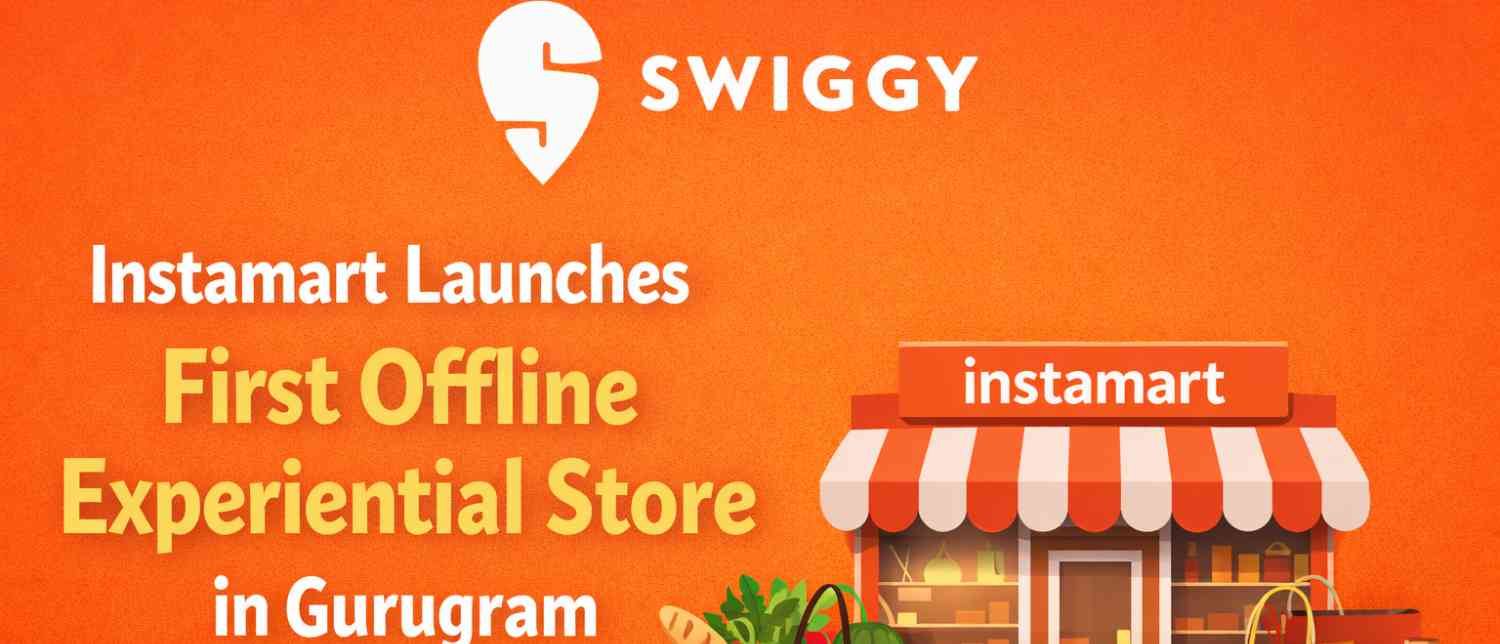
India’s quick commerce sector, long defined by speed, scale, and invisible dark stores, may be witnessing the early signs of a strategic evolution. Swiggy Instamart, the quick commerce arm of food and grocery delivery giant Swiggy, has quietly launched its first-ever physical experiential store in Gurugram. The pilot marks a notable departure from the purely app-based, dark store-driven model that has powered the rapid rise of 10-minute deliveries across Indian cities.
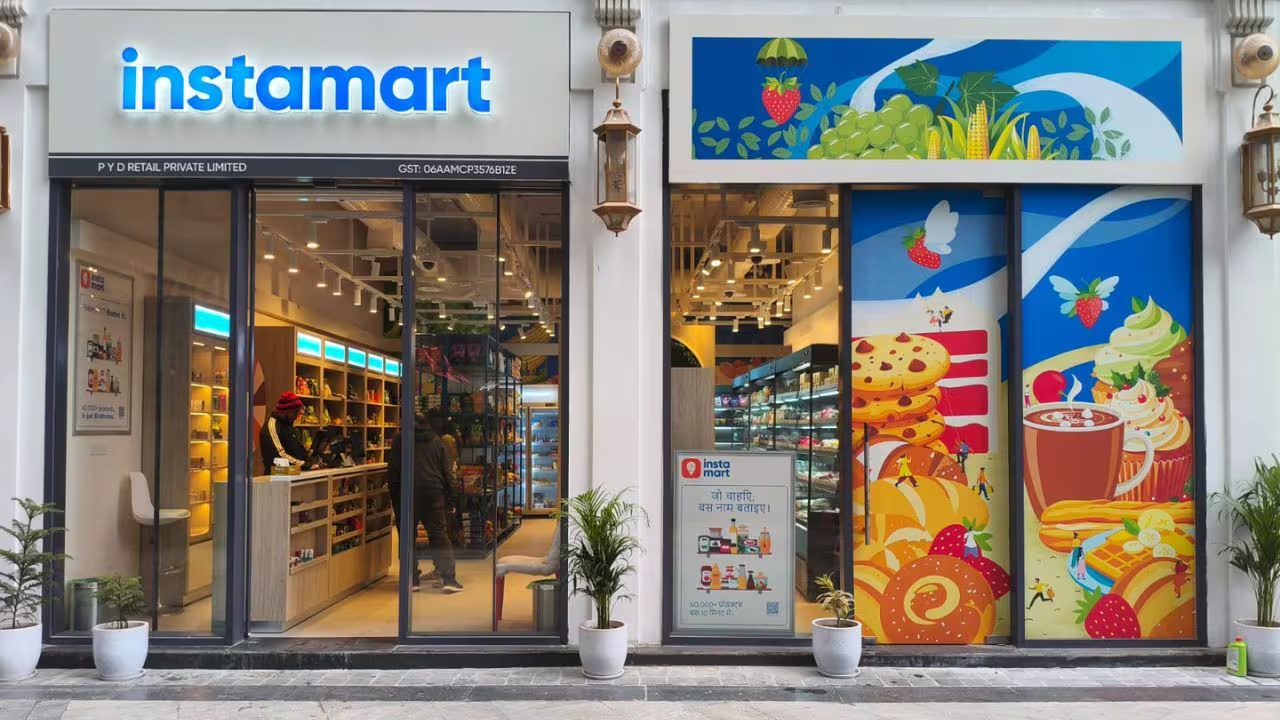
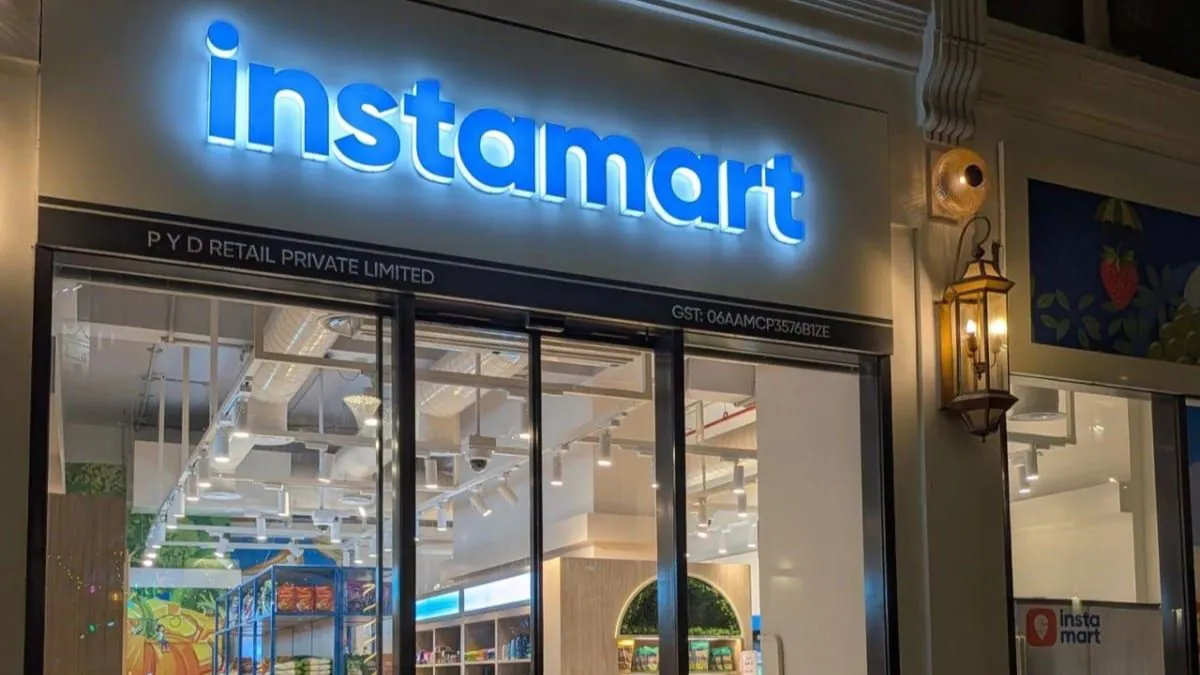
Located at M3M 65th Avenue in Gurugram, this Instamart-branded outlet is not a conventional retail store, nor is it an extension of Swiggy’s existing dark store network. Instead, it represents an experimental offline format designed to allow customers to physically interact with a limited selection of products they would otherwise order online.
At a time when competitors like Blinkit and Zepto are doubling down on dark store expansion and hyperlocal logistics, Instamart’s move stands out for what it is—and what it deliberately is not.
What Sets Instamart’s Experiential Store Apart
Unlike Instamart’s core model, which operates entirely through its mobile app, the Gurugram outlet allows consumers to walk in, browse products on shelves, and complete purchases directly at the store. However, the similarities to a traditional grocery store end there.
The experiential store spans roughly 400 square feet, making it about one-tenth the size of a typical Instamart dark store, which generally covers close to 4,000 square feet. While dark stores are stocked with anywhere between 15,000 and 20,000 stock-keeping units (SKUs)—and in some cases over 40,000 SKUs today—the experiential outlet carries a sharply curated assortment of just 100 to 200 SKUs.
This narrow selection is intentional. The store is not designed to offer exhaustive choice or compete on convenience, pricing, or range with neighbourhood kirana stores, supermarkets, or even Instamart’s own app. Instead, it functions as a tactile, sensory space where customers can see, touch, and assess products before deciding to buy.
A Focus on “Touch and Feel” Categories
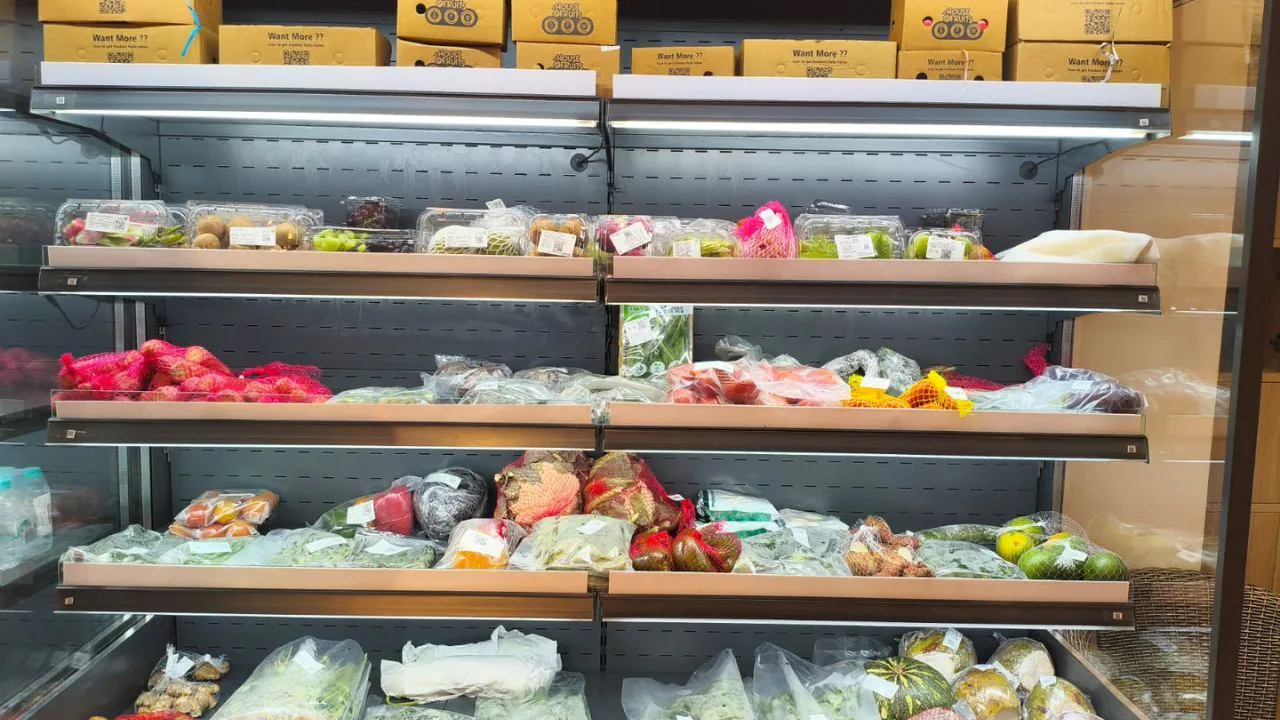
The categories featured at the experiential store reveal the strategic thinking behind the experiment. The assortment is heavily skewed towards products where physical inspection plays a significant role in purchase decisions. These include fresh fruits and vegetables, pulses, newly launched products, and offerings from direct-to-consumer (D2C) brands.
Private labels also feature prominently, including Instamart’s own brand, Noice. By allowing consumers to physically inspect fresh produce and private-label goods, Instamart appears to be addressing one of the lingering pain points in online grocery shopping: trust in quality.
For quick commerce platforms that depend on repeat digital orders and high customer lifetime value, reducing hesitation around freshness and product quality can directly translate into larger basket sizes and stronger brand loyalty.
Not a Retail Store, But a Brand Interface
Despite the presence of in-store purchasing, the experiential outlet is not positioned as a standalone retail channel. Industry sources and media reports suggest that these stores are intended to act as hubs for product discovery and customer interaction rather than full-fledged points of sale.
The emphasis is clearly on branding, engagement, and confidence-building. Customers may discover a new D2C brand, examine fresh produce quality, or explore private labels in person—then continue ordering through the Instamart app for future purchases.
In this sense, the format resembles a mini showroom rather than a grocery store. It is designed to support Instamart’s digital-first ecosystem, not replace it.
Seller-Operated, Asset-Light Model
Another key distinction lies in how these experiential stores are operated. Unlike traditional retail outlets owned and managed by the platform, Instamart’s experiential stores are expected to be run by sellers, similar to how dark stores operate today.
According to reports, Swiggy does not own or operate the Gurugram outlet directly. Instead, sellers on the Instamart platform are keen to experiment with Instamart-backed branding and services, viewing the physical format as an opportunity to enhance visibility and consumer engagement.
This seller-led model keeps the experiment asset-light and low-risk for Swiggy. It also reinforces the idea that the initiative is exploratory rather than a large-scale strategic pivot.
A Different Transaction Structure
The way payments are handled at the experiential store further sets it apart from Instamart’s standard operating model. In regular online transactions, Swiggy collects payments from customers and later transfers proceeds to sellers after deducting its commission.
At the experiential store, however, payments made at the outlet are routed directly to sellers. Swiggy does not collect the money upfront, nor does it settle transactions post-commission. This structure aligns more closely with offline retail practices and underscores the limited, experimental nature of the format.
Is Instamart Moving Towards Offline or Omnichannel Retail?
Despite the physical footprint, industry insiders are clear that this does not signal Instamart’s transition to an omnichannel retail strategy. True omnichannel models integrate inventory, pricing, and fulfilment across online and offline formats. Instamart’s experiential store, by contrast, offers limited depth across categories and lacks the infrastructure to compete with supermarkets or kirana stores on assortment or speed.
People familiar with the matter have indicated that the Gurugram outlet is a pilot project, with no confirmed plans for scaling or expansion. Any future rollout will depend on how the experiment performs.
Swiggy itself has not made an official announcement or commented publicly on the initiative.
Strategic Context: A Crowded and Costly Market
The timing of Instamart’s offline experiment is significant. India’s quick commerce market has entered a phase of intense competition, with multiple deep-pocketed players battling for dominance. According to BofA Research, Blinkit currently commands over 50% of the market, while the remainder is split among Zepto, Instamart, Tata Digital-backed BigBasket, Flipkart Minutes, and Amazon Now.
Despite rapid growth, all three leading players—Blinkit, Zepto, and Instamart—remain loss-making. Concerns around cash burn and long-term sustainability persist, particularly as public market appetite for loss-heavy businesses remains uncertain. Swiggy has recently strengthened its balance sheet, raising Rs 10,000 crore through a qualified institutional placement, taking its total cash reserves to around Rs 15,000 crore. Zepto, meanwhile, is expected to file its IPO papers soon.
This capital cushion gives Swiggy the flexibility to test new formats without immediate pressure for profitability.
Branding as a Competitive Lever
As delivery times compress, discounts converge, and assortment sizes begin to look similar across platforms, branding and trust are becoming increasingly important differentiators. In dense urban markets, even a small physical presence can act as a powerful marketing tool.
Instamart’s experiential store appears to be less about immediate revenue and more about recall, credibility, and differentiation. By creating a tangible brand interface, Instamart can strengthen consumer confidence—especially around fresh produce and private labels—while reinforcing its digital value proposition.
Dark Stores Still Dominate the Economics
Despite the symbolism of the offline experiment, dark stores remain central to the economics of quick commerce. India’s total quick commerce real estate footprint is projected to nearly triple from 13 million square feet to 38 million square feet by 2030.
According to Savills India data shared with ET, the number of dark stores is expected to grow from about 2,525 in October to nearly 7,500 by the end of the decade. These facilities will continue to drive ultra-fast deliveries and meet rising urban demand.
In this context, Instamart’s experiential store should be viewed as complementary rather than substitutive. It does not reduce reliance on dark stores but may enhance their effectiveness by driving higher-quality demand and stronger brand affinity.
A Small Store With Large Implications
Quick commerce has already reshaped India’s retail landscape, initially impacting neighbourhood kirana stores and later encroaching on modern trade and traditional online grocery platforms. India’s success with this model mirrors broader trends across the Asia-Pacific region, now the world’s fastest-growing quick commerce market due to dense cities, improving logistics, and widespread smartphone adoption.
Instamart’s Gurugram experiential store may be small in scale, but it carries significant symbolic weight. It signals a sector that is maturing, experimenting, and looking beyond speed alone to build defensible advantages.
While widespread rollout remains uncertain, the experiment suggests that even digital-native platforms are rediscovering the value of physical presence—not as a replacement for technology, but as a subtle reinforcement of trust, quality, and brand memory.
For now, Instamart’s offline foray stands as a reminder that in India’s fiercely competitive quick commerce race, being seen, touched, and remembered may matter just as much as being fast.
With inputs from agencies
Image Source: Multiple agencies
© Copyright 2025. All Rights Reserved. Powered by Vygr Media.