 By

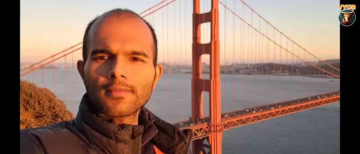
A question that divided physicists for years and sat unsolved for more than two decades now has an answer, thanks to an Indian mathematician. Riddhipratim Basu, whose academic path runs from the Indian Statistical Institute (ISI) in Kolkata to the University of California, Berkeley and the Tata Institute of Fundamental Research (TIFR), has been awarded the Infosys Prize 2026 in Mathematical Sciences. The recognition honours his work on the famous slow-bond problem, along with his wider contributions to probability theory and statistical physics.
Who Is Riddhipratim Basu?
Basu is an Associate Professor at the International Centre for Theoretical Sciences (ICTS), part of TIFR, in Bengaluru, where he joined the faculty in 2017. He earned his PhD from the University of California, Berkeley, and later served as a Szegő Assistant Professor in the Department of Mathematics at Stanford University before returning to India.
His research covers probability theory and statistical physics, with a focus on random growth, interacting particle systems, and random geometry. In simple terms, he studies how orderly patterns emerge from randomness, why systems sometimes behave very differently from what is typical, and why very different models often show the same underlying behaviour.

The Infosys Prize 2026
The Infosys Prize is among India’s most prestigious awards for researchers and is given by the Infosys Science Foundation, a not-for-profit trust set up in 2009. It covers six categories: Economics, Engineering and Computer Science, Humanities and Social Sciences, Life Sciences, Mathematical Sciences, and Physical Sciences. Each winner receives a gold medal, a citation, and a purse of USD 100,000.
The 2026 citation recognises Basu’s outstanding contributions to probability theory and statistical physics, noting that his work resolved the slow-bond problem and established new large deviations asymptotics.
What Is the Slow-Bond Problem?
The puzzle comes from a standard model of traffic-like movement called the totally asymmetric simple exclusion process (TASEP). Imagine particles lined up along a road, each moving forward only when the spot ahead is empty. It is a simplified picture of how traffic, queues, or flows behave.
The slow-bond question is this: what happens if you slow down movement across just one single point by a tiny amount? Would that small obstruction change the overall flow of the entire system, or would the system absorb it and carry on as before?
Physicists who studied this with different heuristics and computer simulations came to opposite conclusions. Some believed a very small slowdown would have no lasting effect on the large-scale flow. Others believed it would. The question stayed open for many years because it had never been settled with a rigorous mathematical proof.
How Basu Solved It
Working with mathematicians Vladas Sidoravicius and Allan Sly, Basu proved that even the smallest obstruction at a single bond reduces the overall flow of particles. In technical terms, they showed that the critical slowdown value is zero, so any slowdown, however slight, has a measurable effect on the system’s current.
The proof was a significant breakthrough. A later paper with Sourav Sarkar and Allan Sly built on it and established a conjectured description by the mathematician Thomas Liggett of particle densities on either side of the obstruction.
Other Major Contributions
The slow-bond result is only part of Basu’s body of work. The prize jury also highlighted several other achievements:
- Large deviations: With Shirshendu Ganguly and Allan Sly, he established the first upper-tail large deviations principle for a class of first-passage percolation models that are not exactly solvable, which is a difficult setting for rigorous results.
- Conjectures on fluctuations: He has resolved conjectures about fluctuations and the geometry of optimal paths in last-passage percolation.
- Lattice Yang-Mills theory: He developed explicit combinatorial descriptions of Wilson loop expectations in two-dimensional lattice Yang-Mills theory in an asymptotic strong-coupling regime, linking his work to ideas from fundamental physics.
His work also sits within the Kardar-Parisi-Zhang (KPZ) universality class, a major area of modern probability that explains why many different growth processes share common statistical patterns.
Why This Matters
Problems like the slow-bond question may look abstract, but they speak to something basic: how local disturbances affect large systems. Understanding this is relevant to models of traffic flow, biological transport, and many physical processes where movement is constrained.
For Indian science, the award also highlights the strength of mathematical research in the country. Basu built his career at leading institutions abroad and then returned to contribute to research at TIFR’s theoretical sciences centre in Bengaluru.
A Journey Worth Noting
From ISI Kolkata, known for its strong tradition in statistics and mathematics, to Berkeley, Stanford, and now ICTS-TIFR, Basu’s path reflects the global nature of modern mathematics. His success also stands as encouragement to young students in India who are interested in pure and applied mathematics.
© Copyright 2026. All Rights Reserved. Powered by Vygr Media.