 By

Every year, as the celebrations of Diwali fill homes with lights, colours and festivities, another spiritually significant occasion invites people to pause and reflect on something far more fundamental: their relationship with nature. Govardhan Puja, also known as Annakut, commemorates Lord Krishna's extraordinary act of lifting the Govardhan Parvat to protect the people of Braj from the wrath of Lord Indra. But beyond the familiar story of divine intervention lies a deeper message about environmental consciousness, humility, gratitude and the importance of respecting the forces that sustain life.
In an age marked by environmental degradation, unpredictable weather patterns, diminishing natural resources and an increasingly disconnected relationship between people and the environment, the significance of Govardhan Puja feels remarkably contemporary. What appears to be an ancient religious tradition is, in many ways, a reminder of principles that modern society is struggling to rediscover.
Perhaps that is what makes this festival particularly meaningful. It is not merely about remembering a divine miracle; it is about understanding the responsibility that comes with being part of the natural world.
Govardhan Puja 2026: Date, Traditions and Religious Significance
Govardhan Puja is traditionally observed on Kartik Shukla Pratipada, the first day of the bright fortnight of the Hindu month of Kartik. It is generally celebrated a day after Diwali and is also known as Annakut, referring to the mountain-like arrangement of food offered to Lord Krishna.
In 2026, Govardhan Puja will be celebrated on Tuesday, November 10. Interestingly, the festival falls two days after the main Diwali celebration this year because of the lunar calendar and the timing of the Pratipada tithi. This is an important reminder that Hindu festivals follow the traditional Panchang rather than fixed Gregorian calendar dates.
The festival is celebrated with particular enthusiasm in Uttar Pradesh, especially in Mathura, Vrindavan, Gokul and the surrounding Braj region, where the life and teachings of Lord Krishna remain deeply embedded in local culture.
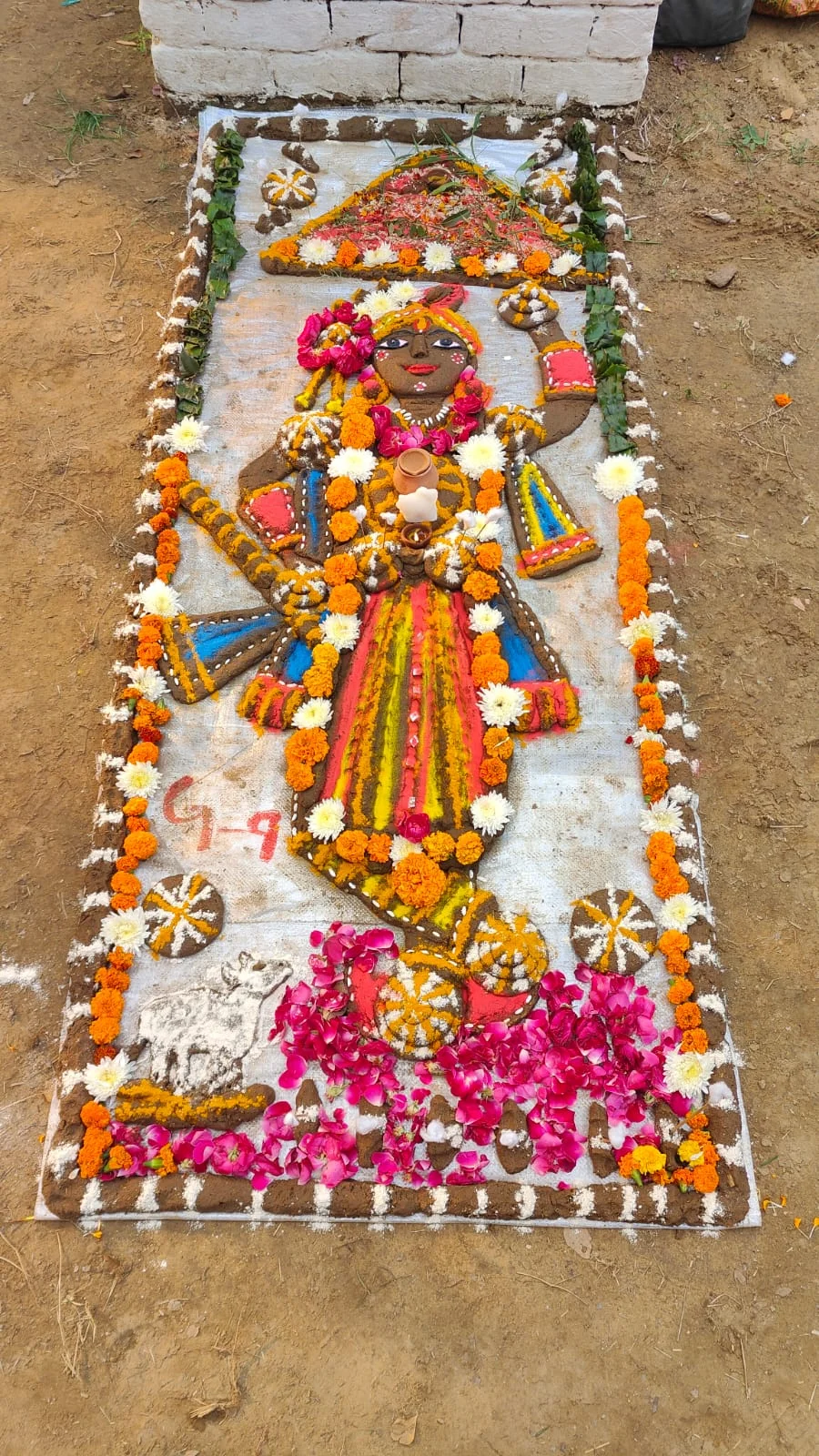
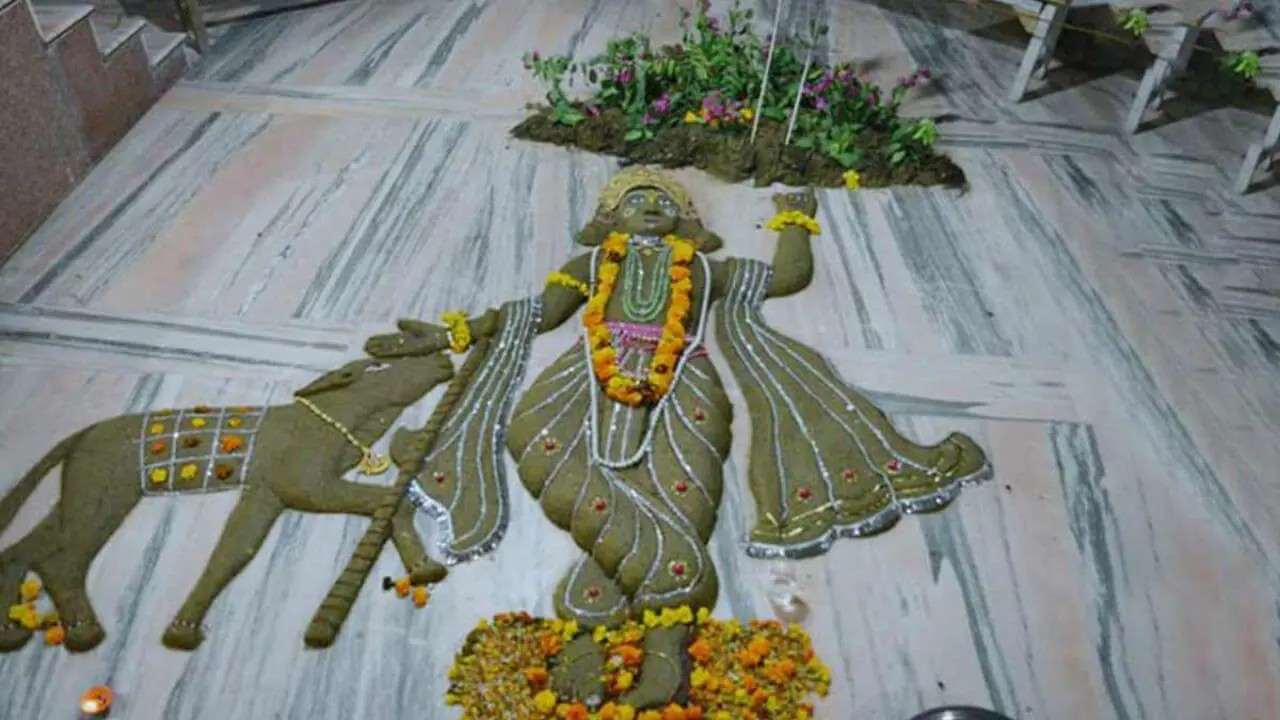
Devotees worship Govardhan Hill, prepare elaborate Annakut offerings, perform Govardhan Parikrama and express gratitude towards cows and other elements of nature. In many households, a symbolic Govardhan mountain is created using cow dung or mud, decorated with flowers and worshipped with traditional rituals.
Yet, the rituals are only one part of the celebration. Its deeper significance lies in the philosophy behind them.
The Story of Lord Krishna Lifting Govardhan Parvat
The Govardhan Puja story, rooted in the Shrimad Bhagavata Purana, begins in the pastoral community of Vrindavan, where the residents traditionally worshipped Lord Indra, the deity associated with rain and thunderstorms.
For an agrarian and cattle-rearing community, rainfall was essential. Their crops, pastures, livestock and livelihoods depended on it. Therefore, the people regularly performed rituals and offerings to seek Indra's blessings and ensure prosperity.
However, young Krishna questioned the purpose of this practice. He encouraged the villagers to recognise the importance of Govardhan Hill, the surrounding forests, the grazing lands and the cattle that directly sustained their lives.
Krishna explained that their prosperity was closely connected to the natural environment in which they lived. Rather than performing rituals out of fear, they should express gratitude towards the resources that nourished and protected them.
Persuaded by Krishna, the people of Braj redirected their offerings towards Govardhan Hill and celebrated the abundance of nature.
This decision angered Indra, who considered it an insult to his authority. In retaliation, he unleashed devastating rainfall and thunderstorms upon the region, threatening the lives of the villagers and their cattle.
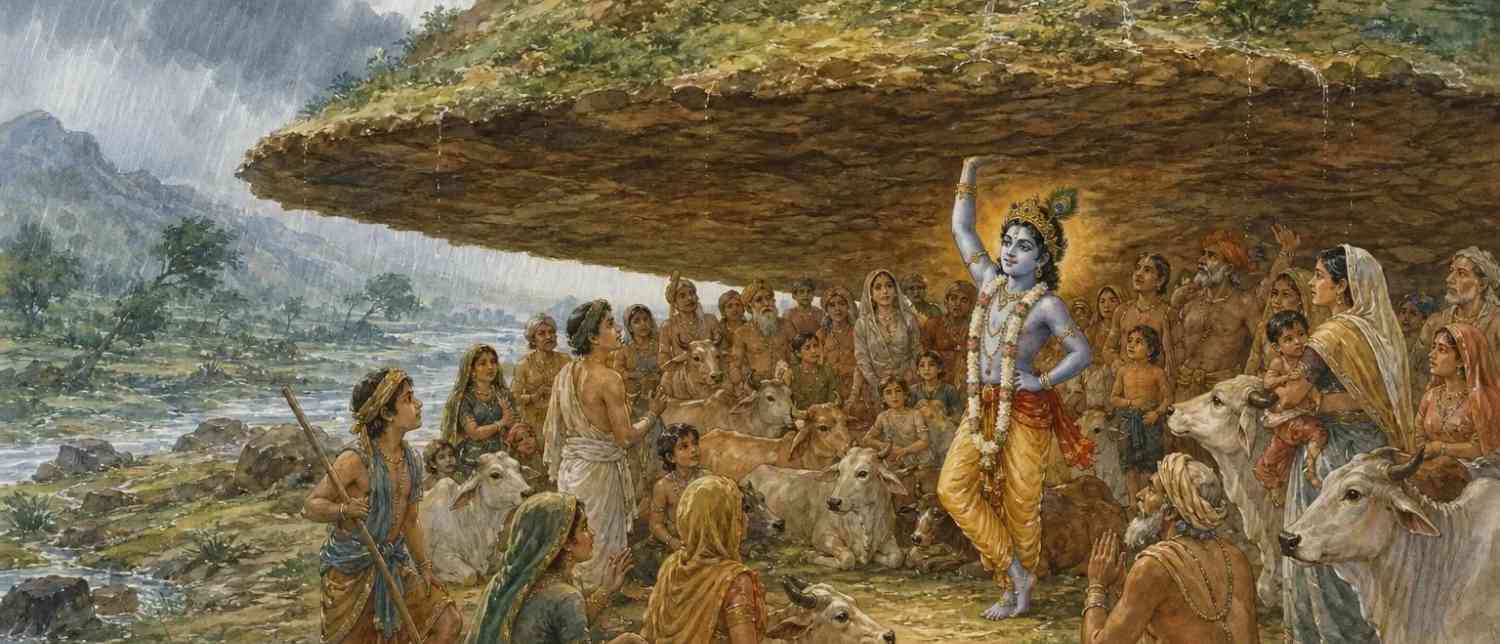
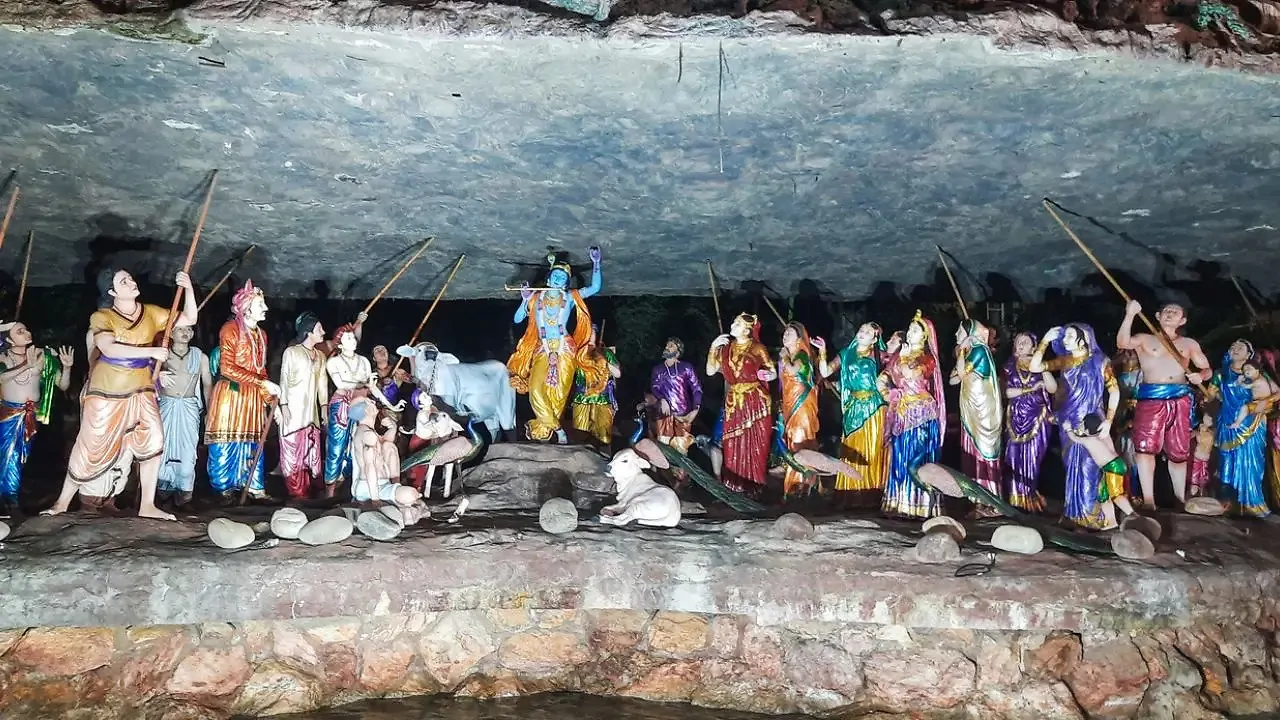
Seeing the suffering of his people, Krishna lifted the enormous Govardhan Parvat on his little finger, creating a shelter beneath which the villagers, cows and other animals could take refuge.
For seven days and seven nights, Krishna held the mountain aloft until Indra finally recognised his mistake. Realising that his actions were driven by arrogance, he withdrew the storm and surrendered before Krishna.
The episode became a powerful symbol of divine protection, devotion and the victory of humility over pride.
However, reducing this story to a miraculous display of Krishna's supernatural strength would mean overlooking its most important philosophical message.
Beyond Mythology: Govardhan Puja Is a Celebration of Nature
One of the most compelling aspects of Govardhan Puja is its emphasis on the natural environment.
Krishna's message to the people of Braj was rooted in an understanding of their dependence on the land, forests, hills, water and animals. Their survival was not determined by religious ceremonies alone; it depended on the delicate relationship between these natural elements.
Govardhan Hill, therefore, represents much more than a geographical formation. It symbolises the larger ecosystem that supports human existence.
Mountains influence weather patterns, forests support biodiversity, rivers provide water, fertile soil enables agriculture, and animals contribute to ecological and economic stability. Each element plays a role in maintaining the balance of nature.
The festival encourages people to recognise this interconnectedness.
This interpretation becomes especially relevant today. Urbanisation, deforestation, pollution, excessive consumption and the destruction of natural habitats have placed enormous pressure on the environment. People increasingly depend on resources whose origins and importance they rarely consider.
Govardhan Puja offers an opportunity to question this disconnect.
Are we treating nature as something to be protected, or merely as a resource to be exploited? Are we grateful for the land that feeds us, the water that sustains us and the trees that make life possible?
These questions make the ecological significance of Govardhan Puja particularly important in contemporary society.
Its underlying message is simple: respecting nature is not separate from spirituality; it is an essential expression of it.
Why the Defeat of Indra's Ego Is Equally Important
The Govardhan Puja story is also a powerful reflection on human behaviour, particularly the dangers of arrogance and unchecked authority.
Indra's anger was not simply a reaction to the villagers changing their religious practices. It represented the ego of someone who believed that his position made him indispensable and unquestionable.
Krishna's intervention challenged this assumption.
The eventual surrender of Indra illustrates that power without humility can become destructive. Authority, wealth, influence and recognition should never create the illusion that someone is above accountability.
This philosophical dimension gives the Govardhan Puja story a relevance that extends beyond religious boundaries.
In contemporary society, individuals, institutions and even powerful nations often struggle with the temptation to equate authority with superiority. The desire to control, dominate and receive recognition can sometimes overshadow responsibility towards others.
Indra's realisation reminds us that genuine greatness is not demonstrated through the ability to command others. It is reflected in the willingness to acknowledge mistakes, respect others and surrender one's ego when confronted with a greater truth.
Krishna's strength, meanwhile, is demonstrated through protection rather than domination.
That distinction is perhaps one of the most valuable lessons the festival offers.
The Sacred Relationship Between Cows, Agriculture and Human Life
Another important aspect of Govardhan Puja is the worship of cows, traditionally revered as Gau Mata in Hindu culture.
The significance of cattle becomes easier to understand when viewed through the agricultural traditions of rural India.
For generations, cows and other livestock have been integral to village economies. They provide milk and dairy products, support agricultural livelihoods and contribute to traditional farming systems. Their presence has historically been associated with nourishment, prosperity and rural stability.
The connection between Lord Krishna and cows is particularly significant because his childhood in Gokul and Vrindavan was closely associated with cowherding communities.
Govardhan Puja continues this association through rituals in which cattle are bathed, decorated with colourful ornaments, adorned with garlands and worshipped as symbols of nourishment and abundance.
However, the importance of this tradition should extend beyond ceremonial worship.
Respecting animals should also mean ensuring their well-being, providing proper care, protecting them from neglect and recognising their role in the larger ecosystem.
A festival that celebrates the sacredness of cattle offers an opportunity to reflect on whether society is translating its reverence into meaningful action.
True respect cannot remain limited to a few hours of celebration.
Annakut: When Food Becomes an Expression of Gratitude
Among the most visually striking traditions associated with Govardhan Puja is the preparation of Annakut, literally meaning a mountain of food.
Devotees prepare a wide variety of vegetarian dishes, including vegetables, sweets, grains, fruits and traditional delicacies, which are arranged as offerings to Lord Krishna.
In several temples, the Annakut celebration features elaborate displays, sometimes comprising dozens of preparations. The famous Chhappan Bhog tradition, involving 56 food offerings, is also associated with Krishna worship.
But the significance of Annakut extends beyond its abundance.
Food is among the most basic necessities of human existence, yet it is often taken for granted. From the farmer who cultivates the land to the natural resources that make agriculture possible, countless elements contribute to the food that eventually reaches our plates.
Annakut symbolises gratitude for this entire process.
It also reflects the philosophy of sharing. After the offerings are made, the food is distributed as prasad among devotees and members of the community.
This practice transforms food into a medium of collective participation, generosity and social bonding.
At a time when food wastage, unequal access to nutrition and agricultural distress remain significant concerns, the philosophy behind Annakut deserves renewed attention.
The real spirit of an abundant offering should not be measured by how much food is displayed, but by how thoughtfully it is prepared, respected and shared.
Govardhan Puja and the Living Traditions of Rural India
The cultural significance of Govardhan Puja becomes particularly visible in India's agrarian communities, where the festival remains deeply connected to everyday life.
In villages around the country, the occasion is not simply another religious date on the calendar. It is an important community event that brings together families, farmers, cattle owners and neighbours.
Traditional celebrations may include decorating cattle sheds, preparing symbolic Govardhan figures from cow dung, performing circumambulation rituals, singing devotional songs and organising community meals.
The celebrations in places such as Asola and Fatehpur Beri on Delhi's rural outskirts offer an interesting example of how deeply the festival remains embedded in village identity.
Despite the transformation of these communities over generations, their connections with agriculture, dairy farming, cattle and traditional physical culture continue to influence their social practices.
Such celebrations also reveal something important about India's cultural diversity: traditions are not preserved only through temples and scriptures. They survive through people, families, occupations, local customs and collective memories.
For urban residents, these rural celebrations offer a glimpse into a way of life in which nature and livelihood remain closely connected.
They remind us that India's traditions are not merely historical inheritances. They are living cultural experiences that continue to evolve.
Govardhan Parikrama: A Journey of Devotion and Reflection
Govardhan Parikrama is another significant religious practice associated with the festival.
Devotees circumambulate Govardhan Hill near Mathura, traditionally walking along the sacred route as an expression of devotion to Lord Krishna and reverence for Giriraj Maharaj.
For many devotees, completing the parikrama is an act of faith, surrender and spiritual commitment.
However, the practice also carries a symbolic significance. Walking around the sacred hill represents a recognition that human beings are not separate from the natural world. They are part of something much larger than themselves.
The popularity of Govardhan Parikrama also highlights the enduring religious importance of the Braj region, particularly Mathura and Vrindavan.
During the festival, these places become centres of devotion, attracting pilgrims who participate in temple celebrations, devotional singing, Annakut offerings and traditional rituals.
The experience demonstrates how geography, spirituality and cultural identity can become inseparably connected.
Why Govardhan Puja's Message Matters in Modern India
Perhaps the most important question to ask is whether the lessons of Govardhan Puja are reflected in the way society behaves today.
It is relatively easy to create a symbolic mountain, offer food, worship cattle and participate in religious ceremonies. The greater challenge is translating the values behind these rituals into everyday decisions.
If Govardhan Puja celebrates nature, environmental protection must become part of our collective responsibility.
If it honours cattle, animal welfare must receive genuine attention.
If Annakut represents gratitude for food, reducing food wastage and supporting sustainable agriculture should become meaningful priorities.
And if Krishna's actions represent humility, individuals and institutions must learn to exercise power with responsibility rather than arrogance.
These are not demands that require abandoning modern life or rejecting technological progress. Instead, they encourage a more balanced understanding of development.
Economic growth and environmental preservation need not be opposing goals. Cultural traditions and modern thinking can coexist. Spirituality can inspire practical action rather than remaining confined to symbolic observances.
This is where the true contemporary relevance of Govardhan Puja lies.
It offers an opportunity to reconnect ancient wisdom with present-day challenges.
More Than a Festival, Govardhan Puja Is a Reminder of Our Responsibility
The story of Lord Krishna lifting Govardhan Parvat has survived for generations because its message goes far beyond the miracle itself.
It speaks of protecting the vulnerable, respecting nature, acknowledging our dependence on the environment, sharing resources and recognising the dangers of unchecked ego.
It also reminds us that prosperity is not created by human ambition alone. It depends on countless natural and social relationships that often remain invisible in everyday life.
As Govardhan Puja 2026 approaches, its significance deserves to be understood beyond the rituals and celebrations. The festival invites us to reconsider how we treat the earth, how we value animals, how we share what we have and how we exercise power.
Perhaps the greatest tribute to Lord Krishna's divine act would not simply be to remember the mountain he lifted, but to protect the natural world that continues to sustain us.
After all, the essence of Govardhan Puja is not merely celebrating nature's abundance. It is recognising that protecting that abundance is a responsibility we all share.
© Copyright 2026. All Rights Reserved. Powered by Vygr Media.