 By
By 
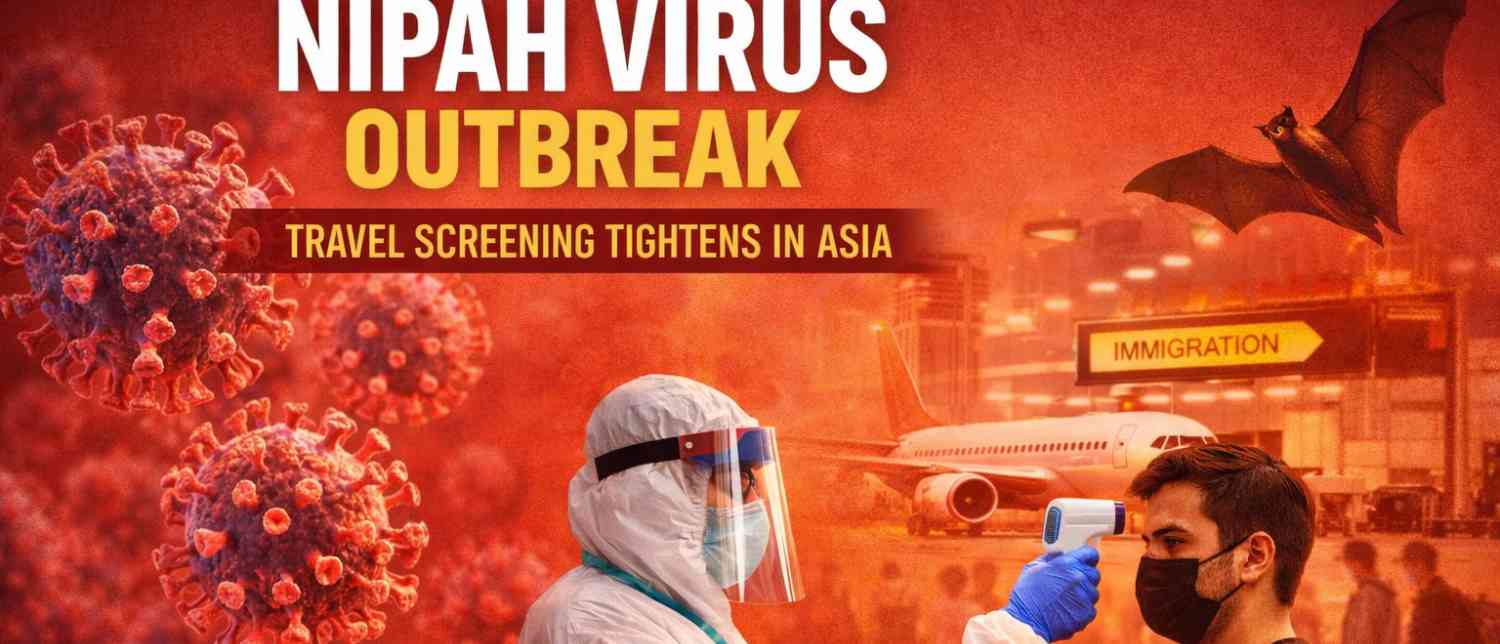
Airports across Asia are once again dusting off pandemic-era health protocols as a fresh outbreak of the Nipah virus (NiV) in India triggers regional concern. From Thailand and Nepal to Taiwan, South Korea, and beyond, authorities are ramping up airport screening, border checks, and disease surveillance—measures reminiscent of Covid-19—aimed at preventing the cross-border spread of one of the world’s most lethal viruses.
The renewed alert follows confirmation of multiple Nipah virus cases in India, particularly in West Bengal and Kerala, prompting swift responses from neighbouring and travel-connected countries. While experts stress that the overall risk to international travellers remains low, the virus’s high fatality rate and lack of a vaccine or cure have made early detection and strict containment a global priority.

Nipah Virus Outbreak in India: What We Know So Far
India is currently dealing with a renewed Nipah virus outbreak, with at least five confirmed cases in West Bengal. Around 100 to 110 close contacts have been placed under quarantine as authorities race to halt further transmission. Several of the confirmed infections involve healthcare workers, including doctors and nurses, believed to have contracted the virus while treating patients whose illness was diagnosed as Nipah only later.
In one cluster linked to a private hospital in Barasat, North 24 Parganas district, five healthcare workers tested positive. Two nurses are being treated in an intensive coronary care unit, with at least one reported to be in “very critical” condition. Earlier cases included a doctor, a nurse, and another hospital staff member from the same district.
A bat surveillance survey conducted in West Bengal did not find any active Nipah infections, though antibodies were detected in one bat specimen, suggesting prior exposure. “The findings are reassuring, but caution is warranted,” a senior West Bengal Health Department official told PTI, adding that surveillance would continue until the risk is fully ruled out.
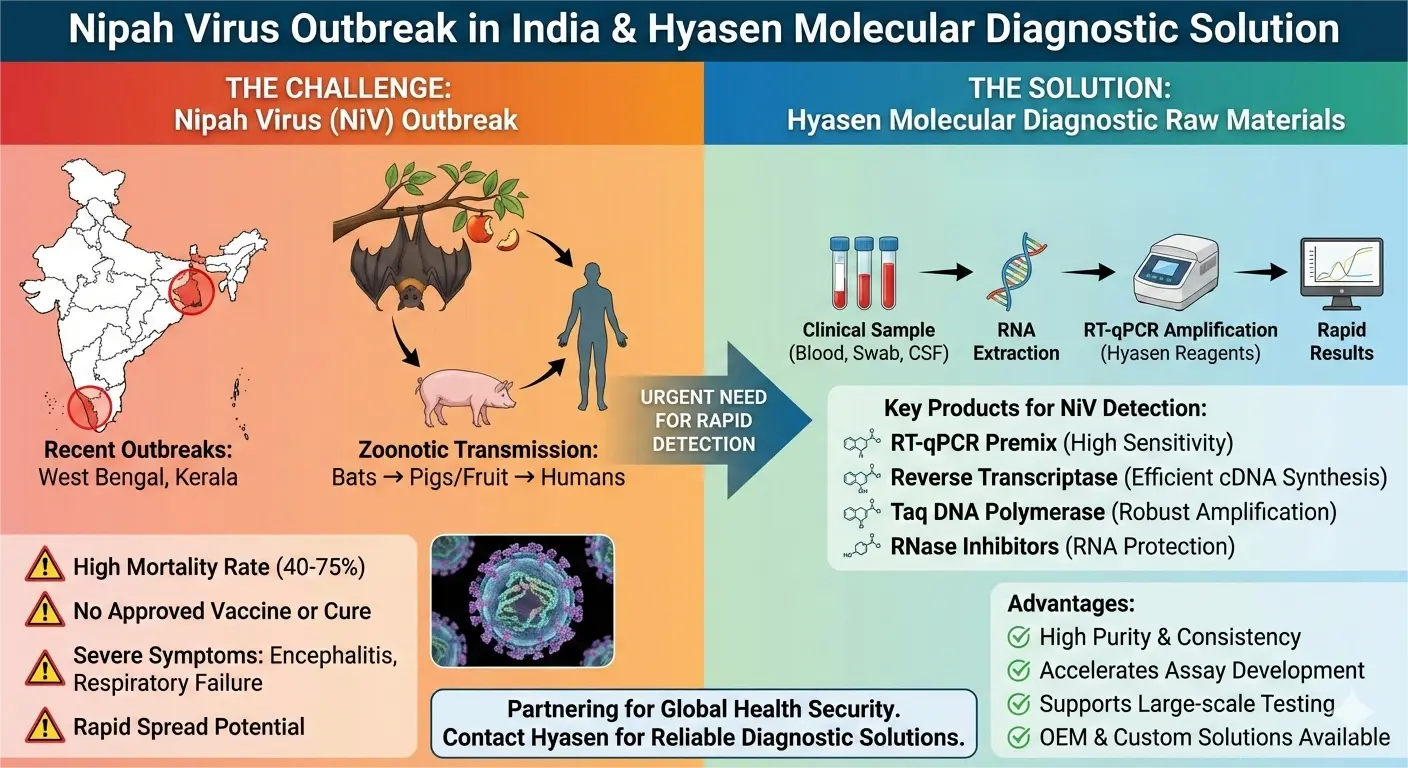
At the same time, Kerala—a state with a history of Nipah outbreaks—has also reported fresh cases. In the districts of Malappuram and Kozhikode, multiple infections and a small number of fatalities have been confirmed. Kerala first encountered the virus in 2018, when 17 of 19 cases proved fatal, and again in 2023, when two of six patients died.
What Is the Nipah Virus and Why Is It So Dangerous?
The Nipah virus is a zoonotic pathogen, meaning it spreads from animals to humans. Its natural hosts are fruit bats, also known as flying foxes. Humans can become infected through:
-
Consuming fruit contaminated by bat saliva or urine
-
Drinking raw date palm sap
-
Close contact with infected pigs
-
Direct, close contact with infected humans, particularly bodily fluids
According to the World Health Organization (WHO), Nipah infection can present with a wide range of symptoms—or sometimes none at all. Early signs often resemble the flu, including fever, headache, muscle pain, vomiting, and sore throat. In many cases, the disease escalates rapidly.
Severe outcomes include acute respiratory infection, atypical pneumonia, and encephalitis, a dangerous inflammation of the brain that can cause dizziness, drowsiness, confusion, altered consciousness, and coma within 24 to 48 hours. The virus has a fatality rate ranging from 40% to 75%, depending on the outbreak and healthcare response.
There is currently no vaccine or specific treatment for Nipah. Care is limited to managing symptoms and complications, making prevention, early detection, and isolation critical. Because of these factors, the WHO has designated Nipah as a priority pathogen with epidemic potential.
Follow these essential precautions to prevent Nipah Virus infection. Stay alert, stay informed, and follow advisories issued by local health authorities.#NipahVirus #PublicHealth #HealthForAll pic.twitter.com/itTuZA18ev— Ministry of Health (@MoHFW_INDIA) January 22, 2026
A History of Nipah Outbreaks
The Nipah virus was first identified in 1998 in Malaysia, where it spread among pig farmers before reaching Singapore the following year. Since 2001, more than 100 people have died in Bangladesh due to recurring outbreaks.
India has experienced multiple episodes, including outbreaks in West Bengal in 2001 and 2007, and later in Kerala. Despite its limited geographic spread so far, the virus’s severity keeps global health agencies on high alert.
Asia Reacts: Airports and Borders on High Alert
The latest outbreak has prompted a coordinated response across Asia. Thailand has intensified screening at major airports, including Suvarnabhumi, Don Mueang, and Phuket, particularly for passengers arriving from West Bengal. Travellers are being checked for fever and symptoms, asked to make health declarations, and issued advisory cards.
Passengers showing signs of illness may be taken to quarantine facilities. Cleaning and disease-control measures have also been increased at Phuket airport, which maintains direct flight connections with Kolkata.
Thai Prime Minister and Public Health Minister Anutin Charnvirakul confirmed that no Nipah cases have been detected in Thailand so far, but said monitoring would continue. “Public health screening systems have been adjusted based on the model that we used during the Covid-19 outbreak,” he said, adding that authorities were confident in their ability to prevent an outbreak.
In Nepal, health checks have been intensified at Kathmandu’s international airport and at key land border crossings with India. Health ministry spokesperson Dr Prakash Budhathoki said screening had already begun at airports and border points to prevent the virus from entering the country.
Taiwan is planning to classify Nipah infection as a top-level notifiable disease, designated for emerging or rare infections requiring immediate reporting and strict control measures. Travel alerts will be reviewed as the situation evolves.
South Korea had already classified Nipah as a top-tier infectious disease, while Hong Kong’s Centre for Health Protection said it would closely monitor developments and implement preventive measures based on risk assessments.
China on Edge Ahead of Lunar New Year Travel Rush
Concerns have also risen sharply in China, particularly as the outbreak coincides with preparations for the Lunar New Year travel season, known as chunyun. This year’s 40-day travel period runs from February 2 to March 13, during which millions are expected to travel.
Topics related to the Nipah outbreak in India trended on Chinese social media on January 26, according to the South China Morning Post. Some users expressed fear of renewed lockdowns, while others questioned whether travel links with India should be temporarily closed.
China and India recently eased visa processes to encourage travel, adding to public anxiety. In response, China has added Nipah to its monitored infectious disease list, and its Frontier Health and Quarantine Law—enforced last year—already lists Nipah as a targeted pathogen.
However, experts have downplayed the risk. Zhao Haiyan, a virologist at Wuhan University, said that although Nipah poses a serious threat, it has limited transmission pathways compared to highly contagious respiratory viruses like influenza or SARS-CoV-2. Human-to-human spread requires close contact with bodily fluids or exposure to high viral loads, making a widespread outbreak unlikely under current conditions.
Is the UAE at Risk?
The outbreak has also raised questions in the United Arab Emirates, given the high volume of travel between India—especially southern states like Kerala—and the Middle East. As of 2026, no Nipah cases have been reported in the UAE, but authorities are taking no chances.
The UAE Ministry of Health and Prevention (MoHAP) is working closely with airports to screen travellers arriving from affected regions for symptoms such as high fever, respiratory distress, or neurological changes. Monitoring protocols previously used during global health emergencies have been reactivated.
Health experts emphasize that the risk to the general public remains low. Speaking to The National, Dr Sagar Kawale, a consultant neurologist in Dubai, said travellers should not be overly worried unless they have had close exposure to infected individuals or visited high-risk settings like hospitals in outbreak zones.
“Nipah is rare and typically localised rather than widespread like influenza or Covid-19,” he said, adding that its severity is the main reason it is taken so seriously.
What Travellers and the Public Should Do
For most people, daily life remains unchanged, but awareness is essential. Those who have recently travelled to affected areas such as Kerala or West Bengal—or have been in contact with someone who has—should monitor their health for up to 14 days.
Experts advise:
-
Avoid close contact with people showing fever or cough
-
Maintain strict hand hygiene
-
Avoid consuming half-eaten, fallen, or uncovered fruits
-
Avoid unnecessary visits to hospitals in outbreak areas
-
Seek medical attention early if symptoms develop and inform doctors about recent travel
Healthcare workers and travellers in high-risk environments are urged to use masks, gloves, and strict contact precautions.
Vigilance Without Panic
International health agencies stress that while the situation is serious, it remains under control. Rapid isolation of cases and the tracking of over 1,200 high-risk contacts across India have significantly slowed the spread.
The return of Covid-style screening is not a sign of panic, but of preparedness. With early detection, transparent communication, and coordinated global action, health authorities believe the risk of a large-scale international outbreak remains extremely low—even as the world keeps a close eye on one of its most dangerous viruses.
With inputs from agencies
Image Source: Multiple agencies
© Copyright 2025. All Rights Reserved. Powered by Vygr Media.