 By
By 
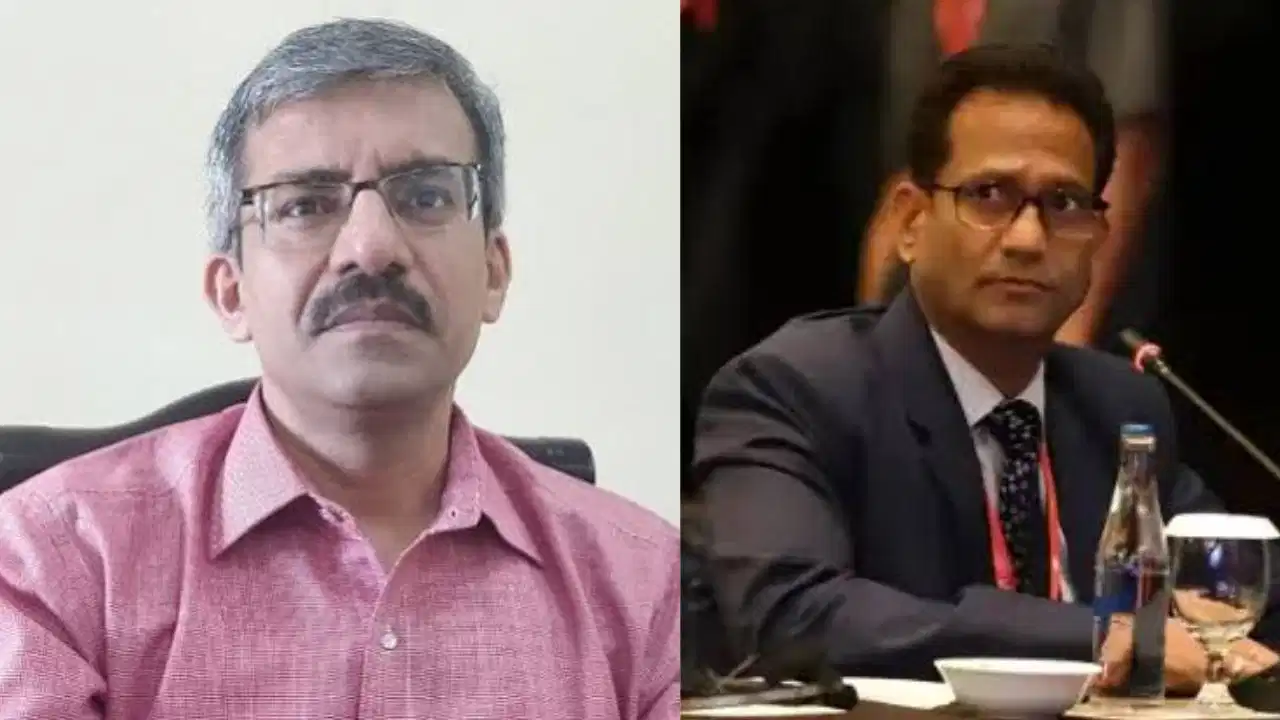
New Delhi: In a significant bureaucratic reshuffle against the backdrop of nationwide protests over the alleged NEET-UG 2026 paper leak, the Centre has replaced Higher Education Secretary Vineet Joshi with senior IAS officer Naresh Pal Gangwar. The move comes as pressure mounts on the government to ensure accountability and restore public confidence in India's examination system.
The appointment was announced late on Thursday as part of a wider administrative reshuffle approved by the Appointments Committee of the Cabinet (ACC). While Joshi has been transferred to the Ministry of Panchayati Raj as Secretary, Gangwar, who was serving as Secretary in the Department of Animal Husbandry and Dairying, will now head the Department of Higher Education.
The change in leadership coincides with escalating protests by students, civil society groups and opposition parties over the alleged paper leak in the National Eligibility-cum-Entrance Test (NEET-UG), one of India's largest entrance examinations for medical colleges. Demonstrators have demanded stricter accountability from the government and institutional reforms to prevent future examination irregularities.
Administrative reshuffle amid mounting pressure
The reshuffle is being viewed as one of the Centre's most significant administrative responses since the controversy over the NEET examination intensified. Besides replacing the Higher Education Secretary, the government also appointed T.K. Anil Kumar as Secretary of the Department of School Education and Literacy.
Until now, Vineet Joshi had been holding additional charge of the School Education Department following the retirement of its previous secretary. With the latest appointments, the Ministry of Education now has separate heads for both higher and school education departments.
Although the government has not officially linked Joshi's transfer to the ongoing NEET controversy, the timing of the move has drawn considerable attention, coming just hours after Prime Minister Narendra Modi announced tougher measures to deal with examination paper leaks.
Why the reshuffle matters
The NEET paper leak controversy has evolved into a major political and administrative challenge. Student groups have alleged that repeated examination irregularities have undermined the credibility of India's competitive examination system, affecting the futures of millions of aspirants.
Protests have continued in several parts of the country, with demonstrators demanding transparent investigations, stronger safeguards against paper leaks and accountability from officials overseeing examinations.
Civil society organisations also gathered at Delhi's Jantar Mantar to protest the recurring issue of examination leaks, arguing that repeated lapses have caused immense psychological stress for students and their families.
Vineet Joshi's long association with India's examination system
Vineet Joshi is a 1992-batch IAS officer of the Manipur cadre and has held several important positions in India's education ecosystem.
Perhaps most notably, he served as the first Director General of the National Testing Agency (NTA), the body responsible for conducting major national entrance examinations, including NEET and JEE. He has also served as Chairman of the Central Board of Secondary Education (CBSE) and later as Higher Education Secretary.
Joshi is an IIT Kanpur graduate in Mechanical Engineering and also holds an MBA from the Indian Institute of Foreign Trade (IIFT). Before joining the Centre, he served as the Chief Secretary of Manipur.
Given his long association with India's examination infrastructure, his transfer during the ongoing crisis has naturally attracted significant public attention, even though no official reason has been provided for the move.
Who is Naresh Pal Gangwar?
Naresh Pal Gangwar, a 1994-batch IAS officer of the West Bengal cadre, brings decades of administrative experience to his new role.
Before taking charge of the Department of Higher Education, Gangwar served as Secretary in the Department of Animal Husbandry and Dairying. Earlier in his career, he held several district-level administrative positions in Rajasthan, including as Collector in Tonk, Bharatpur, Jodhpur and Jhalawar.
Gangwar has also worked in Rajasthan's School Education Department and later served as Joint Secretary in the Ministry of Environment, Forest and Climate Change before moving to the Fisheries Ministry.
Academically, he holds a BTech in Electronics and Communication Engineering from IIT Roorkee, an MTech in Communication and Radar Engineering from IIT Delhi, and a Master's degree in Economics from the University of Rajasthan.
His administrative background across education, governance and policy implementation is expected to play a key role as the Higher Education Department navigates one of its most challenging periods in recent years.
Government promises tougher action
The bureaucratic reshuffle follows a series of announcements by the Centre aimed at addressing public concerns over examination integrity.
Prime Minister Narendra Modi has assured students that the government will take stricter action against those responsible for examination paper leaks. Among the measures announced is the establishment of fast-track courts to ensure speedy trials in paper leak cases.
The government has also indicated that additional legislative measures may be introduced to strengthen the legal framework against organised examination fraud and protect the interests of students appearing in competitive examinations.
The announcements came amid growing public pressure for institutional reforms, with many education experts arguing that stronger technological safeguards, tighter logistical controls and faster investigations are essential to restore confidence in the examination process.
Political reactions intensify
The NEET controversy has also become a major political issue, with opposition parties accusing the government of failing to safeguard the integrity of national entrance examinations.
Parliament has witnessed repeated disruptions as opposition leaders sought discussions on the alleged irregularities. Student organisations have continued demonstrations, insisting that accountability should extend beyond arrests in individual leak cases to include administrative responsibility.
Meanwhile, some leaders from the ruling party have defended the government's response, arguing that recent administrative changes demonstrate its willingness to act decisively against lapses in the education system.
Focus shifts to restoring trust
For millions of students preparing for competitive examinations each year, the controversy has reignited concerns over fairness, transparency and the credibility of India's testing mechanisms.
Education experts believe that while leadership changes may signal administrative accountability, long-term reforms will be necessary to prevent similar incidents in the future. These could include enhanced digital security, stricter monitoring of examination logistics, stronger coordination between agencies and quicker prosecution of those involved in organised paper leak networks.
With Naresh Pal Gangwar assuming charge of the Department of Higher Education, attention will now shift to how the ministry responds to one of the biggest crises confronting India's examination system.
As investigations continue and protests show little sign of easing, the government's immediate challenge will be to reassure students that competitive examinations remain fair, secure and merit-based. Whether the latest administrative reshuffle succeeds in rebuilding public confidence will likely depend not only on personnel changes but also on the effectiveness of the broader reforms that follow.
With input from agencies
Image Source: Multiple agencies
© Copyright 2026. All Rights Reserved. Powered by Vygr Media.