
 By
By 
New Delhi: India has, for the first time, deployed nuclear warheads during peacetime, marking a significant evolution in its nuclear posture and strategic deterrence framework, according to the latest assessment released by the Stockholm International Peace Research Institute (SIPRI).
The SIPRI Yearbook 2026, released on June 8, states that India now possesses an estimated 190 nuclear warheads, up from 180 warheads in 2025, and has deployed 12 of them operationally. This is the first time SIPRI has classified any portion of India’s nuclear arsenal as "deployed" rather than entirely stockpiled, signaling what analysts describe as a major shift in the country’s long-standing nuclear practices.
_1781033602.jpg)
Historic Shift in India's Nuclear Posture
For decades, India was widely believed to follow a policy of storing nuclear warheads separately from their delivery systems, including ballistic missiles and aircraft, during peacetime. This arrangement was considered consistent with India's doctrine of "credible minimum deterrence" and its declared "No First Use" policy.
However, SIPRI's latest findings indicate that India has moved toward a more operationally ready nuclear force. According to the report, at least 12 warheads are now considered deployed, meaning they are mated with delivery platforms and available for quicker use if required.
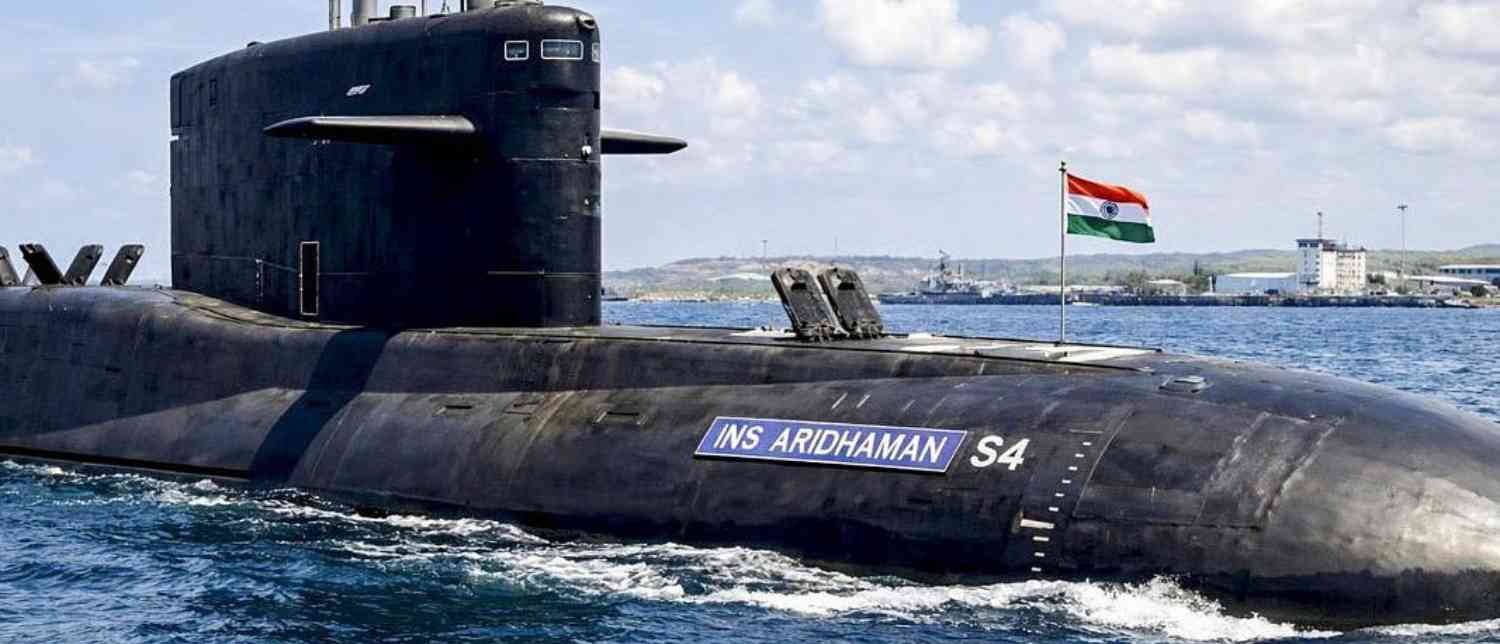
The report suggests that India's nuclear deterrent is becoming increasingly operational, with warheads reportedly positioned in missile silos and aboard nuclear-powered ballistic missile submarines, enhancing readiness and survivability.
This marks a departure from India's traditional approach, under which nuclear weapons and launch systems remained physically separated until needed during a crisis.
Growing Nuclear Arsenal
SIPRI estimates that India's nuclear inventory increased from approximately 180 warheads in January 2025 to 190 warheads by January 2026. Of these, 12 are now considered deployed, while the remaining stockpile remains in reserve.
The expansion reflects India's ongoing efforts to modernize its strategic forces amid a rapidly changing security environment in Asia.
Analysts cited in various reports suggest the increase is linked to the continued development of canisterised missile systems, improvements in command-and-control structures, and the strengthening of India's sea-based nuclear deterrent.
Role of Nuclear Submarines and Sea-Based Deterrence
One of the most significant factors behind the deployment is believed to be India's growing submarine-based nuclear capability.
SIPRI noted that India may now occasionally deploy a limited number of warheads on missiles during peacetime, a capability linked to the country's expanding fleet of nuclear-powered ballistic missile submarines and sea-based deterrence assets.
The move enhances the credibility of India's nuclear triad — the ability to launch nuclear weapons from land, air and sea platforms. Sea-based deterrence is particularly valued because submarines are harder to detect and destroy, ensuring a survivable second-strike capability.
Reports indicate that India's missile submarines have become increasingly operational, providing the country with greater strategic flexibility and resilience in the event of a conflict.
Context of Regional Security Challenges
The development comes amid heightened regional security concerns involving both China and Pakistan.
According to SIPRI, China continues to expand its nuclear arsenal at the fastest pace among all nuclear-armed states. China's stockpile is estimated to have reached approximately 620 nuclear warheads, significantly larger than India's inventory. Some assessments indicate China has around 34 deployed nuclear warheads.
Pakistan, meanwhile, is estimated to possess around 170 nuclear warheads, placing it behind India in total numbers.
The changing strategic environment, coupled with advances in missile technology and evolving military doctrines among neighboring nuclear powers, is believed to be influencing India's modernization efforts.
Several reports also noted that the shift comes after a period of increased military tensions in the region, including the India-Pakistan conflict episodes referenced by SIPRI while discussing broader nuclear risks in South Asia.
No Change in India's Nuclear Doctrine
Despite the operational deployment of warheads, there is no indication that India has altered its fundamental nuclear doctrine.
India continues to officially adhere to the principles of credible minimum deterrence and No First Use (NFU), under which nuclear weapons would only be used in retaliation to a nuclear attack.
Experts cited in reports emphasize that deploying a limited number of warheads does not necessarily indicate a more aggressive nuclear posture. Instead, it reflects efforts to improve readiness, survivability and response capability while maintaining existing doctrinal commitments.
The SIPRI assessment does not suggest India has abandoned its NFU policy or moved toward a launch-on-warning posture.
Global Nuclear Trends Raise Concerns
India's strategic shift is taking place against a broader backdrop of renewed global reliance on nuclear weapons.
The SIPRI Yearbook 2026 warns that nuclear-armed states are increasingly viewing nuclear weapons as instruments of national power, reversing decades-long efforts aimed at reducing their role in international security.
According to SIPRI, the world possessed an estimated 12,187 nuclear warheads as of January 2026. Of these, roughly 9,745 were held in military stockpiles, while approximately 4,012 warheads were deployed with missiles and aircraft. Between 2,100 and 2,200 warheads remained on high operational alert, primarily in the arsenals of Russia and the United States.
SIPRI Director Karim Haggag warned that growing dependence on nuclear weapons, combined with technological advances, weakening arms-control frameworks and rising geopolitical tensions, is increasing the risks of miscalculation and escalation.
The institute noted that while Russia and the United States continue to dominate global nuclear deployments, countries such as China and India may now be moving toward occasional peacetime deployment of limited numbers of nuclear warheads.
Strategic Implications
Defence analysts view the deployment of 12 warheads as symbolically important despite representing a small fraction of India's overall arsenal.
The move demonstrates greater operational readiness and reflects the maturation of India's nuclear command structure, missile systems and sea-based deterrent capabilities. It also indicates a willingness to adapt deterrence strategies to evolving threats while remaining within the framework of existing doctrine.
While the number of deployed warheads remains modest compared to major nuclear powers, the development underscores India's growing emphasis on ensuring a credible and survivable nuclear deterrent amid an increasingly complex security landscape.
With its arsenal now estimated at 190 warheads and a portion operationally deployed for the first time, India has entered a new phase in the evolution of its nuclear strategy—one that could shape strategic calculations across Asia in the years ahead.
With inputs from agencies
Image Source: Multiple agencies
© Copyright 2026. All Rights Reserved. Powered by Vygr Media.