

 By
By 
A green or red dot on a food packet is familiar to Indian consumers. Soon, a similar colour-coded declaration will also appear on products that most people use every day — including soap, shampoo, toothpaste, cosmetics and other toiletries.
The Centre has amended the Legal Metrology (Packaged Commodities) Rules, 2011, making it mandatory for covered personal-care products to display a symbol indicating whether they are of vegetarian or non-vegetarian origin. The amendment was notified on September 21, 2026, and came into force from the date of its publication in the Official Gazette.
Under the new provision, products of vegetarian origin must carry a green dot, while products of non-vegetarian origin must carry a red or brown dot. The mark is required to be placed at the top of the principal display panel, meaning consumers should be able to spot it without having to search through the entire package.
The change brings a familiar food-labelling concept into the personal-care aisle. But despite the attention surrounding the announcement, the rule is not entirely new. Its history goes back more than a decade.
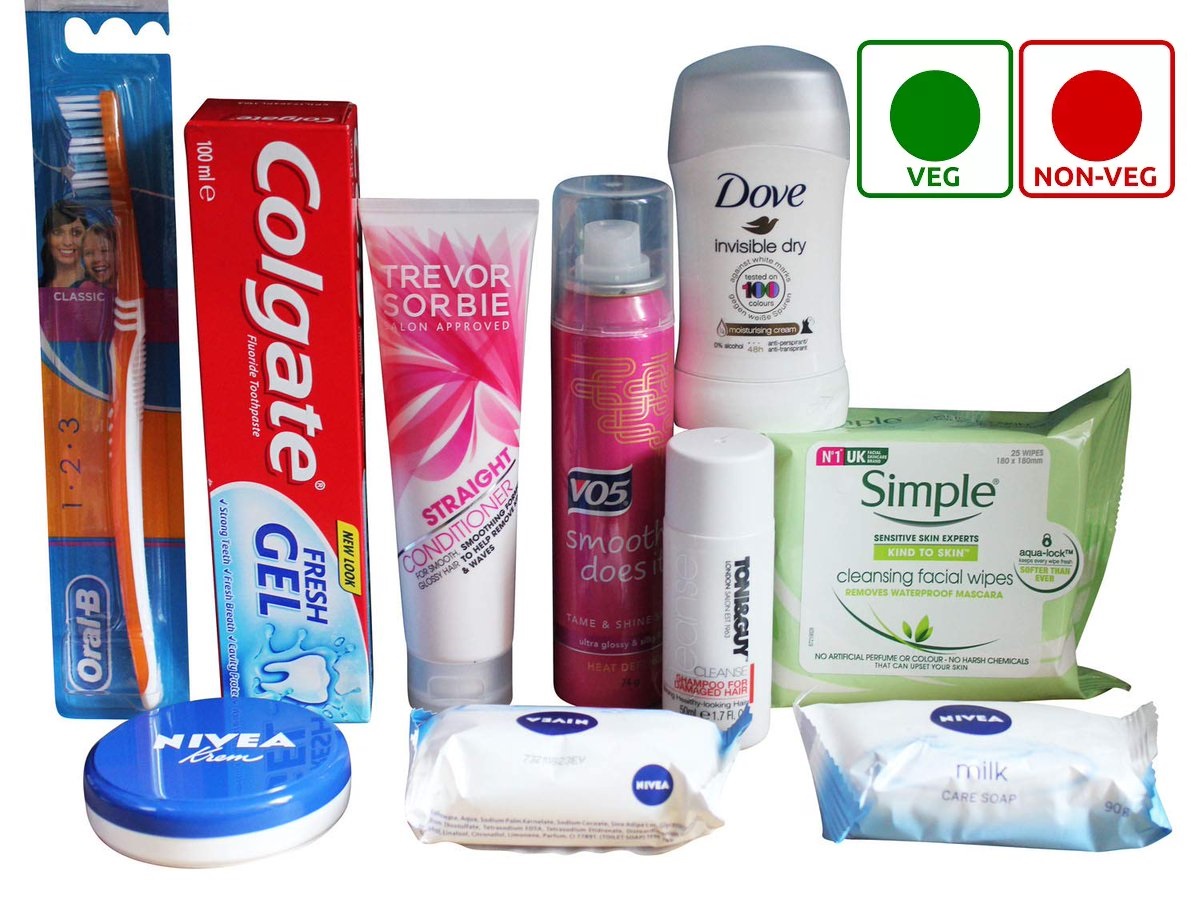
What do the new green and red dots mean?
The basic system is straightforward.
A green dot indicates that the product is of vegetarian origin. A red or brown dot indicates non-vegetarian origin.
The requirement applies to packaged soaps, shampoos, toothpaste, cosmetics and toiletries. The intention is to give shoppers an immediate visual indication about the origin of ingredients used in the product rather than making them rely entirely on lengthy ingredient lists.
For consumers who avoid animal-derived ingredients for religious, cultural, ethical or personal reasons, the change could make shopping simpler. Instead of trying to determine the origin of every unfamiliar chemical or cosmetic ingredient, shoppers will have a standardised symbol on the package.
However, the classification is specifically about vegetarian or non-vegetarian origin. It should not automatically be interpreted as a broader claim about whether a product is vegan, cruelty-free or free from animal testing.
Those are separate issues and can involve different standards and certifications.
Is this actually a new rule?
Not exactly.
The requirement for colour-coded markings on personal-care products dates back to an amendment made in 2014. At that time, the requirement was included under Rule 6(8) of the Legal Metrology (Packaged Commodities) Rules.
The September 2026 amendment changes the legal structure of that requirement. It inserts a new clause, Rule 6(4A)(d), specifically covering soaps, shampoos, toothpaste, cosmetics and toiletries, while omitting the earlier Rule 6(8).
In other words, the latest notification does not simply introduce the concept of vegetarian and non-vegetarian markings for the first time. Instead, it places the requirement under a revised provision and formally reinforces the packaging obligation.
The notification, identified as G.S.R. 826(E), was issued by the Department of Consumer Affairs on September 21, 2026. The amended rules took effect immediately upon publication in the Gazette.
Why has the issue returned to the spotlight?
The labelling requirement has been the subject of regulatory and legal discussion for years.
One complication has been that cosmetics and toiletries are also governed by a separate regulatory framework, including the Cosmetics Rules, 2020. This created questions about how the Legal Metrology requirements should interact with the regulatory system governing cosmetics.
The issue reached the Delhi High Court, which in February 2026 dealt with a challenge involving the labelling requirement and directed the relevant regulatory authorities to work towards a clearer position. The latest amendment now provides a more explicit formulation within the Legal Metrology Rules.
That background is important because the September 2026 notification represents more than a packaging change. It is also an attempt to provide a clearer regulatory basis for a requirement that has been debated for years.
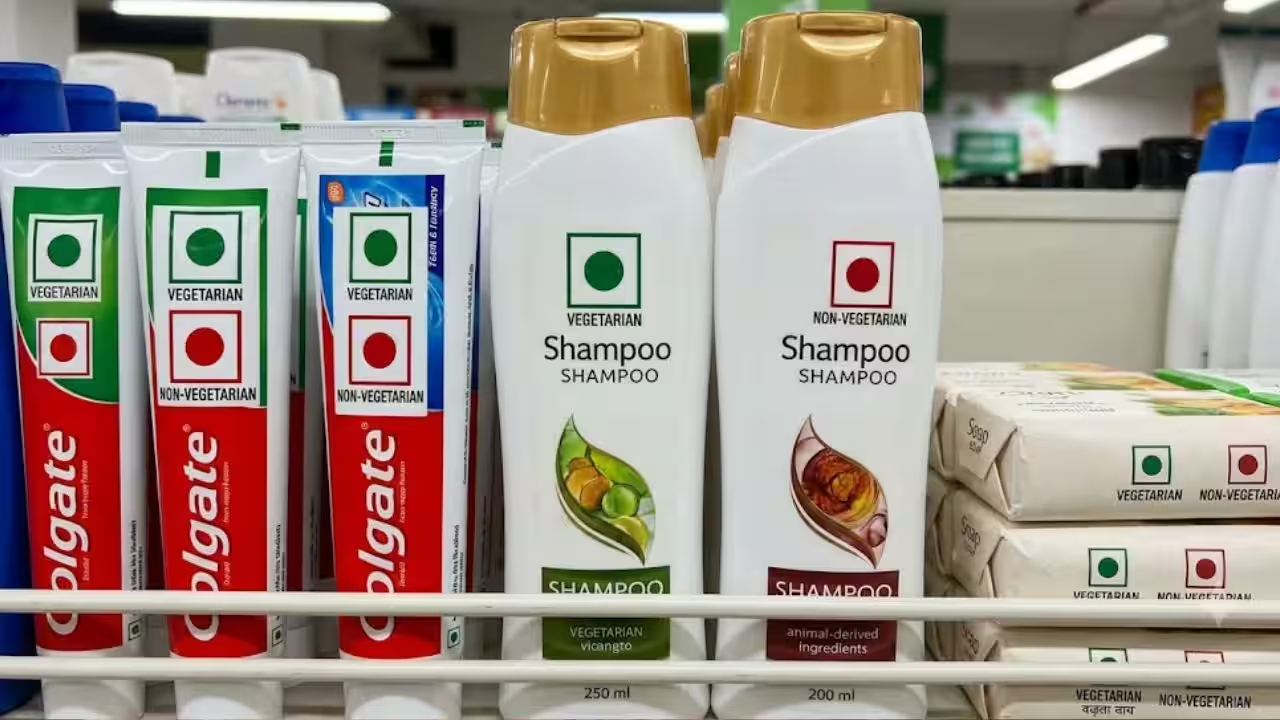
Why ingredient origin matters in soaps and cosmetics
Unlike food, personal-care products can contain ingredients whose origins are not immediately obvious from their names.
For example, ingredients such as glycerin, stearic acid and certain fatty acids can potentially be sourced from either plant or animal materials, depending on how they are manufactured and supplied.
Other ingredients used in some cosmetic formulations, such as collagen, keratin, lanolin or gelatin, are associated with animal sources.
That does not mean every product containing a particular ingredient is automatically non-vegetarian. The origin of the ingredient and the formulation used by the manufacturer matter.
This is one reason why the new labelling requirement could be significant for consumers who previously had to research individual ingredients or contact manufacturers to establish their source.
The new symbol is designed to shift that information from the fine print to a prominent position on the package.
What other information must personal-care products carry?
The new vegetarian/non-vegetarian symbol is only one part of India's broader packaging requirements.
Cosmetics and toiletries are already required to carry various declarations, including details such as the product name, manufacturer information, net quantity, batch number, manufacturing licence information and manufacturing or expiry details, as applicable.
Imported products must also provide relevant importer or authorised-agent information.
Packaging rules additionally cover declarations concerning maximum retail price, directions for safe use and warnings or precautions where applicable. Ingredient declarations are also regulated, with ingredients present above specified concentrations required to be listed in a prescribed manner.
The new colour-coded declaration therefore becomes another visible piece of information alongside the existing mandatory packaging details.
What does the rule mean for manufacturers?
For manufacturers, the change will require greater attention to the origin of raw materials used in covered products.
Companies will need to establish whether their formulations qualify for the vegetarian or non-vegetarian classification and ensure that the appropriate symbol appears on packaging.
That could involve reviewing supplier declarations, tracing the source of ingredients and updating artwork used for product packaging.
The practical challenge may be particularly relevant for ingredients that can have multiple sources. A chemical name on a formulation sheet may not by itself reveal whether the material came from a plant, animal or synthetic source.
Manufacturers and importers will therefore need reliable information from their supply chains to make the appropriate declaration.
The government notification itself is concise: it specifies the categories covered, the colours to be used and where the mark must appear on the package.
Will consumers immediately see the new labels?
The amendment is already in force, but consumers may not see the new markings on every product overnight.
Retail shelves typically contain products manufactured and packaged at different times. Companies also have existing inventories, packaging material and products moving through distribution networks.
As manufacturers update packaging to comply with the amended rules, the symbols are expected to become increasingly visible on covered products.
For shoppers, the easiest place to look will be the top portion of the main display panel on the package.
A green dot will indicate vegetarian origin, while a red or brown dot will indicate non-vegetarian origin.
What shoppers should remember
The most important distinction is that the new symbol answers a specific question: is the product of vegetarian or non-vegetarian origin?
It does not, by itself, answer every question a consumer may have about a cosmetic product.
For example, someone looking for a vegan product may need to check additional information because vegetarian and vegan classifications are not necessarily identical. Similarly, the symbol does not by itself certify a product as cruelty-free.
Consumers should also continue checking ingredient lists, manufacturer information and any additional certifications relevant to their particular requirements.
A small dot with a bigger role
For something as ordinary as a bar of soap or a tube of toothpaste, a tiny coloured dot may seem like a minor packaging change. But the new rule touches a broader question of consumer information: how easily should people be able to understand what they are buying?
The September 2026 amendment gives vegetarian and non-vegetarian origin a prominent place on the packaging of soaps, shampoos, toothpastes, cosmetics and toiletries.
And while the requirement has roots going back to 2014, its formal restructuring in 2026 gives the labelling system a renewed regulatory footing.
For consumers, the change is likely to be noticed in the simplest possible way — by looking at the front of the package before putting a product into the shopping basket.
Green means vegetarian origin. Red or brown means non-vegetarian origin. For everyday toiletries, that distinction is now set to become much harder to miss.
With input from agencies
Image Source: Multiple agencies
© Copyright 2026. All Rights Reserved. Powered by Vygr Media.