 By
By 
India's ambitious Mumbai-Ahmedabad Bullet Train project has crossed another significant milestone with excavation work beginning on the country's first undersea rail tunnel beneath Thane Creek. The launch of the second Tunnel Boring Machine (TBM), coupled with the successful installation of a massive 80-metre steel bridge, marks a crucial phase in the nation's first high-speed rail corridor and showcases the rapid pace of construction on one of India's most complex infrastructure projects.
The latest developments not only demonstrate engineering progress but also reinforce the government's commitment to delivering India's maiden bullet train corridor, which is expected to transform intercity travel between Mumbai and Ahmedabad.
Second Tunnel Boring Machine Begins Excavation Beneath Thane Creek
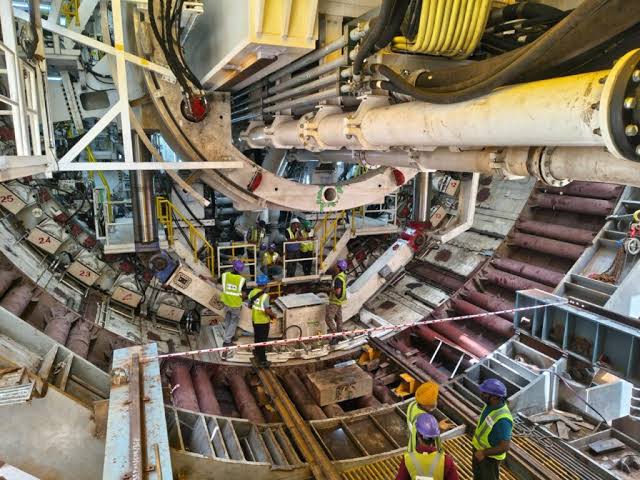
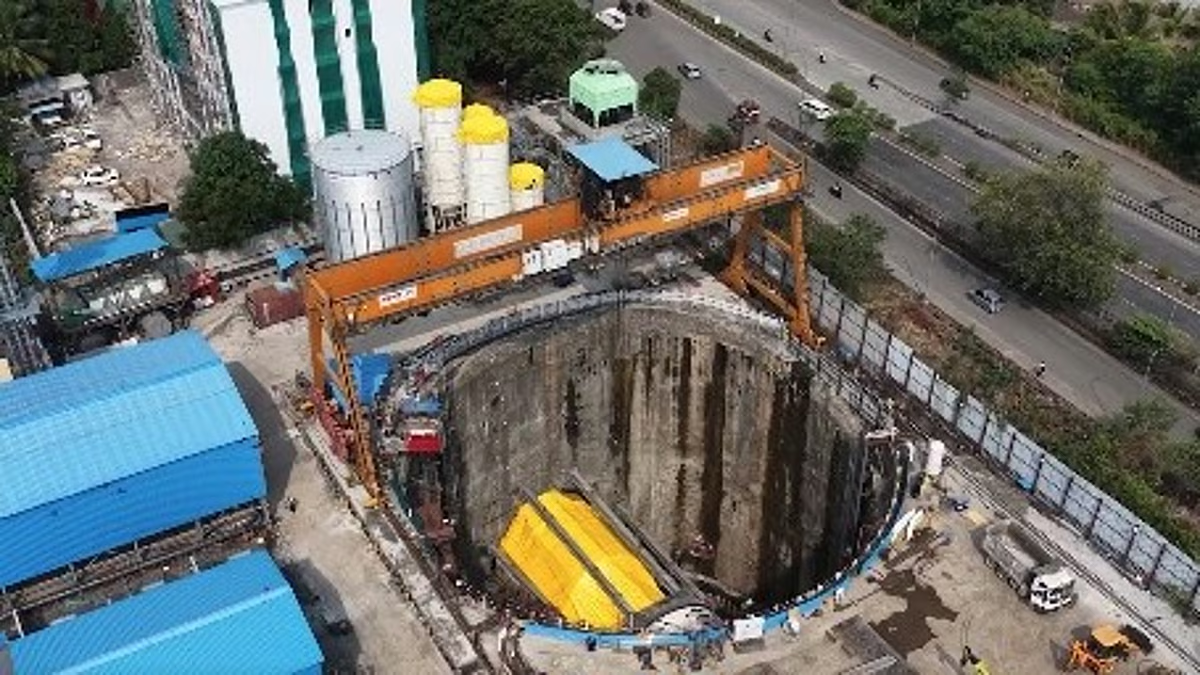
The National High Speed Rail Corporation Limited (NHSRCL) has commenced excavation using the second Tunnel Boring Machine for the underground section of the Mumbai-Ahmedabad High-Speed Rail (MAHSR) corridor. According to the Press Information Bureau (PIB), the TBM has started its journey from a launch shaft approximately 39 metres below ground level, where engineers will construct one of India's most technically demanding railway tunnels.
The tunnel beneath Thane Creek represents India's first undersea railway tunnel and is considered one of the defining engineering achievements of the bullet train project. The underground section stretching from Mumbai's Bandra-Kurla Complex (BKC) towards Shilphata is around 21 kilometres long, of which nearly seven kilometres will be underground through the Thane Creek region, including an approximately 1.8-kilometre stretch passing directly beneath the seabed.
The deployment of the second TBM follows the launch of the first machine earlier this month, allowing excavation to proceed simultaneously from different points and significantly accelerate tunnel construction. Together, the two machines are expected to play a pivotal role in completing the underground corridor within the planned schedule.
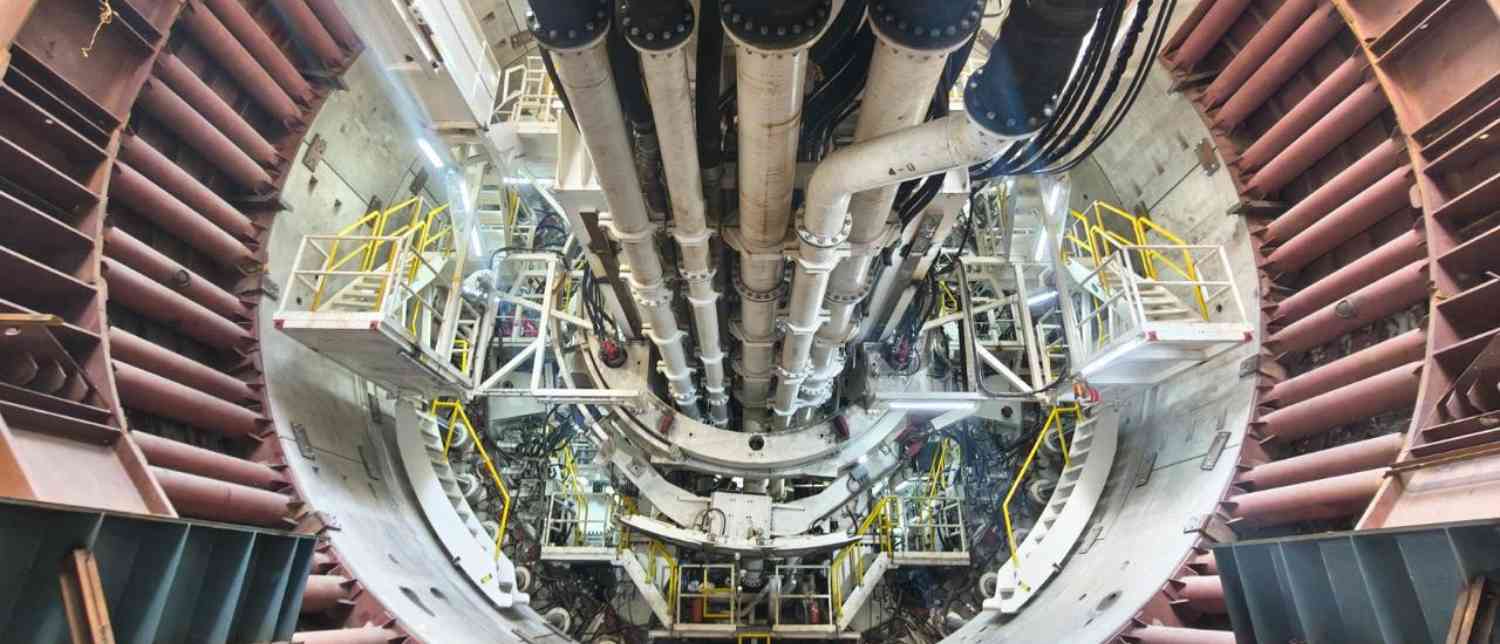
One of India's Largest Tunnel Boring Machines
The TBMs being deployed for the project rank among the largest tunnel boring machines ever used in India. These sophisticated machines are designed to excavate through varying geological conditions while simultaneously installing precast concrete tunnel lining segments, ensuring structural stability throughout the excavation process.
Engineers have equipped the tunnel with advanced waterproofing systems, modern ventilation arrangements, emergency evacuation provisions, and multiple safety mechanisms to meet international standards followed in high-speed rail construction.
The challenging geology beneath Thane Creek requires continuous monitoring as the machine cuts through soft soil, rock formations, and sections beneath water bodies without disturbing marine ecosystems or existing urban infrastructure above ground.
Why the Undersea Tunnel Matters
The undersea tunnel is among the most technologically advanced components of the Mumbai-Ahmedabad Bullet Train corridor. Instead of constructing elevated tracks across environmentally sensitive mangrove regions and densely populated urban areas, planners opted for an underground alignment that minimizes environmental impact while maintaining operational efficiency.
Building beneath Thane Creek allows the project to avoid extensive disruption to protected ecological zones while creating a direct connection between Mumbai and the elevated sections of the corridor further north.
Experts believe successful execution of the tunnel will establish India's capability to undertake complex underground transportation projects comparable to those executed in Japan and Europe.
Massive 80-Metre Steel Bridge Installed
Alongside the tunnelling milestone, NHSRCL has also successfully launched an 80-metre-long steel bridge as part of the bullet train corridor. The bridge installation represents another engineering achievement that supports uninterrupted progress across multiple construction fronts.
The steel bridge was assembled using heavy-duty launching equipment before being carefully positioned over its designated alignment. Such bridges are critical because they allow the high-speed corridor to cross existing transport infrastructure while maintaining the precise geometry required for trains operating at speeds of up to 320 km/h.
According to project authorities, multiple steel bridges of varying lengths are being constructed across the corridor to overcome highways, railways, rivers, and other natural obstacles.
Progress Across the 508-km High-Speed Corridor
The Mumbai-Ahmedabad High-Speed Rail project extends approximately 508 kilometres, connecting Maharashtra and Gujarat through India's first dedicated high-speed rail line. Once operational, trains are expected to run at speeds of up to 320 km/h, dramatically reducing travel time between the two major economic centres.
Construction activity has accelerated considerably over the past year.
Significant milestones already achieved include:
-
Completion of hundreds of kilometres of viaduct construction.
-
Ongoing track laying on completed sections.
-
Construction of multiple high-speed rail stations.
-
Progress on mountain tunnels and underground sections.
-
Launch of both Tunnel Boring Machines for Mumbai's underground corridor.
-
Installation of several major steel bridges across the alignment.
The project involves thousands of engineers, workers, and specialists operating simultaneously across Gujarat and Maharashtra.
Japanese Technology Meets Indian Execution
The Mumbai-Ahmedabad Bullet Train project is being developed with Japanese Shinkansen technology, regarded globally as one of the safest and most reliable high-speed rail systems.
While Japan is providing technological expertise and financial assistance, much of the civil construction is being executed by Indian companies, reflecting increasing domestic capability in delivering large-scale infrastructure projects.
The tunnel excavation itself combines international engineering standards with extensive Indian expertise in geotechnical engineering, heavy machinery operation, and large underground construction.
Officials say knowledge gained during this project will strengthen India's ability to undertake future metro, railway, and underground transportation infrastructure nationwide.
Engineering Challenges Beneath the Creek
Constructing an undersea railway tunnel is significantly more complex than conventional tunnelling.
Engineers must continuously monitor groundwater pressure, soil movement, and machine alignment while ensuring complete waterproofing throughout excavation. Even minor deviations can affect tunnel integrity, making precision essential.
The TBM continuously excavates soil while installing reinforced concrete lining rings immediately behind the cutting head. This method minimizes ground settlement and maintains structural stability beneath the creek.
Project teams also rely on sophisticated monitoring systems that provide real-time data on pressure, vibration, and tunnel alignment throughout the excavation process.
Transforming India's High-Speed Rail Future
The Mumbai-Ahmedabad corridor is widely viewed as the foundation of India's future high-speed rail network.
Beyond reducing travel time, the project is expected to stimulate regional economic growth, improve business connectivity, encourage tourism, and generate employment across multiple sectors.
Infrastructure experts believe the experience gained in constructing India's first undersea railway tunnel will pave the way for more technically advanced rail projects in the coming decades.
With tunnelling now progressing from multiple fronts and major civil works advancing steadily across the alignment, the project has entered one of its most visible phases of construction. Each milestone—from launching giant tunnel boring machines beneath Thane Creek to installing massive steel bridges—brings India closer to realizing its long-envisioned bullet train network.
As excavation continues beneath the creek and structural works advance above ground, the Mumbai-Ahmedabad Bullet Train project is steadily transforming from an ambitious vision into one of the country's most remarkable engineering achievements.
With input from agencies
Image Source: Multiple agencies
© Copyright 2026. All Rights Reserved. Powered by Vygr Media.