
 By

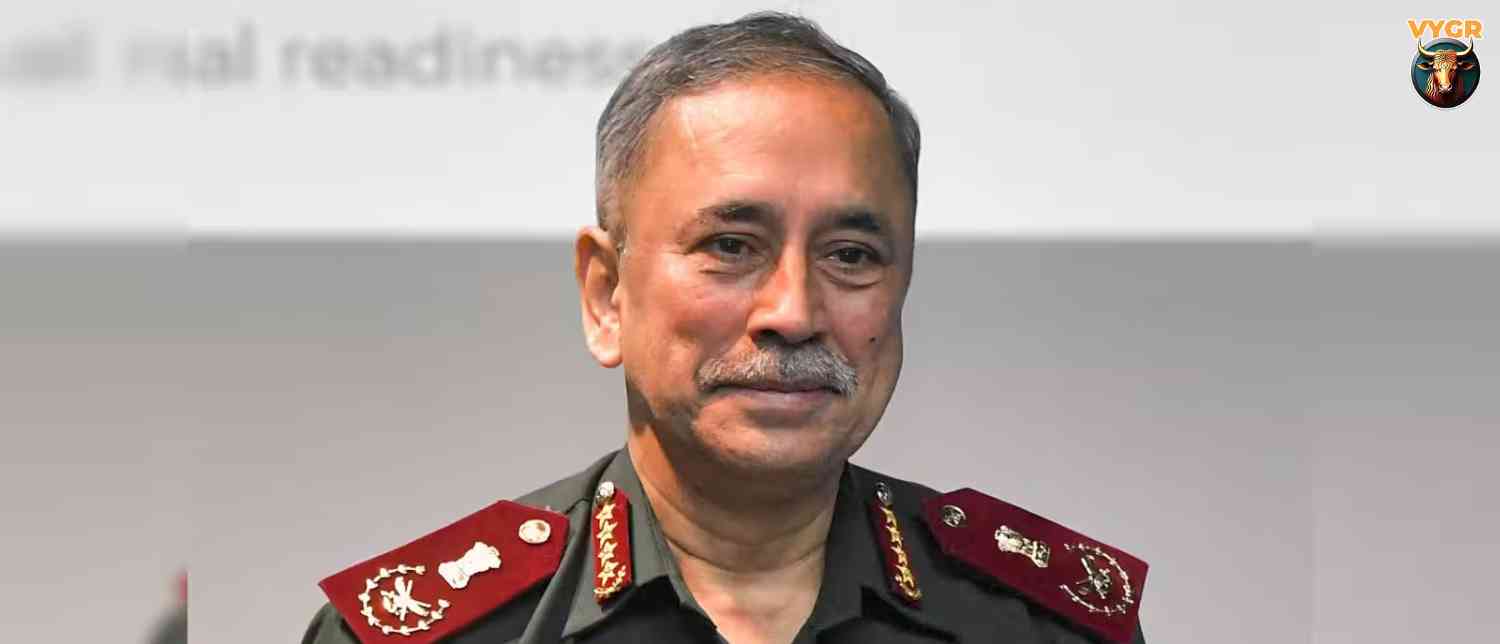
India’s top military officer has raised a flag that strategists have been quietly discussing for some time. The Chief of Defence Staff (CDS) has pointed to Pakistan’s growing space capabilities, supported by China and possibly Turkey. He says India needs to speed up its own space-based military assets to keep its strategic edge.
The remark is brief, but it carries weight. It shows how the next phase of South Asian security may be shaped as much by satellites in orbit as by tanks on the ground.
What the Defence Chief Actually Said
The CDS has drawn attention to a shift in the regional balance. Pakistan has long lagged behind India in space, but it is now building capacity with outside help. China is the clear backer. Turkey could become a supporting partner.
His message was practical rather than alarmist. India should not wait for the gap to narrow before acting. It should accelerate the development of military space assets, from surveillance and communication to navigation and early warning.
Why Space Matters So Much in Modern Warfare
Not long ago, space was mostly about weather forecasts, television broadcasts and scientific pride. Today it sits at the centre of how armed forces fight.
- Surveillance: Satellites track troop movements, airfields, ports and missile deployments in near real time.
- Communication: Secure satellite links keep commanders connected to units across mountains, deserts and oceans.
- Navigation: Precision-guided weapons, drones and ships depend on satellite positioning to find targets and stay on course.
- Early warning: Space sensors can detect missile launches and give decision-makers precious minutes.
A military that sees the battlefield clearly and talks to its forces without interruption has a major advantage. A military that is blind or cut off is exposed.
Pakistan’s Growing Space Ambitions
Pakistan has been expanding its presence in orbit. In recent times it has launched Earth-observation satellites and reached for new partnerships to strengthen its eyes in the sky. The aim appears to be clear: close the intelligence and surveillance gap with India.
Analysts say the experience of the May 2025 conflict exposed how important timely satellite imagery and data are in a crisis. Since then, Islamabad’s push for better space-based awareness has gathered pace. Even modest satellite capability becomes much more significant when it is paired with a powerful partner’s resources.
The China Factor
China is the biggest reason the CDS’s warning matters. Beijing operates one of the largest and most advanced military space networks in the world. It has a large fleet of reconnaissance and communication satellites, its own navigation system, and a mature launch industry.
Pakistan and China already have a deep defence relationship. Beijing is Islamabad’s principal supplier of military hardware and a long-standing strategic partner. Extending that cooperation into space makes sense for both sides. It gives Pakistan access to capabilities it could not build alone, and it gives China a stronger partner on India’s western flank.
For India, this raises a hard possibility. In a future crisis, Pakistan could benefit from the surveillance reach of a far larger space power. That would change how Indian planners think about a two-front challenge, with pressure from both the north and the west.
Where Does Turkey Fit In?
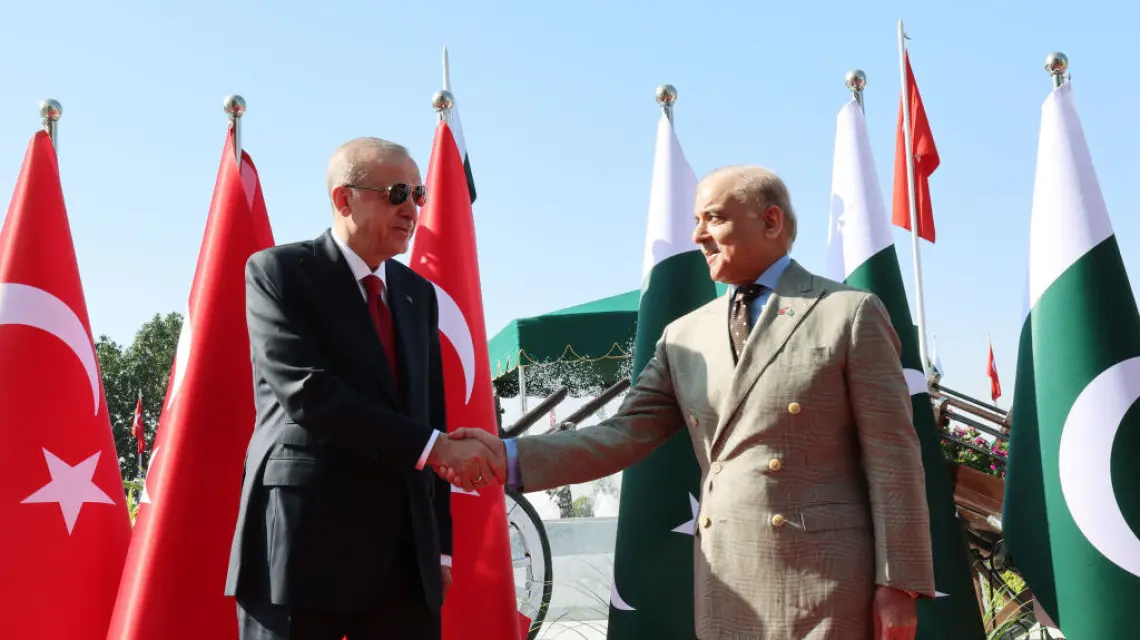
Turkey’s role is less clear, but it is worth watching. Ankara and Islamabad have grown closer on defence, with cooperation spanning drones, naval platforms and technology. Turkey also has a growing space and aerospace industry of its own.
The CDS’s careful wording matters here. He spoke of Turkey’s help as a possibility rather than a certainty. Still, even the prospect of a third country adding technical know-how or capacity to Pakistan’s space efforts adds another layer of complexity to India’s planning.
What This Means for India
India is not starting from zero. It is one of the world’s established space powers, with a strong civilian programme and a growing set of dedicated military satellites. It has also shown technological confidence, including its 2019 anti-satellite test.
But the CDS’s message is that being ahead today does not guarantee being ahead tomorrow. Several priorities stand out.
- Build more military satellites, faster. India has been working on a large constellation of surveillance satellites to give its forces round-the-clock, all-weather vision. Speeding this up is now a clear priority.
- Strengthen launch capability. If satellites are lost or damaged in a conflict, India must be able to replace them quickly. Reliable, responsive launch systems are as important as the satellites themselves.
- Bring in private industry. India’s growing space start-up sector can add speed, innovation and capacity to what the government and defence forces are building.
- Integrate space into everyday military planning. Satellite data is only useful if the Army, Navy and Air Force can use it together, in real time, at every level of command.
- Protect what is already in orbit. Defending satellites against jamming, cyber attacks and other threats is becoming a core part of national security.
The Bigger Strategic Picture
The CDS’s remarks fit a wider global pattern. Space is becoming a contested domain, and countries are racing to secure their place in it. For South Asia, which is already a tense region with two nuclear-armed neighbours and unresolved disputes, the arrival of space as a military arena adds both opportunity and risk.
There is also a deterrence angle. A country that can see clearly and respond quickly is less likely to be tested. By strengthening its space capabilities, India sends a message that it will not be caught off guard.
A Measured View, Not a Panic Button
It is worth keeping perspective. India remains a considerably more advanced space power than Pakistan. Pakistan’s programme is still developing, and dependence on a foreign partner brings limits and vulnerabilities of its own. Borrowed capability is rarely the same as home-grown strength.
The warning is about direction, not an immediate crisis. The trend is clear, and the CDS wants India to act while it still holds the advantage rather than after it has slipped away.
Final Word
The Defence Chief’s statement is a reminder that tomorrow’s security challenges will be fought in the skies above as much as on land and sea. Pakistan’s space push, backed by China and possibly Turkey, is a development India cannot ignore. The response, as he sees it, is simple to state and harder to deliver: build faster, build smarter and build together.
For a country with India’s scientific talent and growing space industry, that goal is well within reach. The question is how quickly it can be met.
© Copyright 2026. All Rights Reserved. Powered by Vygr Media.