 By
By 
In a landmark achievement for India's infrastructure sector, the strategically vital Zojila Tunnel project has crossed one of its most significant milestones with the successful breakthrough of the main tunnel, bringing the long-awaited dream of year-round road connectivity between Kashmir and Ladakh closer to reality.
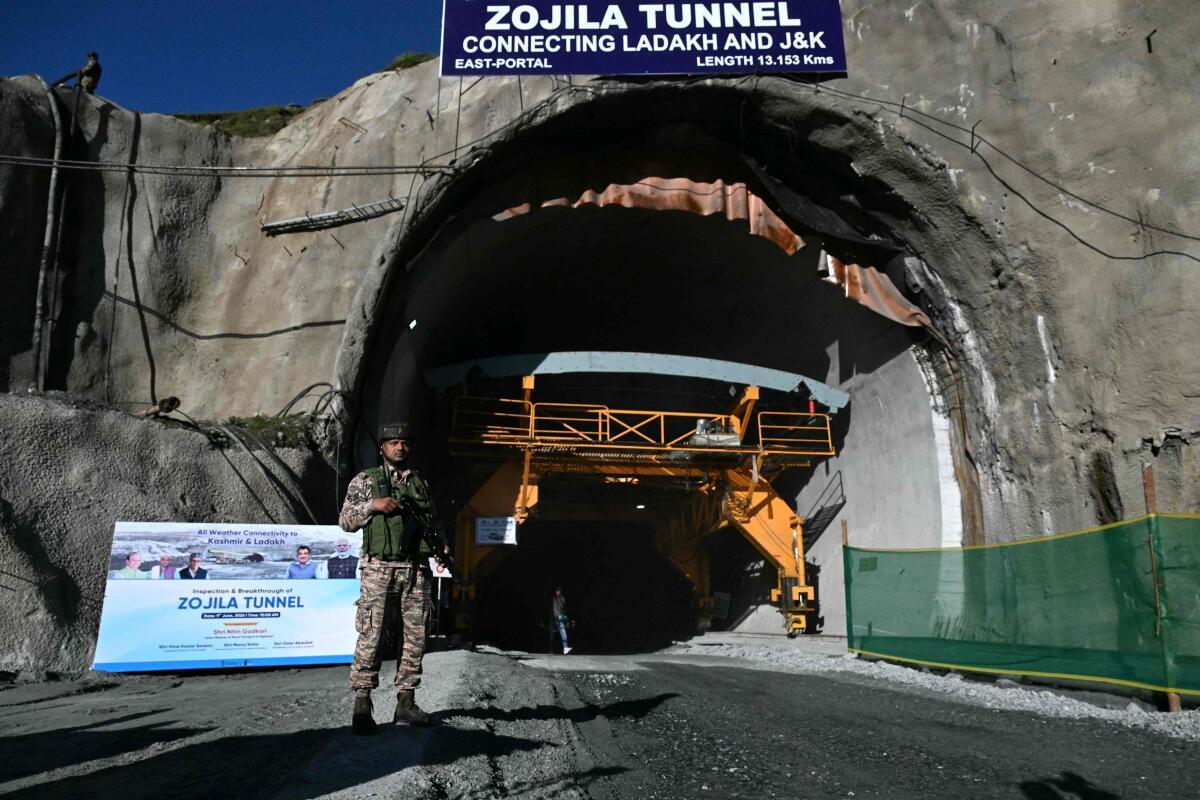
Union Minister for Road Transport and Highways, Nitin Gadkari, marked the occasion by triggering the final breakthrough blast, an engineering feat that connected the two ends of the tunnel being excavated from Baltal in Kashmir and Minamarg in Ladakh. The breakthrough represents the completion of the most critical phase of excavation and signals major progress in one of India's most challenging and strategically important infrastructure projects.
What the Breakthrough Means
In tunnel engineering, a "breakthrough" occurs when excavation teams working from opposite ends successfully meet, creating a continuous passage through the mountain. At Zojila, engineers blasted through the final 2.5 metres of rock, linking both sides of the tunnel beneath the Himalayas. The achievement was completed six months ahead of schedule, according to project officials.
The breakthrough marks the completion of the excavation phase of the project and paves the way for finishing works, including road surfacing, ventilation systems, electrical installations, safety infrastructure, and operational testing before the tunnel becomes fully functional.
A Transformational Project for Kashmir and Ladakh
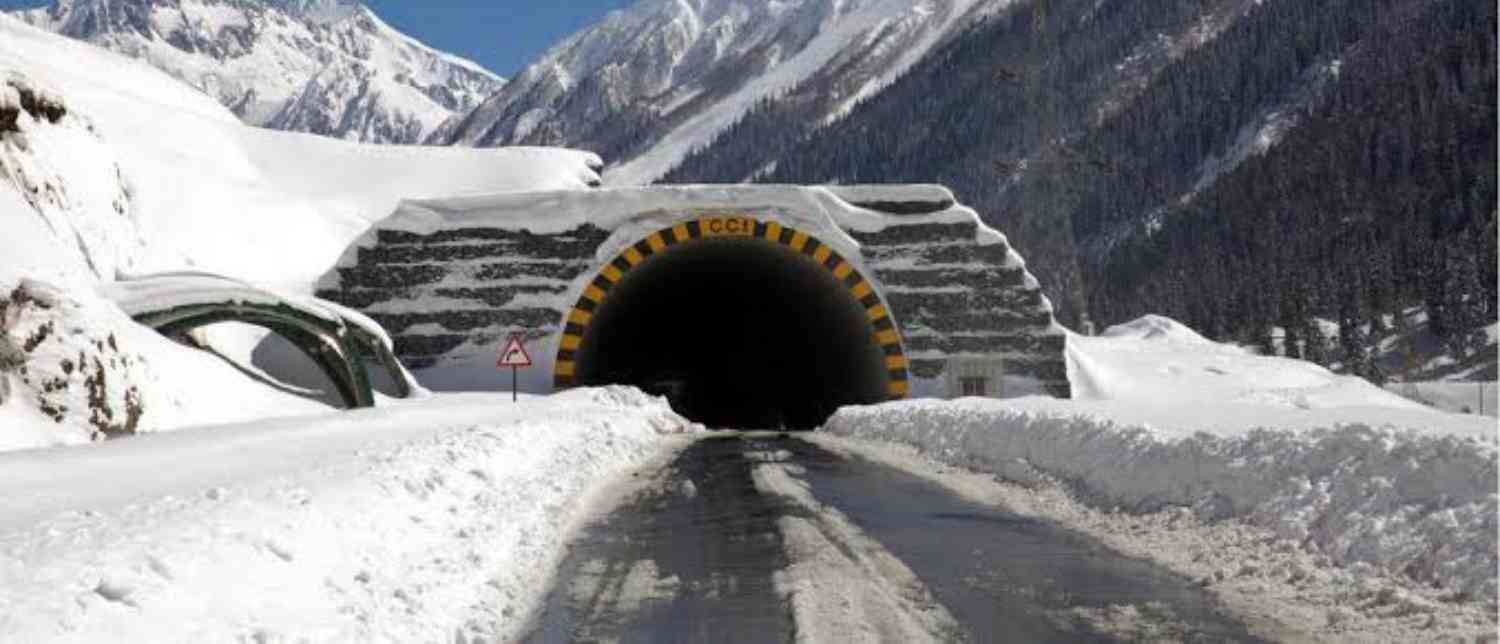
The Zojila Tunnel is being constructed on National Highway-1 and is designed to provide all-weather connectivity between the Kashmir Valley and Ladakh, regions that are frequently cut off from each other during winter due to heavy snowfall across the Zojila Pass. Traditionally, the route remains inaccessible for nearly six months every year, disrupting civilian life, trade, tourism, and military logistics.
Once operational, the tunnel will enable uninterrupted movement between Srinagar, Ganderbal, Sonamarg, Drass, Kargil, and Leh throughout the year. Gadkari described the project as a "lifeline for Ladakh," emphasizing its role in strengthening connectivity, economic activity, and regional development.
Jammu and Kashmir Chief Minister Omar Abdullah termed the breakthrough a historic milestone, noting that year-round connectivity across the Zojila axis had been a long-cherished aspiration. He said the tunnel would significantly improve access to education, healthcare, tourism, trade, and commerce for residents on both sides of the pass.
Engineering Marvel in the Himalayas
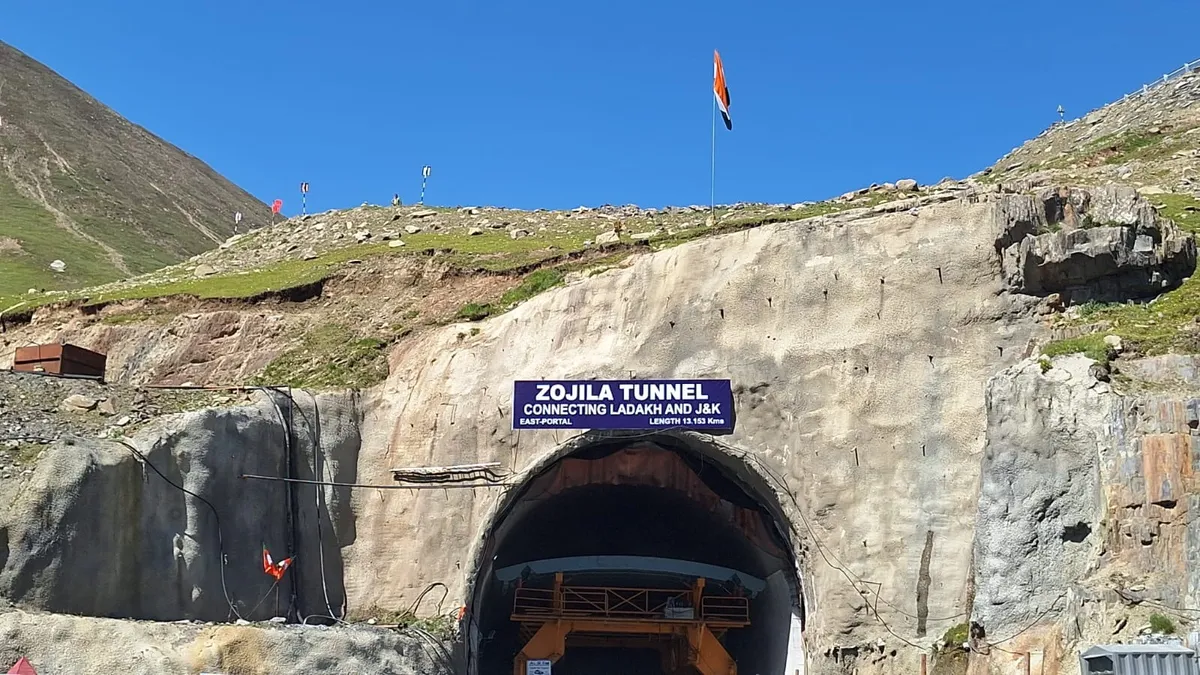
The Zojila Tunnel is widely regarded as one of India's most ambitious and technically demanding road infrastructure projects. Located at an altitude of approximately 11,500 to 11,578 feet above sea level, the tunnel is being built through some of the harshest terrain in the Himalayas. Workers and engineers have had to operate in sub-zero temperatures, often at minus 4 degrees Celsius or lower.
According to Gadkari, nearly 80 percent of the workforce involved in the project came from the local region, working under extremely challenging conditions while maintaining world-class safety standards.
The project is being executed by the National Highways & Infrastructure Development Corporation Limited (NHIDCL), an agency under the Ministry of Road Transport and Highways.
World's Longest High-Altitude Bi-Directional Road Tunnel
The Zojila Tunnel has earned global recognition due to its scale and location. Multiple official sources describe it as the world's longest single-tube bi-directional road tunnel at such a high altitude. The main tunnel stretches approximately 13.15 kilometres, while some project documents reference the overall tunnel length at around 14 kilometres to 14.15 kilometres.
The project includes:
-
The 13.15-kilometre main tunnel.
-
An escape tunnel.
-
Three vertical ventilation shafts.
-
Nearly 18 kilometres of approach roads.
-
Associated road infrastructure linking the Z-Morh Tunnel corridor with the Zojila section.
The entire Zojila package forms part of a larger 33-kilometre connectivity project with an estimated investment of around ₹7,000 crore.
Massive Reduction in Travel Time
One of the most visible benefits of the tunnel will be the dramatic reduction in travel time across the Zojila region.
Currently, traversing the snow-prone pass can take between 90 minutes and more than three hours depending on weather and road conditions. Once the tunnel becomes operational, travel time is expected to fall to approximately 15 minutes.
Specifically, the travel time between Sonamarg and Minamarg along the 38-kilometre stretch is expected to reduce from around one-and-a-half hours to just 45 minutes, while the most difficult crossing through the pass itself will shrink to roughly 15 minutes.
The tunnel will also bypass snowbound and accident-prone sections of the existing highway, significantly improving road safety and reliability.
Strategic Importance for National Security
Beyond civilian mobility, the Zojila Tunnel carries enormous strategic significance.
The Srinagar-Leh corridor serves as a critical supply route for defence forces deployed in Ladakh and other sensitive border regions. Frequent winter closures have historically posed logistical challenges for the movement of troops, equipment, fuel, and essential supplies.
With all-weather connectivity, defence personnel and supplies will be able to move throughout the year, strengthening operational readiness and improving India's strategic infrastructure in a region of considerable geopolitical importance.
Economic and Tourism Benefits
The project is expected to unlock significant economic opportunities across both Kashmir and Ladakh.
Improved connectivity will facilitate freight movement, lower transportation costs, enhance market access, and support local businesses. Remote communities that remain isolated during winter will gain dependable access to goods and services.
Tourism is also expected to receive a major boost. Year-round road access will make destinations such as Sonamarg, Drass, Kargil, and Leh more accessible to visitors, reducing seasonal disruptions and expanding tourism activity beyond traditional summer months.
Timeline and Current Progress
The project has now crossed the excavation stage and is estimated to be around 85 percent complete. Following the breakthrough, construction teams will focus on finishing works and installation of operational systems.
The tunnel is currently scheduled for commissioning by February 2028. Once completed, it is expected to become one of the most significant transportation assets in northern India.
Part of a Larger Tunnel-Building Push
The Zojila breakthrough also highlights India's broader effort to expand all-weather connectivity through mountain regions.
According to officials, 54 tunnels have been completed across the country over the past 11 years at a cost of approximately ₹20,000 crore. Currently, work is underway on 128 tunnels with investments totaling around ₹1.12 lakh crore.
By 2027-28, authorities expect to complete 51 additional tunnels spanning 106 kilometres at an estimated cost of ₹40,000 crore. Detailed Project Reports are also being prepared for 77 more tunnels covering 194 kilometres.
In Jammu and Kashmir alone, several key tunnel projects are progressing, including the Digdol-Khooni Nala Tunnel, Sungal Tunnel, Bhimber Gali Tunnel, Singhpora-Vailoo Tunnel, Sudhmahadev Tunnel, a parallel tunnel to the Chenani-Nashri corridor, and proposed tunnels at Sadhna Pass and Peer Ki Gali. Officials note that 20 of the 25 approved road tunnels between Jammu and Srinagar have already been completed, with work continuing on the remaining projects.
A Defining Moment for Himalayan Infrastructure
The successful breakthrough of the Zojila Tunnel stands as a defining moment in India's infrastructure journey. Constructed beneath one of the country's most challenging mountain passes, the project represents years of engineering innovation, perseverance, and large-scale coordination.
When the tunnel opens to traffic, it will do far more than shorten travel times. It will ensure uninterrupted connectivity between Kashmir and Ladakh, strengthen national security, enhance trade and tourism, and transform the lives of communities that have long battled seasonal isolation. For a region where winter often dictates mobility, the Zojila Tunnel promises a future where connectivity no longer depends on the weather.
With inputs from agencies
Image Source: Multiple agencies
© Copyright 2026. All Rights Reserved. Powered by Vygr Media.