

 By
By 
In an increasingly globalised labour market, where talent moves faster than borders can adapt, one trend is becoming impossible to ignore: Indian professionals working overseas are commanding some of the highest wages among global workforces. From Germany to the United States and the United Kingdom, recent data shows that Indians are not just participating in advanced economies — they are excelling at the very top of them.
Nowhere is this more visible than in Germany, Europe’s largest economy, where Indian nationals have emerged as the highest-paid full-time employees across all nationalities. A comprehensive evaluation by the German Economic Institute (Institut der deutschen Wirtschaft, IW), based on 2024 employment data from the Federal Employment Agency, places Indian professionals firmly at the summit of Germany’s wage ladder.
The figures are striking, but the story behind them is far more revealing. This is not a tale of nationality-based privilege. It is a case study in how skills, education, migration policy, and demographic timing intersect to reshape modern labour markets.

Indians Top Germany’s Wage Rankings — By a Significant Margin
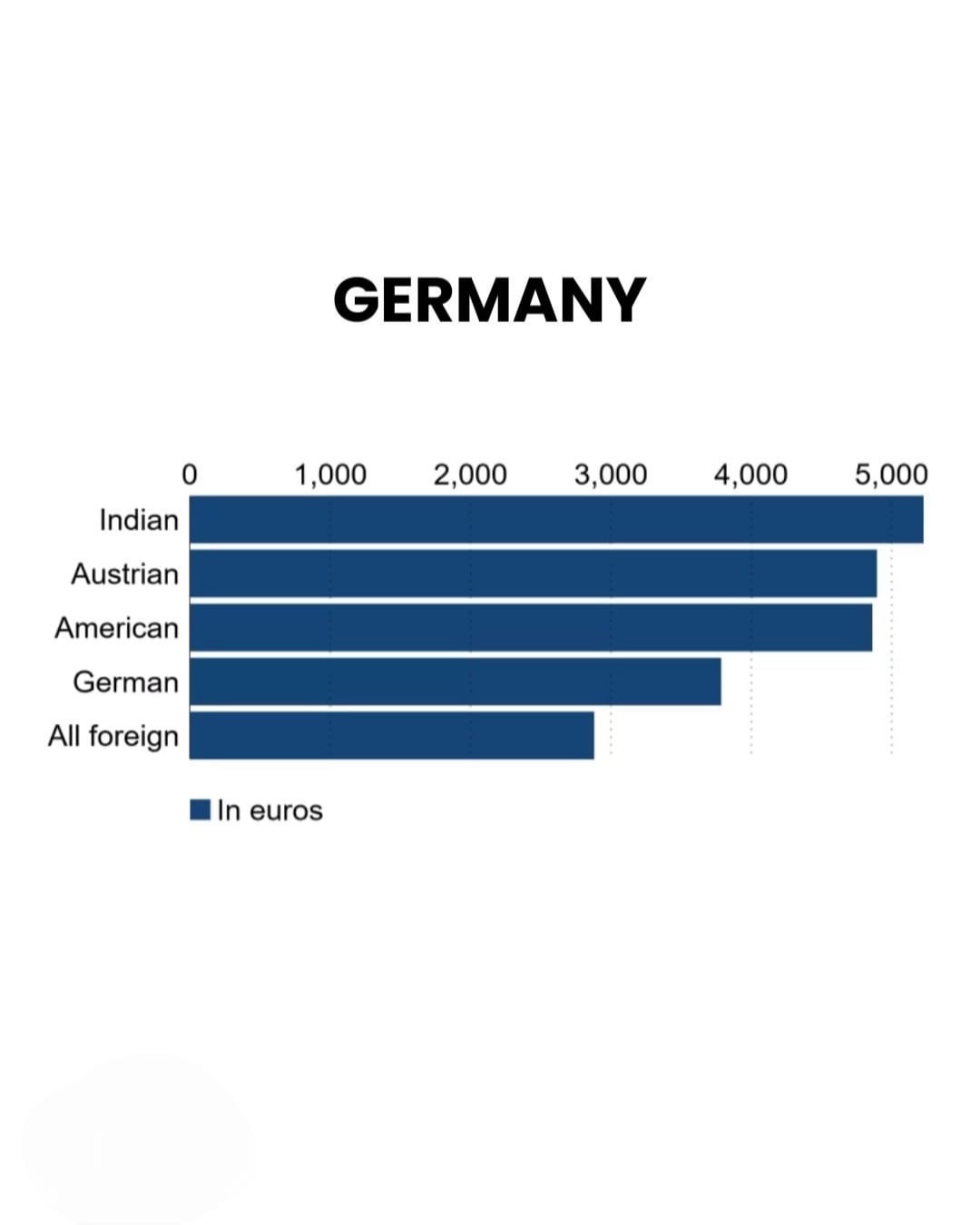
According to the IW study, Indian nationals employed full-time in Germany earned a median gross monthly wage of €5,393 in 2024. This places them ahead of workers from Austria (€5,322), the United States (€5,307), Ireland and the United Kingdom (€5,233), and well above German nationals themselves, whose median wage stood at €4,177.
The contrast becomes even sharper when compared with the broader migrant workforce. Across all foreign employees in Germany, the median gross monthly wage is €3,204 — more than €2,100 lower than that earned by Indian professionals.
Even among other European and global cohorts, the Indian figure stands out. Workers from Northern Europe earned a median of €5,114, Chinese nationals €4,888, and employees from Switzerland and Liechtenstein €4,809. At the lower end of the spectrum, Romanian workers earned €2,762, Syrians €2,750, and Bulgarians €2,681.
Converted at an approximate exchange rate of €1 = ₹105.6, the median monthly earnings of Indian professionals in Germany amount to nearly ₹5.7 lakh, underlining the scale of the wage premium.
Yet the IW study is careful to emphasise that this is not a nationality dividend. Indians are not paid more because they are Indian. They are paid more because of where they work, what they do, and the skills they bring.
It’s Not Origin — It’s Occupation
Analysing wage data by nationality can easily provoke uncomfortable conclusions about fairness or bias. The German Economic Institute avoids this trap by grounding its findings in occupational structure rather than identity.
The central explanation for Indian professionals’ high earnings lies in their overwhelming concentration in high-skill, high-demand sectors, particularly science, technology, engineering, and mathematics — known in Germany as MINT professions (Mathematik, Informatik, Naturwissenschaften, Technik).
These are not peripheral jobs. They sit at the heart of Germany’s industrial and innovation ecosystem, spanning engineering, information technology, artificial intelligence, pharmaceuticals, clean energy, and advanced manufacturing. Crucially, these sectors have faced persistent and deepening talent shortages, pushing wages structurally higher.
Indian professionals are disproportionately represented in academic, technical, and research-intensive roles, where advanced qualifications are mandatory and global competition for talent is fierce. In effect, they are filling exactly the jobs Germany struggles most to staff domestically.
As the IW analysis makes clear, Indian workers are not earning more despite the German labour market — they are earning more because they are supplying the labour market’s most acute needs.
A Dramatic Shift in Skill Migration
The transformation has not been incremental; it has been rapid and pronounced. Since 2012, the number of Indians employed in STEM professions in Germany has increased nearly ninefold. By 2024, more than 32,800 Indian professionals were working in MINT occupations.
Age demographics further sharpen the picture. Around one-third of full-time Indian employees aged between 25 and 44 are now working in STEM roles. This cohort represents the most economically productive segment of the workforce — combining advanced education, adaptability, and long-term career potential.
For German employers grappling with an ageing population and a shrinking domestic labour pool, this group is exceptionally valuable. It delivers immediate productivity while also offering continuity over decades.
In practical terms, Germany has become a key destination for highly specialised Indian engineers, IT professionals, researchers, and scientists trained to operate at the cutting edge of their fields.
Why German Workers Earn Less — And Why That’s Not the Point
The fact that German nationals earn a lower median wage than Indian professionals often attracts headlines, but the comparison requires context.
German workers span the full breadth of the economy — from low-wage service jobs to highly paid technical roles. By contrast, many foreign professionals, particularly from India, are recruited selectively for specific high-paying occupations through employer-sponsored visas and qualification-based immigration routes.
This structural difference explains why Austrian and American workers also rank highly in the wage table. The IW notes that their elevated earnings partly reflect employment in economically strong urban regions, where pay levels are generally higher.
Indian workers, however, stand apart. Their wage advantage is driven less by geography and more by occupational concentration. In other words, it is not where they live, but what they do.
Beyond Paycheques: India’s Growing Role in German Innovation
Income is only one dimension of economic impact. The IW study highlights a parallel surge in the innovative contribution of Indian professionals to Germany’s knowledge economy.
Patent data offers a compelling metric. Since 2000, patent applications involving inventors of Indian origin have increased more than twelvefold, with growth accelerating between 2000 and 2022. This rise reflects Indian professionals’ deepening involvement in research and development, particularly in engineering, pharmaceuticals, artificial intelligence, and green technology.
For a country whose global competitiveness depends heavily on innovation-led growth, this contribution is not incidental — it is foundational.
As IW expert Axel Plünnecke notes, “Without qualified immigration, economic growth in Germany would hardly be possible today — especially in STEM professions and in terms of innovation.”
From Indian Classrooms to German Research Labs
Another critical driver of this trend is education. Germany has witnessed a sharp rise in Indian students enrolling in its universities over the past decade. Many of them complete advanced degrees in technical and scientific disciplines, then transition directly into the labour market.
This education-to-employment pipeline has strengthened Germany’s research ecosystem while offering Indian graduates access to world-class facilities and global career pathways. The result is a virtuous cycle: students become skilled professionals, who become innovators, who reinforce Germany’s demand for international talent.
Policy Choices That Made the Difference
Germany’s reliance on Indian talent did not emerge by accident. Since 2012, successive governments have actively pursued skilled immigration from non-EU countries, with a strong focus on academic and technical professions.
In 2024, the government led by then Chancellor Olaf Scholz introduced a raft of measures designed to ease immigration from India, streamline recognition of qualifications, and improve pathways from education to employment.
These policies were a direct response to structural labour shortages driven by demographic change. The IW study suggests they are now yielding tangible results — not only filling vacancies, but attracting a workforce that is both highly skilled and highly paid.
Plünnecke has stressed the importance of sustaining this momentum, calling for faster procedures, clearer rules, and stronger support systems for international students and professionals entering the German labour market.
A Global Pattern Extends Beyond Germany
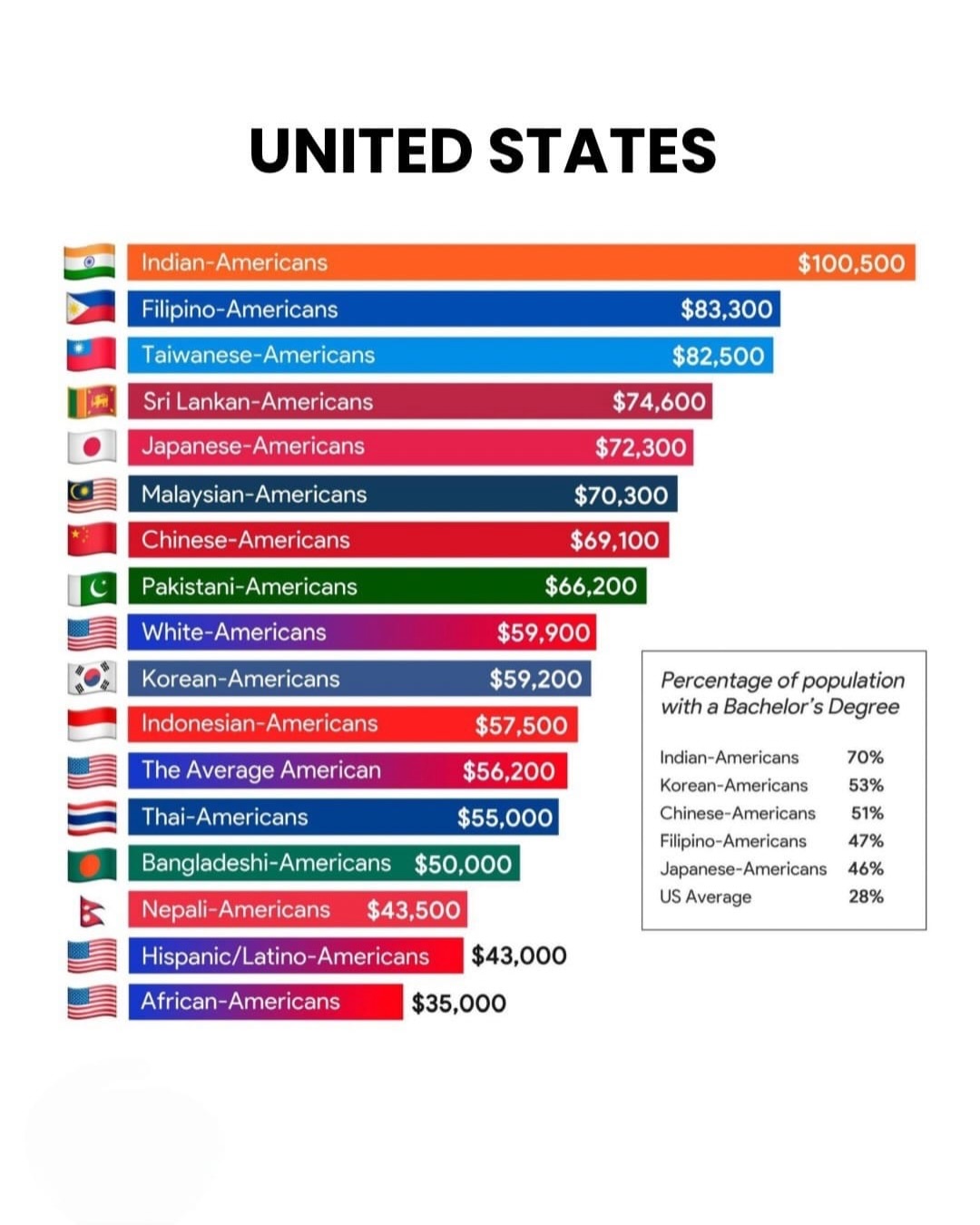
The German case is part of a broader global trend. In the United States, Indian American households are among the highest-earning demographic groups in the country. U.S. Census data shows that households headed by Indian immigrants earned a median annual income of $166,200 in 2023 — roughly double the median income of all immigrant-led households and well above that of native-born Americans.
This premium reflects the same structural factors seen in Germany: high educational attainment, concentration in professional and managerial roles, and strong representation in sectors such as technology, medicine, finance, and academia.
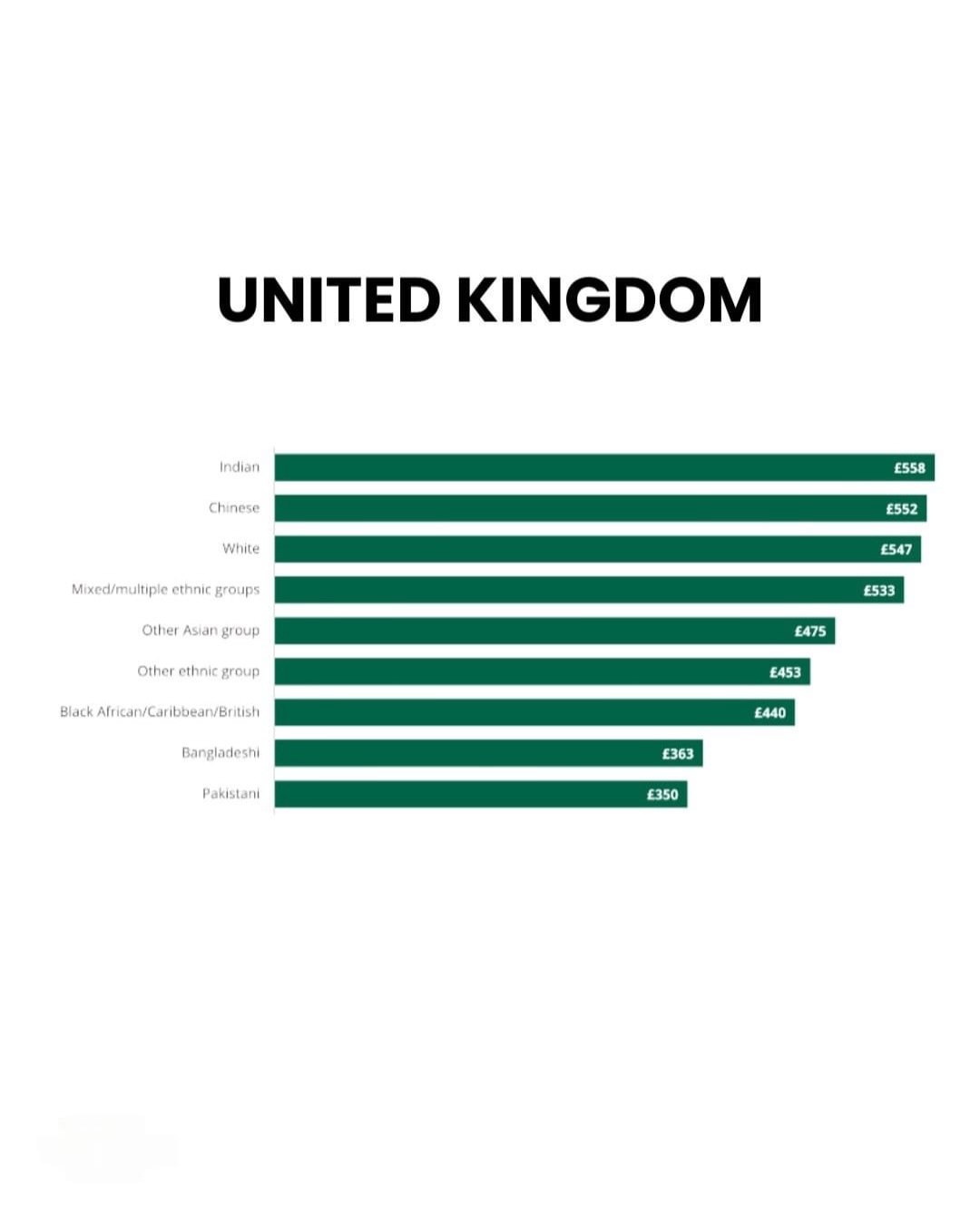
The United Kingdom tells a similar story. British Indians rank among the highest-paid ethnic groups in terms of hourly wages and household wealth, underpinned by their prevalence in managerial, professional, and specialist occupations.
Across continents, the pattern holds: where advanced economies demand specialised skills, Indian professionals are often well positioned to supply them.
A Nuanced Success Story — Not a Universal One
Despite the impressive figures, the IW study cautions against oversimplification. High median wages do not imply universal prosperity among Indian migrants. The data reflects full-time employees, many of whom enter through selective visa regimes tied to qualifications and job offers.
This is not a story of migration in general, but of targeted skill migration. It highlights what happens when education, policy, and labour market demand align — not a blanket guarantee of success for all migrants.
Crucially, the findings do not suggest that nationality itself is rewarded. As the institute repeatedly emphasises, income differences are linked to job profiles, skill intensity, and sectoral demand, not passports.
What This Data Ultimately Reveals
The rise of Indian professionals to the top of Germany’s wage hierarchy says as much about Germany as it does about India.
It reveals an economy increasingly dependent on global talent to sustain growth and innovation. It underscores the reality that education and specialisation have become globally portable assets. And it highlights how timing — arriving with the right skills at the right moment — can shape economic outcomes in profound ways.
For Germany, the message is structural: without skilled immigration, particularly in STEM fields, its economic future would be far more constrained.
For Indian professionals, the lesson is equally clear: specialised skills travel well — and in today’s interconnected world, they can carry workers not just across borders, but to the very top of global labour markets.
With inputs from agencies
Image Source: Multiple agencies
© Copyright 2025. All Rights Reserved. Powered by Vygr Media.