
 By
By 
For decades, the global fashion industry has dipped into India’s cultural reservoir for inspiration. Our textiles, silhouettes, embroideries, and artisan traditions have shaped couture and ready-to-wear runways across continents. But 2025 marked a new and unsettling chapter in this long, complicated relationship—one where borrowing grew bolder, credits shrank smaller, and India found itself at the centre of a fashion storm it never asked to be part of.
The year was supposed to be India’s fashion high. Rahul Mishra continued mesmerizing Paris Couture Week with his botanical universes. Gaurav Gupta sculpted liquid magic on international red carpets, including the Met Gala. And luxury maisons openly praised Indian embroidery, surface ornamentation, and handcrafted excellence. It felt, finally, like our distinct fashion identity had claimed its rightful place on the global stage.
But what should have been a shared celebration soon spiralled into a year-long cycle of appropriation allegations, cultural erasure debates, and social-media reckonings. Large fashion houses repeatedly took signature Indian crafts, silhouettes, or motifs, repackaged them under Western narratives, and presented them as novel designs—often with little to no acknowledgement of their origins.
2025 didn’t just highlight India’s creative influence. It exposed the ways global luxury still treats Indian heritage as a free moodboard.
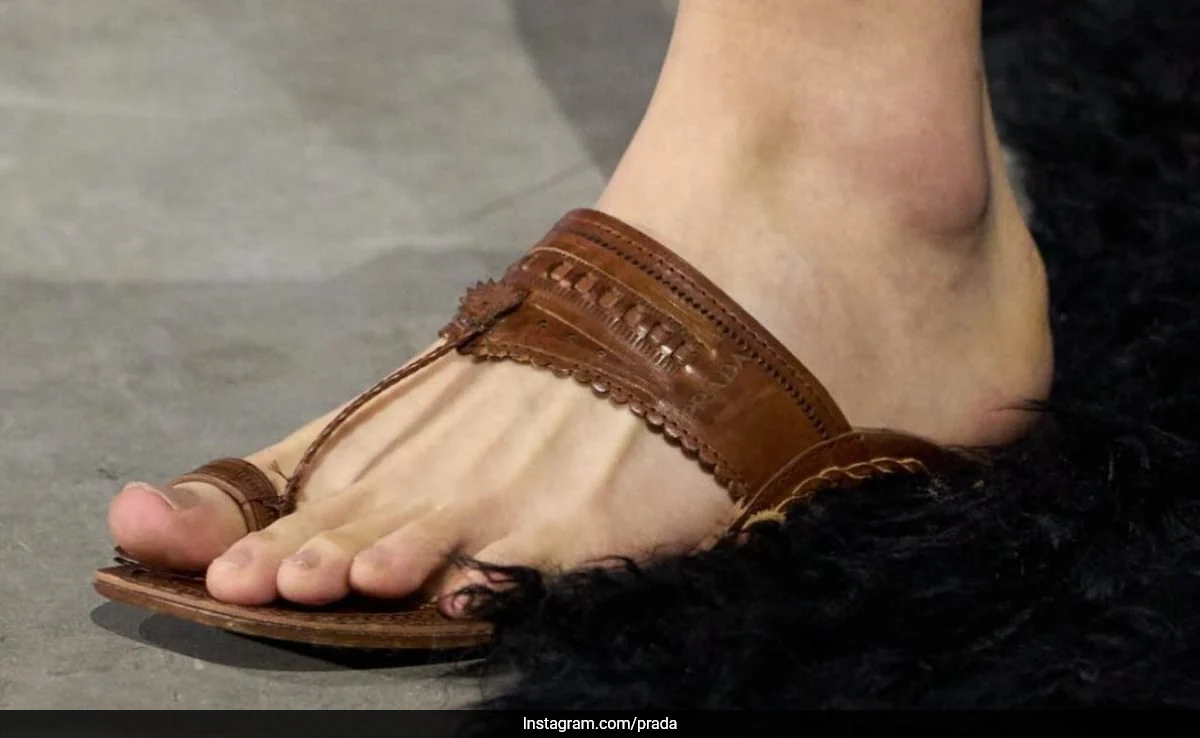
- When Prada ‘Discovered’ Kolhapuri Chappals
The first big tremor arrived in June. At Milan Fashion Week, Prada unveiled leather sandals priced above ₹1.2 lakh. The silhouette, however, was unmistakable: they were Kolhapuri chappals, down to the shape, cut, and distinctive handcrafted identity.
Except, Prada didn’t say that. Not a word about Maharashtra. Not a whisper of Karnataka’s centuries-old cobbler communities. No nod to the 12th-century craft tradition behind the design.
Indian artisans, fashion watchdogs, researchers, and even government officials immediately called it out. Social media erupted: how could a luxury brand rebrand a cultural heirloom as its own while selling it at an astronomical price—without even mentioning the craft that inspired it?
The backlash eventually pushed Prada into issuing a letter to the Maharashtra Chamber of Commerce. The brand admitted that the sandals were “inspired by traditional Indian handcrafted footwear, with a centuries-old heritage.”
But the apology was too late and too limited. Critics pointed out the obvious: a generic acknowledgment in a letter did nothing to uplift the actual artisans whose work had been repurposed. No collaboration, no compensation, no visibility for the craftsmen behind the original Kolhapuri legacy.
Prada had nodded. But it had not repaired.
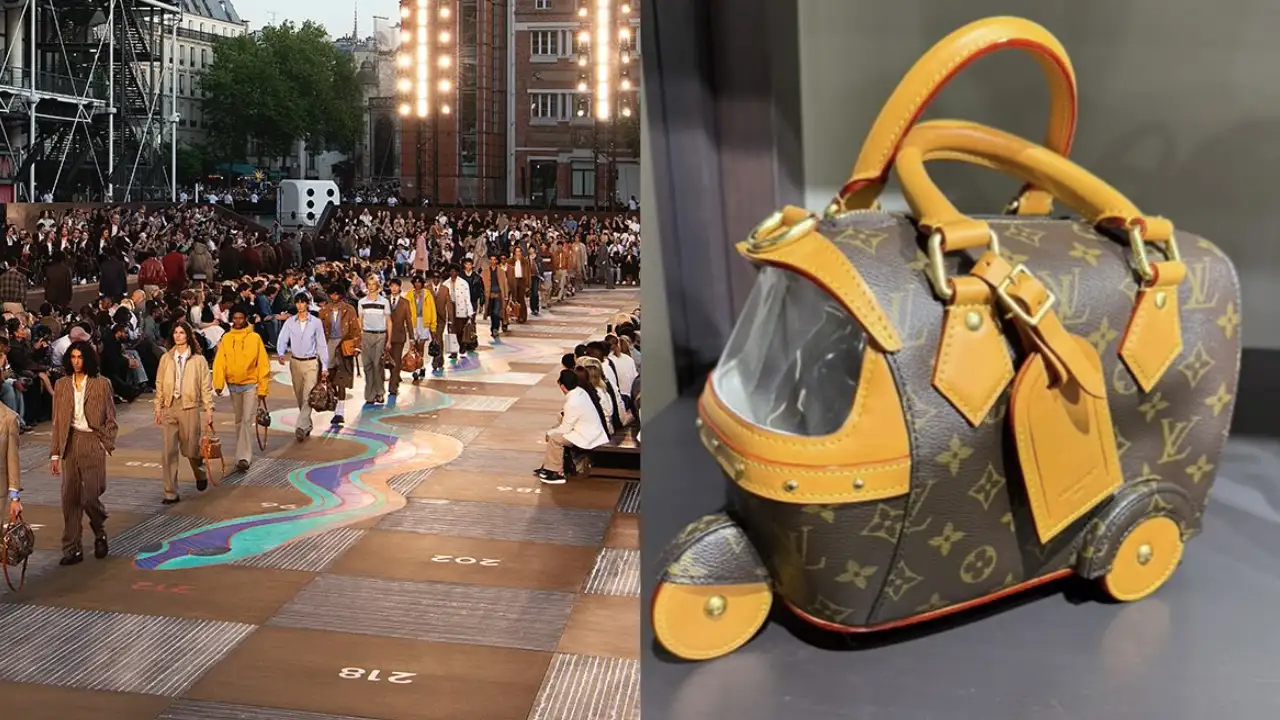
- Louis Vuitton’s ₹35 Lakh Auto-Rickshaw Bag
Barely a month later—just as the Prada fire was dimming—Louis Vuitton lit a fresh one.
At a private re-see event for the brand’s Men’s Spring/Summer 2026 collection, a novelty bag shaped like an Indian auto-rickshaw was unveiled. Designed under Pharrell Williams’ creative direction, the bag carried a mind-bending price tag: approximately ₹35 lakh.
The internet exploded. Memes multiplied. But behind the humour was a serious question: Was this a playful homage to Indian street culture or a tone-deaf exaggeration of it?
India’s auto-rickshaw isn’t just a quirky vehicle; it is the backbone of urban mobility for millions. Yet, LV’s bag felt detached from that context. For some, it was a charming tribute. For many others, it was yet another example of Indian imagery being turned into an exotified accessory—exorbitantly priced, aesthetically fetishized, and culturally unanchored.
- Dior’s ₹1.6 Crore Mukaish Coat—with No Mention of Mukaish
The same month, Dior found itself in hot water.
Jonathan Anderson, newly appointed as the sole creative director of the brand’s menswear and womenswear lines, presented his much-anticipated debut collection in Paris on June 27, 2025. Celebrities from Rihanna and Robert Pattinson to Daniel Craig filled the front row. But the moment that went viral wasn’t tied to the guest list—it was a coat.
A stunning overcoat worth ₹1.6 crore, richly embellished using mukaish work—a centuries-old needlecraft originating in Lucknow—was posted across social media. The craft, historically practiced by artisans known as tunkars, involves twisting metallic wires into delicate motifs that shimmer like liquid light.
But Dior didn’t credit the technique. No mention of its roots. No acknowledgement of the artisans who would have made such intricate work possible.
For Indian viewers, it stung. Mukaish isn’t merely decorative—it is a living heritage practiced by communities often struggling to stay afloat. To see it showcased stripped of context was both ironic and painful: a luxury coat celebrated globally while the artisans behind the original craft remained invisible.

- Rapsodia vs. Anupamaa Dayal: A Designer’s Fight for Her Creative Rights
Before these major houses dominated headlines, the year had already opened with a deeply troubling case of alleged plagiarism.
Delhi-based designer Anupamaa Dayal—loved for her botanical motifs, spiritual symbolism, and joyous use of colour—noticed designs nearly identical to hers appearing on the social media pages of international fashion chain Rapsodia.
The sequence was unnerving. In March 2025, a woman claiming to represent Rapsodia’s India operations visited Dayal’s Mehrauli studio. Not long after, Dayal spotted Rapsodia selling pieces that looked “copied in total,” as she publicly stated.
When Dayal reached out, the responses were dismissive at best and hostile at worst. She was asked to provide proof—trademarks, patents, anything to claim ownership—despite the clear aesthetic alignment. The episode highlighted the fragile legal protections available to independent designers in the fashion industry, where copyright structures rarely cover artistic silhouettes, motifs, or surface details comprehensively.
Refusing to let it slide, Dayal sent a legal notice demanding a formal apology. She later said, “It’s shaken me, but it’s also reminded me of the relevance of my work.” Her experience reignited urgent conversations around fashion IP in India.

- The ‘Scandinavian Scarf’ Saga: When a Dupatta Was Rebranded for Europe
Even before luxury brands stepped into controversies, European influencers had triggered their own appropriation cycle.
On social media, a chiffon dupatta—a staple of South Asian wardrobes for centuries—was suddenly being presented as the “Scandi girl scarf” or “Scandinavian minimalist wrap.” Influencers praised its airy elegance and draped it like a newfound European discovery. Fashion platforms began marketing it as a trending Northern aesthetic.
Indians responded instantly, and with unfiltered humour. A wave of memes, videos, and posts pointed out the obvious: this wasn’t a new trend. This was a dupatta—a cultural garment with a history far richer than a renamed accessory for Western moodboards.
And the issue didn’t stop at dupattas. Saree blouses were sold online as “Ibiza summer tops.” Kurtis were advertised as “strappy sheer dresses.” Entire elements of Indian clothing were being rebranded for global consumers with captions that casually erased South Asian origin.
The rebrand wasn’t just inaccurate—it was insulting. It reduced deeply rooted traditions into marketable European aesthetics while pushing the original identity out of the frame.

- Dolce & Gabbana and the Kashmiri Walnut Carving Controversy
The summer controversies continued into August 2025 when Dolce & Gabbana presented its Alta Moda Spring/Summer 2025 collection at the Roman Forum. Among the ornate pieces on display was a handbag combining an elaborate Trevi Fountain motif with a carved wooden jewelry-box-like structure.
Except that structure was unmistakably South Asian in origin.
These boxes—often found across Indian and Pakistani households—are crafted using Jandankari, the traditional walnut wood carving technique still practiced meticulously by artisans in Kashmir. Similar products are also crafted in Saharanpur, Uttar Pradesh, where the technique holds a GI (Geographical Indication) tag.
Yet D&G offered no credit. The craft’s lineage and artisans were absent from its narrative. The bag became another example of luxury borrowing from South Asia without acknowledging the craftsmanship integral to its design.
_1765525750.png)
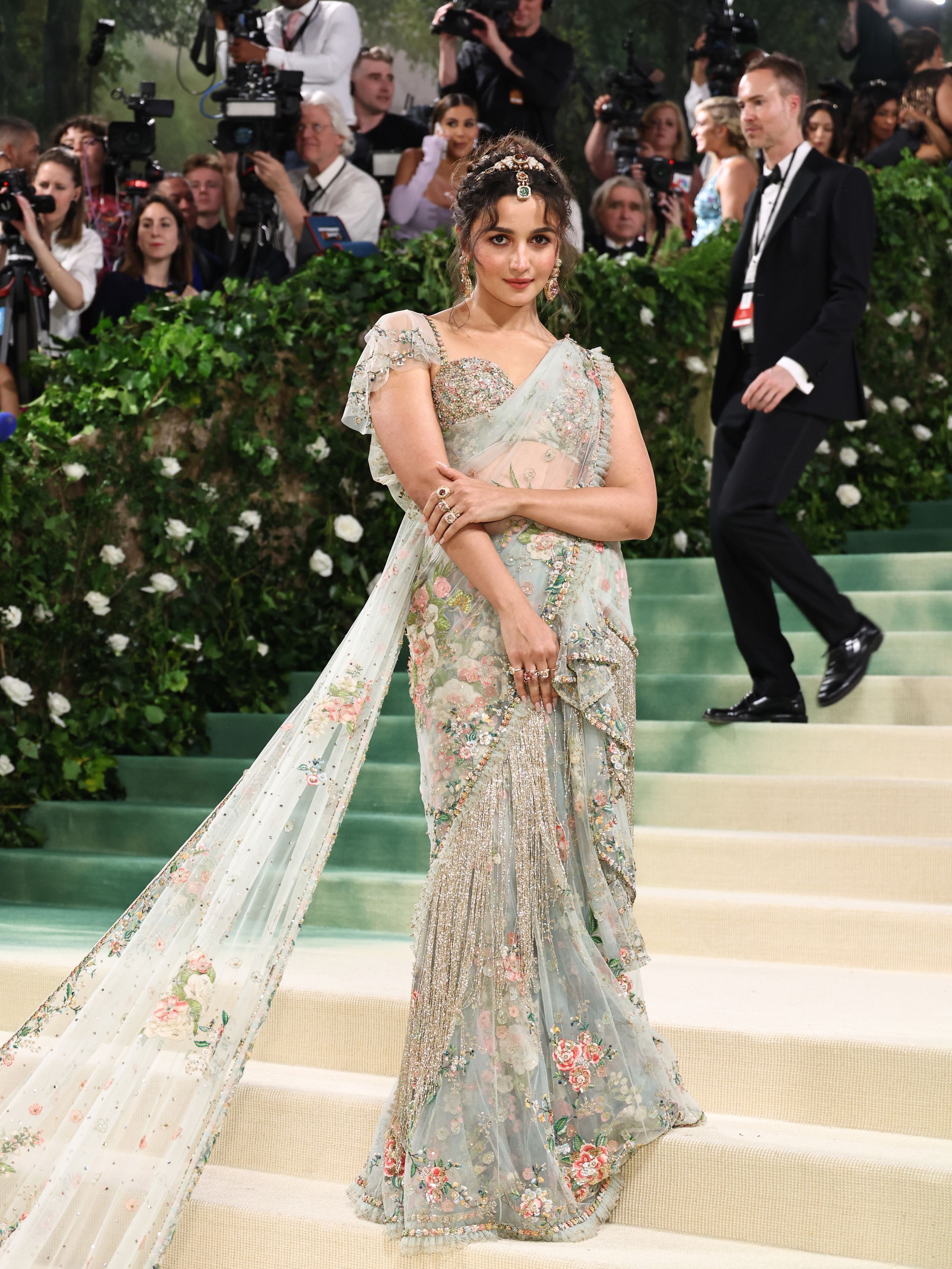
- Alia Bhatt’s Met Gala & the ‘Gown’ vs. Saree Debate
In May 2025, Alia Bhatt attended the Cannes Film Festival wearing a Gucci creation she described as a “saree-inspired ensemble.” It was a moment of pride—Bollywood glamour meets Indian heritage on one of the world’s most-watched red carpets.
But Gucci’s official post called it a “gown.”
The mislabeling seemed minor, but it struck a nerve. The design’s entire spirit drew from the saree’s drape and sensibility, and by calling it a gown, the brand had flattened the cultural narrative that Alia herself highlighted.
Soon after, online users noted striking similarities between her look and a lehenga by Indian label Talking Threads, run by Pearl Uppal. Whether intentional or coincidental, the absence of any credit revived questions about transparency—and the fine line between inspiration and imitation.
- Dior’s Sharara Moment & a Look Back to a 2018 Controversy
Dior wasn’t done drawing scrutiny.
When influencer Chiara King recently wore a three-piece Dior outfit that looked heavily inspired by a sharara paired with a dupatta, the brand once again failed to acknowledge the South Asian roots of the silhouette.
For many, it felt like déjà vu.
Back in 2018, Delhi-based design studio People Tree had accused Dior of copying a block print for a Cruise collection dress. The original design had been handcrafted for over 15 years by Rajasthani block printers—many dependent on the longevity of such crafts for survival. Yet Dior’s version appeared globally without credit, retailing at luxury prices far removed from the artisan economies that birthed it.
The incident re-emerged in conversations this year, reminding the world that Dior’s relationship with Indian crafts has long walked an uneasy path.

- Gucci, the Turban, and a Lesson Still Relevant
Not all controversies from previous years faded.
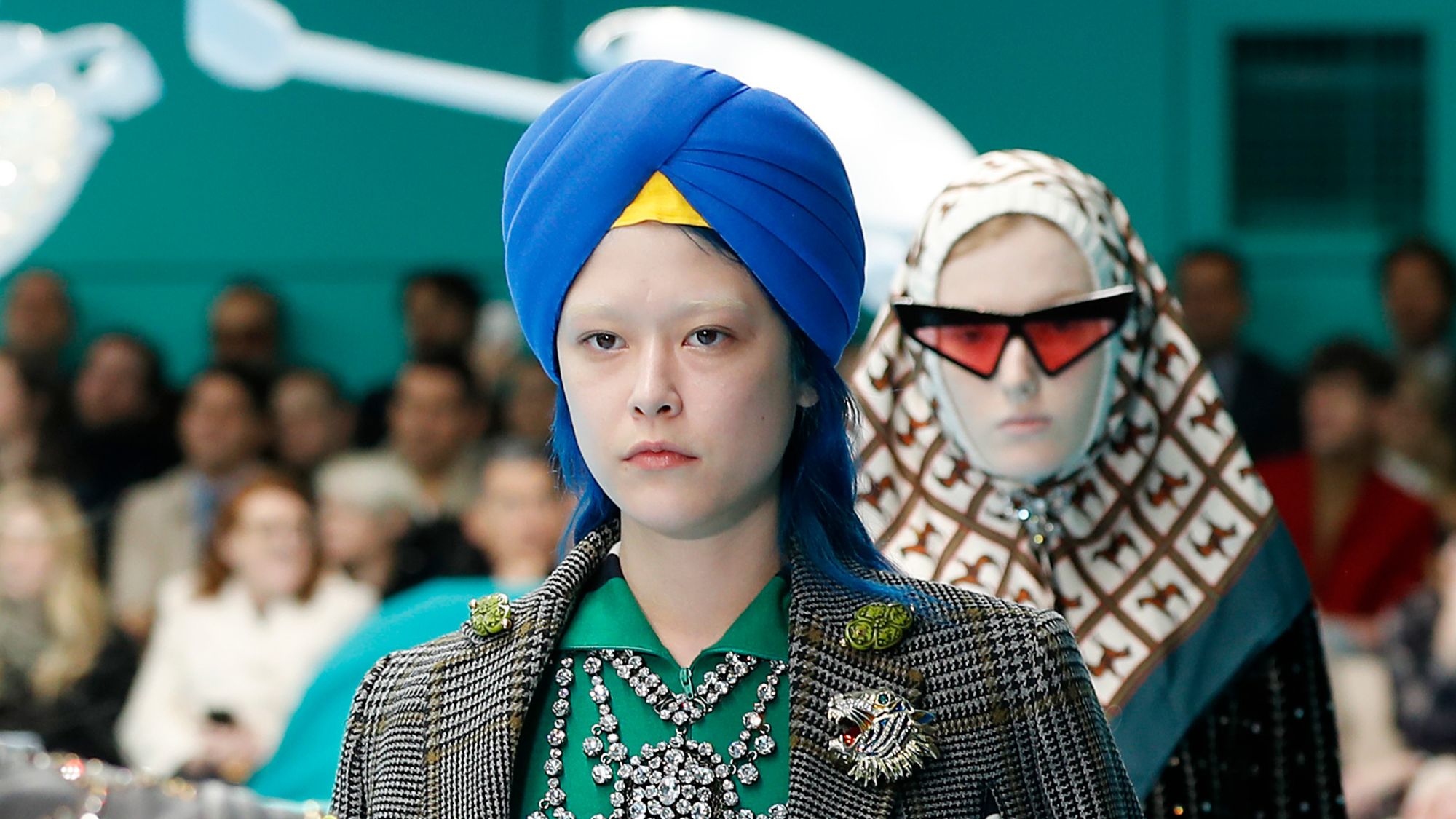
In 2019, Gucci released a turban-style headpiece priced at ₹68,000 ($790), calling it the “Indy Full Turban.” For Sikh communities, the turban (dastar) is a sacred symbol—an article of faith, not fashion. The backlash was immediate and intense.
Though the brand renamed it the “Indy Full Head Wrap,” the damage was irreversible. The accessory became a cautionary tale on how cultural items, when stripped of meaning, can quickly turn insensitive.
- Jean Paul Gaultier’s Saree Silhouettes & the Tricky Terrain of Runway Borrowing
Even earlier, at Jean Paul Gaultier’s Fall/Winter 2017 show, models walked in saree-inspired forms accessorized with naths, the traditional Indian nose rings worn historically by maharanis and still donned by millions of Indian women today.
The runway was visually stunning—but context-free. Without explanation or homage, the pieces became aesthetic props rather than cultural expressions.
The memory of that show resurfaced repeatedly this year as buyers and designers connected the dots between admiration and appropriation.
_1765526707.jpg)
Why 2025 Felt Like a Tipping Point
The past year wasn’t the first time Indian fashion and global luxury collided problematically—but it was the loudest. Indian designers, consumers, celebrities, and online communities refused to stay silent or accept vague “inspiration” statements.
Social media accelerated accountability. Every print, bead, and silhouette could be cross-referenced within minutes. The era of uncredited borrowing had finally met a visible, vocal resistance.
Most importantly, India’s crafts are not decorative extras—they are livelihoods. They are cultural lineages, skills passed through generations, and repositories of collective identity. When a brand lifts them without credit or compensation, it doesn’t just borrow—it erases.
So Where Do We Draw the Line Between Inspiration and Appropriation?
Fashion thrives on influence. Designers innovate by absorbing ideas, textures, histories. But influence must be paired with integrity.
The line becomes clear when we examine certain practices:
-
Inspiration becomes appropriation when credit disappears.
-
Admiration becomes exploitation when artisans remain uncompensated.
-
Design becomes disrespectful when cultural symbols are stripped of meaning.
The world doesn’t want global fashion to stop engaging with Indian craft. Far from it. Collaboration can be powerful. Cross-cultural design can be beautiful. What people demand is fairness:
Credit the origins. Elevate the artisans. Share the economic value. Respect the cultural significance.
Kolhapuri chappals, mukaish embroidery, Kashmiri woodwork, block printing, shararas, naths—these are not trends. They are legacies. And if 2025 taught global luxury anything, it’s that India is done being silent when its legacy walks the runway without a name tag.
With inputs from agencies
Image Source: Multiple agencies
© Copyright 2025. All Rights Reserved. Powered by Vygr Media.