 By
By 
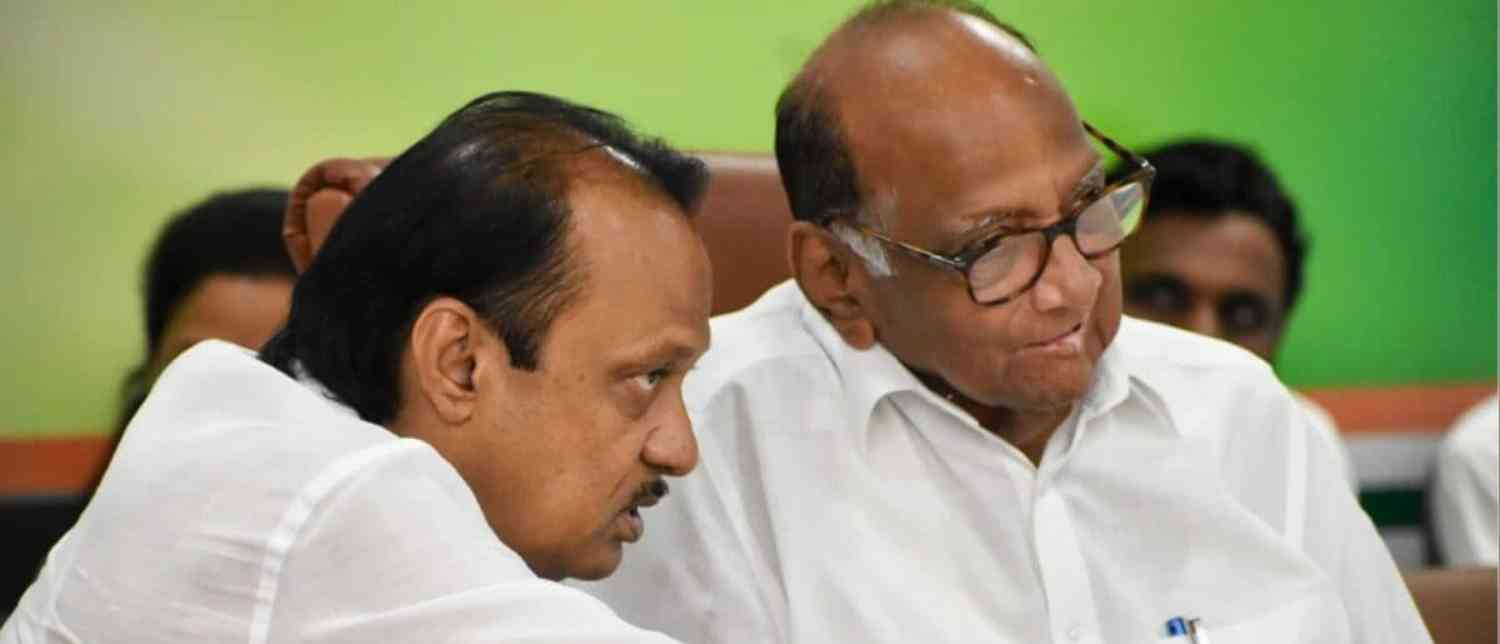
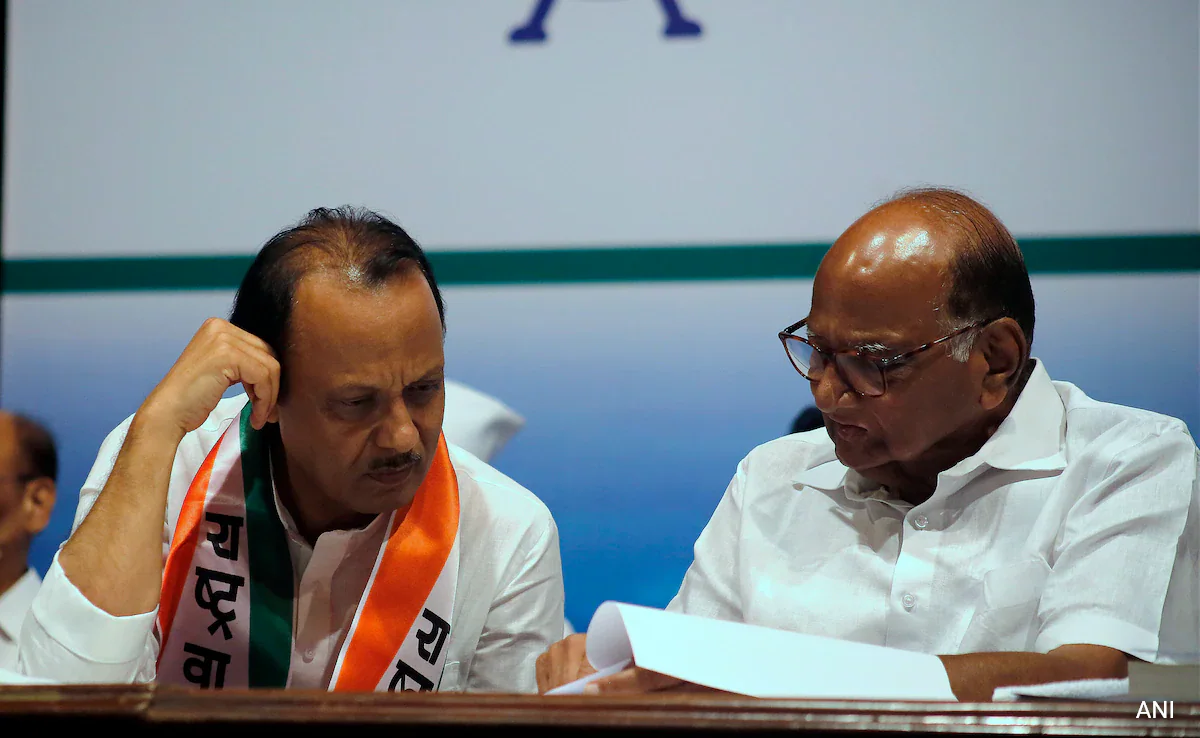
More than two years after a dramatic political and personal rupture, the Pawar family has staged a carefully calibrated reunion—this time driven by electoral arithmetic rather than reconciliation. Ajit Pawar and Sharad Pawar-led factions of the Nationalist Congress Party (NCP) have decided to join hands for the crucial Pimpri-Chinchwad and Pune municipal corporation elections, marking their first major collaboration since the party’s historic split in 2023.
The announcement, made at a rally on Sunday, carried heavy symbolism and unmistakable political messaging. Maharashtra Deputy Chief Minister Ajit Pawar declared, “For the sake of the Pimpri-Chinchwad Municipal Corporation elections, the ‘clock’ and the ‘tutari’ have united. The ‘parivar’ has come together.”
The reference was deliberate. The ‘clock’ is the election symbol of Ajit Pawar’s NCP faction, recognised by the Election Commission of India as the original party. The ‘tutari’, or curved trumpet, represents the faction led by Sharad Pawar after the split. Their joint appearance underscores a pragmatic truce forged under mounting poll pressures.
A Party Built by Sharad Pawar, Split by Succession Politics
The Nationalist Congress Party was founded in 1999 by Sharad Pawar, one of Maharashtra’s most influential political figures. For over two decades, the NCP remained a formidable force in the state’s political landscape, often playing kingmaker in coalition governments.
Ajit Pawar, Sharad Pawar’s nephew, was long seen as his political heir. Over the years, Ajit held key portfolios and served multiple terms as Maharashtra’s Deputy Chief Minister, emerging as one of the party’s most powerful leaders. However, simmering tensions over leadership, strategy, and generational transition eventually erupted into a full-blown split.
The 2023 Break: When Family and Party Parted Ways
The fracture became official in 2023 when Ajit Pawar led a rebellion against his uncle, breaking away with several senior NCP leaders to align with the BJP and Eknath Shinde-led Shiv Sena government in Maharashtra. Ajit Pawar was sworn in as Deputy Chief Minister under the new ruling alliance, firmly shifting his faction into the National Democratic Alliance (NDA).
At the heart of the split was a sharp ideological and strategic disagreement. Ajit Pawar argued that aligning with the ruling coalition was necessary for stability and governance, while Sharad Pawar insisted that the NCP should remain in opposition alongside the Maha Vikas Aghadi (MVA).
Speaking at the NCP’s Chintan Shivir in Nagpur at the time, Ajit Pawar defended his decision, acknowledging the personal cost it entailed. “Many people ask me why I took the step of separating from the undivided NCP and why I accepted the strain on family and personal relationships,” he said. “I want to tell you that I did this not for power or position, but to ensure stability and progress in Maharashtra.”
Age, Authority, and Open Criticism
Ajit Pawar’s criticism of his uncle was unusually blunt by Indian political standards. He questioned Sharad Pawar’s continued leadership at the age of 83, drawing comparisons with other parties where senior leaders retire after reaching a certain age.
“In other parties, leaders retire after an age. In the BJP, leaders retire at 75. When are you going to stop?” Ajit Pawar asked publicly. “You should also give new people a chance. If we make mistakes, tell us. Your age is 83—will you ever stop or not? You give us blessings.”
Sharad Pawar’s response was measured but firm. He dismissed age as a limitation, asserting that he remained “effective” regardless of whether he was “82 or 92,” signalling his refusal to step aside under pressure.
Two Parties, Two Symbols, Two Political Paths
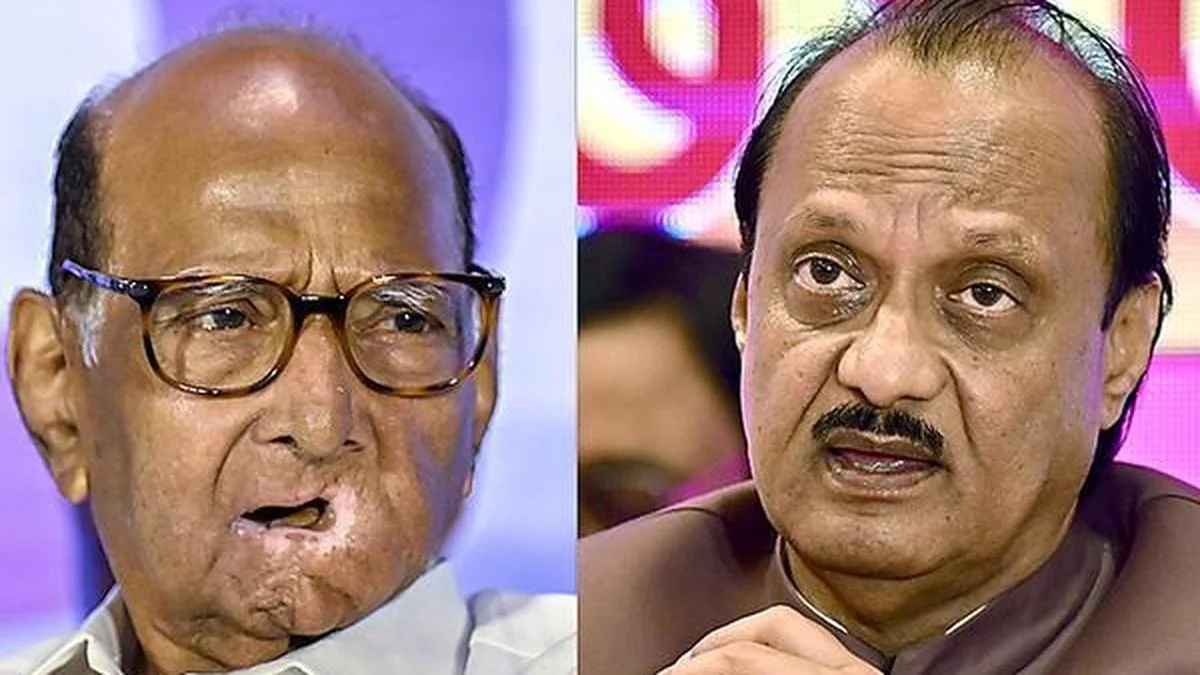
Following the split, the NCP formally divided into two factions. Ajit Pawar’s group secured recognition from the Election Commission as the legitimate Nationalist Congress Party and retained the iconic ‘clock’ symbol. His faction became part of the ruling NDA government in Maharashtra.
Sharad Pawar’s faction, named NCP (Sharadchandra Pawar), continued independently, adopting the ‘tutari’ symbol. It remained aligned with the opposition Maha Vikas Aghadi, alongside the Congress and Uddhav Thackeray-led Shiv Sena (UBT).
Both factions contested elections separately in the months that followed. However, the 2024 Lok Sabha elections proved challenging for Ajit Pawar’s camp. After suffering setbacks, Ajit Pawar publicly acknowledged that turning his back on family had been a “mistake,” a remark that rekindled speculation about a possible reconciliation.
Workers Push for Unity Ahead of Pune Civic Polls
That speculation turned into reality in Pune and Pimpri-Chinchwad, long considered Pawar strongholds. After weeks of behind-the-scenes discussions, the two factions decided to contest the municipal elections together, nearly a fortnight before the Mumbai civic polls.
This marks the first carefully stage-managed reunion of the two NCP factions since 2023. While there had been limited cooperation in some municipal council elections earlier, this is the most significant joint political move since the split.
Confirming the alliance, NCP (Sharadchandra Pawar) leader Rohit Pawar said the decision was driven entirely by local-level demands. “This is a fight between the workers and for their election,” he said. “After listening to their views and understanding their concerns, it was decided that both NCP factions will contest the polls together in Pune and Pimpri-Chinchwad.”
Ajit Pawar echoed this sentiment at a late-night rally in Pimpri-Chinchwad, stating that the joint contest was aimed at accelerating development in the region. “While finalising the list of candidates for the Pimpri-Chinchwad Municipal Corporation elections, both NCP factions decided to contest the elections together. Because of this, the family will come together once again,” he said.
Strategic Limits to the Reunion
Despite the symbolism, the reunion is neither unconditional nor statewide. Rohit Pawar was quick to clarify that the decision applies strictly to Pune and Pimpri-Chinchwad and was taken without the involvement of Sharad Pawar himself.
“This decision has been taken only for Pune and Pimpri-Chinchwad, and that too after listening to local workers and with their consent,” Rohit Pawar said. “Pawar Saheb is not involved in this entire decision-making process.”
The two factions will also contest under their respective symbols, putting to rest reports that Ajit Pawar’s camp had sought a unified symbol. “Both parties will contest under their respective symbols,” Rohit Pawar clarified, reinforcing the limited and tactical nature of the alliance.
BJP, Congress, and the Complicated Political Chessboard
The reunion introduces an unusual political dynamic. Ajit Pawar remains Deputy Chief Minister in the BJP-led Maharashtra government even as his party teams up with Sharad Pawar’s faction to contest civic polls against the BJP—and against the Congress, which is the largest constituent of the MVA mentored by Sharad Pawar—in Pune district.
Earlier, Chief Minister Devendra Fadnavis had explained why the Mahayuti allies would not contest the civic polls as a single unit in Pune and Pimpri-Chinchwad. “NCP and BJP will be fighting against each other. If we fight alongside each other, the chances of a third party benefiting increase,” he had said.
Blood, Ballots, and Political Reality
In Indian politics, ideology often bends before electoral necessity, and the Pawar reunion is a textbook example. As the January 15 municipal elections approach, the once-bitter rivals have set aside personal and political differences to protect their shared turf.
While this alliance does not erase the ideological divide or undo the events of 2023, it highlights a deeper truth of Indian politics: when power, legacy, and voter bases are at stake, even fractured families find common ground—at least until the ballots are counted.
Whether this reunion remains a local arrangement or evolves into something larger will depend on electoral outcomes and future negotiations. For now, the ‘clock’ and the ‘tutari’ tick together, reminding Maharashtra that the Pawar story is far from over.
With inputs from agencies
Image Source: Multiple agencies
© Copyright 2025. All Rights Reserved. Powered by Vygr Media.