 By
By 
India has marked a watershed moment in global academic excellence, as a young team of mathematicians scripted history at the European Girls’ Mathematical Olympiad 2026—a performance that signals not just a single victory, but the steady rise of a national ecosystem built to nurture world-class problem solvers.
Held in Bordeaux, France from April 9 to April 15, the 15th edition of the Olympiad saw participation from 260 students across 67 countries, including 161 contestants from 41 European nations. Amid this intensely competitive global field, India delivered its strongest-ever showing since debuting at the Olympiad in 2015, finishing sixth overall—its highest rank to date.
But the defining headline of this achievement lies in a long-awaited milestone: India’s first-ever gold medal at the EGMO.
A historic first, led by a Mumbai prodigy
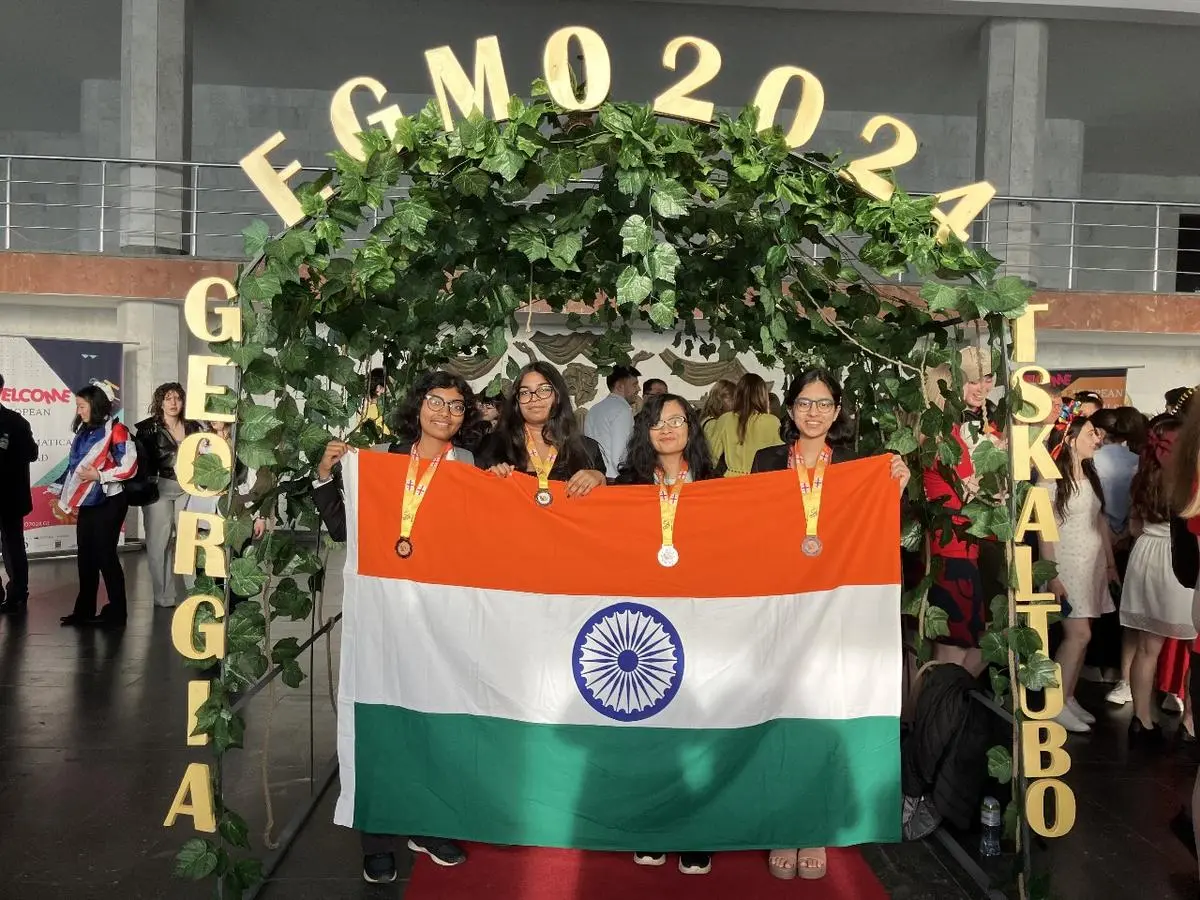
At the center of this landmark moment is Shreya Shantanu Mundhada, a student from Mumbai, Maharashtra, who secured the country’s first gold medal in the competition’s history. Her performance not only lifted India into the top tier of global rankings but also symbolised a breakthrough for Indian representation in elite mathematics competitions traditionally dominated by European and East Asian nations.
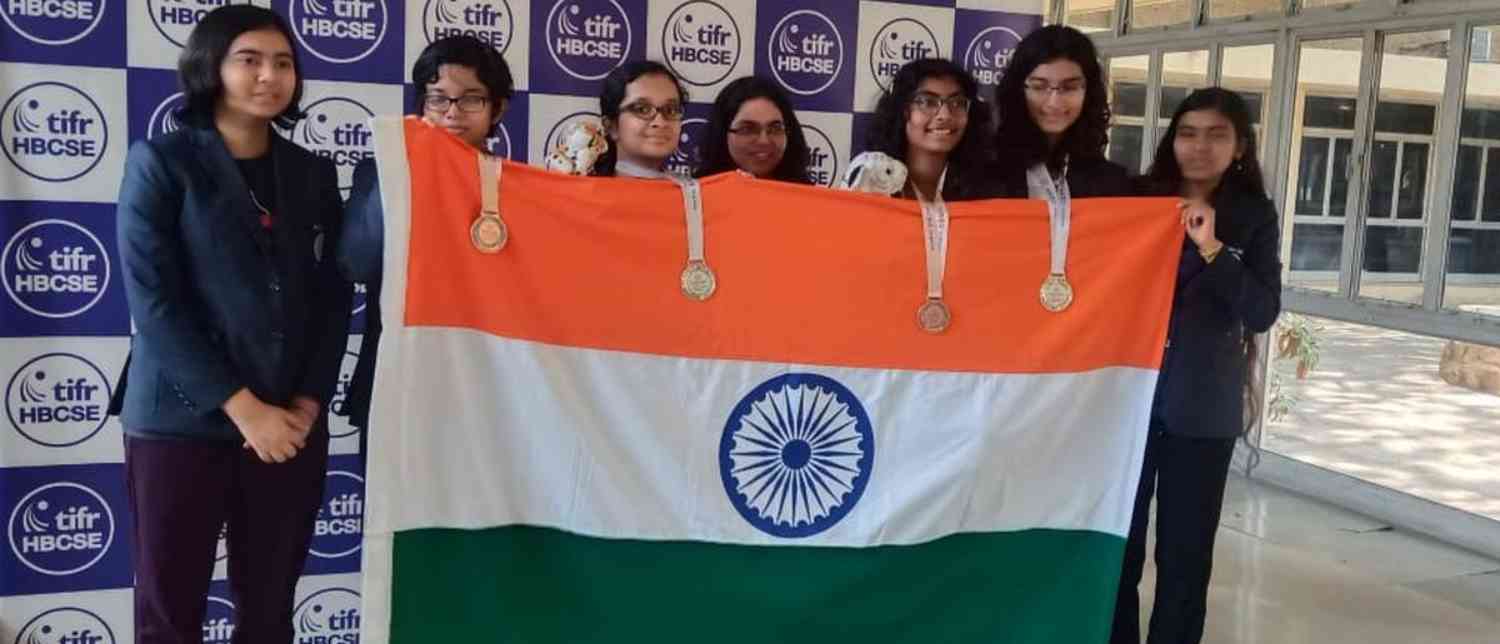
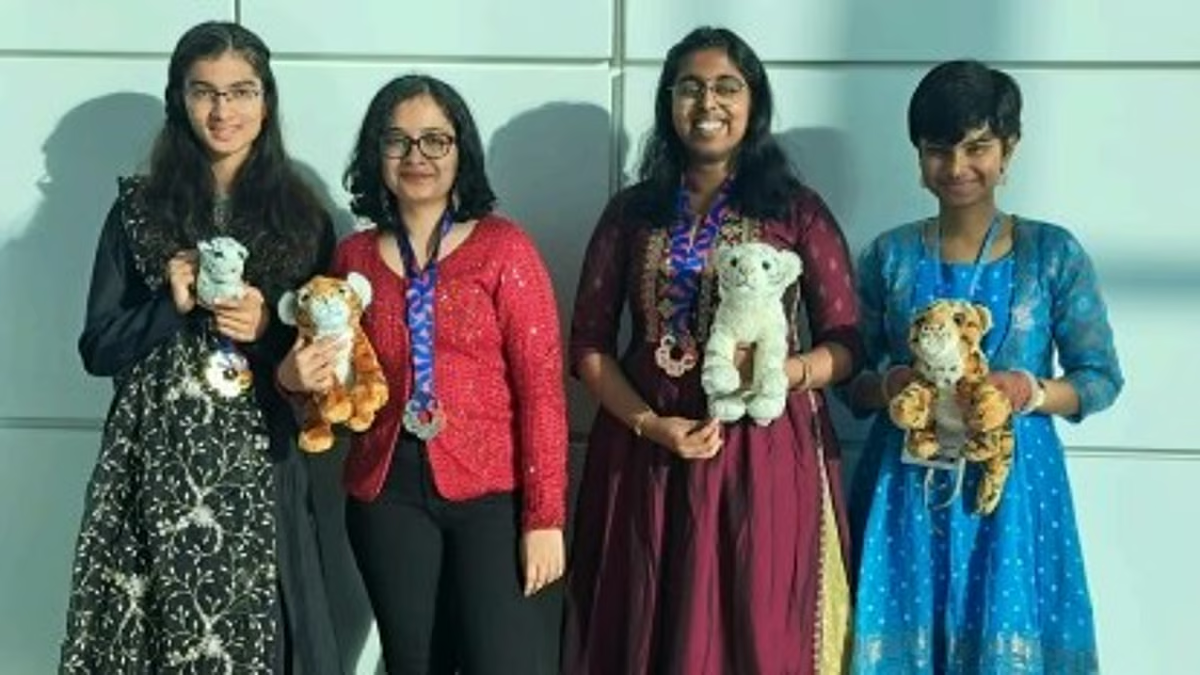
Alongside Mundhada, the Indian team delivered a well-rounded medal tally. Sanjana Philo Chacko from Kerala clinched the silver medal, while Shivani Barath Kumar from Tamil Nadu secured bronze, ensuring India finished with a complete set of medals—gold, silver, and bronze.
The fourth member of the team, Shrimoyee Bera, also contributed to the team’s overall score, reflecting the collective strength of the contingent. Together, the team accumulated a total score of 81 points across six problems, underlining both depth and consistency in performance.
Leadership, preparation, and a rare all-women contingent
The Indian delegation was led by Dr. Vaidehee Thatte, with Dr. Mrudul Thatte serving as deputy leader, and Aditi Muthkhod as observer. Their mentorship played a crucial role in guiding the students through one of the most demanding mathematics competitions in the world.
Notably, this marked only the second occasion that India sent an all-women contingent to the EGMO—a fact that underscores both progress and potential in addressing gender representation in STEM fields.
From training camps to global podiums
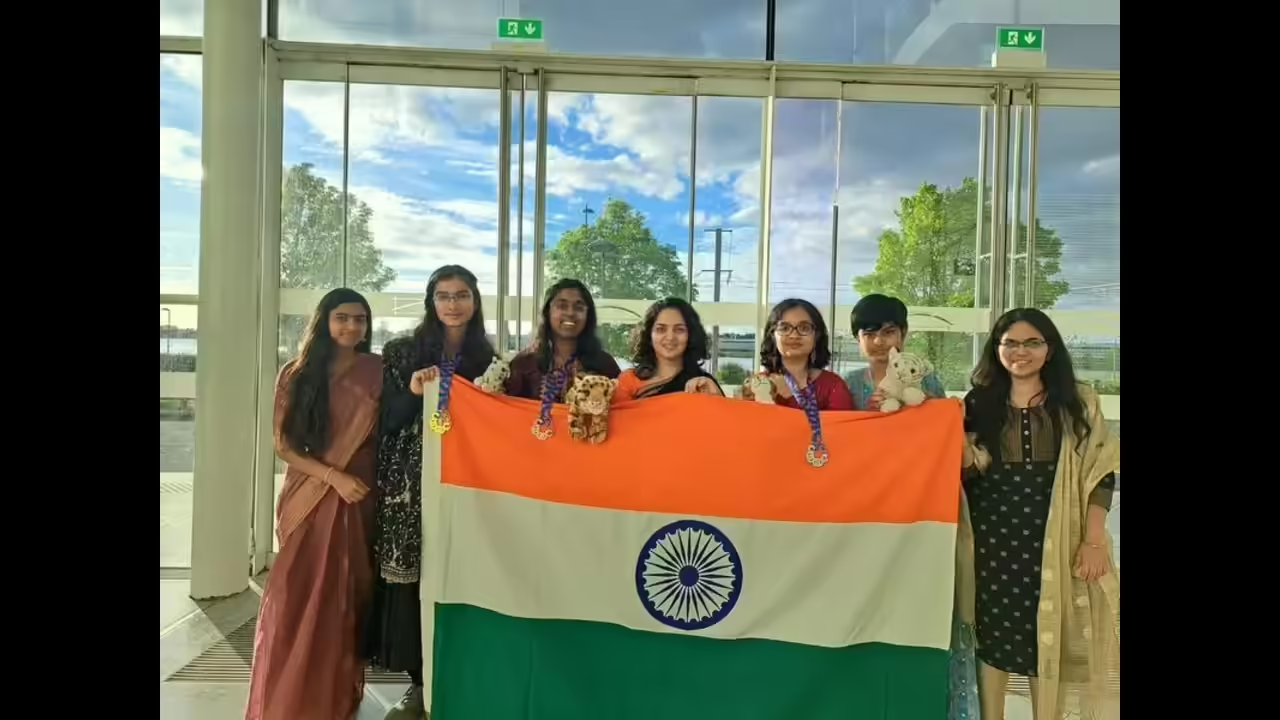
Behind the podium finish lies a rigorous and highly structured training pipeline. The success of the Indian team has been attributed to the EGMO Training Camp (EGMOTC), a specialised programme designed to prepare top-performing students for international competitions.
The training ecosystem draws heavily on the expertise of former Olympians and academic resource personnel from leading research institutions. At its core is the Homi Bhabha Centre for Science Education, a premier institution under the Department of Atomic Energy that identifies talent through national-level Olympiad examinations and provides intensive coaching across disciplines including mathematics, physics, chemistry, biology, and astronomy.
The programme is supported by the National Board for Higher Mathematics, which operates under the Department of Atomic Energy and continues to play a pivotal role in sustaining India’s Olympiad ambitions.
This layered system—selection, mentorship, and advanced training—has increasingly begun to bear fruit. Over the years, India’s EGMO results have shown a steady upward trajectory, culminating in this year’s historic breakthrough.
A performance years in the making
India’s journey at the EGMO began in 2015, when it first participated as a guest nation. In the early years, the results were modest, with occasional bronze medals and lower overall rankings. However, the steady strengthening of the Olympiad pipeline—combined with greater institutional support—has transformed outcomes over time.
The 2026 performance stands out not just for the gold medal, but for the overall team result. India’s sixth-place finish represents a sharp improvement over previous rankings and reflects a broader maturation of the country’s competitive mathematics ecosystem.
Education experts note that such achievements are rarely accidental. Instead, they are the product of sustained investment in talent identification, long-term mentoring, and exposure to high-level problem-solving environments.
The Mumbai story and national resonance
The gold medal win by Mundhada has also drawn attention to Mumbai’s growing prominence as a hub for academic excellence. Institutions and training networks in the city have increasingly contributed to India’s Olympiad successes, supported by strong academic cultures and access to mentorship.
At the same time, the diversity of the team—spanning Maharashtra, Kerala, Tamil Nadu, and West Bengal—highlights the pan-India spread of mathematical talent. This geographic diversity reinforces the idea that excellence is no longer confined to a handful of urban centers but is emerging from across the country.
A signal moment for women in STEM
The significance of this achievement extends beyond medals and rankings. The EGMO, by design, is a platform aimed at encouraging young women to pursue mathematics at the highest level. India’s success, particularly with an all-women team, sends a powerful signal about the country’s evolving gender dynamics in STEM education.
While women have historically been underrepresented in advanced mathematics, initiatives like the EGMO—and India’s participation in it—are helping to reshape that narrative. The visibility of role models such as Mundhada, Chacko, and Kumar is expected to inspire a new generation of students to pursue mathematics with confidence and ambition.
Global recognition and future momentum
India’s performance at EGMO 2026 has not gone unnoticed on the international stage. Finishing sixth among 67 countries places the country firmly among the top-performing nations in the competition, a significant leap from its earlier standings.
More importantly, the result reflects the growing competitiveness of Indian students in global academic arenas. As international Olympiads become increasingly rigorous, such achievements signal that India is not only participating but actively contending at the highest levels.
The implications extend beyond competitions. Strong performances in Olympiads often correlate with future contributions in research, technology, and innovation. Many past Olympiad winners go on to become leading scientists, mathematicians, and technologists, contributing to both academia and industry.
The road ahead
With its first gold medal now secured, India’s focus is likely to shift toward sustaining and expanding this success. Experts suggest that continued investment in training infrastructure, mentorship programmes, and early talent identification will be key to maintaining momentum.
There is also a growing call to broaden access to Olympiad training, ensuring that talented students from smaller towns and underrepresented communities are not left behind.
For now, however, the achievement stands as a moment of national pride—a reminder of what sustained effort, institutional support, and individual brilliance can accomplish when aligned.
As the celebrations continue, one thing is clear: India’s young mathematicians are no longer just participants on the global stage. They are contenders—and increasingly, champions.
With inputs from agencies
Image Source: Multiple agencies
© Copyright 2026. All Rights Reserved. Powered by Vygr Media.