
 By
By 
A sharp escalation in tensions in West Asia, involving the United States, Israel, and Iran, has sent ripples through global energy markets, pushing fuel prices in India to unprecedented levels and triggering immediate consequences across both road transport and aviation sectors. Within hours of dramatic price hikes, however, the government moved to cushion the blow for domestic airlines, rolling back a portion of the increase in jet fuel rates even as international carriers continue to bear the full burden.
The sudden volatility underscores India’s vulnerability to geopolitical shocks, particularly in energy imports, with both petrol and aviation turbine fuel (ATF) witnessing steep and, in some cases, record-breaking increases.

Premium Petrol Breaches Record Highs
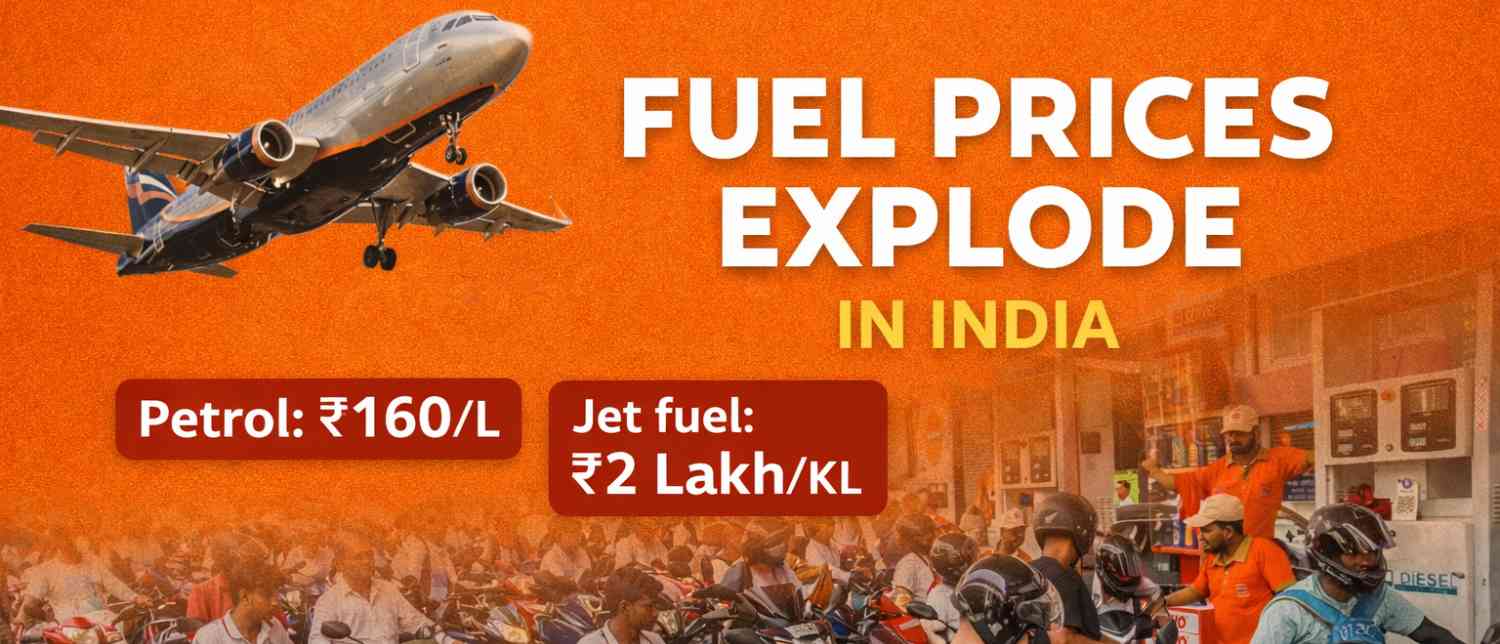
Premium petrol variants, particularly XP100, saw one of the steepest hikes in recent memory. Prices surged by ₹11 per litre, pushing XP100 petrol to around ₹160 per litre in several cities. This dramatic rise reflects the immediate pass-through effect of rising global crude oil prices, which spiked amid fears of supply disruptions in the oil-rich West Asia region.
The increase is especially notable because premium fuels like XP100 cater to a niche but growing segment of high-performance vehicles, making the hike symbolic of broader inflationary pressures across the fuel spectrum.
Industry experts noted that while regular petrol and diesel prices remain more regulated and politically sensitive, premium fuels often act as a “pressure valve” for oil marketing companies to adjust pricing in line with global trends.
Jet Fuel Prices Cross Critical Threshold
More alarming, however, was the surge in aviation turbine fuel prices, which briefly crossed the ₹2 lakh per kilolitre mark — a historic high. Earlier reports also indicated an 8.5% increase that pushed ATF prices to around ₹1.04 lakh per kilolitre, already a record at the time.
The spike effectively doubled jet fuel prices within a short span, creating panic within the aviation industry. Fuel accounts for nearly 40% of an airline’s operating cost, and such a sharp increase threatens to derail financial planning, especially for domestic carriers already operating on thin margins.
For international routes, the impact is even more pronounced. The government clarified that airlines operating foreign routes would have to pay the full increased ATF rates, exposing them directly to global market volatility. This move aligns with India’s broader policy of market-linked pricing for international operations, where competitive dynamics differ significantly from domestic aviation.
Government Steps In to Shield Domestic Airlines
In a swift policy response, the government rolled back the jet fuel price hike for domestic flights just hours after it came into effect. The rollback came as a relief to airlines, preventing what could have been an immediate surge in ticket prices and potential disruptions in flight operations.
Officials indicated that the rollback was aimed at stabilising the domestic aviation market and protecting passengers from sudden fare hikes. Domestic carriers, which serve a price-sensitive market, were particularly vulnerable to passing on the full cost increase.
However, this partial rollback creates a dual pricing system — one for domestic routes and another for international operations — raising questions about long-term sustainability and competitive fairness.

Aviation Sector Faces Renewed Pressure
Despite the rollback, the aviation sector remains under significant strain. Airlines are still grappling with elevated fuel costs compared to previous months, and the uncertainty surrounding global oil prices continues to complicate operational planning.
Industry insiders warn that even with partial relief, airlines may be forced to adjust fares gradually, especially if high fuel prices persist. The situation is particularly challenging for budget carriers, which rely heavily on cost efficiency and high passenger volumes.
Moreover, the decision to maintain higher ATF prices for international routes could impact India’s competitiveness as an aviation hub. Airlines operating long-haul routes may need to reassess pricing strategies, potentially making international travel more expensive for Indian passengers.
Global Conflict Drives Energy Market Volatility
At the heart of the price surge lies the escalating conflict in West Asia. The involvement of major geopolitical players has heightened fears of disruptions in crude oil supply chains, particularly through key transit routes such as the Strait of Hormuz.
Global crude oil prices reacted sharply, triggering a cascading effect on refined petroleum products worldwide. For India, which imports over 80% of its crude oil requirements, such external shocks translate almost immediately into domestic price pressures.
The situation also highlights the limited buffer available to oil marketing companies, which must balance global price movements with domestic political and economic considerations.
Broader Economic Implications
The fuel price surge is likely to have wider economic implications beyond the transport and aviation sectors. Higher fuel costs can lead to increased logistics expenses, potentially pushing up prices of essential goods and contributing to inflationary pressures.
Economists caution that sustained high energy prices could impact economic growth, particularly if they lead to reduced consumer spending and higher operational costs for businesses.
At the same time, the government’s intervention in rolling back domestic ATF prices indicates a willingness to act swiftly to mitigate immediate shocks. However, such measures may not be sustainable if global oil prices remain elevated for an extended period.
A Fragile Equilibrium
For now, the situation appears to have settled into a fragile equilibrium. Premium petrol prices remain high, reflecting global trends, while domestic aviation has received temporary relief through the ATF rollback.
Yet, the underlying volatility persists. Much will depend on how the geopolitical situation in West Asia evolves in the coming days and weeks. Any further escalation could trigger another round of price shocks, testing the resilience of both the Indian economy and its policy response mechanisms.
As the world watches the unfolding conflict, India finds itself navigating a complex interplay of global forces and domestic priorities — a balancing act that will define its economic trajectory in the near term.
With inputs from agencies
Image Source: Multiple agencies
© Copyright 2025. All Rights Reserved. Powered by Vygr Media.