 By

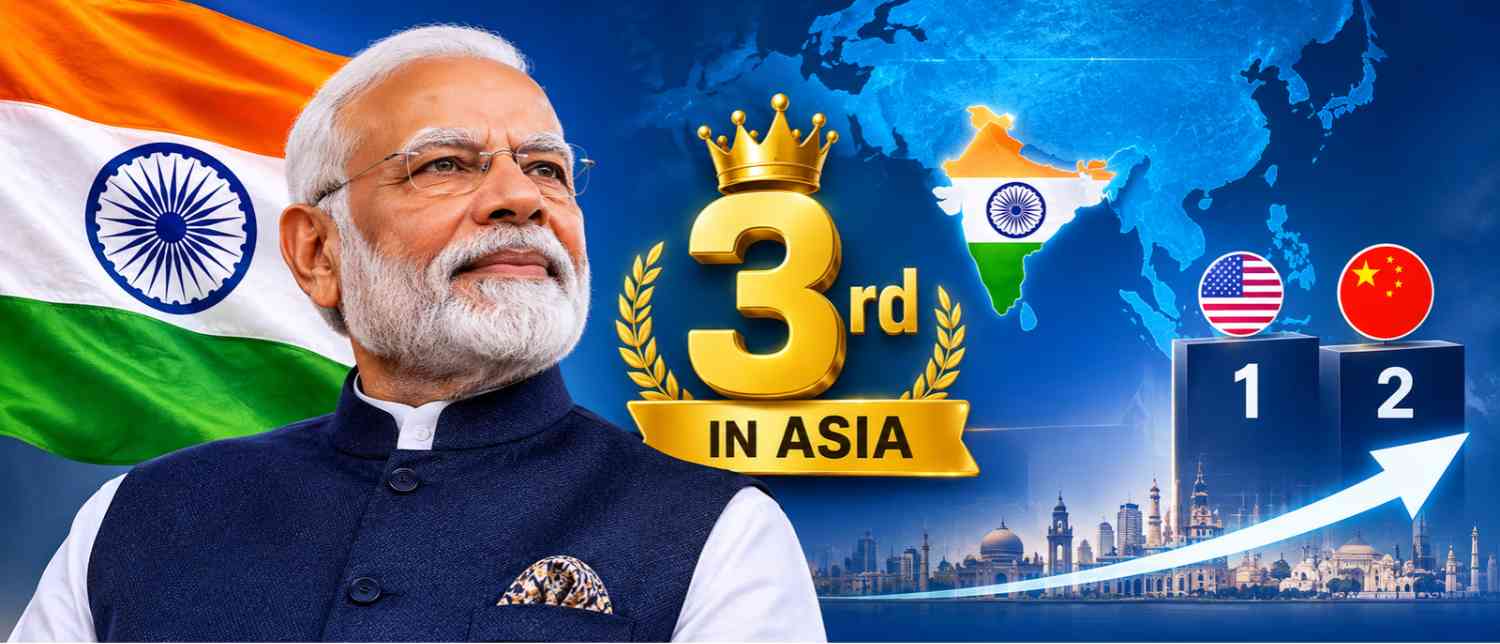
India has further strengthened its position as a major power in Asia, retaining its rank as the continent's third-most powerful country in the 2026 Asia Power Index. Adding to the country's diplomatic achievement, Prime Minister Narendra Modi has been recognised as the region's second-most effective leader, ranking just behind Chinese President Xi Jinping.
The latest rankings reflect India's growing influence across multiple areas, including defence cooperation, diplomatic engagement, cultural influence and international partnerships. More importantly, the narrowing power gap between India and China signals a gradual shift in Asia's geopolitical landscape, highlighting India's expanding role in regional and global affairs.
According to the 2026 assessment, India's overall power score increased by 0.5 points to 40.5 out of 100. This improvement brings the country closer to China than at any point since the index was first introduced in 2018.
While the United States and China continue to dominate the regional power rankings, India's consistent performance reinforces its position as an increasingly influential Asian powerhouse.
India Ranks Third in Asia Power Index 2026
India has retained its third position in the Asia Power Index 2026, maintaining its standing among the most powerful countries in the Indo-Pacific region.
The United States secured the first position with a score of 78.9, followed by China with 73.6 points. India occupied the third position with 40.5 points, consolidating its status as a major regional power.
The rankings assess countries based on their ability to influence events and outcomes within the region. Rather than focusing exclusively on economic size or military strength, the index considers a broader combination of resources, capabilities, relationships and strategic influence.
India's improved score is particularly significant because it demonstrates progress despite the increasingly competitive geopolitical environment. The country's ability to maintain economic relationships, strengthen defence partnerships and expand its cultural reach has contributed to its overall performance.
The latest assessment also highlights an important development: India's power gap with China has narrowed to its lowest level since 2018. Although China continues to maintain a considerable lead, the changing numbers indicate that India is gradually strengthening its position in Asia's strategic landscape.
PM Narendra Modi Ranked Second-Most Effective Leader in Asia
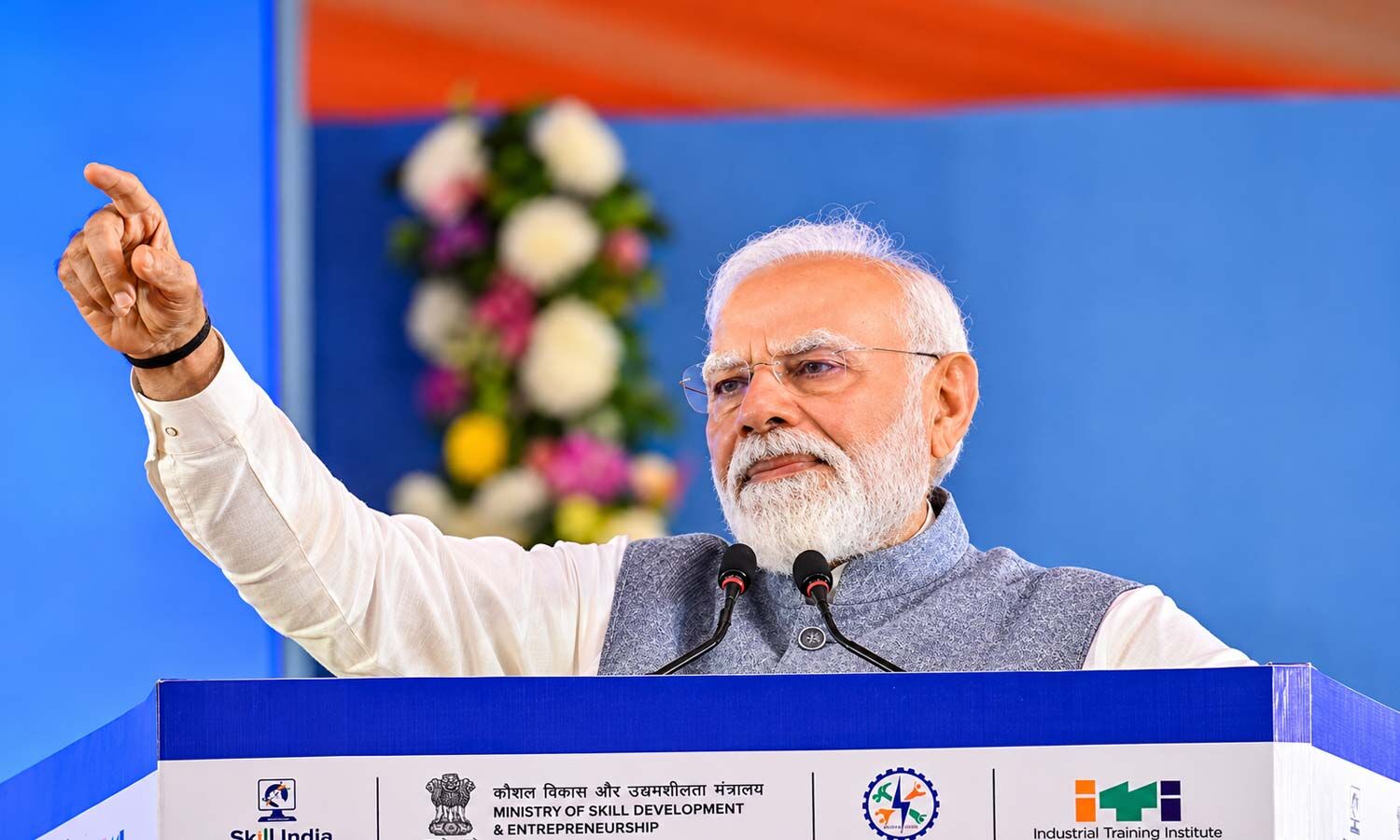
Another major highlight of the 2026 rankings is Prime Minister Narendra Modi's improved standing in regional leadership.
Modi has been ranked the second-most effective regional leader in Asia, behind Chinese President Xi Jinping. Notably, his position improved by three places compared with the 2025 assessment, reflecting stronger expert evaluations of his regional leadership.
The improvement comes at a time when Asia is experiencing significant geopolitical uncertainty, economic competition and shifting international alliances.
The assessment suggests that political stability and continuity in India's foreign policy have contributed to the improved perception of Modi's leadership. His long tenure as Prime Minister, alongside the continued presence of External Affairs Minister S Jaishankar, has provided consistency in India's diplomatic engagement.
However, the assessment also highlighted some limitations. India's relatively low diplomatic profile during the Gulf conflict affected perceptions of Modi's global leadership and strategic ambitions.
The distinction between regional and global leadership is important. While Modi's regional leadership assessment improved considerably, the country's diplomatic positioning during international conflicts remains an area requiring greater attention.
Nevertheless, securing the second position among Asia's most effective regional leaders represents a significant achievement for India's political and diplomatic standing.
How India Is Narrowing Its Power Gap With China
One of the most noteworthy findings of the Asia Power Index 2026 is the narrowing gap between India and China.
China continues to hold a substantial advantage, with its overall power estimated to be approximately 80% higher than India's. However, the difference between the two countries has reached its lowest level since the index was launched in 2018.
This development is particularly significant considering China's established position as a major economic, military and technological power.
India's growing influence reflects improvements across several strategic areas, including military capability, defence partnerships, diplomatic engagement and future economic resources.
The changing balance does not suggest that India has caught up with China. Rather, it indicates that India is gradually strengthening its regional influence and expanding its strategic capabilities.
The development also highlights India's increasing importance in the Indo-Pacific, where competition between major powers continues to shape international relations.
For India, reducing the power gap with China will depend on sustained economic expansion, military modernisation, technological development and stronger regional partnerships.
Defence Cooperation and BrahMos Missile Sales Strengthen India's Regional Influence
Defence cooperation has emerged as one of the important contributors to India's improved position in the 2026 rankings.
India recorded a 2.1-point improvement in defence networks, with its ranking in this category rising by two places to ninth.
An important factor behind this improvement has been India's expanding defence engagement with Southeast Asian countries.
The growing international interest in India's defence capabilities, particularly the BrahMos supersonic cruise missile, has helped strengthen its strategic partnerships.
BrahMos missile sales to Southeast Asian countries represent an important development in India's defence diplomacy. These partnerships demonstrate that India is increasingly positioning itself not just as a defence consumer but also as a defence exporter and security partner.
Such cooperation can create long-term strategic relationships through military procurement, training, technology collaboration and defence consultations.
India's expanding defence engagement also strengthens its position in the Indo-Pacific, a region of growing geopolitical and maritime importance.
However, defence networks remain one of India's weaker performance areas, ranked ninth among the countries assessed. This indicates that there is considerable room to expand military partnerships, joint exercises and regional security cooperation.
Cultural Influence Records India's Biggest Improvement
While defence cooperation has strengthened India's strategic position, cultural influence emerged as the country's strongest area of improvement in the 2026 assessment.
India recorded a 2.3-point increase in cultural influence, taking its score to 43.8.
The improvement reflects India's expanding cultural presence and its ability to connect with other countries through cultural projection, information flows and people-to-people exchanges.
India's cultural influence extends across several dimensions, including its entertainment industry, traditional heritage, international diaspora, educational connections and growing global visibility.
Bollywood, Indian cuisine, yoga, traditional festivals and the country's rich cultural heritage continue to contribute to its international recognition.
The Indian diaspora also plays an important role in strengthening relationships between India and other countries. Through professional networks, business connections, cultural activities and educational exchanges, overseas Indians contribute to the country's international presence.
The improvement in cultural influence suggests that India's soft power is becoming an increasingly important component of its overall regional standing.
Unlike military or economic capabilities, cultural influence develops through sustained engagement and international perceptions. India's progress in this area demonstrates the growing importance of its cultural identity in shaping its position across Asia.
India's Economic Capability Faces Challenges Despite a Positive Outlook
Despite improvements in several areas, India's economic capability remained a key challenge in the 2026 rankings.
The country recorded a decline of 0.7 points in this category, bringing its score to 26.4. The assessment attributed the decline partly to a weakening rupee, changes in the International Monetary Fund's methodology for measuring economies and a reduction of nearly $20 billion in India's outbound investment.
Despite the setback, India retained third place in the economic capability category.
Importantly, its future resources score improved to 56.2 points, placing it third overall in this measure. This indicates a relatively positive long-term outlook for India's economic and strategic potential.
Future resources consider factors such as projected economic resources, defence spending and demographic advantages.
India's large working-age population and economic growth potential could provide significant opportunities over the coming decades. However, converting these advantages into greater regional influence will require sustained investment in infrastructure, manufacturing, technology, education and employment generation.
The decline in economic capability also highlights why economic expansion alone cannot be treated as the only measure of national power. A country's ability to translate its resources into international influence is equally important.
For India, strengthening economic competitiveness while maintaining stable international trade and investment relationships will remain essential.
India Records Improvements Across Five of Eight Power Measures
The 2026 assessment evaluates countries across eight broad measures of power, covering economic capability, military capability, resilience, future resources, economic relationships, defence networks, diplomatic influence and cultural influence.
India registered improvements in five of these eight measures, while experiencing marginal declines in the remaining three, according to the assessment.
Its performance across individual categories highlights both its growing strengths and the areas requiring further development.
|
Measure |
India's 2026 score |
Global regional rank |
|---|---|---|
|
Economic capability |
26.4 |
3rd |
|
Military capability |
48.5 |
4th |
|
Resilience |
55.4 |
4th |
|
Future resources |
56.2 |
3rd |
|
Economic relationships |
19.9 |
7th |
|
Defence networks |
18.6 |
9th |
|
Diplomatic influence |
70.3 |
4th |
|
Cultural influence |
43.8 |
4th |
Scores and rankings as reported in the 2026 assessment. The overall comprehensive power score is 40.5.
India's strongest performance remains in future resources, where it secured third place. Diplomatic influence is another significant strength, with a score of 70.3.
Its economic relationships also remained relatively stable, making India one of the few countries whose economic connections did not weaken during the assessment period.
These results demonstrate that India's growing regional power is supported by a combination of existing capabilities and long-term potential.
US and China Continue to Dominate Asia's Power Rankings
Although India has strengthened its position, the United States and China continue to dominate the regional power structure.
The United States secured the top position with 78.9 points, while China followed closely with 73.6 points. The difference between the two countries narrowed to just 5.3 points, the smallest gap recorded since 2018.
The changing balance reflects broader geopolitical developments, including shifts in military capabilities, economic strength and diplomatic influence.
The assessment also recorded a six-point decline in US diplomatic influence, bringing its score to 76.7. This marked its steepest decline and fourth consecutive annual fall in this category.
Factors affecting perceptions of American diplomatic influence included the Iran conflict, punitive tariffs and calls to scale back military exercises with South Korea.
Despite these changes, the regional balance of power remains largely dominated by Washington and Beijing.
India's position as the third-most powerful country therefore becomes particularly significant. It demonstrates that the country is emerging as an influential regional player even as the world's two established superpowers continue to compete for strategic dominance.
What India's Third Position in Asia Power Index 2026 Means for the Future
India retaining third place in the Asia Power Index 2026 is more than a numerical achievement. It reflects the country's growing importance in shaping regional security, economic relationships and geopolitical developments.
The improvement in its overall score, narrowing power gap with China and Prime Minister Narendra Modi's improved leadership ranking collectively highlight India's expanding influence.
However, the assessment also presents a realistic picture of the challenges ahead.
Economic capability needs strengthening, defence networks require further expansion, and India's diplomatic engagement must become more visible in complex international situations.
The country will also need to convert its demographic advantages and future economic potential into tangible strategic capabilities.
Going forward, stronger trade partnerships, technological innovation, defence exports, infrastructure development and consistent diplomatic engagement could help India improve its position further.
For now, retaining the third position and securing recognition for its leadership mark another important milestone in India's emergence as a major Asian power.
The 2026 rankings underline a clear message: India may still have considerable ground to cover before matching China's overall strength, but its influence across Asia is growing, and its role in shaping the region's future is becoming increasingly difficult to overlook.
© Copyright 2026. All Rights Reserved. Powered by Vygr Media.