 By
By 
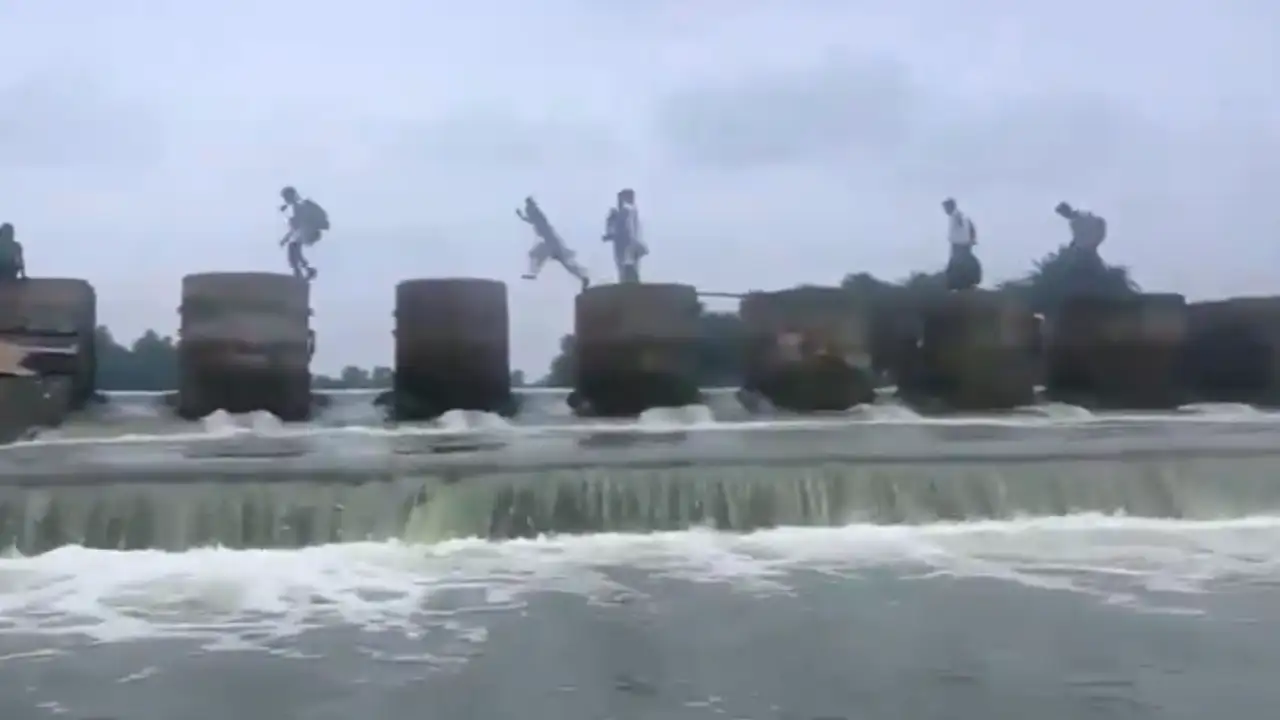
A viral video from Madhya Pradesh's Vidisha district has reignited a national conversation on rural infrastructure and educational access after showing schoolchildren risking their lives by hopping across concrete pillars of a stop dam on the Betwa River just to attend classes.
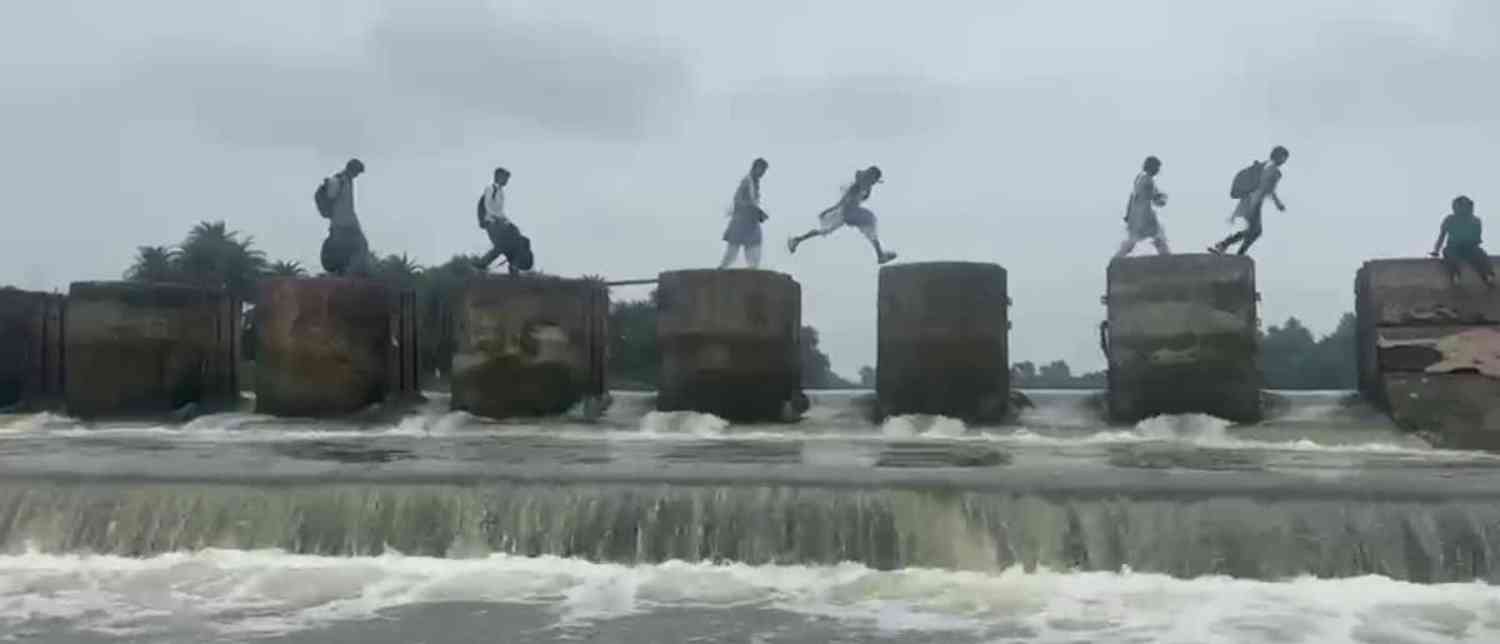
The footage, which has spread widely across social media, captures students carefully balancing themselves while crossing the narrow concrete pillars with fast-flowing water on both sides. A single misstep could prove fatal. Yet for these children, the dangerous route has become part of their daily routine because the safer alternative requires travelling several extra kilometres.
A Shortcut That Comes at the Cost of Safety
The children belong to Kakraua (also reported as Karua) village in Vidisha district and study at the Government High School in nearby Paloh village. According to local officials, they use the stop dam over the Betwa River because it dramatically reduces the distance to school.
While the road route requires an additional detour of approximately 8 to 10 kilometres, crossing the dam cuts the journey down to nearly 1.5 kilometres. Faced with this choice every morning, many students opt for the hazardous shortcut despite the obvious risks.
The video shows groups of children jumping from one concrete pillar to another with remarkable balance and coordination. In several instances, boys can be seen carrying not only their own school bags but also those of their female classmates, allowing the girls to cross more safely.
While the act of mutual support has drawn admiration online, it has also highlighted the harsh reality that children are forced to depend on courage and teamwork instead of safe public infrastructure to access education.
Years of Risking Their Lives
According to statements from both students and local authorities, this is not a one-time incident triggered by seasonal conditions. Children have reportedly been using the dangerous crossing for the past four to five years because they have few practical alternatives.
Residents say the stop dam has become an unofficial route connecting villages to the school. During the monsoon, however, the danger increases significantly as water levels rise and the current becomes stronger, making the crossing even more perilous.
The viral footage has prompted widespread concern across social media, with many users questioning why students should have to risk their lives simply to receive an education.
Administration Responds After Public Outrage
Following the circulation of the video, district authorities acknowledged the issue and announced a series of immediate and long-term measures.
Vidisha Sub-Divisional Magistrate Kshitij Sharma said bicycles would be provided to the affected students so they could use the longer but safer road route instead of crossing the dam. Officials also said a proposal has been sent for constructing a temporary bridge across the Betwa River to provide safer connectivity.
In addition, the administration is reportedly considering opening a school closer to the affected villages, a move that could permanently eliminate the need for children to undertake the dangerous journey every day.
Authorities have also verified the authenticity of the viral video and confirmed that it was filmed in the Paloh area of Vidisha district.
Schoolchildren in MP's Vidisha risk their lives every day by jumping across concrete pillars on the Betwa River to reach school. Locals say it's been happening for 7–8 years despite repeated complaints. A bridge is still awaited. #Vidisha #MadhyaPradesh #BreakingNews pic.twitter.com/RFQanzQBFw— Pooja Talwar (@PoojaTalwar21) August 4, 2026
Education Should Not Require Extraordinary Courage
The incident has once again exposed the stark disparity between urban and rural access to education.
Across many parts of rural India, inadequate transport infrastructure continues to create significant barriers for schoolchildren. In remote villages, students often walk several kilometres daily, cross rivers without bridges, or navigate unsafe terrain simply to attend classes.
While stories of determination and resilience frequently capture public attention, education experts argue that such narratives should not overshadow the systemic shortcomings that make these risks necessary in the first place.
The Vidisha incident serves as a reminder that the constitutional promise of accessible education extends beyond classrooms and teachers. Safe roads, bridges, transportation and basic connectivity are equally essential components of ensuring every child's right to education.
Viral Video Sparks National Debate
The images from Vidisha have generated strong reactions across social media platforms, where thousands expressed shock over the children's daily ordeal.
Many users praised the students' determination to pursue education despite enormous challenges, while others criticised the lack of infrastructure that left them with no safer option. Several posts described the visuals as "heart-wrenching" and questioned why such conditions continue to exist in villages despite years of development initiatives.
The video has also revived broader discussions about rural infrastructure gaps, especially in regions where geographical barriers continue to affect access to schools, healthcare and essential services.
Beyond Viral Outrage
Although the administration has announced corrective measures, residents hope the response will translate into permanent solutions rather than temporary relief.
Providing bicycles may reduce the immediate dependence on the dangerous shortcut, but it still requires students to travel considerably longer distances every day. Similarly, a temporary bridge would improve safety in the short term, yet many believe permanent infrastructure and better educational planning are needed to prevent similar situations elsewhere.
The proposal to establish a school closer to the affected villages could offer a sustainable solution if implemented promptly. Until then, the children of Kakraua remain dependent on daily decisions that no student should ever have to make.
A Story That Reflects a Larger Challenge
The Vidisha incident is more than an isolated viral video. It reflects the broader challenges faced by thousands of rural families across India, where inadequate infrastructure often determines whether children can access education safely.
For these students, attending school is not merely a matter of discipline or dedication—it involves calculating physical risks every single day.
Their determination has earned admiration nationwide, but it has also raised uncomfortable questions about governance, rural connectivity and equal access to education. As public attention remains focused on Vidisha, the real test will be whether the promises made in response to the viral video result in lasting improvements.
Because no child should have to balance on concrete pillars over a river simply to reach a classroom.
With input from agencies
Image Source: Multiple agencies
© Copyright 2026. All Rights Reserved. Powered by Vygr Media.