 By

India has taken another significant step towards strengthening its scientific and technological landscape with the inauguration of COSMOS-Mysuru, the country's first LED dome planetarium, by Prime Minister Narendra Modi on November 13, 2026, in Mysuru, Karnataka. Featuring advanced 8K-resolution LED dome technology, the state-of-the-art facility promises to transform how students, researchers and astronomy enthusiasts experience and understand the universe.
More than just a new scientific attraction, COSMOS-Mysuru represents India's growing commitment to scientific research, innovation and accessible education. By combining cutting-edge display technology with structured astronomy outreach programmes, the planetarium aims to bring the mysteries of space closer to people, particularly young learners who could become tomorrow's scientists and researchers.
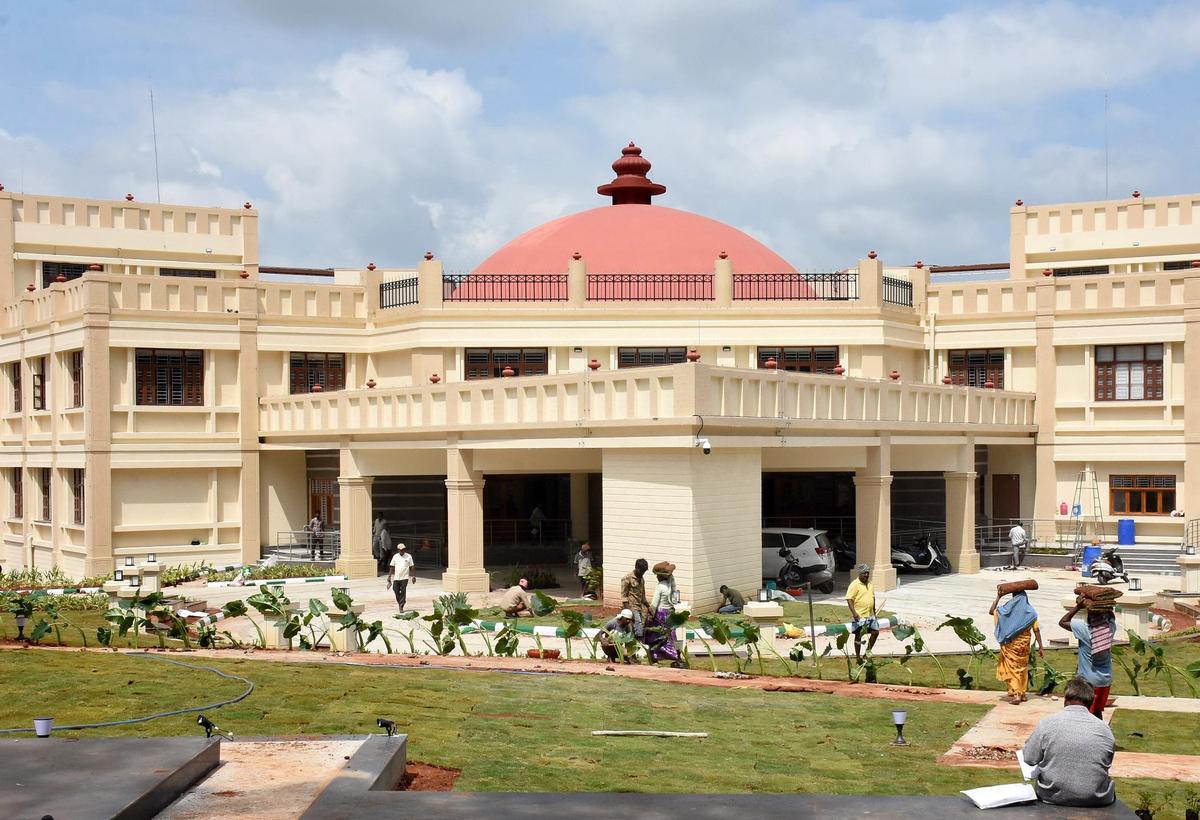
COSMOS-Mysuru: India's First LED Dome Planetarium
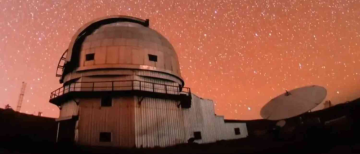
The inauguration of COSMOS-Mysuru marks an important milestone in India's astronomy and science education journey. Developed by the Indian Institute of Astrophysics (IIA) in collaboration with the University of Mysore and government departments, the facility introduces a new generation of immersive astronomical experiences.
What makes this planetarium particularly remarkable is its advanced 8K-resolution LED dome display. Unlike conventional planetariums that generally depend on projection-based systems, LED dome technology uses high-resolution displays across the dome's surface to create detailed and immersive visual experiences.
Visitors can explore celestial objects, astronomical phenomena and the vastness of the universe through expansive visual presentations. The technology is designed to make complicated scientific concepts easier to understand by allowing audiences to experience astronomical subjects in a more engaging and visually compelling environment.
COSMOS-Mysuru is also among the world's early planetarium facilities to feature an 8K-resolution LED dome, placing Mysuru on the map of advanced astronomy education infrastructure.
PM Modi Highlights the Importance of Science and Scientific Temper
Addressing the gathering after inaugurating the facility, Prime Minister Narendra Modi described COSMOS-Mysuru as an important addition to India's scientific journey. He emphasised that the planetarium would bring the wonders of the universe closer to young minds and encourage students to develop curiosity about astronomy and scientific discovery.
Drawing a comparison between Mysuru's recently inaugurated Viveka Smaraka and the new planetarium, the Prime Minister highlighted how both institutions represent different yet complementary aspects of India's intellectual traditions.
While Viveka Smaraka encourages people to look inward through spirituality and introspection, COSMOS-Mysuru inspires them to look towards the skies and explore the mysteries of the universe.
He reiterated that science and spirituality have historically progressed together in India, reflecting the country's longstanding tradition of intellectual exploration.
The Prime Minister also urged the authorities associated with the planetarium to establish stronger connections with schools and colleges and encourage educational visits. According to him, the real success of COSMOS would be measured not simply by the number of visitors but by the discoveries and achievements of the young minds it inspires.
Connecting India's Rich Astronomy Heritage With Modern Technology
India's relationship with astronomy dates back thousands of years. During his address, PM Modi recalled the contributions of legendary Indian astronomers, including Aryabhata, Varahamihira, Bhaskaracharya and Nilakantha Somayaji.
These scholars made remarkable contributions to mathematics and astronomy, studying planetary movements, celestial bodies, calendars and solar and lunar eclipses without access to the sophisticated instruments available today.
Their achievements demonstrate that scientific curiosity and the pursuit of knowledge have long been integral to India's intellectual heritage.
Mysuru itself has a distinguished history of supporting education and research. The establishment of the University of Mysore during the reign of Maharaja Nalwadi Krishnaraja Wadiyar and the Wadiyar family's contribution to the foundation of the Indian Institute of Science in Bengaluru helped strengthen the region's academic foundations.
COSMOS-Mysuru builds upon this legacy by introducing advanced astronomical infrastructure that connects India's historical scientific achievements with contemporary research and technological possibilities.
Three Years of Astronomy Outreach Behind the Planetarium
One of the most significant aspects of the COSMOS-Mysuru project is the educational groundwork undertaken before its inauguration.
The Indian Institute of Astrophysics conducted a comprehensive three-year astronomy education and outreach initiative across Mysuru city and surrounding rural areas. The programme aimed to improve awareness of astronomy and prepare local communities to make meaningful use of the upcoming facility.
During this period, more than 150 outreach events reached over 40,000 participants from different communities.
These initiatives included:
-
Astronomy activities and educational programmes in urban and rural schools.
-
Workshops for students and teachers.
-
Public lectures and technical discussions.
-
Online learning sessions conducted in English and Kannada.
-
Community engagement programmes and collaborations with local stakeholders.
-
Radio programmes featuring more than 60 episodes in Kannada and English.
This extensive outreach programme reflects an important understanding: building scientific infrastructure is only one part of developing a strong scientific culture. Equally important is ensuring that students, teachers and communities have the knowledge and opportunities to benefit from it.
With the planetarium now inaugurated, the institute plans to expand its educational activities through academic training workshops, astronomy data-analysis programmes and specialised learning sessions.
The LED dome will also serve as a teaching tool, helping students understand astronomical observations and scientific concepts beyond conventional classroom instruction.
India's Growing Achievements in Space Exploration
The inauguration of COSMOS-Mysuru comes at a time when India is making significant progress in space exploration, astronomy and astrophysics.
During his address, PM Modi highlighted several landmark achievements that demonstrate the country's expanding scientific capabilities.
Among the most prominent is Chandrayaan-3, which made India the first country to successfully land near the Moon's south polar region. Another major achievement is Aditya-L1, India's first space-based solar observatory, designed to study the Sun and its activities.
India has also demonstrated space docking and undocking capabilities, becoming the fourth country to achieve this technological milestone.
The Prime Minister further highlighted an Indian astronaut's recent visit to the International Space Station and the scientific experiments conducted during the mission. The experience and knowledge gained are expected to contribute to India's ambitious Gaganyaan human spaceflight programme.
These achievements underline the importance of investing in scientific education, advanced research facilities and opportunities for young researchers.
Space Technology Beyond Exploration: Making Science Useful for Society
India's progress in space technology is not limited to missions beyond Earth. Satellite-based innovations are increasingly contributing to everyday life and addressing practical challenges.
Highlighting the philosophy of 'Science for Society', PM Modi pointed to several applications of space technology that directly benefit citizens.
Satellite communication systems developed by ISRO help provide fishermen with timely alerts during storms, supporting safer fishing operations and return journeys.
Similarly, the Real-Time Train Tracking System, developed through collaboration between Indian Railways and ISRO, enables passengers to access information about train locations and arrival times.
Satellite imagery and other technological inputs are also being used under the Pradhan Mantri Fasal Bima Yojana to estimate agricultural yields and support crop insurance assessments.
These examples demonstrate how scientific research and space technology can extend their benefits far beyond laboratories and space missions to improve public services, agriculture, transportation and safety.
Strengthening India's Research and Innovation Ecosystem
The COSMOS-Mysuru inauguration also highlights the broader effort to create more opportunities for scientific learning and innovation across India.
The Prime Minister referred to several initiatives aimed at supporting students, researchers and educational institutions.
More than 10,000 Atal Tinkering Labs have benefited over one crore students, providing opportunities to experiment, develop ideas and explore innovation.
The One Nation One Subscription initiative is improving access to leading international research journals for Indian educational and research institutions. Meanwhile, the Anusandhan National Research Foundation aims to strengthen research capabilities across universities.
The government has also introduced a ₹1 lakh crore Research, Development and Innovation Scheme to support domestic research and help transform laboratory discoveries into practical technologies.
Additionally, opening India's space sector to private participation has created opportunities for startups and young entrepreneurs to develop rockets, launch satellites and participate in new space-related ventures.
Together, these initiatives reflect an expanding ecosystem in which scientific curiosity, research funding, technological infrastructure and private-sector participation can contribute to India's future growth.
Why COSMOS-Mysuru Matters for India's Young Generation
The biggest contribution of India's first LED dome planetarium could ultimately lie in its ability to inspire the next generation.
For students, astronomy can sometimes seem like a distant and complicated subject, limited to textbook illustrations and theoretical explanations. An immersive learning environment can make these concepts more accessible by allowing learners to visualise celestial objects, understand astronomical phenomena and develop a deeper interest in scientific questions.
The planned workshops, data-analysis programmes and institutional collaborations could further help students move from passive observation to active scientific learning.
By encouraging schools and colleges to organise visits, the facility also has the potential to make astronomy education more accessible to students from different backgrounds.
Mysuru could gradually emerge as an important destination for astronomy education, scientific engagement and public understanding of space.
COSMOS-Mysuru Opens a New Chapter in India's Scientific Journey
The inauguration of India's first 8K LED dome planetarium is more than a technological achievement. It represents an investment in curiosity, education and the country's long-term scientific ambitions.
From the pioneering calculations of ancient Indian astronomers to modern achievements such as Chandrayaan-3, Aditya-L1 and the Gaganyaan programme, India's scientific journey has continued to evolve.
COSMOS-Mysuru adds another important dimension to this progress by creating an environment where people can experience the universe, explore scientific ideas and develop an interest in research.
As the facility begins its journey, its greatest achievement may not be the sophistication of its LED technology but the inspiration it provides to young minds.
The students who walk beneath its illuminated dome today could become the astronomers, astrophysicists and space scientists making tomorrow's discoveries. And that possibility is what makes COSMOS-Mysuru a meaningful milestone for India's scientific future.
© Copyright 2026. All Rights Reserved. Powered by Vygr Media.