
 By
By 
India has taken a major step forward in its Earth-observation and space capabilities with the successful launch of the Indian Space Research Organisation’s (ISRO) GSLV-F17 rocket carrying EOS-05, an advanced imaging satellite designed to operate from geosynchronous orbit.
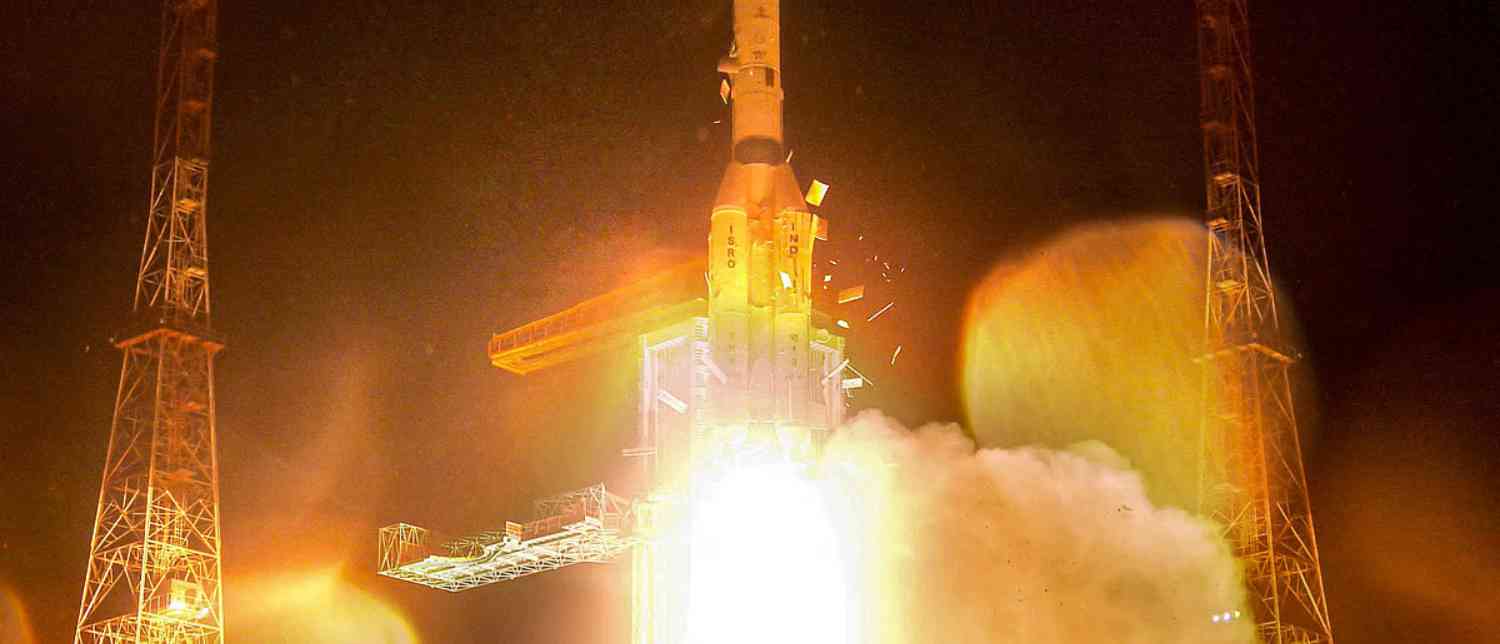
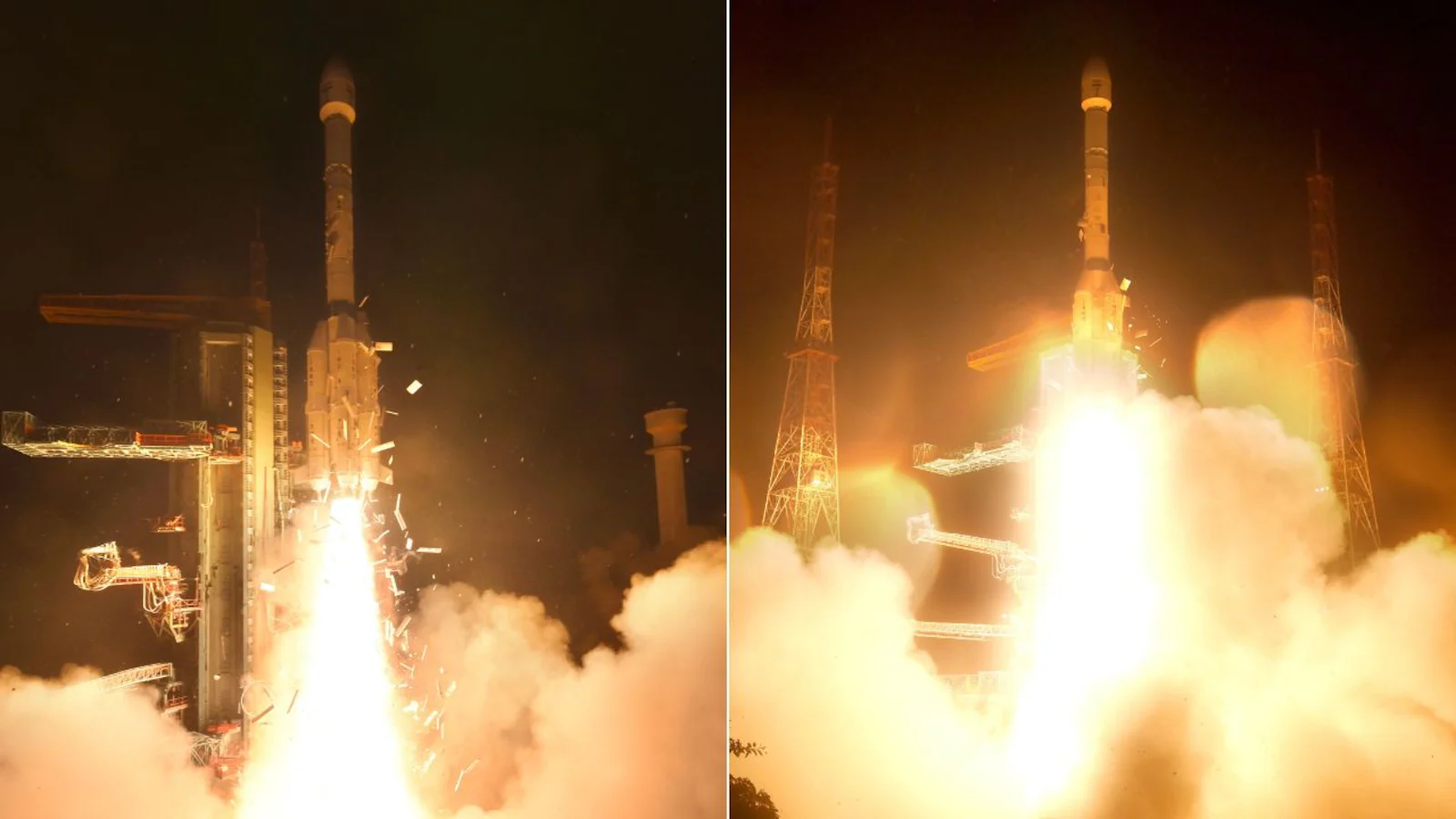
The GSLV-F17 lifted off from the Second Launch Pad at the Satish Dhawan Space Centre in Sriharikota at 2:55 am on September 4, 2026, bringing an end to a nearly eight-month gap in India’s orbital launch activity. About 18 minutes after liftoff, the rocket successfully placed EOS-05 into its intended sub-geosynchronous transfer orbit, marking a significant achievement for ISRO and India’s Earth-observation programme.
The mission is particularly significant because EOS-05 is India’s first dedicated imaging satellite intended to operate from geosynchronous orbit. Once it reaches its final operational position at roughly 36,000 km above Earth, the satellite will be capable of continuously observing a fixed region, offering a fundamentally different perspective from conventional Earth-observation satellites that move across the planet in lower orbits.

GSLV-F17 Successfully Delivers EOS-05 Into Orbit
The launch followed a smooth 27-hour countdown, which began at 11:30 pm on September 2. Despite rain and the unusual pre-dawn launch time, the mission proceeded as scheduled.
Standing 51.7 metres tall and carrying a liftoff mass of approximately 420.5 tonnes, GSLV-F17 is a three-stage launch vehicle featuring a cryogenic upper stage. The successful mission was the 19th flight of the GSLV, and it demonstrated the vehicle’s ability to deliver a considerably heavier payload into a high-energy orbit.
EOS-05 weighs approximately 2,367 kg, making it the heaviest satellite ever launched by the GSLV into a geosynchronous transfer or sub-geosynchronous transfer orbit.
The achievement also reflects the gradual evolution of India’s GSLV programme. From its early missions carrying considerably lighter payloads, the launch vehicle has undergone improvements in structural optimisation and propulsion systems. The latest mission demonstrates the progress made in the vehicle’s payload-handling capability.
Following separation, the satellite successfully deployed its solar panels and initial telemetry indicated that its systems were functioning normally. Additional orbit-raising manoeuvres will be carried out before EOS-05 reaches its intended operational geosynchronous position.
Why EOS-05 Is Different From Earlier Earth-Observation Satellites
The biggest significance of EOS-05 lies not simply in its imaging technology but in where it will operate.
Most Earth-observation satellites operate from low Earth orbit or other relatively low-altitude orbits. Because these satellites travel around Earth at high speeds, they can observe a particular location only when their orbital path brings them over that area.
EOS-05 is designed to change that equation.
At approximately 36,000 km above Earth, a satellite in geosynchronous orbit travels at a rate that matches Earth’s rotation. As a result, it can appear to remain over a particular region and repeatedly observe the same area without the long gaps associated with satellites passing overhead.
This gives EOS-05 the potential to provide near-real-time and persistent imaging, particularly valuable when events develop quickly.
The satellite has been described as an “eye in the sky” because of this ability to maintain a continuous watch over a designated region. Its observations are expected to have applications spanning civilian requirements, disaster management, agriculture and strategic activities.
Multi-Band Imaging Could Expand India’s Observation Capabilities
EOS-05 is also notable for its sophisticated imaging configuration.
The satellite has been designed with multi-band imaging capabilities covering visible, infrared, multispectral and hyperspectral portions of the electromagnetic spectrum. Such capabilities allow Earth features to be studied beyond what can be detected through ordinary visible-light imagery.
This can be particularly useful for monitoring changes on the ground, identifying environmental patterns and supporting applications where different spectral bands reveal information that ordinary photographs cannot.
The satellite’s ability to combine multiple imaging modes from geosynchronous orbit could therefore provide India with a powerful source of frequently updated Earth-observation data.
For agriculture, such information could support monitoring of crops and changing land conditions. During natural disasters, frequent observations could assist authorities in assessing affected areas and tracking the progression of events.
The strategic significance is equally important. Persistent observation from a high-altitude orbit can provide a broad and continuous view of areas of interest, potentially strengthening India’s ability to monitor developments along its territory and borders.
A Major Boost for Disaster Management and Agriculture
One of the most practical advantages of EOS-05 is the speed at which imagery can potentially be generated for changing situations.
During floods, cyclones, landslides, forest fires or other large-scale emergencies, conditions on the ground can change rapidly. A satellite capable of repeatedly observing the same region can provide a stream of information that helps authorities understand how a situation is evolving.
For agriculture, frequent observation can similarly help track vegetation and land conditions across large areas.
The importance of this capability extends beyond individual applications. Reliable Earth-observation data can support planning, infrastructure management, environmental monitoring and resource assessment, giving government agencies a more current picture of conditions on the ground.
The Mission Also Closes a Difficult Chapter for the GISAT Programme
EOS-05 carries another layer of significance because of its connection to an earlier unsuccessful mission.
The satellite is associated with the GISAT-1A designation and follows the earlier GISAT-1/EOS-03 mission, which failed during launch in August 2021.
The 2021 GSLV-F10 mission was terminated after an anomaly involving the cryogenic upper stage. The onboard computer aborted the mission roughly 307 seconds into flight, and subsequent analysis identified an issue with the cryogenic stage.
The successful deployment of EOS-05 therefore represents more than another routine satellite launch. It demonstrates the ability of the programme to return to a technically demanding objective after a previous setback.
It also comes after a difficult period for India’s launch programme.
The January 2026 PSLV-C62 mission, which carried multiple satellites, failed to place its payloads into their intended orbit following an anomaly in the vehicle’s third stage. The GSLV-F17 mission consequently became an important opportunity to restore confidence in India’s launch operations.
Its success makes EOS-05 the first successful Indian orbital launch of 2026, adding further weight to the achievement.
ISRO’s Return to the Launch Pad Comes at a Crucial Time
The successful GSLV-F17 mission arrives as India’s space programme prepares for an ambitious series of upcoming missions.
ISRO Chairman V. Narayanan said work was progressing vigorously and systematically towards the first uncrewed Gaganyaan mission, targeted for launch during 2026. The space agency is also aiming for several additional launches during the current financial year, including the NVS-03 navigation satellite.
That makes the EOS-05 mission an important confidence-building exercise.
The launch demonstrated not only the performance of the GSLV but also the ability to manage a complex spacecraft with a sophisticated payload and a demanding orbital destination.
A New Chapter in India’s Earth-Observation Strategy
The successful launch of EOS-05 marks a significant expansion of India’s space-based observation capabilities.
The satellite’s eventual position roughly 36,000 km above Earth will allow it to maintain a persistent view of a designated region, while its advanced imaging systems are expected to generate valuable data across multiple applications.
For India, the significance extends from farms and disaster zones to strategic monitoring and national planning.
The mission also demonstrates how much the GSLV programme has evolved. Carrying a 2,367-kg spacecraft into a high-energy transfer orbit is a substantial achievement for a launch vehicle whose early missions handled much smaller payloads.
As EOS-05 undergoes its remaining orbital manoeuvres and prepares for operational deployment, the focus will now shift from the drama of launch to the data the satellite can deliver.
For India, that data could translate into faster disaster response, better agricultural monitoring, more informed planning and a more persistent strategic view of the country and its surroundings.
The early hours of September 4 may have begun with a rocket piercing the dark skies over Sriharikota, but the real impact of the mission will unfold from much farther away — with EOS-05 watching Earth from the edge of space.
With input from agencies
Image Source: Multiple agencies
© Copyright 2026. All Rights Reserved. Powered by Vygr Media.