 By
By 
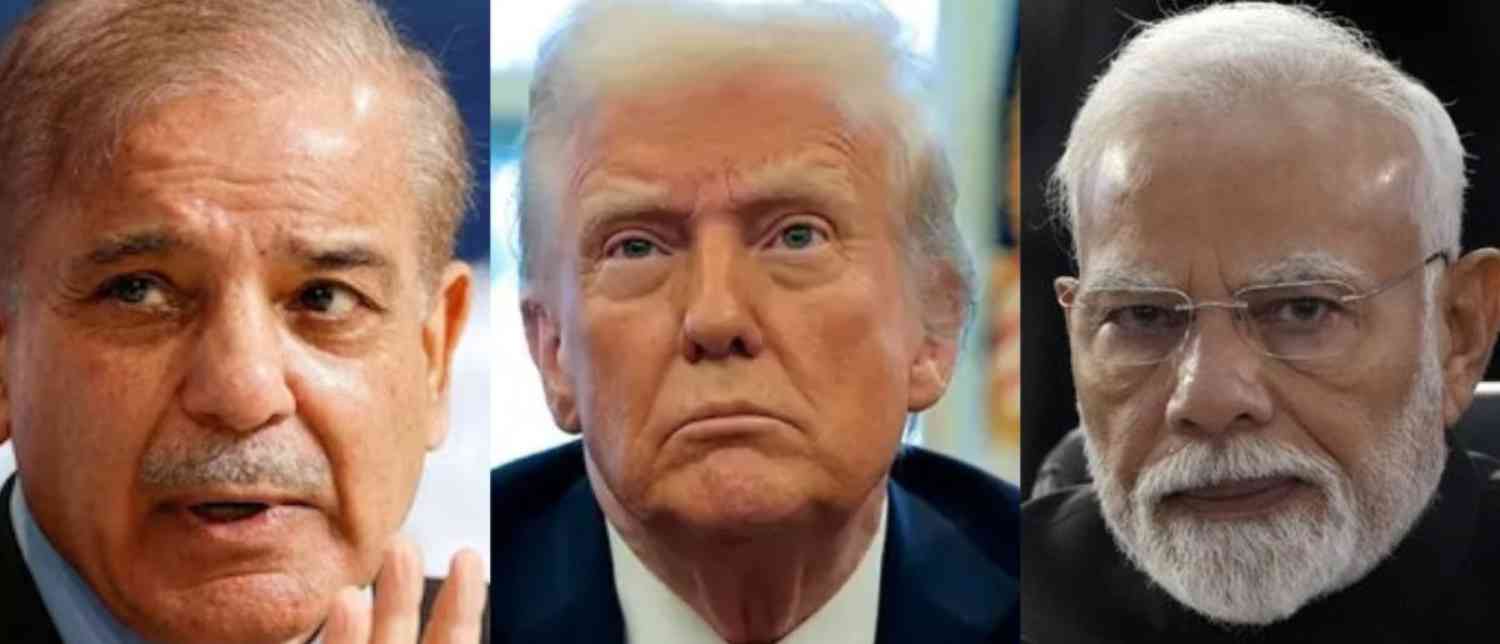
The recent remarks by Donald Trump about the India-Pakistan conflict have once again sparked debate over his claims of brokering peace between the two nuclear-armed neighbours. During his State of the Union (SOTU) address, Trump appeared to misspeak while recounting his role in defusing tensions, saying that the Prime Minister of Pakistan “would have died” if not for his involvement. The comment, dramatic even by his standards, has added to a growing list of sweeping assertions he has made about the 2025 India-Pakistan military escalation and the subsequent ceasefire.
Trump’s “35 Million Lives” Claim
In his address to the US Congress, Trump declared:
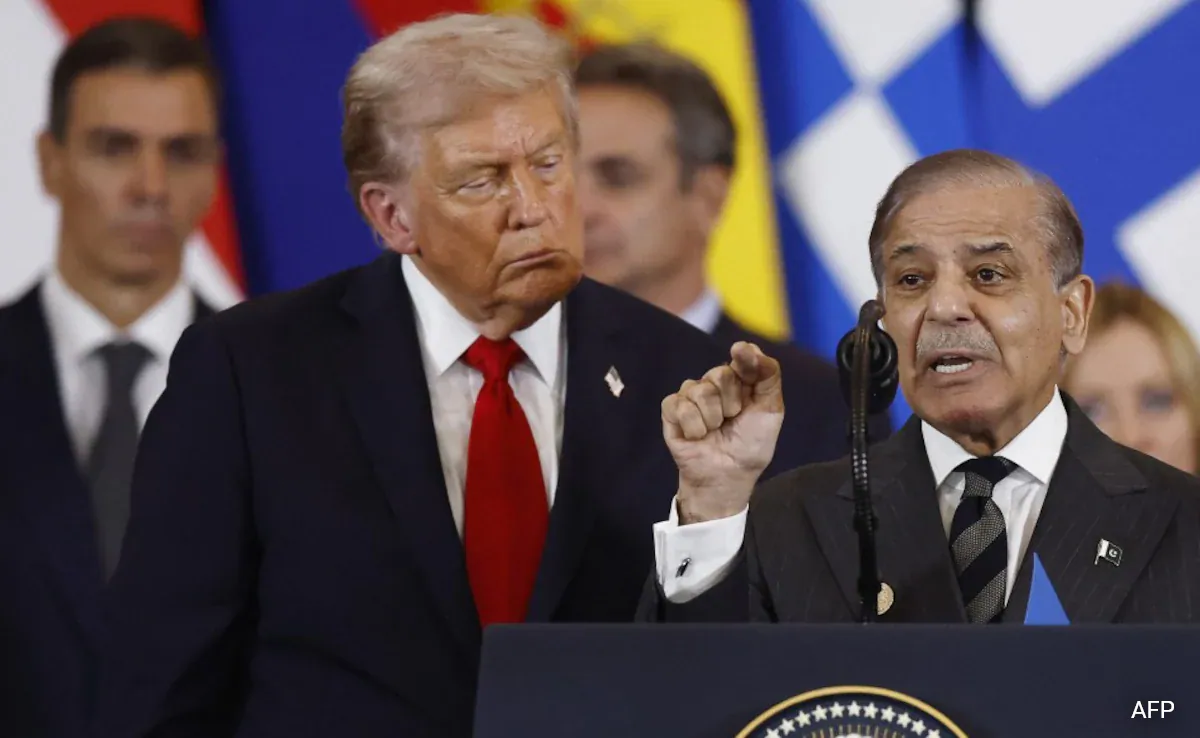
“In my first ten months, I ended eight wars… Pakistan and India would have had a nuclear war. 35 million people, said the Prime Minister of Pakistan, would have died if it were not for my involvement.”
The US President appeared to suggest that Shehbaz Sharif had told him that around 35 million people could have perished during India’s military operation had Washington not stepped in to broker a truce.
In all likelihood, Trump meant that his intervention helped save 35 million lives and that Pakistan’s Prime Minister credited him for it. However, neither Islamabad nor New Delhi has publicly confirmed the figures cited by Trump.
This is not the first time he has made the “saving 35 million lives” claim. Just days before the SOTU address, on February 20, Trump reiterated his position, saying:
“The Prime Minister of Pakistan said that President Trump could have saved 35 million lives by getting us to stop fighting. They were getting ready to do some bad things. But these tariffs have given us great national security.”
The emphasis on tariffs as a diplomatic lever has been a recurring theme in his narrative.
Operation Sindoor and the Origins of the Conflict
To understand the controversy surrounding Trump’s claims, it is crucial to revisit the events that led to the 2025 escalation.
On May 7 last year, India launched Operation Sindoor, targeting terror infrastructure in Pakistan and Pakistan-occupied Kashmir. The operation was carried out in retaliation for the April 22 Pahalgam attack, which killed 26 civilians.
India has consistently maintained that the operation was a counter-terror strike and that the subsequent understanding on cessation of hostilities was achieved through direct military-to-military engagement. According to New Delhi, talks between the Directors General of Military Operations (DGMOs) of India and Pakistan led to the de-escalation.
India has firmly denied any third-party mediation, including claims of US involvement.
“I Ended Eight Wars”
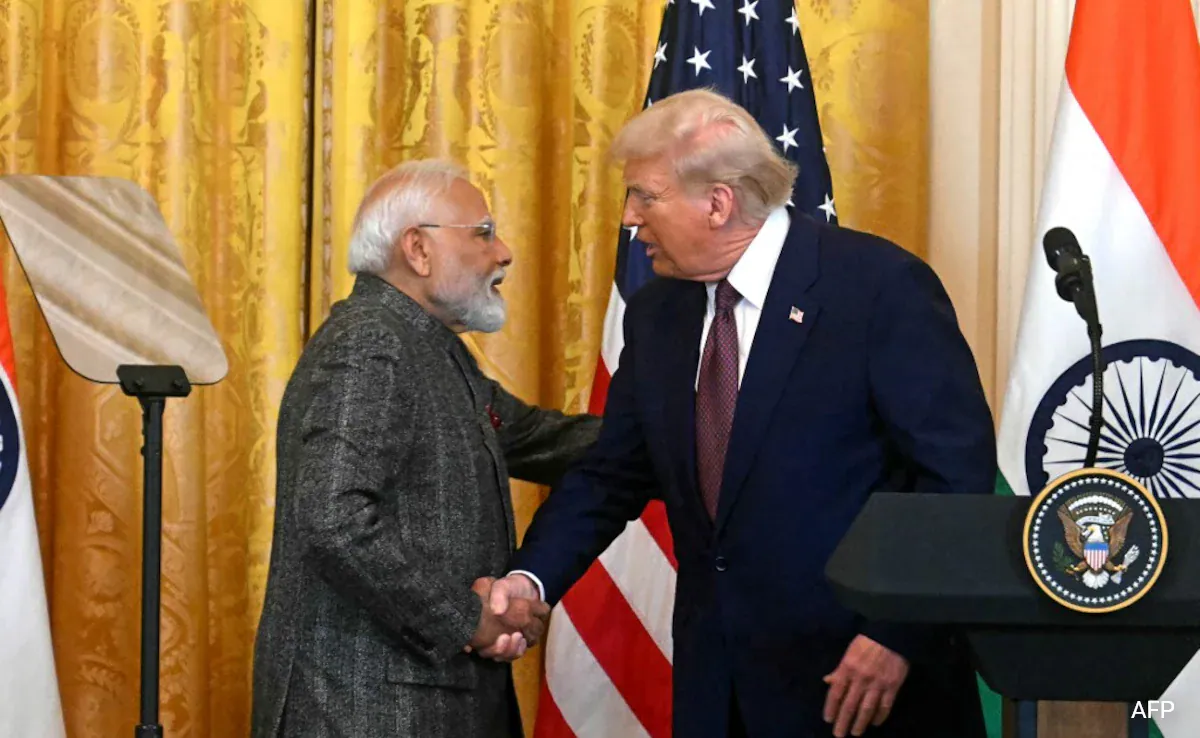
Trump has repeatedly stated that he ended eight wars within the first year of his second term in the White House. During the SOTU address, he said:
“We’re proudly restoring safety for Americans at home and abroad. In my first ten months, I ended eight wars… Pakistan and India would have had a nuclear war.”
He added that his administration is “working very hard to end a ninth war — the killing and slaughter between Russia and Ukraine,” insisting that the conflict “never would have happened” had he been president earlier.
In the same speech, Trump also honoured a World War II veteran and joked that he had “always wanted the Congressional Medal of Honour” but was informed he could not award it to himself — a remark consistent with his often self-referential style.
The Tariff Threat Narrative
Central to Trump’s account is his claim that he threatened both India and Pakistan with 200 per cent tariffs if they continued fighting. He has said that economic pressure — rather than traditional diplomacy — persuaded both nations to step back from the brink.
At a Board of Peace event in Washington, Trump framed the crisis in stark transactional terms:
“I said, if you’re going to fight, then it’s fine, but you are not doing business with the US, and you are going to pay a 200 per cent tariff… And they both wanted to fight. But when it came to losing a lot of money, they said, ‘We don’t want to fight.’”
This depiction of crisis management as economic brinkmanship stands in sharp contrast to India’s official position that the de-escalation was achieved through established military communication channels.
The Shifting Jet Numbers
Another element of Trump’s retelling that has drawn scrutiny is his changing account of aircraft losses during the conflict.
At different points, he has claimed that five, seven, eight, ten, or even eleven jets were shot down. At the Washington event, he said:
“11 jets were shot down. Very expensive jets.”
In July 2025, he reportedly referred to “five jets” being shot down, without clarifying which country’s aircraft were involved. Later, he told another audience that “seven planes were shot down… and I got it stopped.” Months after that, he mentioned “eight planes” and again attributed the halt in escalation to his intervention.
The fluidity of these figures — ranging from five to eleven — has raised questions about the factual basis of his narrative. Neither India nor Pakistan has released verified data supporting these specific tallies.
India’s Firm Rejection of Mediation Claims
While Trump has claimed credit for stopping the conflict more than 80 times since May 10 last year — the day he announced on social media that India and Pakistan had agreed to a “full and immediate” ceasefire after US-mediated talks — India has consistently rejected the premise.
New Delhi has reiterated that no issues related to US trade deals or third-party intervention were part of the discussions that led to the cessation of hostilities. According to Indian officials, the understanding was reached solely through direct communication between the two militaries’ DGMOs.
This categorical denial creates a stark contrast between Washington’s public claims and India’s official record of events.
Dramatic Storytelling vs. Diplomatic Reality
Trump’s account of the India-Pakistan conflict often carries a cinematic tone: a looming nuclear war, millions at risk, jets falling from the sky, and a last-minute intervention driven by tariff threats.
Each time he recounts the episode, details shift — whether in the number of aircraft allegedly downed or in the scale of the catastrophe that was supposedly avoided. The narrative tends to centre him as the indispensable actor, the linchpin preventing disaster.
Critics argue that such retellings blur the line between political storytelling and diplomatic fact. Peace mediation between long-time rivals with nuclear capabilities typically involves back-channel communications, careful coordination, and measured language. It is rarely reduced to public ultimatums framed as economic punishment.
Moreover, when the principal narrator of an event continually modifies key details, it becomes difficult for observers to separate verified information from political embellishment.
A Nuclear Nightmare — Or Political Theatre?
Trump’s portrayal of the crisis as a narrowly avoided nuclear war heightens the drama. The phrase “35 million people would have died” evokes apocalyptic imagery. Yet, without confirmation from either India or Pakistan, the claim remains unsubstantiated.
The India-Pakistan relationship has long been fraught with tension, and military escalations between the two have historically raised global concern. However, India’s consistent position has been that Operation Sindoor was a targeted response to a terror attack and that de-escalation followed established bilateral military mechanisms.
The suggestion that a superpower’s tariff threats alone prevented nuclear catastrophe is a narrative that fits Trump’s broader political brand — one that emphasises deal-making, economic leverage, and personal agency.
The Broader Implications
The stakes in this debate are high. India and Pakistan are both nuclear-armed states with a history of conflict. Assertions about third-party mediation are diplomatically sensitive, particularly for India, which has long opposed external involvement in bilateral disputes with Pakistan.
By repeatedly claiming credit for halting the conflict, Trump has placed himself at the centre of a geopolitical episode that both South Asian nations describe differently.
Whether his comments were a genuine misspeak, rhetorical flourish, or deliberate framing, they highlight a deeper tension between political narrative and documented diplomatic processes.
Final Thoughts
Donald Trump’s statements about the 2025 India-Pakistan conflict — particularly his claim that 35 million lives, and even Pakistan’s Prime Minister, were saved because of his intervention — have reignited controversy over the nature of US involvement in the crisis.
While Trump maintains that tariff threats and his personal diplomacy averted a nuclear war, India continues to deny any third-party mediation, asserting that direct military talks led to the cessation of hostilities following Operation Sindoor.
The evolving numbers of jets allegedly shot down, the repeated invocation of “eight wars ended,” and the dramatic language surrounding a potential nuclear catastrophe underscore a broader pattern: a narrative that shifts with each retelling.
In matters as serious as conflict between nuclear-armed neighbours, clarity and factual consistency are essential. Yet, as this episode demonstrates, when political storytelling takes centre stage, the line between reality and rhetoric can become increasingly difficult to discern.
With inputs from agencies
Image Source: Multiple agencies
© Copyright 2025. All Rights Reserved. Powered by Vygr Media.