 By
By 
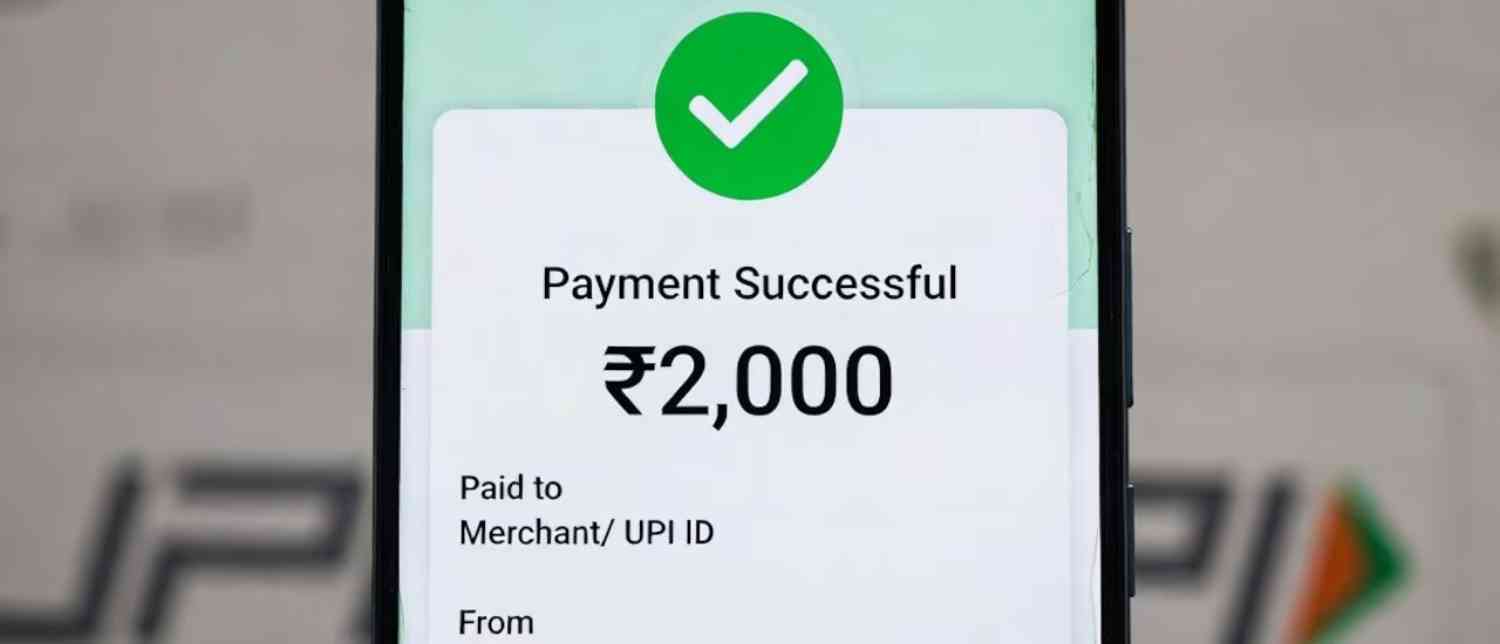
India's UPI payment system is entering a new phase. From October 15, 2026, selected UPI payments made to merchants above Rs 2,000 will attract a 0.4% Merchant Discount Rate (MDR), marking a major shift for a payment network that has operated for years without a standard merchant transaction fee.
The announcement has triggered questions among millions of UPI users: Will customers now have to pay to scan a QR code? Will sending money to friends and family become chargeable? Will shops start asking customers to pay extra? And what happens when someone pays a large electricity bill, buys fuel or books a railway ticket through UPI?
The answer is more nuanced than the headline suggesting that "UPI will now be charged."
The new MDR is primarily a merchant-side charge. Individual-to-individual UPI transfers will remain free, while merchant payments up to Rs 2,000 will also continue without MDR. Small merchants meeting the prescribed eligibility conditions will receive additional protection. At the same time, certain sectors such as railways, fuel, insurance, telecom and utilities will operate under special flat-fee arrangements rather than the standard 0.4% rate.
The change is significant because UPI has become one of India's most important everyday payment systems. In August 2026 alone, UPI processed around 24.5 billion transactions worth nearly Rs 29.8 lakh crore, underlining the enormous scale of the infrastructure now supporting India's digital economy.
UPI Charges From October 15: What Is Actually Changing?
The central change is the introduction of MDR on specified Person-to-Merchant (P2M) UPI transactions above Rs 2,000.
Under the new framework, the standard MDR will be 0.4% of the transaction value, subject to a maximum charge of Rs 300 per transaction. The fee is applicable to the merchant side rather than being added directly to the customer's payment amount.
That means a Rs 3,000 UPI payment would generate an MDR of Rs 12, while a Rs 50,000 payment would attract Rs 200. If the payment reaches Rs 75,000, 0.4% works out to Rs 300. Payments above that amount will continue to attract a maximum MDR of Rs 300 rather than increasing indefinitely.
For example, a Rs 1 lakh merchant payment would mathematically produce an MDR of Rs 400 at 0.4%. However, because of the cap, the applicable MDR would be Rs 300.
Importantly, this does not mean the customer will automatically see Rs 1,00,300 deducted from their bank account. The prescribed MDR is a charge within the merchant-payment ecosystem. Banks and payment providers have been instructed to ensure that merchants do not pass the MDR on to customers, while UPI applications have been prohibited from adding separate platform or hidden charges under the new framework.
Will Sending Money to Friends and Family Cost Money?
For ordinary users, this is perhaps the biggest concern — and one of the clearest answers.
Person-to-person (P2P) UPI transfers will remain free.
If someone sends Rs 500, Rs 5,000 or even a significantly larger amount to a friend or family member through UPI, the new MDR framework does not impose the 0.4% merchant charge on that transfer.
The distinction is important because UPI is used for two very different kinds of payments. A transfer from one individual's bank account to another individual's account is a P2P transaction. Paying a shopkeeper, restaurant, online seller or other business is generally a P2M transaction.
The new MDR applies to specified merchant transactions, not ordinary money transfers between individuals. The authorities have also clarified that individuals should not be charged a transaction fee, platform fee or another payment charge for sending or receiving money through UPI.
So, if a person is simply transferring money to a sibling, friend, parent or colleague, the October 15 MDR change does not turn that transfer into a paid service.
UPI Payments Up to Rs 2,000 Will Remain Free
Another major protection built into the new system is the Rs 2,000 threshold.
Merchant UPI payments up to and including Rs 2,000 will continue to carry zero MDR. This means that many routine digital purchases — particularly small-value payments at neighbourhood shops, restaurants, stores and other businesses — will remain outside the standard MDR framework.
The authorities have indicated that payments up to Rs 2,000 account for more than 95% of P2M UPI transaction volume, meaning the majority of merchant transactions by count will remain outside the new charge structure.
The threshold therefore creates a clear divide between smaller everyday payments and higher-value merchant transactions.
For example, someone paying Rs 800 for groceries through UPI would remain outside the MDR system. A Rs 1,500 restaurant bill would also remain free of MDR. But a Rs 3,000 merchant payment would fall into the new framework and generate a 0.4% merchant-side charge.
This distinction is likely to become increasingly important for businesses as they adjust their payment systems after October 15.
Small Merchants Get an Additional Exemption
The new system also attempts to shield smaller businesses from the financial impact of MDR.
Small merchants receiving up to Rs 1 lakh a month through UPI QR payments under the applicable small-merchant category will continue to operate with zero MDR. The provision is particularly relevant to street vendors, neighbourhood stores and other small businesses that depend heavily on QR-based digital payments.
The reasoning behind this exemption is straightforward. A tiny retailer operating on narrow margins could find even a relatively small payment-processing cost significant if applied across every transaction.
By protecting eligible small merchants, the framework seeks to preserve the role of UPI in small-value commerce while introducing monetisation primarily in higher-value segments.
However, industry representatives have raised concerns over whether the Rs 1 lakh monthly threshold is sufficient for all businesses that consider themselves small or medium-sized. Some retailers have warned that additional payment costs could influence merchant behaviour, particularly during periods of high transaction volumes.
Rail Tickets, Fuel, Insurance and Utilities Will Have Special Rates
Not every payment above Rs 2,000 will be subject to the standard 0.4% rate.
Several important categories have been placed under a concessional structure. These include areas such as railway payments, fuel, insurance, telecom and utility services.
For qualifying transactions above Rs 2,000 in these categories, the MDR will generally be a flat Rs 5 per transaction, rather than 0.4% of the payment value.
That difference can become substantial for large payments.
Consider a fuel purchase of Rs 10,000. A standard 0.4% MDR would amount to Rs 40, but the applicable special rate would instead be Rs 5. The same principle is intended to prevent the processing cost from becoming disproportionately high for essential services and sectors where margins may already be relatively narrow.
Utility payments, including certain electricity, water and other designated service payments, are also covered by the special framework.
For customers, the key point remains the same: these MDR charges are structured as merchant-side costs rather than an additional amount that should automatically be added to the user's bill.
UPI AutoPay and Recurring Payments Remain Outside the MDR
Another important clarification concerns recurring UPI payments.
Automated transactions made through UPI mandates or AutoPay will not attract the prescribed MDR under the new framework. This matters for people who use UPI for recurring payments such as OTT subscriptions, utility bills, memberships and other automated services.
In practical terms, consumers who have already set up recurring UPI mandates do not need to assume that every future automated debit will suddenly become more expensive because of the new MDR regime.
The distinction once again comes down to how the payment is classified and processed.
Capital Market Payments Will Have a Separate MDR
Payments connected with the capital markets will also have a special rate.
UPI transactions involving areas such as mutual funds, securities, stockbrokers and other eligible capital-market participants will attract an MDR of 0.02%, with a maximum charge of Rs 300.
The much lower rate compared with the standard 0.4% reflects the different nature and typically larger value of these transactions.
For investors, however, the important point is that the MDR remains an ecosystem-level merchant charge rather than a blanket UPI transaction fee imposed on every individual.
Why Is UPI Introducing MDR Now?
The introduction of MDR represents a major change in the economics of UPI.
For years, the payment system has prioritised rapid adoption, convenience and financial inclusion. Users became accustomed to scanning a QR code and transferring money without thinking about transaction costs. Merchants, meanwhile, could accept digital payments without paying the traditional card-style merchant fees associated with some other payment systems.
But operating UPI at its current scale is not cost-free.
The infrastructure requires substantial spending on servers, bandwidth, cybersecurity, fraud prevention, technical support and system upgrades. Estimates cited in connection with the new framework put the annual cost of maintaining and operating the UPI ecosystem at around Rs 20,000 crore.
The new MDR therefore represents an attempt to create a more predictable commercial revenue stream for the payment ecosystem instead of relying as heavily on government support.
Revenue generated through the MDR is expected to be distributed among various participants in the UPI ecosystem, including banks, payment service providers, acquiring institutions and the payment network.
The broader objective is to create a financial model capable of supporting UPI's next stage of expansion, including investment in infrastructure, cybersecurity, innovation and customer support.
Could UPI Become More Expensive for Consumers Indirectly?
This is where the debate becomes more complicated.
Officially, consumers are not supposed to pay the new MDR directly. The fee is intended to be borne by merchants, and banks have been advised to ensure that businesses do not transfer the cost to customers. UPI applications are also not permitted to introduce separate platform or hidden charges for these transactions.
However, merchants operate businesses and may respond to additional costs in different ways.
A large retailer, online platform or restaurant may decide to absorb the MDR as part of its operating expenses. Another business could potentially reconsider which payment methods it encourages customers to use.
This has become one of the main concerns among sections of the retail industry. Some merchant groups have warned that the additional cost could encourage certain businesses to favour cash or other payment methods, particularly where profit margins are thin.
That does not mean such a shift will necessarily occur across the market. Consumer behaviour, merchant margins, competition and the cost of handling cash will all influence how businesses respond.
Cash, after all, is not entirely free either. Businesses incur expenses related to handling, depositing and managing physical currency.
The Bigger Question: Can UPI Remain Free for Users and Sustainable for the Ecosystem?
The MDR decision highlights a difficult balancing act.
UPI has been hugely successful partly because it removed friction from digital payments. There is no need for users to understand payment-processing fees before buying a meal, sending money to a friend or paying a local shopkeeper.
That simplicity helped make QR-code payments a part of everyday life.
At the same time, the scale of UPI has changed dramatically. A system processing billions of transactions every month requires infrastructure capable of operating continuously, securely and reliably. Fraud prevention, cybersecurity and technical capacity become increasingly important as more of India's economic activity moves onto the network.
The new MDR attempts to address that financial sustainability question without introducing a blanket charge on consumers.
The structure is therefore deliberately selective: P2P transfers remain free, merchant payments up to Rs 2,000 remain free, eligible small merchants remain protected, essential sectors receive concessional treatment, and higher-value commercial transactions bear the standard MDR.
What UPI Users Should Know Before October 15
For most users, there is no need to change the way they use UPI simply because the MDR is being introduced.
The most important points to remember are:
-
Sending money to friends and family through UPI remains free.
-
Merchant payments up to Rs 2,000 remain free of MDR.
-
Selected merchant payments above Rs 2,000 will attract a 0.4% MDR on the merchant side.
-
The standard MDR is capped at Rs 300 per transaction.
-
Eligible small merchants receiving up to Rs 1 lakh a month through UPI QR payments remain exempt.
-
Railways, fuel, insurance, telecom and certain utility payments have special Rs 5 MDR arrangements above the applicable threshold.
-
Capital-market transactions have a separate 0.02% MDR, subject to a Rs 300 cap.
-
UPI AutoPay and mandates remain outside the prescribed MDR charge.
-
Customers should not be charged a separate UPI platform fee or hidden MDR-related fee.
The real change, then, is not that UPI has suddenly become a paid service for ordinary users. Instead, India is moving from a largely zero-MDR UPI ecosystem toward a differentiated pricing structure for certain commercial transactions.
What This Means for India's Digital Payment Future
The October 15 change could prove important far beyond the immediate question of a 0.4% fee.
For merchants, it introduces a new operating cost for certain transactions. For banks and payment companies, it creates a potential revenue stream. For policymakers, it offers a way to fund the infrastructure supporting an increasingly central part of India's economy.
And for consumers, the immediate impact is designed to be limited.
The larger test will be whether the new model can generate enough revenue to strengthen UPI without undermining the very convenience and affordability that made the system so widely adopted.
India's digital-payment story has been built around scale, speed and low friction. The new MDR framework represents an attempt to make that system financially sustainable while preserving free access for the majority of everyday users.
From October 15, the QR code will still be there. The familiar UPI apps will still work. Sending money to family will still be free. Small purchases will largely remain unaffected.
But behind the simple act of scanning and paying, the economics of India's most widely used digital payment network will have changed.
With input from agencies
Image Source: Multiple agencies
© Copyright 2026. All Rights Reserved. Powered by Vygr Media.