 By
By 
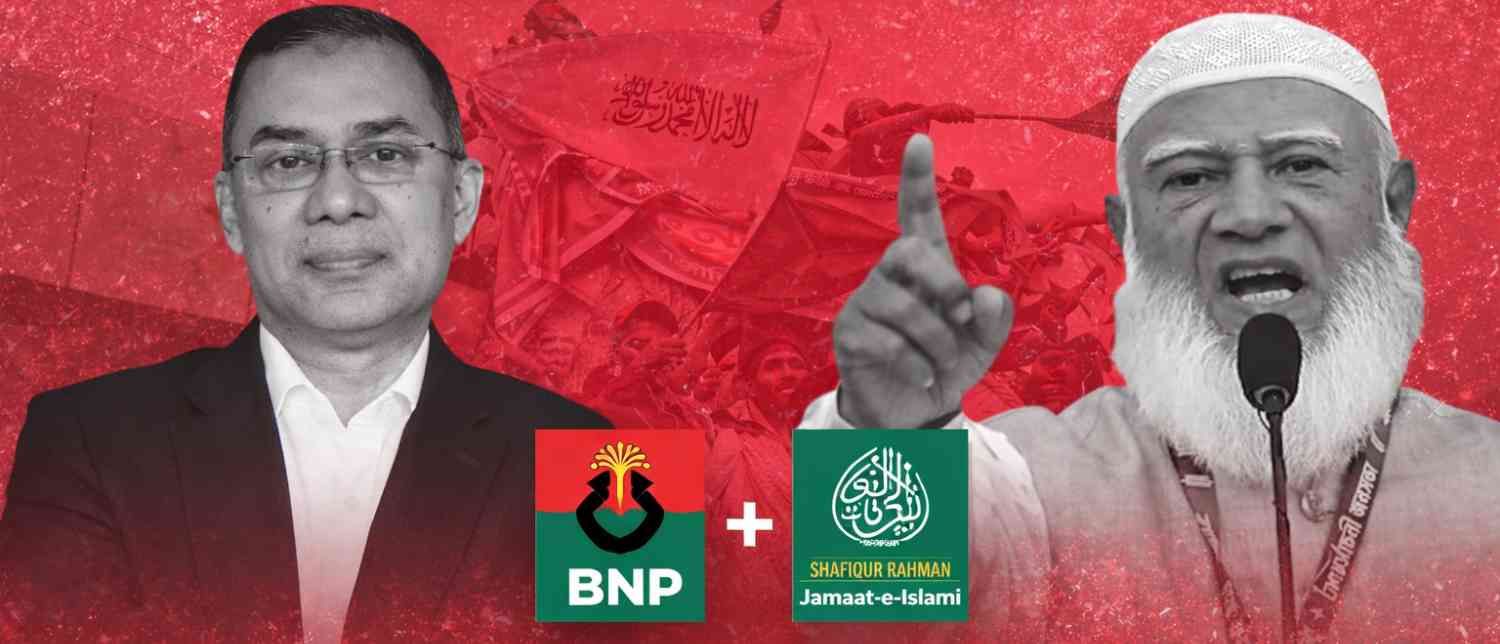
Bangladesh has delivered what many are calling its first genuinely competitive election in 17 years. On the surface, the result appears decisive: the Bangladesh Nationalist Party (BNP) has secured a commanding two-thirds majority, winning 212 of 299 seats. After years of entrenched one-party dominance and widespread allegations of rigging in previous polls, this moment feels like a democratic release valve.
But beneath the headline lies a far more complex and potentially volatile transformation—one that involves the meteoric rise of Jamaat-e-Islami, the controversial constitutional referendum championed by Muhammad Yunus, the total absence of the Awami League, and a geopolitical realignment that places India, China, Pakistan, and even the United States in renewed competition for Dhaka’s favor.
If this is a reset, it is not a clean one.
A Landslide with Shadows
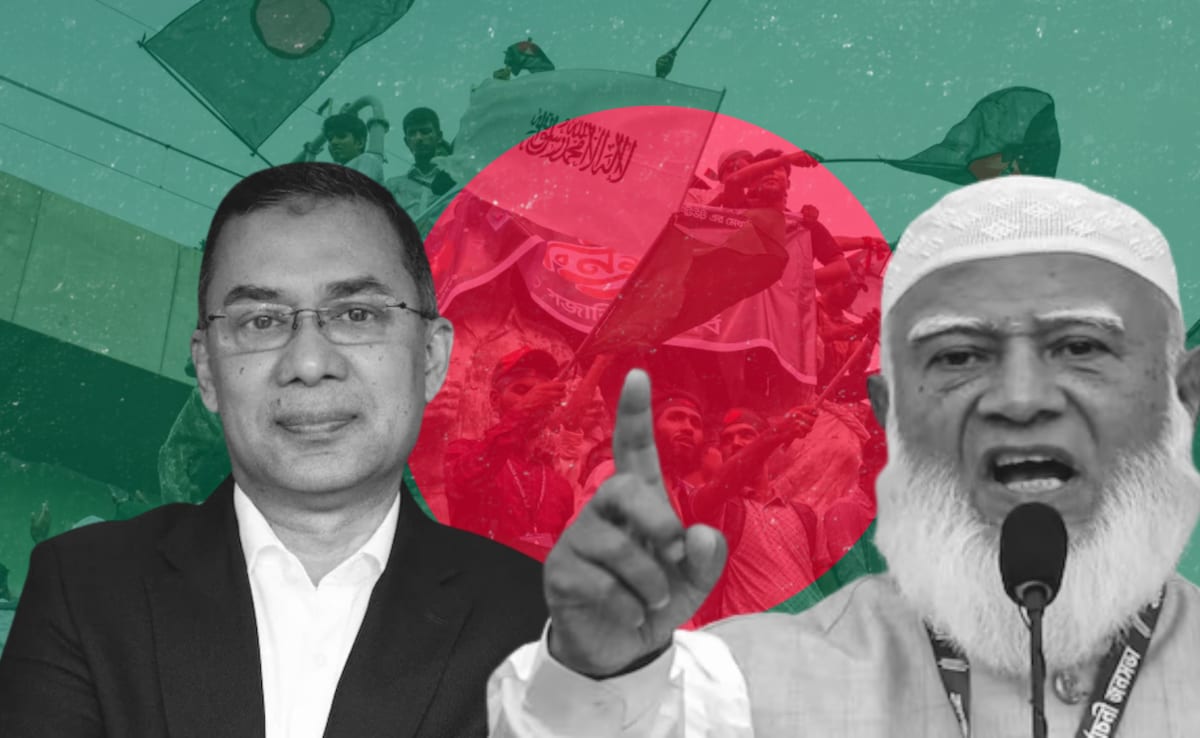
The BNP’s victory was logical in arithmetic terms. With the Awami League (AL) barred from contesting, a vacuum opened. Yet while BNP’s 212 seats signal dominance, the quieter story is Jamaat-e-Islami’s unprecedented performance.
Historically accustomed to winning no more than 18 seats, Jamaat captured 68 seats on its own, and 71 with its 11-party alliance. That makes it the second-largest political force in the country. This is not incremental growth; it is structural repositioning.
Even in Dhaka-17—where BNP leader Tarique Rahman reportedly won by a “landslide”—the vote margin over his Jamaat rival was just 4,399 votes. In Bogura, Rahman performed strongly. But along critical Indian border constituencies such as Lalmonirhat—where Chinese presence is significant in multiple capacities—and Nilphamari, Jamaat trailed BNP only marginally. In Rangpur and other border areas, Jamaat secured outright victories.
Among major parties, Jamaat was the most vociferously anti-India during campaign rallies. According to The Daily Star, it was also the most effective at weaponizing social media to spread disinformation. Yet simultaneously, it projected moderation—publicly assuring friendship with all neighbors, even name-checking Bhutan in what many interpreted as a calibrated signal to New Delhi.
This dual messaging suggests a party preparing not merely to oppose—but to inherit.
The “Gen Z” Factor: Revolution Meets Reality
Nearly 18 months ago, Gen-Z protesters flooded the streets of Dhaka and other cities, demanding cleaner politics, jobs, and an end to corruption and repression. Roughly a third of Bangladesh’s 170+ million population is between 18 and 35. Their energy toppled Sheikh Hasina’s long-entrenched government.
Yet in the election, the so-called “Gen Z revolutionary” leaders were nearly absent. Their party contested only 30 seats and won just five. In a telling development, five universities voted for Jamaat’s student wing rather than these aspiring youth leaders.
Muhammad Yunus, the interim government’s chief advisor, had previously praised these student figures as planners of the revolution. That endorsement failed to translate into votes. Somewhere, strategy faltered.
Jamaat, by contrast, absorbed and outmaneuvered youth energy. Rumors—cheap but effective—circulated that 27-year-old Nahid-ul-Islam might be its prime ministerial face. He won his seat against formidable odds, though that was the extent of his breakthrough. The episode nonetheless revealed Jamaat’s tactical agility: borrow the language of reform, leverage youth optics, and expand institutional footholds—especially in universities.
There is a “use-and-throw” undertone to this dynamic. Youth anger helped dismantle the old order. The beneficiaries may not be the youth themselves.
The Awami League’s Vanishing Act
The Awami League, once the central pillar of political life, was barred from contesting. The impact was immediate: low turnout, particularly in traditional AL bastions.
Even Gopalganj—long an Awami League stronghold—fell entirely to BNP. This suggests a tacit understanding among mainstream forces: better a BNP win than a Jamaat sweep. Yet reports of threats against Awami voters have surfaced, raising concerns about the quality of the democratic opening.
Internationally, the AL has failed to rally support against its ban. More than 300 foreign observers monitored the election, but none prominently flagged the total absence of a major party. Major international newspapers that once hammered Bangladesh for rigged elections barely mentioned the AL this time.
This silence is notable. Bangladesh’s electoral history has long been fraught. What changed was not the system’s fragility—but the global appetite for outrage.
For the Awami League, survival now hinges on internal renewal and image rehabilitation. Without reinvigoration at the grassroots, it risks long-term marginalization.
The Referendum: The Real Power Shift
Parallel to the parliamentary vote, Bangladeshis approved a sweeping referendum containing 84 reform proposals—around 70 related to the Constitution. This may prove more consequential than the seat tally.
The reforms introduce a 10-year cap on the prime minister’s tenure and aim to strengthen checks and balances. They reduce executive concentration of power and enhance the Opposition’s role, including ensuring parliamentary committees are headed by Opposition members. They also significantly expand presidential authority, including the power to appoint the Reserve Bank Governor without consulting the Prime Minister.
Critics argue that presenting such complex constitutional changes to a largely uninformed electorate—and allowing voting on them alongside national elections—is unprecedented and unwarranted in democratic practice. Constitutional amendments of this magnitude typically demand extensive parliamentary and legal debate.
Yunus had a strong hand in drafting the package. While consensus reportedly existed among major parties on many provisions, timing and content raise eyebrows. Among seemingly prosaic changes is a declaration that all languages are equal to Bangla—creating space for Urdu, long backed by Jamaat and its Pakistani sympathizers. Urdu usage has reportedly increased at Jamaat rallies.
Jamaat’s chief declared total support for the referendum, even as others expressed reservations. The party appears committed to seeing these reforms through. Over time, these constitutional recalibrations could constrain any future prime minister—including BNP’s Tarique Rahman—while empowering the Opposition. That dynamic may benefit Jamaat strategically.
Yunus: Retiring or Repositioning?
Muhammad Yunus, the Nobel laureate turned chief advisor, looms large. His influence in crafting the referendum is undisputed. But his actions extend beyond constitutional engineering.
He negotiated a trade deal with the United States that granted duty-free treatment for certain Bangladeshi textile exports made with U.S. inputs. Textiles are Bangladesh’s economic lifeline; the country is the world’s second-largest garment exporter after China.
Yet controversy erupted over announcements that Dhaka would replace Indian yarn—the largest export supplier—with U.S. yarn. Logistically and economically, this is questionable. India is geographically adjacent; U.S. yarn entails far higher transport costs.
Yunus’s motivations suggest he may not retreat from public influence soon. His China visit—breaking the long-standing practice of visiting India first—signaled strategic diversification. He may continue advising, particularly in ways that align with Jamaat’s longer-term recalibration.
Tarique Rahman: Between Mandate and Minefield
Tarique Rahman, son of former Prime Minister Khaleda Zia and former President Ziaur Rahman—founder of the BNP, assassinated in 1981—returned from 17 years of exile in London. His political narrative is steeped in dynastic continuity, even as voters demand an end to clan-driven politics.
For India, Rahman’s ascent carries dual implications. Historically, BNP’s dangerous backing of militant groups casts a shadow. Yet times have changed. Indian leadership has reached out warmly to the younger Rahman, who endured imprisonment and exile.
In governance, Rahman’s immediate threat is not India—but Jamaat. As the second-largest party, Jamaat will likely seek to weaken the new administration and position itself as the natural alternative in the next election.
Rahman must also manage disillusioned Gen-Z voters whose expectations remain enormous. Delivering jobs, transparency, and economic revival will require cooperation with neighbors—including China—to stabilize the economy.
India, China, Pakistan, and the U.S.: The New Contest
Bangladesh is central to India’s security, bordering its sensitive northeastern states. Total India-Bangladesh trade surpassed USD 13 billion in 2025. China’s trade figure was roughly half that, though Dhaka runs a USD 19 billion trade deficit with Beijing despite generous duty-free access. With India, the deficit is under USD 10 billion.
India and Bangladesh have traded in local currencies since 2023, easing pressure on Dhaka’s foreign exchange reserves. Indian firms—Asian Paints, Dabur, Tata Motors—maintain significant presence across FMCG, pharmaceuticals, manufacturing, and infrastructure.
China’s approach has been investment-driven, anchored in long-term Belt and Road Initiative projects, arms supply, and energy infrastructure. Beijing prefers loans and investments over grants.
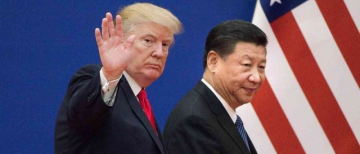
The United States has added complexity through targeted textile concessions under President Donald Trump. Meanwhile, Pakistan is making quiet advances—resuming direct trade for the first time since 1971, restarting military exchanges, and leveraging symbolic gestures, including cricket diplomacy. Notably, Pakistan’s exports to Bangladesh declined in January 2026 amid an overall drop—but engagement is clearly expanding.
Bangladesh’s leverage lies in being courted by all—not aligning exclusively with one.
India’s Strategic Recalibration
New Delhi’s Bangladesh policy rested heavily on Sheikh Hasina. In exchange for security and trade cooperation, India overlooked democratic backsliding. That bet now appears misjudged.
Hasina, living in self-imposed exile in India, was sentenced to death in absentia by a Bangladeshi tribunal for crimes against humanity linked to the 2024 protest crackdown. Her continued presence in India fuels criticism within Bangladesh, especially among Gen-Z activists.
India must now pivot. Its advantages are structural—geography, economic integration, local currency trade, and corporate footprint. But Rahman cannot afford to be labeled “pro-India.” Such a tag would be politically toxic.
Delhi’s challenge is subtlety: deepen economic intertwining in a low-key fashion, present itself as a respectful neighbor, and remain agile in offering assistance. In an increasingly transactional global order, moral posture still matters.
Will Bangladesh Become South Asia’s New Power Player?
Bangladesh’s election is both rupture and continuity. It breaks from the recent past of uncontested dominance but reveals the persistence of dynastic politics. It elevates a party long on the margins into second place. It restructures constitutional power even as it reopens democratic competition.
The youth who ignited change are restless. If Rahman delivers tangible reforms and economic revival, Bangladesh could redefine South Asia’s strategic map—balancing India, China, Pakistan, and the U.S. without becoming beholden to any.
If he fails, Jamaat waits in the wings—armed with university networks, constitutional leverage, and digital savvy.
Bangladesh stands at a hinge moment. The BNP may have won decisively. But Jamaat has grown stronger than ever. Yunus is unlikely to fade quietly. And the region’s great powers are recalculating.
The question is no longer whether Bangladesh has changed. It has.
The question is whether this change will stabilize the republic—or seed the next upheaval.
With inputs from agencies
Image Source: Multiple agencies
© Copyright 2025. All Rights Reserved. Powered by Vygr Media.