 By
By 
The Bharatiya Janata Party has unveiled a strikingly different strategy for the upcoming Uttar Pradesh Rajya Sabha elections 2026, choosing eight candidates while dropping every one of its outgoing Rajya Sabha members from the state.
The list has immediately drawn attention because it leaves out prominent names, including Union ministers Hardeep Singh Puri and B.L. Verma, while also shutting the door on several other leaders whose names had been discussed for the Upper House. Instead, the BJP has turned to a mix of state-level politicians, organisational leaders, former MPs and relatively low-profile party functionaries.
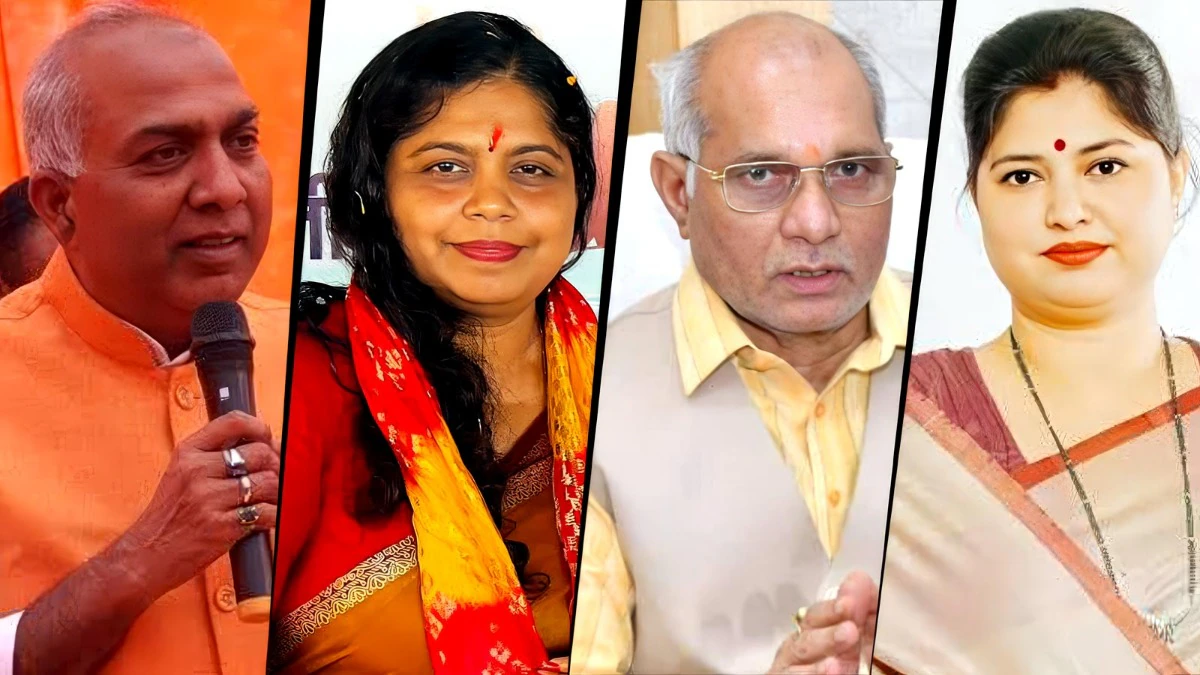
The eight BJP candidates for the UP Rajya Sabha polls 2026 are Dharampal Singh, Radhakant Ojha, Prakash Pal, Vidyasagar Sonkar, Gopi Krishna Pandey, Priyanka Singh Rawat, Ram Pratap Singh Chauhan and Shruti Gangwar.
The announcement comes at a politically significant moment. The Rajya Sabha election in Uttar Pradesh is scheduled for October 16, just months before the state is expected to head into the 2027 Assembly election. That timing makes the candidate list more than a routine exercise in filling Upper House vacancies. It offers a glimpse into how the BJP is thinking about caste representation, regional balance, party organisation and its broader Mission 2027 strategy.
Why the BJP’s Rajya Sabha list is significant
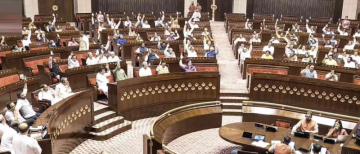
Uttar Pradesh has 10 Rajya Sabha seats going to the polls this time. Eight of these are currently held by the BJP, while the Samajwadi Party and Bahujan Samaj Party hold one each.
With the BJP-led NDA commanding a substantial majority in the Uttar Pradesh Assembly, the ruling alliance is in a strong position to retain most of the seats. Each candidate needs 37 first-preference votes to win a Rajya Sabha seat, and the BJP-led alliance is expected to have enough numbers to secure eight seats, although the final arithmetic could still make the contest interesting if additional candidates enter the fray.
The political importance of the exercise, therefore, lies less in whether the BJP can win and more in whom it has chosen to represent Uttar Pradesh in the Rajya Sabha.
The party has opted against simply renewing the terms of sitting MPs. Seven BJP members whose terms are ending in November — Hardeep Singh Puri, B.L. Verma, Arun Singh, Geeta Shakya, Neeraj Shekhar, Brijlal and Seema Dwivedi — have not been renominated.
The decision represents a considerable reset in the BJP’s Rajya Sabha representation from Uttar Pradesh.
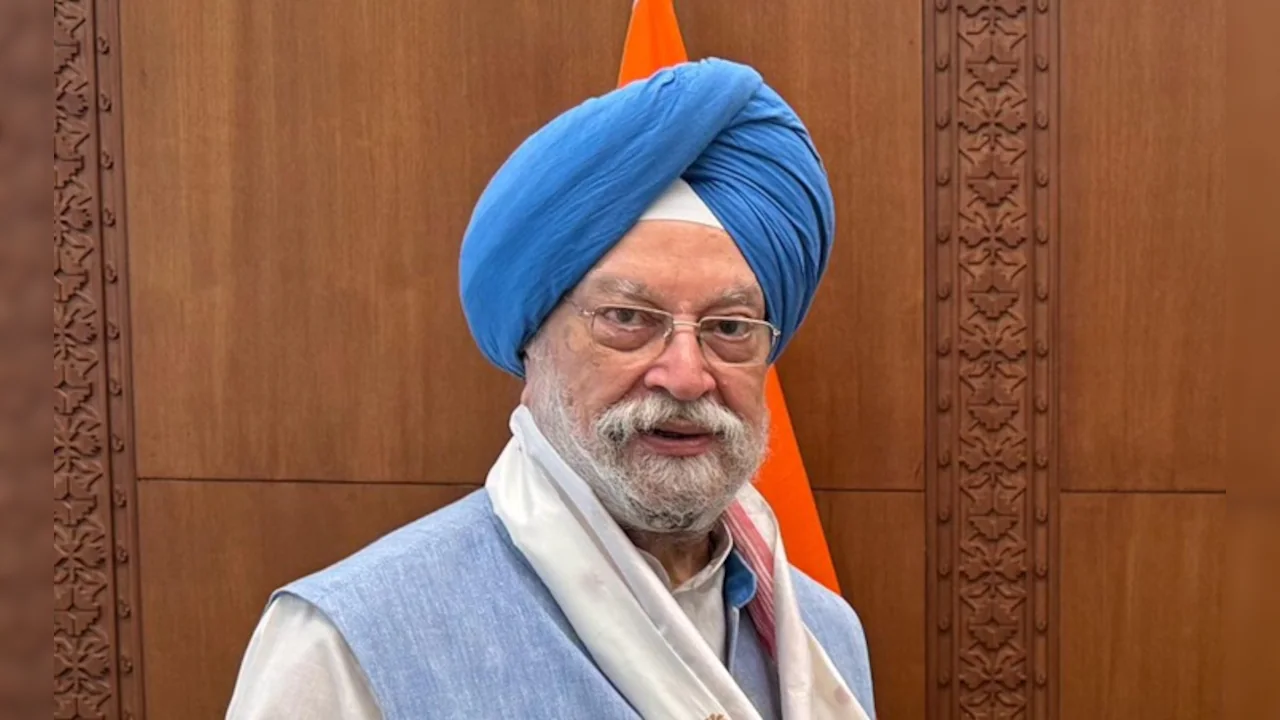
Hardeep Singh Puri and B.L. Verma dropped
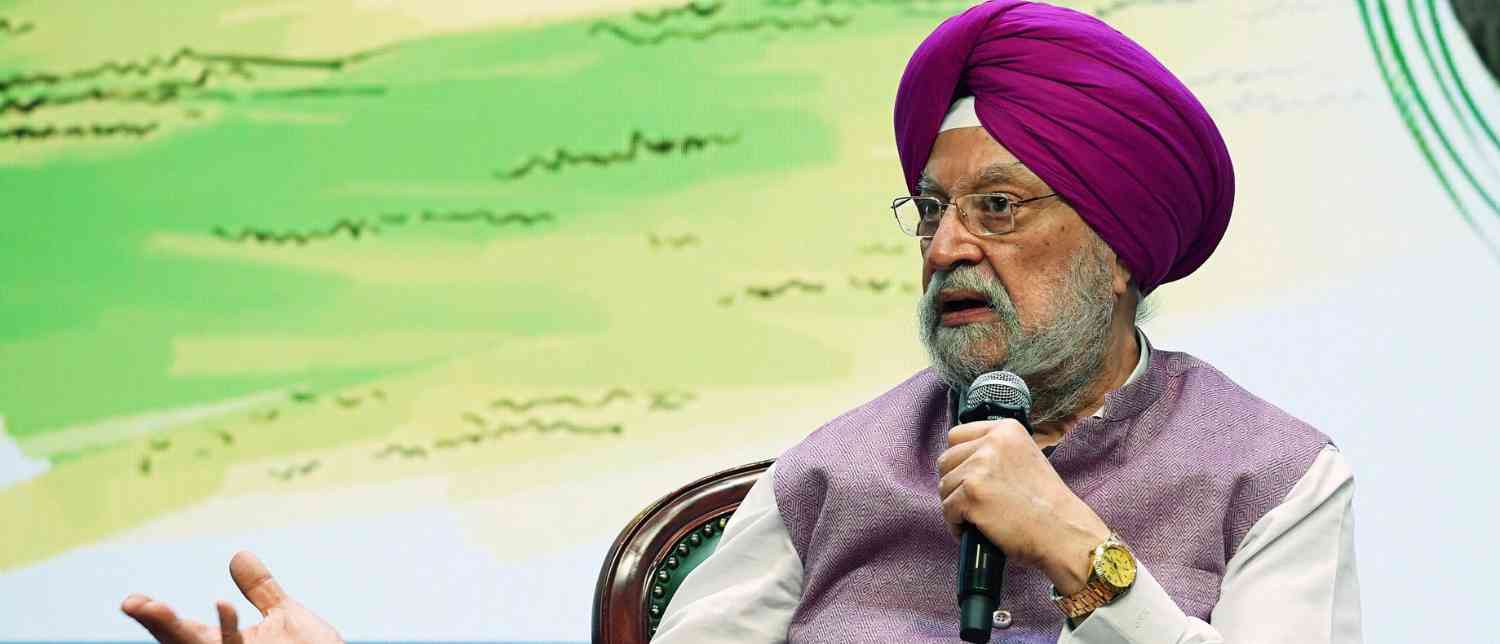
The exclusion of Hardeep Singh Puri is among the most closely watched aspects of the announcement.
Puri, a Union minister and prominent national leader, had been a Rajya Sabha member from Uttar Pradesh. His omission has triggered speculation about a possible future Union Cabinet reshuffle, although the BJP has not publicly linked his Rajya Sabha ticket to any particular ministerial decision.
His political future has also attracted attention because his Rajya Sabha term is nearing its end. The possibility of the government retaining him in the Union Council of Ministers despite the change in his parliamentary position remains an issue to watch.
B.L. Verma's omission is equally significant for Uttar Pradesh politics. Verma is a prominent Lodh leader from western Uttar Pradesh and had previously been considered among the contenders for the Uttar Pradesh BJP president's post.
Interestingly, the BJP appears to have maintained the Lodh representation while changing the individual face. Instead of Verma, the party has nominated Dharampal Singh, another prominent Lodh leader and a cabinet minister in the Yogi Adityanath government.
Dharampal Singh: A change of face, not necessarily of caste equation
Dharampal Singh is a multiple-term MLA from Aonla in Bareilly and currently handles the Animal Husbandry and Dairy Development portfolios in the Uttar Pradesh government.
His nomination carries a clear social and regional message.
The Lodh community has significant influence in parts of Rohilkhand and Bundelkhand, and the community has historically been associated with the BJP. Its political significance in Uttar Pradesh is also closely linked to the legacy of former Chief Minister Kalyan Singh, one of the state's most influential OBC leaders.
By choosing Dharampal Singh, the BJP has effectively replaced one Lodh leader with another while retaining the community's representation in its Rajya Sabha team.
That is an important feature of the entire list: the BJP has changed several faces without abandoning the broader social coalition it believes is essential for electoral success in Uttar Pradesh.
A carefully crafted caste combination
The eight candidates reveal a remarkably clear caste arithmetic.
The list includes three OBC candidates, two Scheduled Caste candidates and three candidates from the upper castes. Among the upper-caste nominees are two Brahmins and one Thakur. The OBC representation includes Lodh, Pal and Kurmi communities.
There are also two women candidates, Priyanka Singh Rawat and Shruti Gangwar.
The combination suggests that the BJP is attempting to preserve a broad social coalition at a time when caste politics remains central to Uttar Pradesh's electoral landscape.
The choice is particularly significant because the BJP's electoral challenge in 2027 will not simply be about retaining its core support base. The party will also have to manage the competing expectations of OBC, Dalit, upper-caste and regional groups.
The Rajya Sabha nominations therefore appear to have been designed as a political signal as much as a parliamentary exercise.
Who are the BJP’s eight Rajya Sabha candidates?
Prakash Pal is the BJP's OBC Morcha president in Uttar Pradesh and represents the Pal community. His selection gives the party a prominent organisational face from the Kanpur-Bundelkhand belt.
Shruti Gangwar, another OBC nominee, comes from the Gangwar community in Bareilly. She is the daughter of Santosh Gangwar, the former Union minister and current Governor of Jharkhand. Her nomination brings together caste, regional and gender representation.
Among the Dalit faces, Vidyasagar Sonkar brings considerable organisational experience. A former Lok Sabha member and former MLC, Sonkar has held important positions within the Uttar Pradesh BJP organisation.
Priyanka Singh Rawat, a former Barabanki MP, is the second Dalit candidate and one of the two women in the list. She won the Barabanki Lok Sabha seat in 2014 but was not renominated in subsequent elections. Her return to the parliamentary arena through the Rajya Sabha marks a significant political comeback.
The BJP has also chosen two Brahmin candidates — Radhakant Ojha and Gopi Krishna Pandey.
Ojha is a senior advocate associated with the Allahabad High Court and has previously served as president of the Allahabad High Court Bar Association. His political selection adds a professional and legal profile to the BJP's Upper House team.
Pandey, by contrast, is known more for his organisational association with the BJP and its affiliated structures, including work connected with the party's farmer and youth wings.
The eighth candidate, Ram Pratap Singh Chauhan, is a Thakur leader from Agra and a senior BJP organisational figure. He has served as a state general secretary and has been involved in managing important party campaigns.
Why there is no Smriti Irani
Another notable omission is Smriti Irani.
The former Union minister and recently appointed BJP general secretary had been among the names discussed for a Rajya Sabha berth from Uttar Pradesh. However, she has not found a place in the final list.
Her exclusion is particularly interesting because it comes at a time when she has returned to a prominent organisational role within the BJP.
The party's decision also appears consistent with its preference in this round for leaders who have either strong organisational roots in Uttar Pradesh or specific caste and regional utility ahead of the Assembly election. The BJP has not, in this list, relied heavily on prominent national faces simply because they are nationally recognisable.
BJP sends a message to its organisation
Perhaps the most important political message from the BJP Rajya Sabha candidates list 2026 is its emphasis on organisational workers.
Several of the nominees have spent years working within the party structure rather than building their profiles primarily through national office or ministerial positions.
That approach could be deliberate.
By rewarding organisational experience, the BJP is signalling to its cadre that long-term party work can translate into parliamentary opportunities. At the same time, it allows the leadership to select candidates whose political identities are closely tied to specific social groups and regions.
The result is a list that is less about celebrity politics and more about electoral organisation.
The 2027 Assembly election looms over every decision
The biggest reason this Rajya Sabha list matters is the Uttar Pradesh Assembly election 2027.
The BJP is entering the next Assembly battle with the challenge of maintaining a broad coalition across communities. The party's latest Rajya Sabha choices suggest that it is already thinking about that contest.
The selection of a Lodh leader, a Pal leader, a Kurmi leader, two Dalit leaders, two Brahmins and a Thakur, alongside two women, provides a carefully distributed representation of important social groups.
The regional spread is also notable, with candidates linked to western Uttar Pradesh, Rohilkhand, Kanpur-Bundelkhand, Purvanchal, Agra and central Uttar Pradesh.
In other words, the BJP has used its Rajya Sabha nominations to reinforce a political map that extends across multiple regions of the state.
What happens next?
The UP Rajya Sabha election 2026 will take place on October 16. The BJP is expected to win eight seats based on the current Assembly numbers, while the Samajwadi Party is positioned to win two.
However, the possibility of an additional SP candidate could make the arithmetic more complicated. Cross-voting, support from smaller parties and the role of independent or unaffiliated MLAs could influence the final contest.
For the BJP, though, the larger objective extends beyond October 16.
Its eight-candidate list is effectively an early statement of intent for Mission 2027: strengthen the party organisation, maintain its caste coalition, reward grassroots workers and prepare for another high-stakes battle in Uttar Pradesh.
The Rajya Sabha election may be a parliamentary exercise, but the BJP's choices make it clear that the party is already looking beyond the Upper House — towards the much bigger political contest waiting in Uttar Pradesh in 2027.
© Copyright 2026. All Rights Reserved. Powered by Vygr Media.