 By

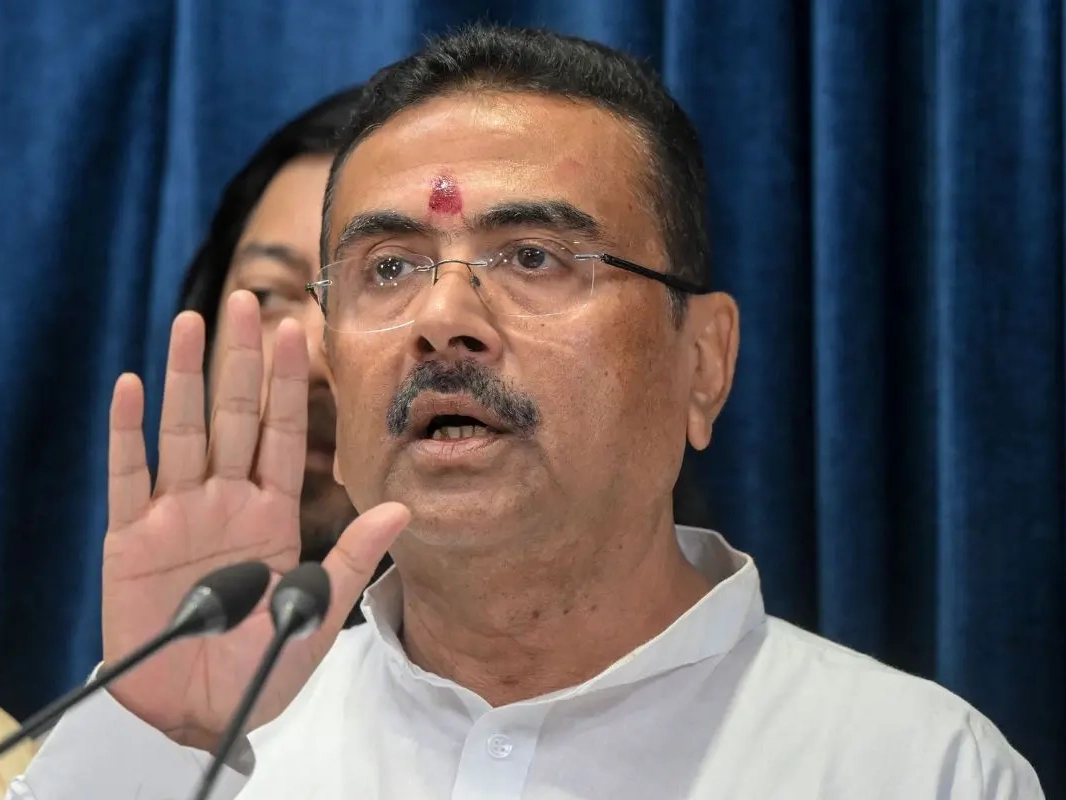
West Bengal could soon have a new official identity, with Chief Minister Suvendu Adhikari announcing that his government plans to rename the state Paschim Banga in English as well as Bengali. The announcement marks another significant development in the long-running debate over the state's name, an issue that has remained part of West Bengal's political and administrative discussions for decades.
The state Cabinet has approved the proposal, and the government plans to introduce a resolution in the West Bengal Assembly on December 9, 2026. If the resolution is passed, it will be forwarded to the Central Government for further approval.
The proposed change has brought the question of West Bengal's identity back into the spotlight. But what is driving this decision? Why does the government want to replace West Bengal with Paschim Banga, and what steps must be completed before the new name becomes official?
West Bengal Name Change: What Has the Government Announced?
On November 23, 2026, Chief Minister Suvendu Adhikari announced that the state government intends to use Paschim Banga as the official name of West Bengal in English, bringing its English and Bengali identities into alignment.
The announcement followed a Cabinet meeting at Nabanna, the state secretariat in Kolkata, where the proposal received approval.
According to the Chief Minister, a resolution proposing the name change will be introduced in the West Bengal Assembly on December 9. The Assembly's winter session is scheduled to take place from December 4 to December 14.
Once the resolution is passed, the proposal will be sent to the Central Government for consideration and approval.
Importantly, the Cabinet's decision does not mean that West Bengal has already been officially renamed. The constitutional and parliamentary procedures must still be completed before Paschim Banga can replace West Bengal as the state's legal name.
Why Does West Bengal Want to Change Its Name to Paschim Banga?
The proposed renaming is not an entirely new idea. The demand for a different official name has been raised by successive state governments, making it a recurring subject in West Bengal's political landscape.
One of the key arguments behind the proposed change concerns the state's position in alphabetical listings and official proceedings.
The name West Bengal places the state towards the end of alphabetical lists, which has been cited as a disadvantage during meetings involving representatives of different Indian states. A name beginning with a different letter could change its position in such listings.
However, the current proposal also focuses on establishing a consistent state identity across languages.
At present, the state is known as West Bengal in English, while Paschim Banga is its Bengali name. The proposed change would eliminate this difference by adopting Paschim Banga in English as well.
For supporters, this would provide greater consistency in official communication while giving prominence to the state's linguistic and cultural identity.
A Look at West Bengal's Previous Renaming Attempts
The proposal to rename West Bengal has a history that goes back several decades.
In July 1999, a proposal was discussed in the West Bengal Assembly to retain the name West Bengal across all languages. However, discussions during the proceedings led to suggestions that Bangla could be a more suitable alternative.
The proposal was subsequently amended following discussions involving the then-ruling Left Front and opposition parties, including the Congress and Trinamool Congress. However, the initiative did not make substantial progress.
The issue resurfaced nearly 17 years later, when Mamata Banerjee's government proposed renaming the state Bangla.
The West Bengal Assembly passed a resolution supporting the proposed name change. However, the proposal did not receive approval from the Central Government.
One of the concerns raised was the similarity between Bangla and Bangladesh, which could potentially create confusion in official and international communications.
With the latest proposal, the government has now put forward Paschim Banga as the preferred alternative.
Unlike the earlier Bangla proposal, the present initiative seeks to retain the state's familiar Bengali identity while establishing one consistent name across languages.
How Is a State's Name Changed in India?
Changing the name of an Indian state is not simply a decision that a state government can implement independently. The process is governed by the Indian Constitution, specifically Article 3, which provides Parliament with the authority to alter the names, boundaries and areas of existing states.
The procedure involves several constitutional steps.
1. State Government Initiates the Proposal
The process generally begins with a proposal from the state government. The state Cabinet considers the proposed name and can approve the decision to move forward.
In West Bengal's case, the Cabinet has approved the proposal to adopt Paschim Banga.
2. Resolution in the State Legislative Assembly
The proposal must then be placed before the state legislature. In the present case, the West Bengal government intends to introduce a resolution on December 9, 2026.
The Assembly's decision will determine whether the state formally supports forwarding the proposal to the Centre.
3. Consideration by the Central Government
After the state-level process, the proposal moves to the Central Government.
Under Article 3, a Bill to alter a state's name cannot be introduced in Parliament without the recommendation of the President. The President must also refer the proposed change to the concerned state legislature for its views within a specified period.
4. Parliamentary Approval
Once the constitutional requirements are met, the proposed name change can be introduced as a Bill in Parliament.
The Bill must pass through the parliamentary legislative process and receive the required approval before the renaming can take legal effect.
5. Official Implementation
After the law is enacted, the necessary changes can be made to the First Schedule of the Constitution and relevant government records, documents and administrative systems.
This is when the proposed name becomes legally effective.
Therefore, even if the West Bengal Assembly passes the resolution on December 9, the state will still need to complete the subsequent Central Government and parliamentary procedures.
What Changes If West Bengal Becomes Paschim Banga?
A state name change can have implications beyond political announcements and official declarations.
If the proposal receives final approval, government departments will need to update official records, administrative documents, stationery, websites, identification systems and other relevant materials.
The name may also need to be updated across government portals, educational documents, official correspondence and other public-facing platforms.
However, changing a state's name does not automatically alter its geographical boundaries, administrative structure or constitutional status.
West Bengal would continue to remain the same Indian state, with Kolkata as its capital and its existing districts and administrative arrangements.
The change would primarily concern the state's official identity and how it is referred to in legal and administrative contexts.
For ordinary residents, the transition would largely involve the gradual adoption of the new name in official communication and public records.
Other Important Announcements Made Alongside the Name Change Proposal
The Paschim Banga announcement was not the only major decision communicated by Chief Minister Suvendu Adhikari following the Cabinet meeting.
The government also announced changes to the Yuva Sathi scheme, which is intended to provide financial assistance to unemployed young people.
The scheme will be renamed Bharosa, with an increase in the monthly financial assistance from the next financial year.
Under the revised arrangement, unemployed graduates will receive Rs 3,000 per month, while non-graduates enrolled in government vocational or technical courses will receive Rs 2,000 per month. Previously, eligible beneficiaries under the Yuva Sathi scheme received Rs 1,500 monthly.
Another significant announcement concerns electricity billing.
The state government plans to introduce monthly electricity bills from January 2027, replacing the existing quarterly billing cycle. According to the Chief Minister, this change addresses a long-standing demand from domestic and commercial electricity consumers.
He also indicated that electricity demand had increased during the first six months of the new government and that the state might need to purchase electricity from outside from December.
These announcements indicate that the Cabinet meeting covered several administrative and welfare-related decisions alongside the proposed renaming of West Bengal.
Will Paschim Banga Become West Bengal's Official Name?
The proposal has moved beyond preliminary discussions, with Cabinet approval secured and a date announced for its introduction in the Assembly. Nevertheless, the final outcome will depend on the remaining constitutional process.
The December 9 Assembly proceedings will be an important milestone. If the resolution receives approval, the proposal will move to the Centre, where it must undergo the necessary constitutional and parliamentary procedures.
For now, West Bengal remains the state's official name.
If approved, Paschim Banga will mark a significant change in the state's official identity, bringing its English name in line with its Bengali designation.
Whether this latest attempt succeeds where previous proposals fell short will become clearer as the process moves forward. Until then, the proposed West Bengal name change remains an important political and administrative development to watch.
© Copyright 2026. All Rights Reserved. Powered by Vygr Media.