 By
By 
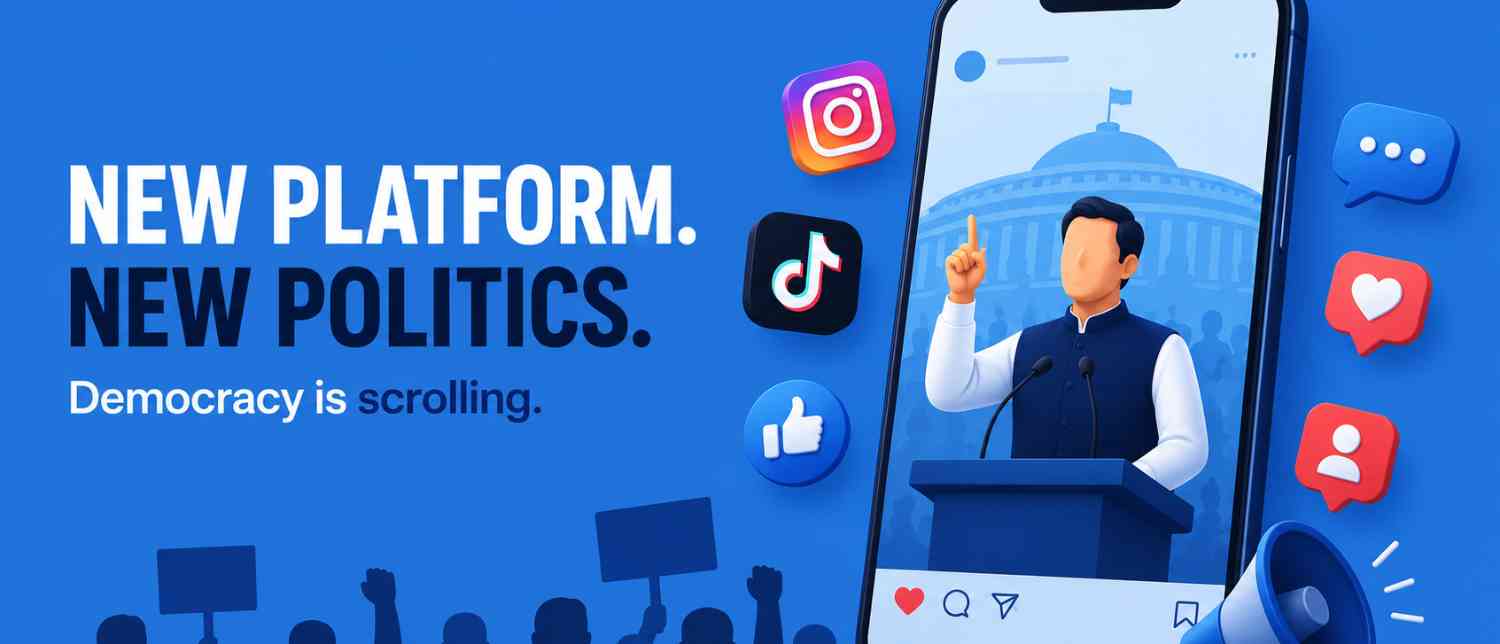
Not too long ago, political conversations unfolded in newspaper editorials, television debates, public rallies, and parliamentary sessions. Today, many of those discussions begin—and often end—on Instagram Reels, TikTok videos, YouTube Shorts, and viral memes.
Politics has entered an era where a 30-second video can influence public opinion more effectively than a two-hour speech. A carefully crafted Instagram carousel may travel farther than a newspaper editorial, while an influencer's endorsement can spark debates that traditional media struggles to match. Social media has evolved beyond being a networking platform; it has become the world's newest political public square.
For democracies, this transformation presents both extraordinary opportunities and unprecedented challenges. The question is no longer whether politics belongs on social media—it already does. The real question is whether democratic institutions, political leaders, and citizens are prepared for what this digital revolution means.
_1785344595.jpg)
The New Town Square Lives on a Smartphone
Historically, the public square represented a physical place where citizens exchanged ideas, challenged authority, and debated public issues. Newspapers later expanded this arena, followed by television and the internet. Today, Instagram, TikTok, and similar platforms have become digital versions of these public spaces, albeit with a significant difference—they are governed not by elected institutions but by algorithms.
Unlike traditional media, where editors determined what deserved public attention, social media platforms personalise content according to user behaviour. Every like, comment, share, and pause contributes to shaping an individual's political information ecosystem.
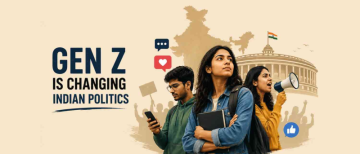
For millions of young users, especially Generation Z, Instagram is no longer merely a platform for entertainment or lifestyle content. It has become a primary source of news, political awareness, and civic engagement. Policy announcements, election campaigns, government initiatives, protests, and public debates increasingly unfold through reels, stories, and short-form videos.
This shift has dramatically altered the way political communication works.
Political Leaders Are Speaking the Language of the Internet
Around the world, political leaders are adapting to the changing media landscape. Rather than relying exclusively on television interviews or press conferences, they are building direct relationships with citizens through social media.
India is witnessing this transformation in real time. Political messaging today is carefully designed for digital-first audiences. Leaders share behind-the-scenes moments, cultural interactions, personal stories, podcasts, and short videos that humanise their public image. Official announcements are often accompanied by visually engaging graphics and videos optimised for social platforms.
The strategy reflects an important reality: today's audiences, particularly younger voters, consume information differently.
A generation raised on smartphones expects communication to be visual, concise, interactive, and authentic. Long speeches may still matter, but clips extracted from those speeches often generate far greater engagement than the speeches themselves.
The emphasis has shifted from broadcasting messages to sustaining conversations.
Why Gen Z Is Changing Political Communication
Perhaps the biggest force behind this transformation is Generation Z.
Unlike previous generations that gradually adopted digital platforms, Gen Z has grown up within them. Social media is not an extension of everyday life—it is an integral part of it.
This generation discovers breaking news on Instagram before television, discusses political issues through memes, participates in online campaigns using hashtags, and forms opinions after consuming content from creators, journalists, policy experts, and even comedians.
Importantly, Gen Z prefers authenticity over polished political messaging.
Highly scripted speeches often struggle to resonate with younger audiences, while spontaneous interactions, podcasts, informal conversations, and relatable content tend to perform better. Political leaders increasingly recognise that voters expect transparency and accessibility rather than distant authority.
The digital generation values participation. It wants to comment, question, remix, challenge, and respond—not merely listen.
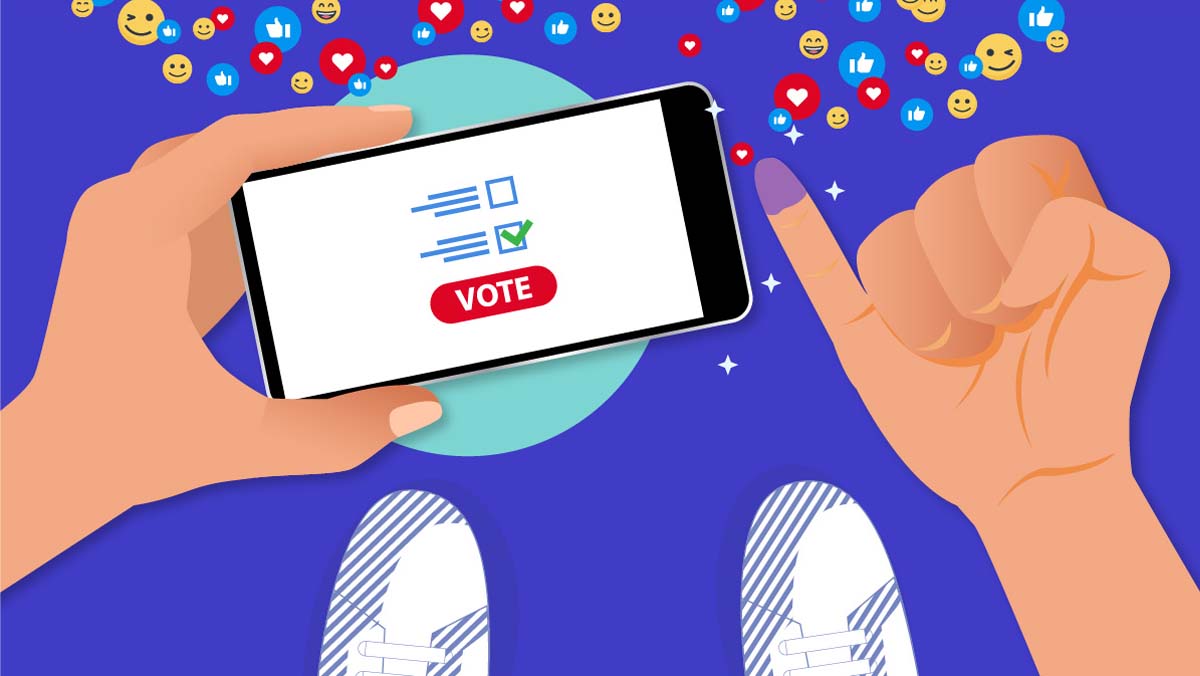
Campaigning Has Become Continuous
Traditional election campaigns once followed predictable timelines. Political parties intensified outreach a few months before polling, organised rallies, purchased advertisements, and released manifestos.
Social media has eliminated these boundaries.
Political campaigning is now a year-round exercise.
Every public appearance, policy announcement, festival greeting, crisis response, or international visit becomes digital content capable of reaching millions within hours. Political narratives evolve daily, and public opinion can shift rapidly as online conversations gain momentum.
This continuous engagement allows leaders to maintain visibility between elections. It also enables governments to communicate policies directly to citizens without depending entirely on conventional media gatekeepers.
However, constant campaigning comes with consequences.
When every issue becomes content, the distinction between governance and political branding can begin to blur.
The Promise of Digital Democracy
Despite concerns, social media has undeniably democratised political participation.
Individuals who previously lacked access to mainstream media can now share opinions, organise campaigns, expose local issues, and mobilise communities online.
Marginalised voices often find audiences through digital platforms that traditional media may have overlooked. Citizen journalism has uncovered corruption, highlighted governance failures, and drawn attention to humanitarian crises.
Young voters who once remained politically disengaged are participating in discussions about climate change, education, employment, gender rights, public health, and governance.
Political awareness is becoming more decentralised.
Instead of relying solely on journalists or political commentators, citizens encounter diverse perspectives from academics, activists, independent creators, civil servants, entrepreneurs, and ordinary people sharing lived experiences.
In many ways, democracy has become more participatory.
But Algorithms Don't Reward Truth
The optimism surrounding digital democracy must be balanced with realism.
Social media platforms are designed primarily to maximise user engagement—not necessarily to promote accurate information or healthy democratic debate.
Algorithms favour content that captures attention quickly. Emotional, controversial, or sensational posts often outperform nuanced analysis.
This creates powerful incentives for political actors to simplify complex issues into emotionally charged narratives.
Outrage travels faster than context.
Memes frequently outperform policy papers.
Short videos sometimes replace informed debate.
Misinformation, manipulated visuals, edited clips, and coordinated disinformation campaigns can spread at extraordinary speed before corrections reach comparable audiences.
In such an environment, citizens risk becoming consumers of political entertainment rather than informed participants in democratic decision-making.
The Rise of Influencer Politics
Another defining feature of modern political communication is the growing role of influencers.
Influencers occupy a unique position in today's media ecosystem because they command trust within niche communities. Their followers often perceive them as more relatable than politicians or television anchors.
Political leaders increasingly collaborate with digital creators to reach younger audiences in ways that conventional campaigning cannot achieve.
This trend raises important questions.
Should influencers disclose political partnerships?
How transparent should sponsored political content be?
Where does personal opinion end and political advertising begin?
As creator economies expand, maintaining transparency becomes essential for preserving public trust.
Authenticity Cannot Be Manufactured
Ironically, while social media rewards authenticity, it also encourages carefully curated digital personas.
Political consultants now analyse engagement metrics, audience behaviour, posting schedules, visual aesthetics, and platform algorithms with remarkable precision.
Professional digital strategies are undoubtedly necessary.
Yet audiences are becoming increasingly sophisticated.
Users quickly recognise overly polished messaging, repetitive talking points, and manufactured spontaneity.
Successful political communication increasingly depends on genuine engagement rather than perfectly edited content.
Authenticity remains difficult to fake.
The Responsibility Belongs to Everyone
It is tempting to blame platforms alone for the challenges facing digital democracy.
However, responsibility is shared.
Technology companies must improve transparency around algorithms, moderation policies, and political advertising.
Governments must avoid the temptation to regulate online speech in ways that undermine legitimate democratic expression.
Political parties should prioritise truthful communication over viral misinformation.
Educational institutions need to strengthen digital literacy so citizens can distinguish credible information from manipulation.
Most importantly, citizens themselves must recognise that every share, like, and comment contributes to shaping the digital public sphere.
Democracy functions only when informed citizens actively evaluate information rather than passively consume it.
The Future of Politics Will Be Digital—but It Must Also Be Democratic
The digital transformation of politics is irreversible.
Instagram, TikTok, YouTube Shorts, podcasts, AI-generated content, and emerging technologies will continue redefining how political narratives are created and consumed. Future elections will likely depend as much on digital engagement as traditional campaigning.
This evolution should not be feared.
It should, however, be approached thoughtfully.
Social media has opened unprecedented opportunities for political participation, particularly among younger generations. It has broken traditional barriers between leaders and citizens, amplified previously unheard voices, and expanded democratic conversations beyond physical boundaries.
At the same time, it has exposed democracies to misinformation, algorithmic manipulation, polarisation, and performative politics.
The challenge before policymakers, technology companies, political leaders, journalists, educators, and citizens is not to return to an earlier media era. That possibility no longer exists.
Instead, the goal must be to build a digital public square that rewards informed debate rather than outrage, values transparency over manipulation, and strengthens democratic participation instead of weakening it.
The smartphone has become the new ballot of public opinion, and every scroll now carries political significance. Democracy must therefore learn not merely to exist online but to thrive there—without sacrificing the principles that make it worth protecting in the first place.
With input from agencies
Image Source: Multiple agencies
© Copyright 2026. All Rights Reserved. Powered by Vygr Media.