 By

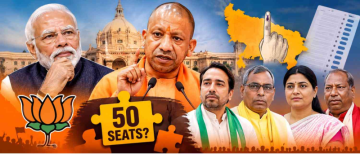
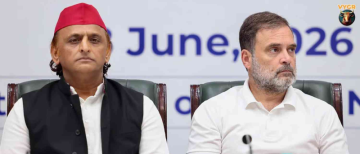
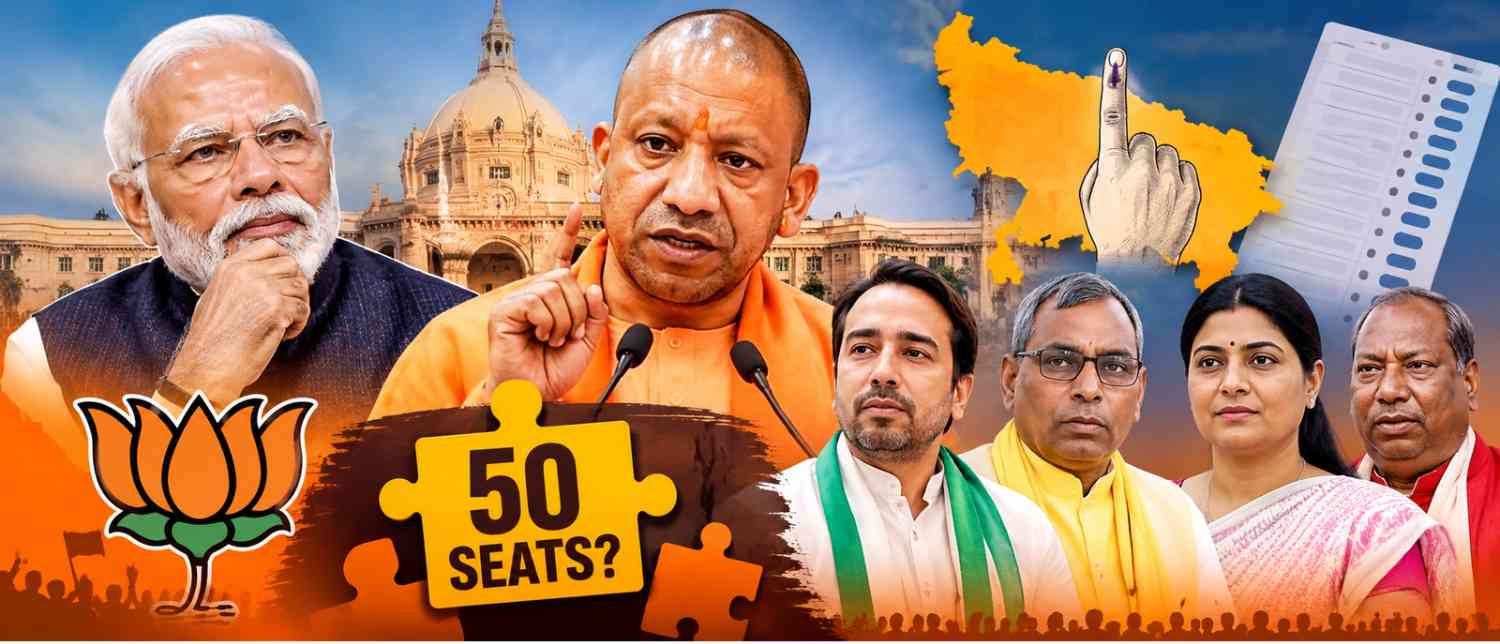
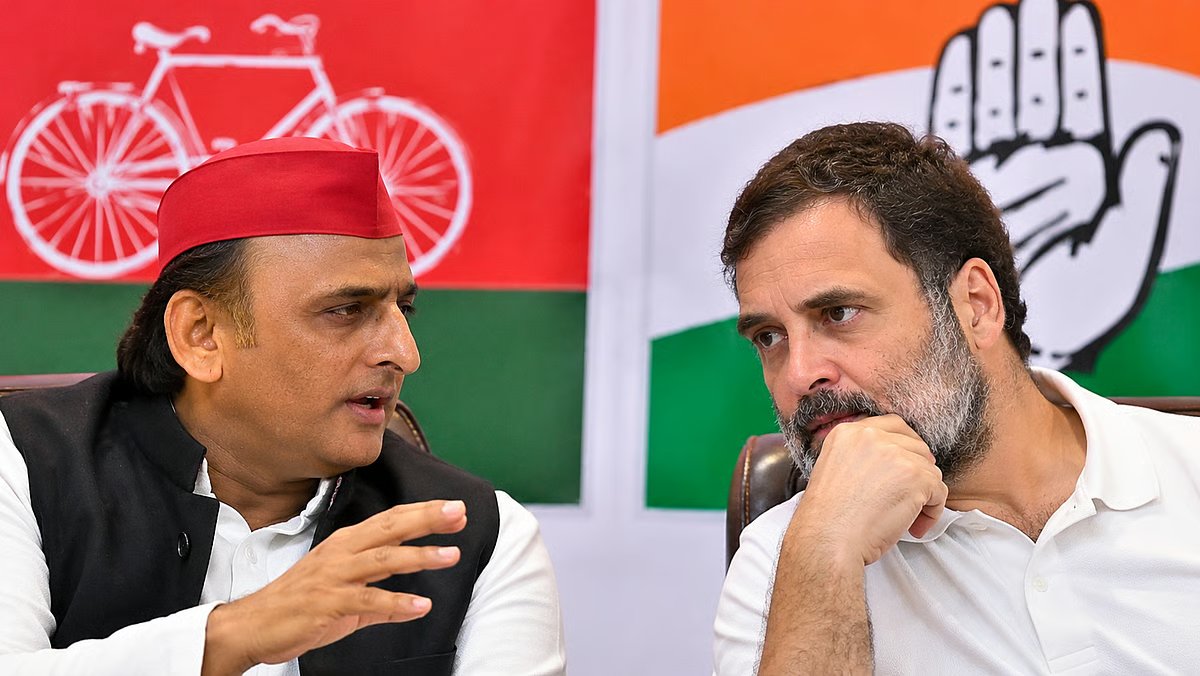
The political battle for Uttar Pradesh in 2027 is already taking shape, even though the Assembly elections are still months away. While the spotlight has largely remained on the opposition's political strategy and the seat-sharing negotiations between the Congress and Samajwadi Party, another contest is quietly developing within the ruling National Democratic Alliance (NDA). This time, the BJP's biggest political challenge could come from within its own alliance.
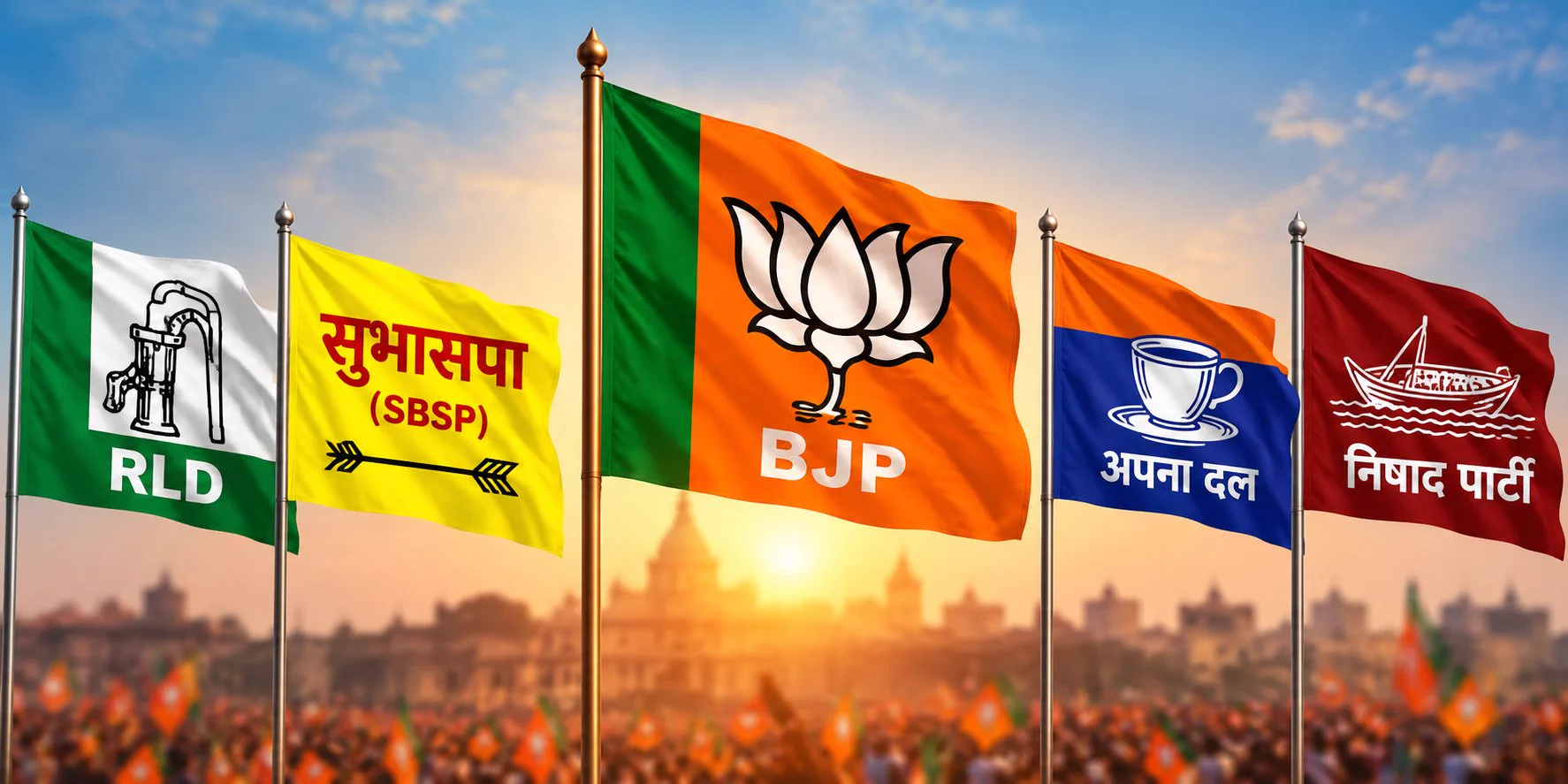
The Bharatiya Janata Party (BJP) is preparing for an election in which it must accommodate four influential regional partners: Jayant Chaudhary's Rashtriya Lok Dal (RLD), Om Prakash Rajbhar's Suheldev Bharatiya Samaj Party (SBSP), Anupriya Patel's Apna Dal (S) and Sanjay Nishad's Nishad Party. Each party brings a distinct voter base, regional influence and electoral ambition to the alliance. Each also wants a meaningful share of the 403 Assembly constituencies in Uttar Pradesh.
The numbers, however, present a difficult equation. If the BJP intends to contest approximately 350 seats and allocate around 50 to its allies, accommodating all four partners could become a complicated exercise. Their reported demands collectively exceed 100 constituencies. The difference between what the allies want and what the BJP may be willing to offer could become one of the defining political negotiations ahead of the UP Assembly elections 2027.
BJP's 50-Seat Formula: A Difficult Balancing Act
In the 2022 Uttar Pradesh Assembly elections, the BJP contested 376 constituencies out of 403 and won 255 seats. Its allies received the remaining 27 constituencies under the seat-sharing arrangement.
The political circumstances have since changed. The BJP is reportedly considering contesting around 350 seats in 2027, leaving approximately 50 seats for its regional partners. Other reported calculations have placed the possible allocation closer to 55–60 seats.
On paper, this may appear to be a reasonable adjustment. In practice, it creates a significant challenge.
According to reported demands, Apna Dal (S) is seeking 25 seats, the RLD wants 30, the SBSP is looking for 25, while the Nishad Party has reportedly sought 36 constituencies. Even without considering the additional ambitions of other NDA partners, these demands cannot be accommodated within a 50–60-seat pool.
This is where the BJP's negotiating skills will face their first serious test.
The party cannot simply divide constituencies equally among its allies. Every constituency carries its own electoral history, caste composition, local leadership dynamics and political calculations. A seat that appears favourable to one alliance partner may already be a stronghold or an important target for another.
The BJP must therefore decide not just how many seats each ally receives, but which seats it is prepared to surrender without weakening its own electoral position.
Four Allies, Four Different Political Calculations
The BJP's difficulty lies in the fact that its four principal regional partners are not interchangeable political entities. Their electoral influence, community support and geographical presence differ considerably.
The RLD, led by Jayant Chaudhary, has traditionally maintained its strongest political influence in western Uttar Pradesh, particularly among sections of the Jat community and rural voters. Its association with farmers' politics and the legacy of the Chaudhary Charan Singh family gives it a distinct identity in the region.
The party's performance in the 2022 Assembly elections provides an important reference point. Contesting 33 seats as part of the Samajwadi Party-led alliance, the RLD won eight. Its present position within the NDA, however, is considerably different from its earlier electoral arrangement. Jayant Chaudhary's party will naturally seek to convert its political relevance into a stronger bargaining position.
The SBSP presents a different challenge. Led by Om Prakash Rajbhar, the party draws support primarily from the Rajbhar community and sections of the non-Yadav Other Backward Classes (OBCs), particularly in eastern Uttar Pradesh.
In 2022, the SBSP contested 19 constituencies and won six while being part of the opposition alliance. Its leadership now finds itself on the other side of the political divide and is seeking a larger role within the NDA.
Apna Dal (S), under Union Minister Anupriya Patel, has a comparatively established position in the NDA. Its influence is particularly visible among Kurmi and other OBC voters, especially in the Mirzapur and Vindhya regions.
Its 2022 Assembly performance gives it a stronger numerical argument during negotiations. The party contested 17 seats and won 12, recording a success rate of approximately 70 per cent.
The Nishad Party, led by Sanjay Nishad, has built its political identity around riverine and fishing communities, including Nishads, Mallahs, Kewats, Binds, Kashyaps and other associated groups.
In 2022, it contested 10 seats and won six. Additionally, several candidates associated with the party contested on the BJP symbol, with five of those six candidates winning their constituencies.
These numbers explain why the allies believe they deserve greater representation. However, electoral strike rates alone cannot determine the final seat-sharing formula.
2022 Performance Versus 2027 Ambitions
One of the most interesting aspects of the upcoming negotiations is the difference between the allies' previous electoral performance and their current demands.
Apna Dal (S) and the Nishad Party have relatively strong success rates from the 2022 elections. The RLD and SBSP, meanwhile, have a weaker numerical record in terms of seats contested and won.
A conventional assessment would suggest that the BJP should prioritise its better-performing partners while remaining cautious about allocating too many constituencies to parties with lower strike rates.
But electoral politics rarely follows such straightforward calculations.
A political party's value to an alliance cannot be measured only by the number of seats it wins. Its ability to influence voters, transfer community support to an alliance candidate, mobilise local networks and strengthen the NDA's position in closely contested constituencies also matters.
The RLD, for instance, may be valuable to the BJP in western UP even if its previous Assembly strike rate was relatively modest. Similarly, the SBSP's influence in selected eastern UP constituencies could make it strategically important beyond the number of seats it won in 2022.
The 2024 Lok Sabha election results have also changed the negotiating atmosphere. The BJP's reduced parliamentary performance in Uttar Pradesh has given regional partners an opportunity to reassess their bargaining power. The result demonstrated that caste combinations, local political factors and opposition consolidation can significantly influence electoral outcomes.
For the allies, the message is clear: the BJP may need regional partners more than it did in earlier electoral cycles. For the BJP, the challenge is to recognise that dependence without allowing negotiations to undermine its own political strength.
Purvanchal: Where the Seat-Sharing Puzzle Becomes More Complicated
If western Uttar Pradesh presents an important political calculation because of the RLD, eastern Uttar Pradesh could become the most complicated region for NDA seat-sharing negotiations.
Purvanchal is particularly significant because three of the BJP's regional partners have overlapping areas of influence here: the SBSP, Nishad Party and Apna Dal (S).
Their support bases are distinct, but their geographical interests are not always separate.
The Nishad Party's influence extends across districts such as Gorakhpur, Basti, Ayodhya, Azamgarh, Prayagraj and Varanasi. These regions have sizeable populations belonging to communities traditionally associated with river-based occupations and related social groups.
The SBSP, on the other hand, has a strong political presence in districts such as Ghazipur, Ballia, Jaunpur and other parts of eastern Uttar Pradesh. Its core support base among Rajbhar voters gives it a specific electoral identity.
Apna Dal (S) has a concentrated influence among Kurmi and other OBC voters, particularly across the Vindhya region and Mirzapur.
The problem for the BJP is that these communities may coexist in the same constituencies or neighbouring electoral areas. Consequently, three different alliance partners could seek representation in constituencies where their political interests overlap.
This creates a question that goes beyond seat allocation: whose candidate should represent the NDA in a constituency where multiple allies claim influence over sections of the same electorate?
The BJP may have to rely on detailed constituency-level assessments, local leadership feedback and previous electoral results before making these decisions. A broad regional formula will not necessarily resolve individual disputes.
Chirag Paswan's Entry Adds Another Layer to the NDA Challenge
Just when the BJP must manage the demands of its four established regional partners, another political development has added to its alliance-management concerns.
Chirag Paswan's Lok Janshakti Party (Ram Vilas) has indicated that it could consider contesting all 403 Assembly constituencies in Uttar Pradesh if an acceptable seat-sharing arrangement with the BJP cannot be reached.
Paswan has cited his party's independent electoral experience in Nagaland as an example of its willingness to contest without an alliance. His statement signals that the LJP (Ram Vilas) is interested in expanding its political presence beyond Bihar.
The party has an established support base among Dalit voters in Bihar, and its expansion ambitions in Uttar Pradesh could introduce another dimension to the state's electoral calculations.
For the BJP, this is potentially uncomfortable.
The party is already attempting to distribute a limited number of constituencies among the RLD, SBSP, Apna Dal (S) and Nishad Party. If the LJP also seeks a substantial share, the available political space becomes even more constrained.
There is also a difference between accommodating an established regional partner and making room for a party seeking to expand its presence in a new state. The BJP will have to assess the LJP's organisational strength, local leadership and actual electoral influence in Uttar Pradesh before considering any significant allocation.
At the same time, dismissing Paswan's ambitions outright could create unnecessary friction within the wider NDA.
The challenge is not merely to prevent an alliance breakdown. It is to ensure that a partner dissatisfied with negotiations does not become an independent electoral competitor in constituencies where the BJP is already facing a difficult contest.
Why the BJP Cannot Afford to Take Its Allies for Granted
The BJP remains the dominant political force within the Uttar Pradesh NDA. Its organisational network, leadership structure and statewide electoral presence give it considerable control over the alliance's direction.
However, political dominance does not automatically translate into complete control over alliance partners.
Regional parties join national alliances for specific reasons. They seek political relevance, constituency representation, ministerial influence and opportunities to strengthen their community-based support. If they believe their interests are being ignored, dissatisfaction can gradually develop into electoral friction.
This is particularly important in Uttar Pradesh, where caste equations and community-level political mobilisation continue to influence Assembly elections.
The RLD, SBSP, Apna Dal (S) and Nishad Party each bring a different segment of voters into the NDA's broader electoral coalition. Their political value lies partly in their ability to connect the BJP with communities and local networks that may not always respond to the same political messaging.
Losing that connection could create an avoidable disadvantage.
At the same time, giving every ally what it demands would be neither practical nor necessarily beneficial. An excessive concession could weaken BJP candidates, create resentment among local party workers and generate dissatisfaction among leaders who have spent years building their own constituency-level influence.
The BJP must therefore strike a balance between coalition management and organisational discipline.
The Real Test: Can the NDA Convert Political Ambition into Electoral Unity?
The 2027 Uttar Pradesh Assembly elections will not be decided by seat-sharing negotiations alone. Governance, employment, development, inflation, law and order, welfare delivery, leadership and the opposition's electoral strategy will all influence the final outcome.
Nevertheless, alliance management could shape the conditions in which the election is fought.
The BJP's negotiations with its partners will reveal how it views its own electoral strength, how much importance it assigns to regional parties and how willing it is to share political space to preserve a wider coalition.
The appointment of senior leaders, including Chief Minister Yogi Adityanath, Deputy Chief Ministers Brajesh Pathak and Keshav Prasad Maurya, and state BJP president Pankaj Chaudhary, to hold discussions with the respective allies indicates that the party is taking the negotiations seriously.
But the real test will begin when discussions move from broad political assurances to specific constituencies.
Will the BJP prioritise past electoral performance or future electoral potential? Will it accommodate the RLD and SBSP's increased ambitions after their shift from the opposition alliance? Can it manage the overlapping claims of three partners in Purvanchal? And will it find a way to address Chirag Paswan's expansion plans without disturbing the existing alliance structure?
These are not minor organisational questions. They go to the heart of the NDA's political strategy in Uttar Pradesh.
The Congress and Samajwadi Party may continue to dominate headlines with their own alliance discussions, but the BJP's internal negotiations deserve equal attention.
Ultimately, the BJP's 2027 challenge is not simply about how many constituencies it contests or how many it leaves for its partners. It is about whether the party can keep four ambitious regional allies—and potentially another expanding partner—invested in a common political objective.
A successful seat-sharing formula could strengthen the NDA's social and geographical reach. A poorly negotiated arrangement, however, could turn its biggest electoral advantage—its broad alliance network—into a source of internal competition.
The BJP may have the numbers to contest Uttar Pradesh, but winning the confidence of its allies could prove just as important as winning the constituencies themselves.
© Copyright 2026. All Rights Reserved. Powered by Vygr Media.