

 By
By 
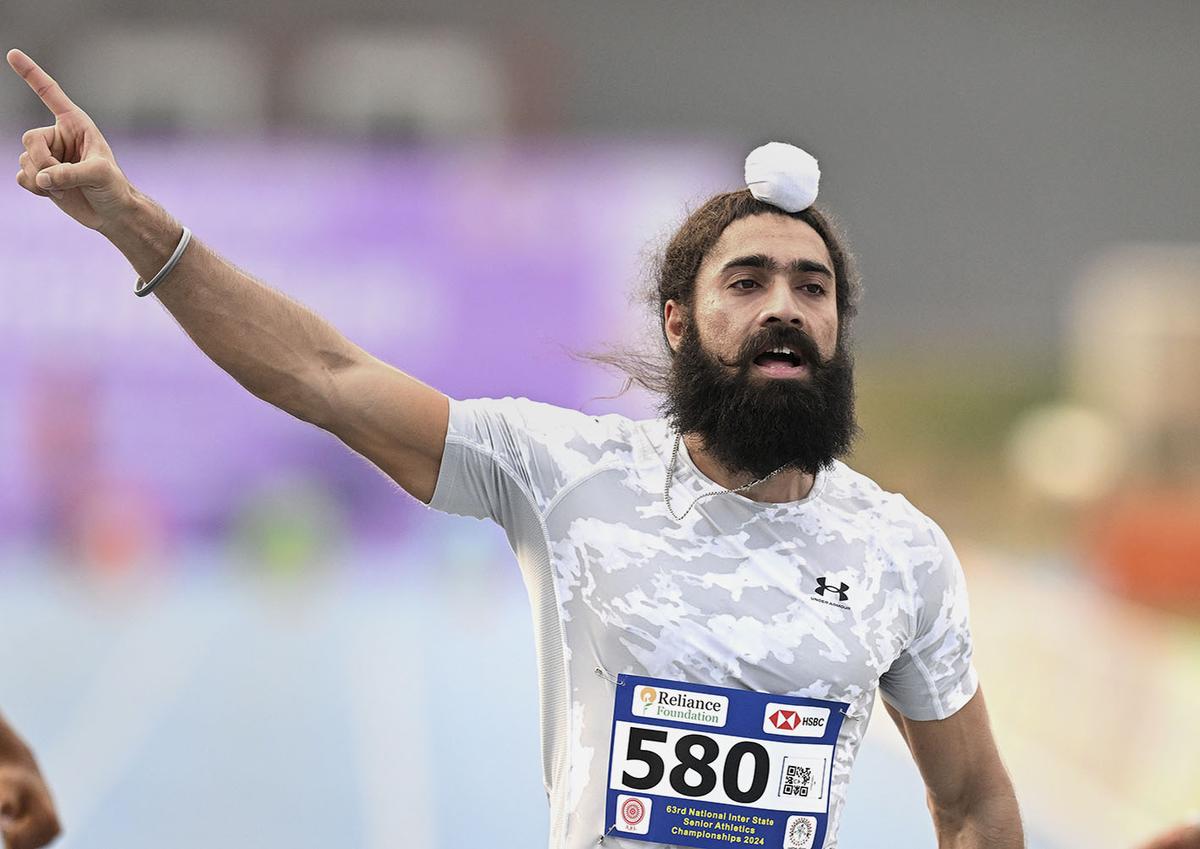
Indian athletics witnessed a watershed moment in Ranchi when Gurindervir Singh blazed through the men’s 100m final in 10.09 seconds, rewriting the national record books and becoming the first Indian sprinter to break the 10.10-second barrier. The performance at the Federation Cup not only established Gurindervir as the fastest Indian ever over 100 metres, but also ignited nationwide conversations about the future of sprinting in a country long told it could never compete with the world’s elite in the shortest race on track.
The Punjab-born sprinter’s achievement immediately drew reactions from across the sporting world, with fans, former athletes, and public figures hailing the run as a transformative moment for Indian track and field. Business leader Anand Mahindra praised the feat on social media, while cricket legend Sachin Tendulkar described the sprint as “a phenomenal achievement.” The Indian Navy, where Gurindervir serves as a Petty Officer, also celebrated his historic milestone, proudly declaring that “India’s fastest man wears whites.”
Yet the 10.09-second run was not simply the story of one perfect race. It was the culmination of years of sacrifice, self-doubt, emotional struggle, relentless training, and a deeply personal fight to prove that Indian sprinters belong on the global stage.
A Historic Run in Ranchi
Competing at the Federation Cup in Ranchi, Gurindervir delivered the race of his life in the men’s 100m final. His time of 10.09 seconds eclipsed the previous national record of 10.15 seconds set by Animesh Kujur earlier in the same competition.
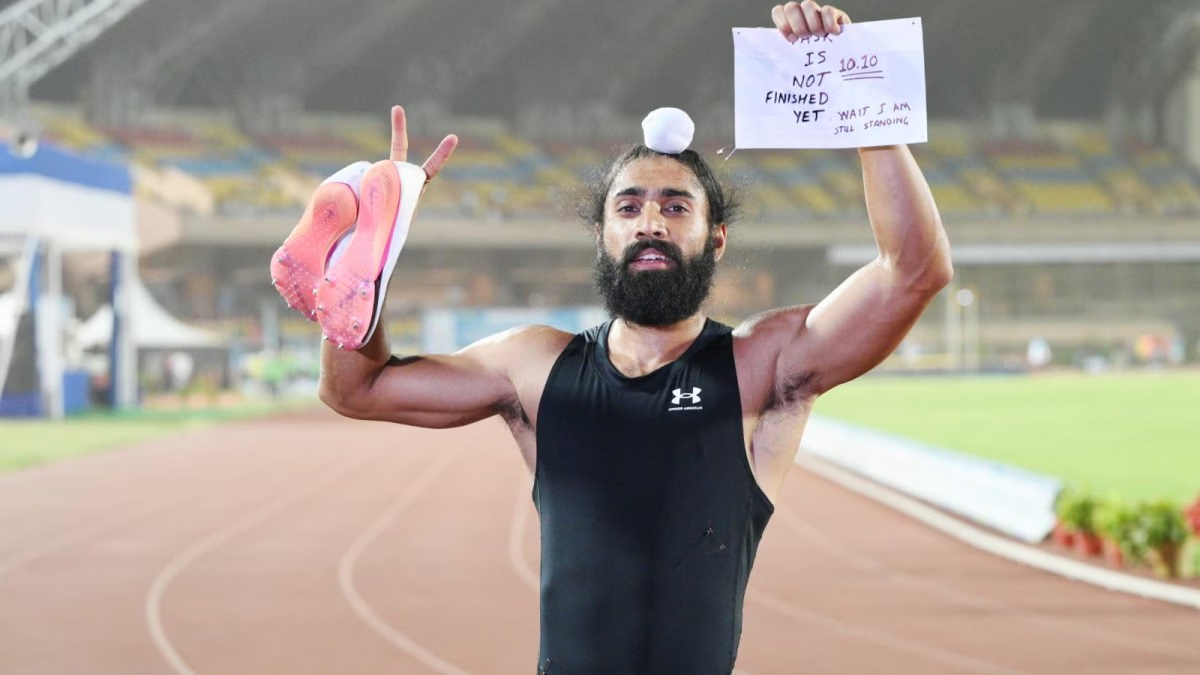
The dramatic nature of the event made the achievement even more remarkable. On the opening day, Gurindervir had briefly broken the national record himself, only for Kujur to surpass it minutes later. Instead of allowing disappointment to derail him, Gurindervir returned stronger the following day and produced a sprint that stunned Indian athletics.
The timing not only made him India’s fastest-ever man over 100 metres, but also secured qualification for two major international events — the 2026 Commonwealth Games in Glasgow and the 2026 Asian Games in Japan. He comfortably crossed the Athletics Federation of India’s qualification standard of 10.16 seconds.
His 10.09-second run also placed him among Asia’s fastest sprinters this season and marked a significant leap forward for Indian sprinting, an area where the country has historically struggled to achieve global recognition.
From Punjab Villages to National Stardom
Gurindervir Singh’s rise began in Punjab, where sport was deeply woven into family life. His father, Kamaljeet Singh, was a former national-level volleyball player and retired Punjab Police constable. Although Kamaljeet’s own sporting ambitions remained unfulfilled, he ensured his son grew up surrounded by the culture of competition and discipline.
One of the defining memories of Gurindervir’s childhood came during Diwali clean-ups, when he was asked to polish his father’s medals, trophies, and shields. Among those items was a photograph of Kamaljeet soaring in the air during a volleyball match — an image that left a lasting impression on the young athlete.
Recognising his son’s growing interest in sport, Kamaljeet pushed Gurindervir toward structured training from an early age. The journey, however, was anything but glamorous.
As a schoolboy studying at Guru Nanak Mission School in Dalla, Gurindervir travelled more than 13 kilometres from his village, often running and walking across rugged terrain before training sessions. Long before he stepped onto a synthetic track, he honed his speed on rough village grounds.
By the time he reached Class 10, his talent had become impossible to ignore. He moved to Cambridge School in Jalandhar, where he met coach Sarabjit Singh Happy — a figure who would become instrumental in shaping both his career and personal growth.
The Coach Who Became Family
The relationship between Gurindervir and coach Sarabjit Singh Happy evolved far beyond the conventional athlete-coach dynamic.
Understanding both the financial pressures and the demands of elite training, Happy effectively welcomed the young sprinter into his own household. He managed Gurindervir’s nutrition, supervised his development, and created an environment where the athlete could focus entirely on improving his sprinting.
Training at the Punjab Institute of Sports track under Happy’s guidance, Gurindervir gradually transformed from a promising youngster into one of India’s most exciting sprint talents.
However, his path remained psychologically challenging.
As he progressed through the Under-16 ranks, Gurindervir often found himself intimidated by older and physically stronger athletes. During that phase, advice from his maternal uncle became a turning point.
“Sher eko hi hunda jungle vich, bakriyan bahut firdi, hun tu sher banke khel,” his uncle told him.
Translated loosely, the phrase means: “There is only one lion in the jungle while many goats roam around. Go out there and play like a lion.”
The words stayed with him and gradually shaped the fearless mentality that later defined his sprinting.
Breaking the Myth Around Indian Sprinters
Throughout his development, Gurindervir repeatedly encountered skepticism surrounding Indian athletes’ ability to compete in world-class sprinting.
Many critics claimed Indians lacked the “genetic makeup” required to excel in the 100 metres — an event traditionally dominated by athletes from sprinting powerhouses.
Rather than ignore those comments, Gurindervir used them as motivation.
His breakthrough came in March 2024 at the Indian Grand Prix, where he clocked 10.20 seconds to set a new national record. The run immediately elevated him into national prominence and established him as the country’s premier sprinter.
But success brought a different kind of pressure.
The Emotional Struggles Behind the Success
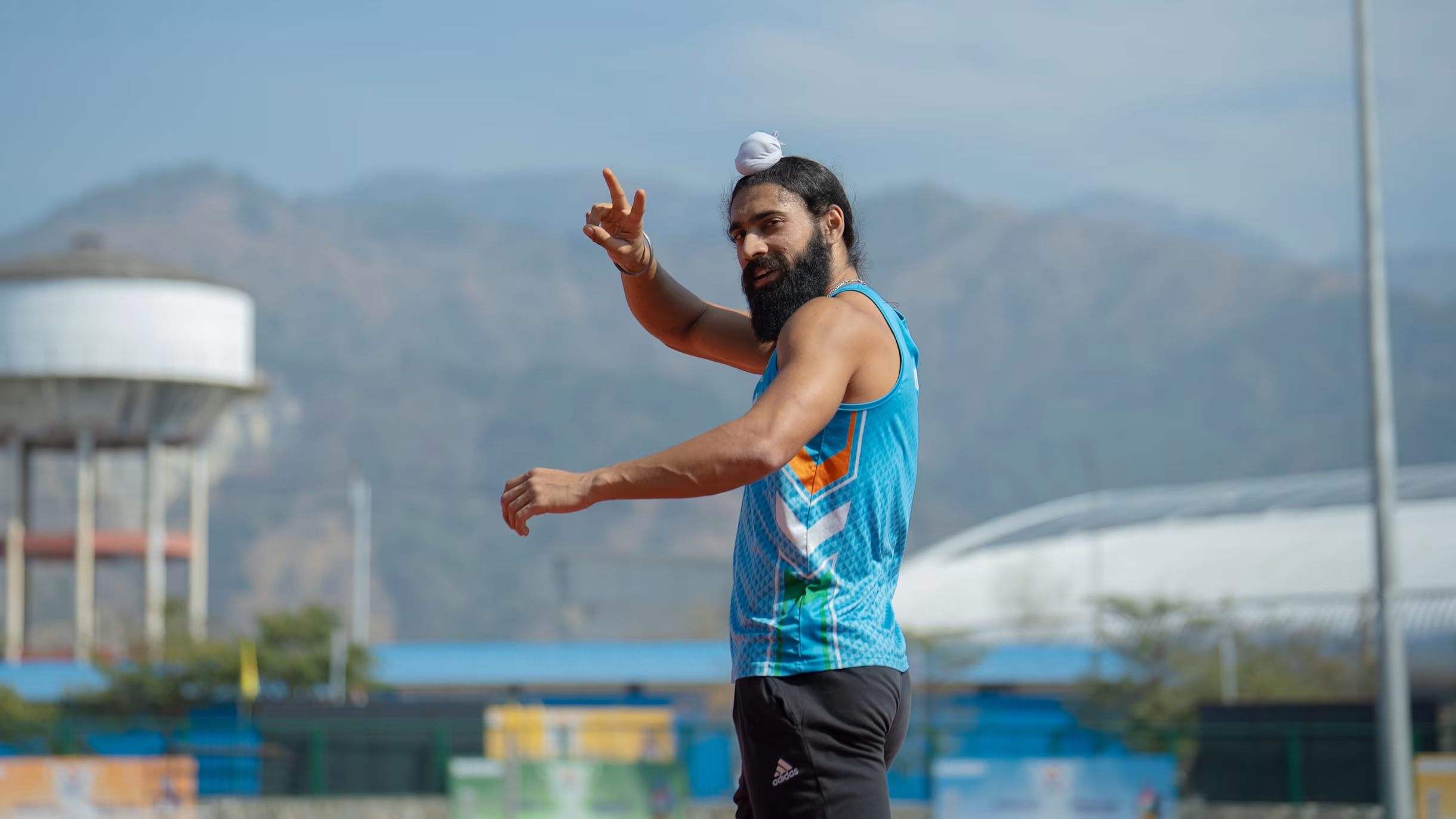
Despite becoming India’s fastest man in 2024, Gurindervir struggled emotionally over the following year.
In an interview after his latest national record, he revealed that an unkind remark about his appearance deeply affected his confidence.
The comment, delivered directly to his face, triggered a period of self-doubt that extended beyond athletics.
He admitted that he stopped looking at himself in the mirror and avoided looking people in the eyes because he feared they were judging him.
“I used to look down,” he revealed. “If I see myself in someone else’s eyes, I would think they are thinking the same thing.”
The psychological burden soon impacted his performances. Despite repeated attempts, he could not reproduce the 10.20-second timing for nearly a year, leading many observers to question whether the run had been a one-off performance.
The criticism intensified, but Gurindervir eventually found support through self-reflection and conversations with his current coach, James Hillier.
James Hillier’s Influence and Mental Reset
James Hillier, Athletics Director at the Reliance Foundation, played a critical role in Gurindervir’s revival.
Recognising that the athlete was overwhelmed by external pressure and social media scrutiny, Hillier encouraged him to disconnect from distractions and focus entirely on his sprinting.
According to Gurindervir, Hillier constantly reminded him that no one else could run the race for him.
“He told me no one will stand up for me,” Gurindervir said. “I have to stand at the starting line myself. I have to motivate myself.”
Hillier taught him how to handle criticism, ignore negativity, and rebuild his confidence.
Ahead of the Federation Cup, the coach reportedly asked him to shut out outside noise completely — including reducing smartphone and social media use.
Ironically, within 24 hours of following that advice, Gurindervir’s record-breaking sprint exploded across social media platforms nationwide.
Support Systems That Changed His Career
Gurindervir’s move into the Reliance Foundation setup significantly improved the infrastructure available to him.
He has credited the system for helping transform him physically and mentally. Enhanced nutrition plans, professional physiotherapy, sports science support, gym facilities, psychologists, and expert coaching all contributed to his development.
Reports suggest his daily nutrition budget increased dramatically after entering the elite programme, allowing him access to higher-quality recovery and training resources.
The improvements translated directly into performance.
In addition to the new 100m national record, Gurindervir also holds the national record in the 60m event with a time of 6.60 seconds. He was also part of India’s record-setting 4x100m relay team that clocked 38.69 seconds in 2025.
His consistency across sprint events indicates that the Ranchi performance was not an isolated achievement, but part of a larger upward trajectory.
A Symbol Beyond Athletics
Gurindervir’s story has resonated particularly strongly in Punjab, a state that has frequently battled concerns over youth drug abuse.
When asked whether his achievement could inspire young people, the sprinter acknowledged that sport could provide direction for the next generation.
“It might have an impact on the next generation,” he said, while also candidly admitting that those already trapped in addiction may not even know about athletics.
Still, he believes performances like his can encourage young athletes to pursue sport instead of destructive paths.
Traditionally, Punjab has produced throwers and 400m runners rather than elite sprinters. Gurindervir’s emergence therefore represents a shift in the state’s athletic identity.
His success has also elevated conversations around India’s sprinting future at a time when the country is beginning to invest more heavily in sports science and track development.
Nationwide Recognition and Viral Fame
The aftermath of the 10.09-second sprint turned Gurindervir into one of the most searched athletes in India.
Comparisons with global sprint icon Usain Bolt quickly flooded social media, although many observers framed those references more as symbols of inspiration than direct competitive comparisons.
His hometown celebrated wildly after the race, with reports describing emotional scenes as family members and villagers reacted to the achievement.
One of the most touching moments came immediately after the race when Gurindervir’s first phone call was to his mother.
“Mummy, did you see the race?” he reportedly asked.
That emotional conversation captured the deeply human side of a performance that had suddenly placed him at the centre of Indian sporting history.
What Comes Next?
At 10.09 seconds, Gurindervir Singh has already changed perceptions around Indian sprinting. Yet the athlete himself believes his journey is only beginning.
The next challenge will be translating national dominance into success at the continental and global level. With the Commonwealth Games and Asian Games qualification secured, expectations around him will continue to rise.
However, perhaps the biggest significance of his achievement lies beyond medals and timings.
For decades, Indian sprinting carried the burden of limitation — the belief that athletes from the country could not compete with the world’s best in pure speed events.
Gurindervir Singh’s sprint in Ranchi shattered more than a national record.
It shattered a psychological barrier.
And in doing so, India’s fastest man may have opened the door for an entirely new generation of sprinters to dream bigger than ever before.
With inputs from agencies
Image Source: Multiple agencies
© Copyright 2026. All Rights Reserved. Powered by Vygr Media.