

 By
By 
India’s digital identity ecosystem has reached another significant milestone, with the Aadhaar App crossing 5 crore (50 million) downloads. The landmark signals growing acceptance of smartphone-based Aadhaar services and reflects a broader shift in how residents manage and verify their identity online.
The app is increasingly becoming a digital interface between Aadhaar holders and the Unique Identification Authority of India (UIDAI), allowing users to access several Aadhaar-related services without necessarily visiting an Aadhaar centre. Among the services available through the app are mobile number updates, address and email changes, biometric lock and unlock facilities, and e-Aadhaar downloads.
The 5-crore download figure is particularly significant because it represents more than simply the number of installations. Usage figures released alongside the milestone show that residents are actively using the app for important identity-related tasks, suggesting that digital Aadhaar services are moving beyond experimentation and becoming part of everyday interactions with public services.
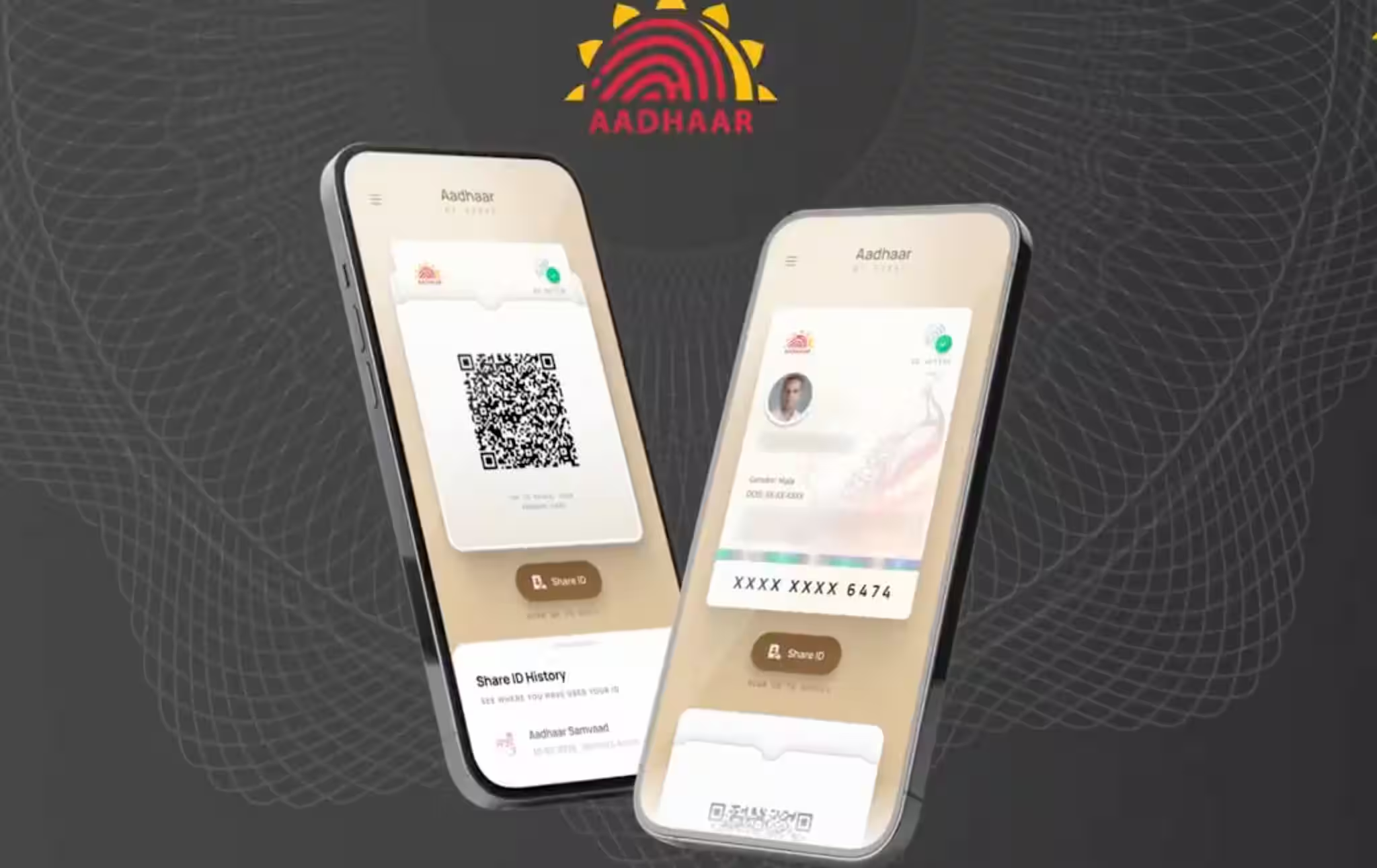
Aadhaar App records millions of digital updates
The strongest indication of adoption comes from the number of updates completed through the application.
More than 60 lakh mobile number updates have been carried out using the Aadhaar App, while over 15 lakh address updates and more than 23 lakh email updates have also been completed digitally. Together, these figures point to sustained use of the application for services that traditionally required residents to navigate an Aadhaar centre or other physical channels.
For users, the appeal is straightforward: routine Aadhaar-related requirements can increasingly be handled through a smartphone. Instead of treating Aadhaar as an identity document that must be physically presented or updated through an offline process, the emerging model allows residents to manage several aspects of their identity information digitally.
This shift could be especially relevant as more government and private-sector services move towards digital-first delivery. When identity-related processes can be completed remotely, residents potentially save both time and the effort associated with visiting service centres.
The growing use of mobile number, address and email update facilities also indicates that the app is not merely being downloaded for occasional verification. A significant number of users are engaging with specific services, making the application a more active part of Aadhaar management.
‘Show, Share and Verify’ puts greater emphasis on user control
A key feature of the Aadhaar App is its design around the principle of “Show, Share and Verify.” The approach is intended to give Aadhaar holders greater control over how their identity information is presented and used.
This is an important consideration as digital identity becomes increasingly integrated into everyday services. Convenience alone is not enough for identity platforms; users also need mechanisms that allow them to understand what information is being shared and why.
The Aadhaar App’s approach is therefore centred on enabling identity verification while giving residents greater control over their information. The emphasis on consent and limited data sharing is particularly relevant in an environment where privacy has become a major consideration in digital services.
The broader objective is to make identity verification simpler without requiring users to disclose more information than necessary. This resident-centric model could become increasingly important as digital verification expands across sectors.
Offline Aadhaar verification ecosystem expands
The growth of the Aadhaar App is taking place alongside another development in the digital identity ecosystem: the expansion of Aadhaar-based offline verification.
Since the rollout of the initiative in January, more than 200 entities have been onboarded as Offline Verification Seeking Entities (OVSEs). These entities can use Aadhaar’s offline verification mechanisms to verify identity information without requiring real-time connectivity to UIDAI’s central database.
The offline framework uses mechanisms such as QR code-based verification and secure digitally signed documents. This creates an alternative to verification processes that depend on a live connection with the central Aadhaar system.
The significance extends beyond technical convenience. Offline verification can allow service providers to authenticate identity information while limiting the amount of data that needs to be shared. For residents, that means a verification process can potentially be completed using only the information necessary for a particular purpose.
The addition of more than 200 OVSEs indicates that this model is gaining traction among organisations that need reliable identity verification while also looking for more privacy-conscious and convenient mechanisms.
What the 5-crore milestone means for digital India
The Aadhaar App’s growth comes against the backdrop of India’s wider push towards digital public infrastructure. Over the past decade, smartphones and online platforms have increasingly become gateways to government and financial services, reducing dependence on physical paperwork and in-person interactions.
Aadhaar is a central component of this ecosystem, and the expansion of app-based services could make the identity system more accessible in everyday situations.
The latest milestone also illustrates an important evolution in the role of digital identity. Aadhaar is no longer limited to being a number or physical document used for authentication. Its ecosystem is increasingly incorporating mobile-based management, digital document access, biometric controls and offline verification.
For residents, this can translate into a more flexible way of managing identity-related needs. For service providers, digital and offline verification mechanisms can offer additional ways to establish identity while reducing paperwork and dependency on real-time database access.
The underlying objective is to create a system that combines ease of use, security, privacy and accessibility. The increasing adoption of both the app and offline verification suggests that these capabilities are becoming an increasingly visible part of India's digital infrastructure.
Privacy and consent remain central to the next phase
As digital identity services expand, the question is no longer simply whether people can access services online. It is also about how identity information is shared during those interactions.
The Aadhaar App’s emphasis on “Show, Share and Verify”, along with the offline verification framework, places user control and consent at the centre of the evolving system. The ability to share only the minimum information required for verification is intended to strengthen privacy while maintaining convenience.
That balance will remain important as more organisations adopt digital verification. A system that is easy to use but gives users limited control over their information could create new concerns. Conversely, strong privacy mechanisms that make verification cumbersome could discourage adoption.
The current direction attempts to address both sides by making identity verification simpler while building safeguards around how information is shared.
Aadhaar services move closer to the smartphone
The 5-crore download milestone ultimately highlights a larger transformation in India's digital identity landscape. Millions of residents are already using the Aadhaar App for updates and other services, while hundreds of organisations are joining the offline verification ecosystem.
The numbers provide a clear indication that digital Aadhaar services are gaining ground. More than 60 lakh mobile number updates, over 15 lakh address updates and more than 23 lakh email updates demonstrate that the app is being used for practical identity-management needs rather than functioning solely as a document-access platform.
The next phase of Aadhaar’s digital journey is likely to be defined by how effectively convenience, security and privacy can work together. If adoption continues at the current pace, smartphone-based identity services could become an increasingly routine part of how residents interact with both public and private services.
For now, crossing 5 crore downloads marks a notable point in that journey. It reflects a clear appetite for digital-first Aadhaar services and reinforces the broader movement towards technology-enabled, paperless and resident-centric service delivery in India.
With input from agencies
Image Source: Multiple agencies
© Copyright 2026. All Rights Reserved. Powered by Vygr Media.