
 By
By 
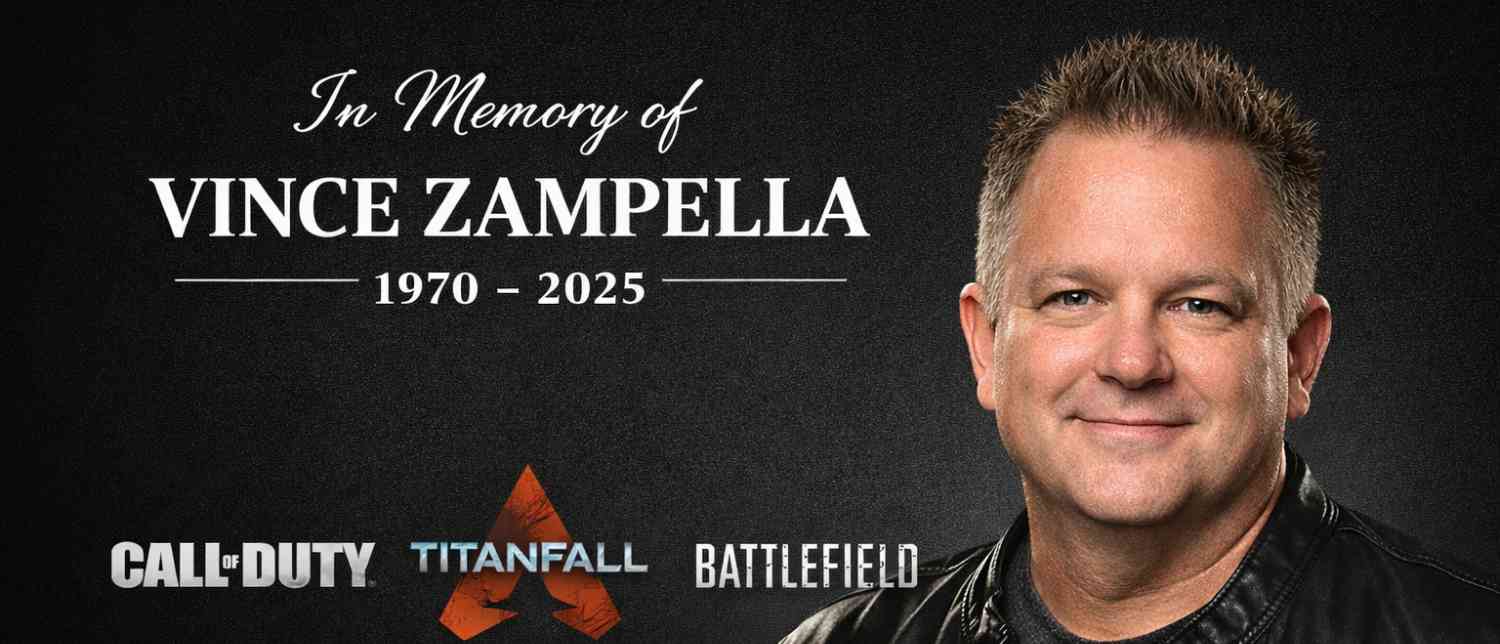
The global video game industry is mourning the sudden and tragic loss of Vince Zampella, one of the most influential architects of modern first-person shooter games. Zampella, a pioneering game designer, studio founder, and executive best known for shaping franchises such as Call of Duty, Titanfall, Apex Legends, and Battlefield, died in a car crash in Southern California on Sunday, December 21. He was 55.
Multiple media reports, including NBC Los Angeles, confirmed that Zampella was killed in a single-vehicle accident on the Angeles Crest Highway, a scenic mountain road north of Los Angeles in the San Gabriel Mountains. Another passenger traveling with him also died from injuries sustained in the crash.
According to authorities, the accident was reported at approximately 12:45 p.m. local time. The California Highway Patrol (CHP) stated that the southbound vehicle veered off the roadway shortly after exiting a tunnel, struck a concrete barrier, and became fully engulfed in flames. Both occupants ultimately succumbed to their injuries.
While officials initially did not identify the victims, Electronic Arts (EA) confirmed Zampella’s death on Monday, bringing clarity to the reports and triggering an outpouring of tributes across the gaming world.
Details of the Fatal Crash
NBC4 Los Angeles reported that the crash involved a cherry-red 2026 Ferrari 296 GTS, a mid-engine hybrid sports car capable of producing more than 800 horsepower. Witness videos posted on social media showed the mangled Ferrari engulfed in flames on the mountain roadway, underscoring the severity of the impact.
According to the CHP, the driver was trapped inside the vehicle and died at the scene due to the ensuing fire. The passenger was ejected from the car during the crash and later died at a hospital. While early reports said it was unclear whether Zampella was driving or riding as a passenger, later NBC4 reporting stated that Zampella had been driving at the time of the accident.
An unverified video circulating online, purportedly showing a Ferrari exiting a tunnel at high speed moments before the crash, has gone viral, though authorities have not officially confirmed its authenticity. The identity of the passenger has not been publicly disclosed. The cause of the crash remains under investigation.
Confirmation and Industry Reaction
Electronic Arts, which owns Respawn Entertainment—the studio Zampella co-founded—confirmed his death in an official statement.
“This is an unimaginable loss, and our hearts are with Vince’s family, his loved ones, and all those touched by his work,” EA said. “Vince’s influence on the video game industry was profound and far-reaching. A friend, colleague, leader, and visionary creator, his work helped shape modern interactive entertainment and inspired millions of players and developers around the world.”
Respawn Entertainment also paid tribute in a statement posted via the Battlefield account on X (formerly Twitter), praising Zampella’s leadership style and creative conviction. The studio noted that he showed up every day trusting his teams, encouraging bold ideas, and consistently advocating for what he believed was right—for both developers and players.
Vince Zampella was not just an amazing game creator. He was also a friend.
In absolute shock right now. Rest in peace to an absolute legend and giant of our industry. pic.twitter.com/acqJxlD1u1— JP Kellams (@synaesthesiajp) December 22, 2025
From Early Shooter Designer to Industry Titan
Vince Zampella’s journey in video games began in the 1990s, when he worked as a designer on shooter titles during a formative era for the genre. One of his earliest and most influential credits was Medal of Honor: Allied Assault, a World War II shooter celebrated for its cinematic presentation of historical battles. That title helped establish the modern military shooter template and directly influenced Zampella’s future work.
In 2002, Zampella co-founded Infinity Ward alongside Jason West and Grant Collier. Their goal was ambitious: to create a game that would surpass Medal of Honor. Backed by a publishing agreement with Activision, the studio launched Call of Duty in 2003.
The franchise quickly redefined the shooter genre, initially dramatizing World War II combat before expanding into modern warfare and speculative future conflicts. Under Zampella’s leadership as CEO and Chief Creative Officer, Infinity Ward released a series of genre-defining titles, including Call of Duty (2003), Call of Duty 2 (2005), Call of Duty 4: Modern Warfare (2007), and Call of Duty: Modern Warfare 2 (2009).
These games reshaped multiplayer design, cinematic storytelling, and competitive balance, laying the foundation for esports-driven shooter ecosystems.
A Franchise That Changed Gaming Forever
Today, Call of Duty stands as one of the most commercially successful entertainment franchises in history. According to publisher Activision Blizzard, more than 500 million copies of Call of Duty games have been sold worldwide. The franchise continues to attract over 100 million active players each month, a scale few games have ever achieved.
Reflecting on that success in a 2016 interview with IGN, Zampella admitted that even he had not been prepared for its magnitude.
“You have that dream of the game being popular,” he said, “but I don’t think you’re ever ready for that level of success.”
The Game Awards mourns the loss of Vince Zampella, co-creator of Call of Duty, and co-founder of Infinity Ward and Respawn Entertainment. pic.twitter.com/TyiStehwsx— The Game Awards (@thegameawards) December 22, 2025
Respawn Entertainment and a New Creative Era
After leaving Activision under contentious circumstances, Zampella reunited with Jason West in 2010 to form Respawn Entertainment. The studio quickly established itself as an innovation hub for shooter design.
Respawn’s debut franchise, Titanfall (2014), introduced agile movement systems, wall-running mechanics, and towering mechs known as Titans. These ideas pushed the genre toward verticality, speed, and fluid momentum. Titanfall 2 (2016) refined those concepts further, earning critical acclaim for both its multiplayer depth and inventive single-player campaign.
In 2019, Respawn released Apex Legends, a free-to-play battle royale set in the Titanfall universe. The game blended hero-based abilities with elite gunplay and introduced a groundbreaking ping communication system that reshaped how players coordinate in multiplayer environments. Its squad-focused design, cross-play support, and live-service updates turned it into a cornerstone of modern esports.
That same year, Respawn expanded into narrative-driven action games with Star Wars Jedi: Fallen Order. The title followed a Jedi Padawan who survived Order 66, combining lightsaber combat, Force powers, and exploration in a cinematic single-player experience. Its success proved that Zampella’s design philosophy extended well beyond competitive shooters. The sequel, Star Wars Jedi: Survivor, released in 2023.
Leadership at Electronic Arts and Battlefield’s Revival
Electronic Arts acquired Respawn Entertainment in 2017, but Zampella remained its CEO and creative leader. Over time, EA entrusted him with broader responsibilities, including oversight of the Battlefield franchise.
His involvement came at a critical moment. Following the disappointing launch of Battlefield 2042 in 2021, the series faced uncertainty. Under Zampella’s guidance, EA refocused the franchise on clarity, pacing, and large-scale combat excellence.
That effort culminated in the release of Battlefield 6, which rebounded dramatically and set a new sales record for the franchise. The series, across its various iterations, has now attracted more than 100 million players over the past two decades.
When asked about the success earlier this year, Zampella remained characteristically grounded.
“We never take moments like this for granted,” he said, despite his long history of industry-defining achievements.
HOLY SHIT friends
This just hit me like a frag grenade...
Vince Zampella, the absolute LEGEND who co-created Call of Duty and built empires with Titanfall and Apex, gone at 55 in a brutal Ferrari crash up on Angeles Crest hwy
Dude was living the...pic.twitter.com/Vl8ZO58GHG— Victoria Gonzalez (@VictoriaGo55816) December 23, 2025
A Design Philosophy That Defined an Era
Beyond sales figures, Vince Zampella’s importance lay in how he thought about games. His work consistently prioritised responsiveness, readability, and player agency—principles that became foundational to competitive shooters and ranked multiplayer systems.
Washington Post video game reporter Gene Park described Zampella’s approach as bold and transgressive.
“It was a method of storytelling of a moment in time that was political, violent, and impactful,” Park told NBC4. “He really knew how to create stories and experiences that hit at the heart of the human experience—terror, dread, heroism.”
Tributes From Across the Industry
As news of Zampella’s death spread, tributes poured in from developers, publishers, awards bodies, and players worldwide.
“The Game Awards mourns the loss of Vince Zampella, co-creator of Call of Duty, and co-founder of Infinity Ward and Respawn Entertainment,” the organisation said in a statement.
J.P. Kellams, lead producer at Epic Games, wrote: “Vince Zampella was not just an amazing game creator. He was also a friend. In absolute shock right now. Rest in peace to an absolute legend and giant of our industry.”
Gamers, too, paid tribute online, sharing gameplay clips, quotes, and references from the worlds Zampella helped create.
A Lasting Legacy
Vince Zampella leaves behind a creative legacy that spans generations of players and developers. From redefining military shooters with Call of Duty to reshaping movement and communication in Titanfall and Apex Legends, and revitalising Battlefield at a critical juncture, his influence is woven into the fabric of modern gaming.
His death marks the end of an era—but the worlds, mechanics, and experiences he helped build will continue to be played, studied, and celebrated for decades to come.
With inputs from agencies
Image Source: Multiple agencies
© Copyright 2025. All Rights Reserved. Powered by Vygr Media.