 By
By 
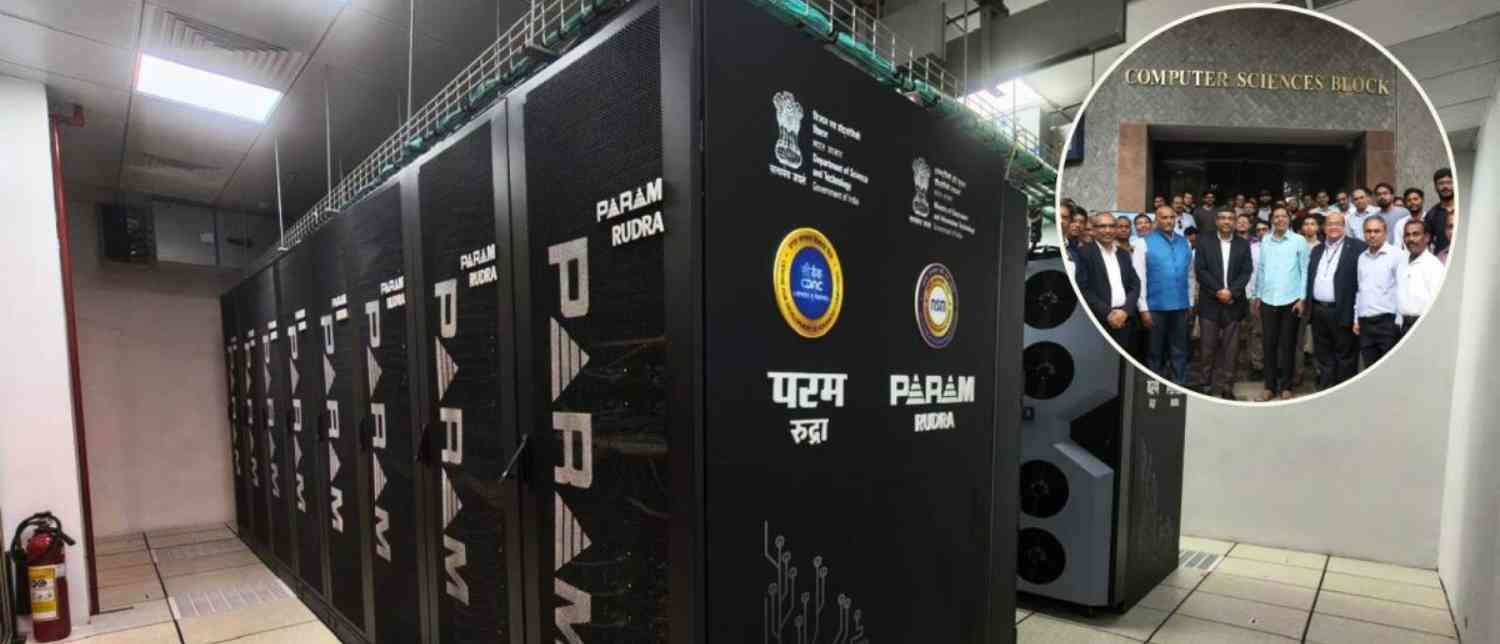
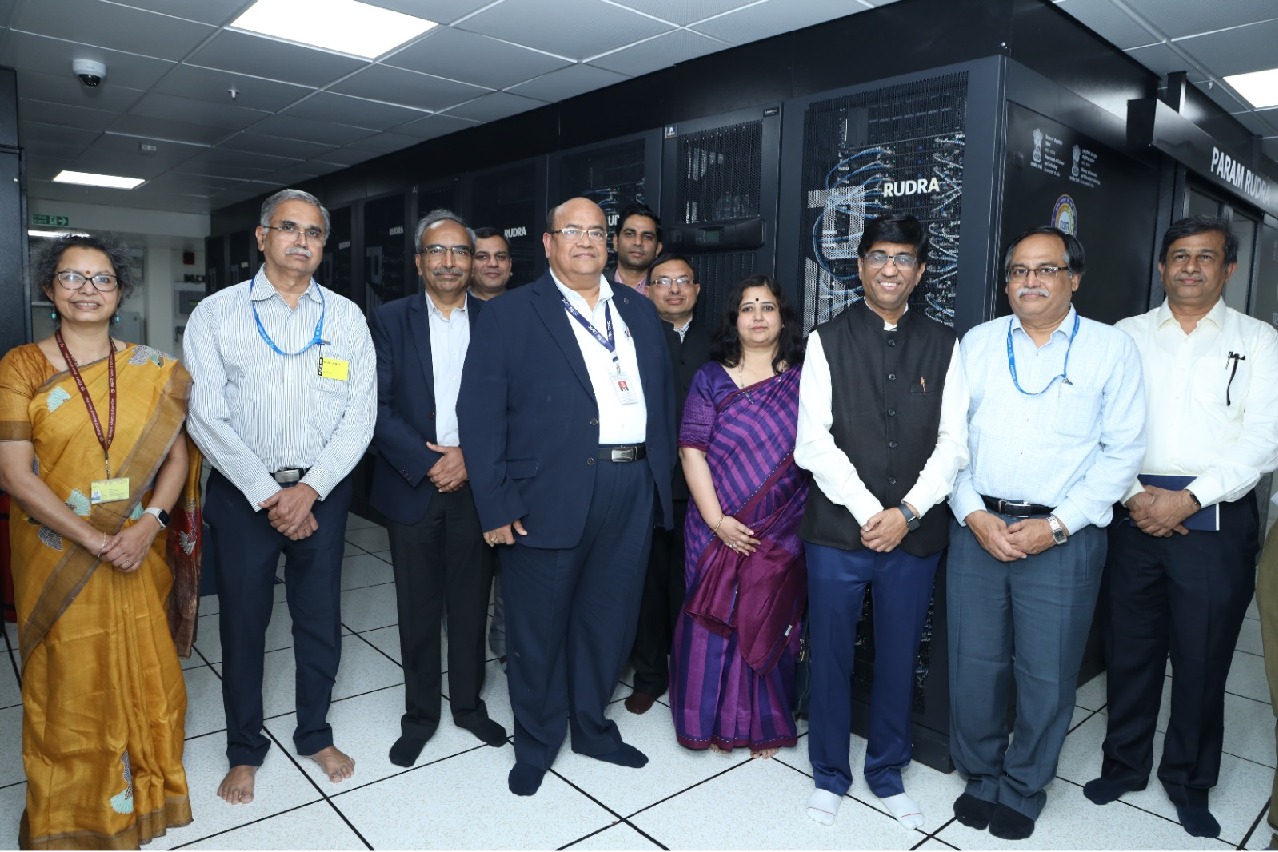
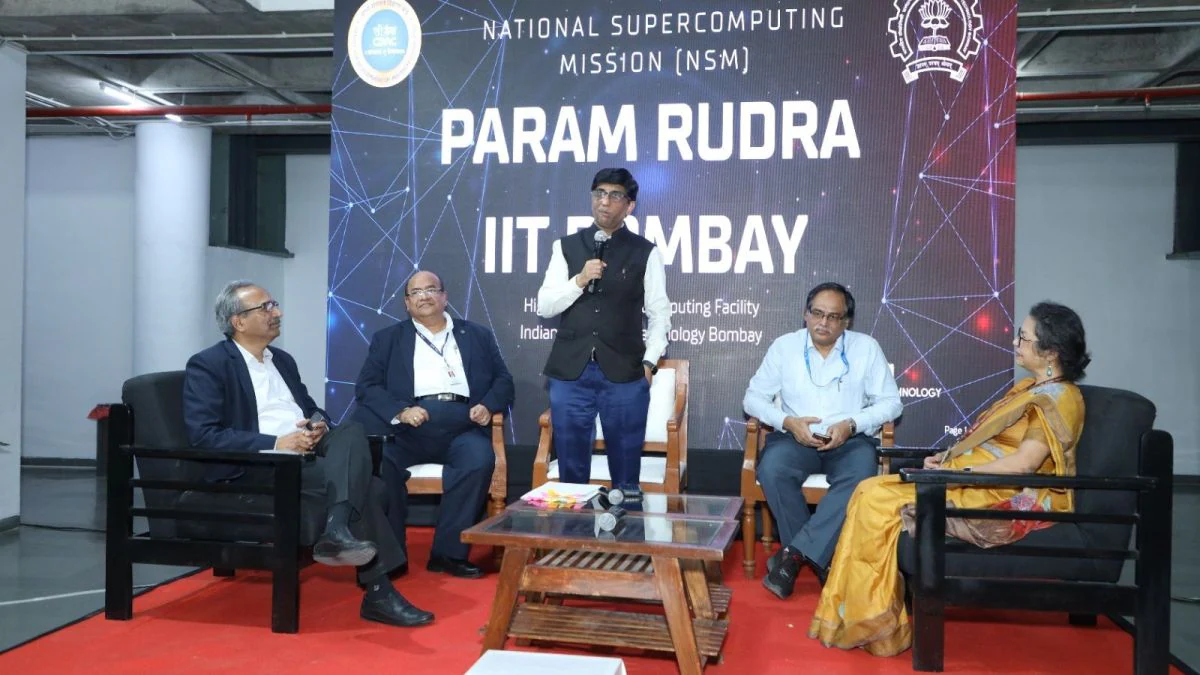
India’s journey towards technological self-reliance in high-performance computing took a major leap forward with the inauguration of the PARAM Rudra supercomputing facility at the Indian Institute of Technology (IIT) Bombay. The state-of-the-art system was inaugurated on January 8, 2026, by Professor Abhay Karandikar, Secretary of the Department of Science and Technology (DST), Government of India, marking another significant milestone under the ambitious National Supercomputing Mission (NSM).
Designed, developed, and deployed by the Centre for Development of Advanced Computing (C-DAC), PARAM Rudra is a three petaFLOPS high-performance computing (HPC) system that strengthens India’s growing network of indigenous supercomputers. The facility is expected to dramatically enhance computational research capabilities at IIT Bombay while also supporting collaborative research efforts across the country.
A Strategic Addition Under the National Supercomputing Mission
PARAM Rudra has been established under the Build Approach of the National Supercomputing Mission, a flagship initiative jointly steered by the Ministry of Electronics and Information Technology (MeitY) and the Department of Science and Technology (DST). The mission aims to create a robust, self-sustaining supercomputing ecosystem in India by focusing on four key pillars: supercomputing infrastructure, applications development, research and development, and human resource development.
C-DAC and the Indian Institute of Science (IISc), Bengaluru, serve as the mission’s implementing agencies. Since its launch in 2015, the NSM has sought to reduce India’s dependence on imported computing technologies while building domestic capacity for both manufacturing and advanced computational usage.
With the commissioning of PARAM Rudra at IIT Bombay, India has now deployed 38 supercomputers with a cumulative capacity of 44 petaFLOPS across academic and research institutions nationwide.
Built in India, for India: Indigenous Design and Manufacturing
One of the most defining aspects of PARAM Rudra is its indigenous foundation. The system is based on Rudra servers, which have been designed and developed by C-DAC and manufactured entirely in India, reinforcing the Government of India’s Make in India initiative.
Unlike earlier systems that relied on imported server architectures assembled domestically, Rudra servers are fully Indian in design. This indigenous approach significantly reduces exposure to global supply chain vulnerabilities while strengthening national technological sovereignty.
The supercomputer runs on C-DAC’s indigenous software stack, further underlining India’s capability to develop both hardware and software solutions for advanced computing needs.
Advanced Cooling for Enhanced Performance and Energy Efficiency
PARAM Rudra also incorporates Direct Contact Liquid Cooling (DCLC) technology, an advanced cooling solution that improves system efficiency while reducing energy consumption. As supercomputing systems grow larger and more powerful, efficient thermal management becomes critical, both for performance stability and sustainability.
The integration of DCLC allows PARAM Rudra to deliver high computational throughput while maintaining improved energy efficiency—an increasingly important factor as India scales towards exascale computing.
Transforming Research at IIT Bombay and Beyond
Addressing the gathering at the inauguration ceremony, Professor Abhay Karandikar emphasised that PARAM Rudra would significantly strengthen computational research at IIT Bombay. He noted that the facility would directly benefit over 200 faculty members and nearly 1,200 students at the institute.
Beyond campus boundaries, the supercomputer is also expected to support researchers from institutions across the country, expanding access to high-performance computing resources and fostering nationwide collaboration.
According to Professor Karandikar, PARAM Rudra will serve as a catalyst for innovation in artificial intelligence, biotechnology, and advanced manufacturing, while also supporting startups and industry-oriented research projects that require large-scale computing power.
Boosting Collaboration in the Mumbai Research Ecosystem
Dr Hemant Darbari, Mission Director of the National Supercomputing Mission, highlighted the broader regional impact of the new facility. He stated that PARAM Rudra at IIT Bombay would augment research opportunities for several institutions in and around Mumbai, encouraging enhanced collaboration and improved scientific outcomes.
The system is expected to become a shared computational backbone for researchers tackling complex, data-intensive problems across disciplines—from engineering and materials science to life sciences and climate studies.
A Milestone in India’s Supercomputing Journey
Representing the Ministry of Electronics and Information Technology, Ms Sunita Verma, Group Coordinator at MeitY, described the Rudra-based cluster as a major milestone in India’s indigenous supercomputing journey.
She underscored the importance of sustained investment not only in HPC systems, but also in software development, microprocessors, and networking technologies, to ensure that India remains on a steady path toward exascale computing—the next frontier in high-performance computing.
PARAM Rudra in the Context of India’s Growing HPC Network
The inauguration of PARAM Rudra at IIT Bombay comes close on the heels of similar developments at other premier institutions. Earlier, IIT Madras inaugurated PARAM Shakti, a 3.1 petaFLOPS supercomputer built by C-DAC and housed at the institute’s computer centre.
PARAM Shakti is currently one of the strongest indigenously built supercomputers in Indian academia, second only to the 3.3 petaFLOPS system at IISc Bengaluru. Its applications span cancer research, pollution control technologies, hypersonic vehicle design, and other strategic research areas.
What sets PARAM Shakti apart is its fully indigenous server architecture. As noted by G Phanikumar, Chairman of the Computer Centre at IIT Madras, the server—the “brain” of the computer—was designed, developed, and built entirely in India, rather than imported and assembled domestically.
Completing the First Phase of NSM Installations
The inauguration of PARAM Shakti on January 3 by S Krishnan, Secretary of MeitY, marked the completion of the first phase of supercomputer installations under the NSM. With its commissioning, the mission achieved its initial goal of installing 37 supercomputers across educational and research institutions, including IITs, NITs, IISERs, and IISc.
PARAM Shakti also became the eighth supercomputer in the RUDRA series, a family of systems built using indigenous RUDRA servers and Indian software stacks. Its capacity is at par with similar systems installed at IIT Bombay and IIT Delhi.
Understanding the Power of Supercomputers
Supercomputers are massive, interconnected systems capable of performing extraordinarily large calculations in a fraction of the time taken by conventional computers. They play a critical role in fields such as computational biology, climate modelling, astrophysics, artificial intelligence, and big data analytics.
As explained by Phanikumar, a computational task that might take a laptop an entire year to complete can be finished within two hours on a supercomputer. These systems also offer storage capacities thousands of times greater than personal computers, enabling the handling of vast datasets.
However, supercomputers consist of multiple complex components—GPUs, storage systems, servers, and operating systems—each typically sourced from global supply chains. This complexity was a key reason behind the launch of the National Supercomputing Mission, aimed at reducing reliance on external dependencies.
National Credibility and the Push for Self-Reliance
While inaugurating the first PARAM RUDRA supercomputers in September 2024, Prime Minister Narendra Modi emphasised that the ability to build supercomputers indigenously is a matter of national credibility.
He noted that in the era of the digital revolution, computing capacity is increasingly synonymous with national capability, and India’s progress in this domain reflects its growing technological confidence.
Currently, the strongest supercomputer in India is PARAM Siddhi AI, with a capacity of 5.2 petaFLOPS, housed at C-DAC Pune. However, it is built on an NVIDIA DGX SuperPOD base, making it a globally designed system rather than fully indigenous.
The Road Ahead: Towards Exascale Computing
Looking forward, India is already building the next generation of indigenous supercomputers under the NSM. These include a 20 petaFLOPS PARAM RUDRA system at C-DAC Bengaluru, which will become the largest and strongest fully indigenous supercomputer in the country.
In addition, a six petaFLOPS system at IIT Delhi and an 838 teraflops supercomputer at IIT Jammu are currently under development. All three systems are expected to be built on indigenous RUDRA servers, further strengthening India’s supercomputing capabilities.
A Catalyst for Innovation and Collaboration
With the inauguration of PARAM Rudra at IIT Bombay, India continues to build momentum toward a future driven by high-performance computing, advanced research, and technological self-reliance. The facility not only enhances IIT Bombay’s research infrastructure but also contributes to a broader national vision—one where computing power fuels innovation, collaboration, and global competitiveness.
As India steadily advances toward exascale ambitions, systems like PARAM Rudra stand as tangible symbols of the country’s growing confidence in designing, building, and deploying world-class computing technologies—entirely on its own terms.
With inputs from agencies
Image Source: Multiple agencies
© Copyright 2025. All Rights Reserved. Powered by Vygr Media.