 By

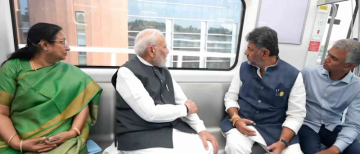
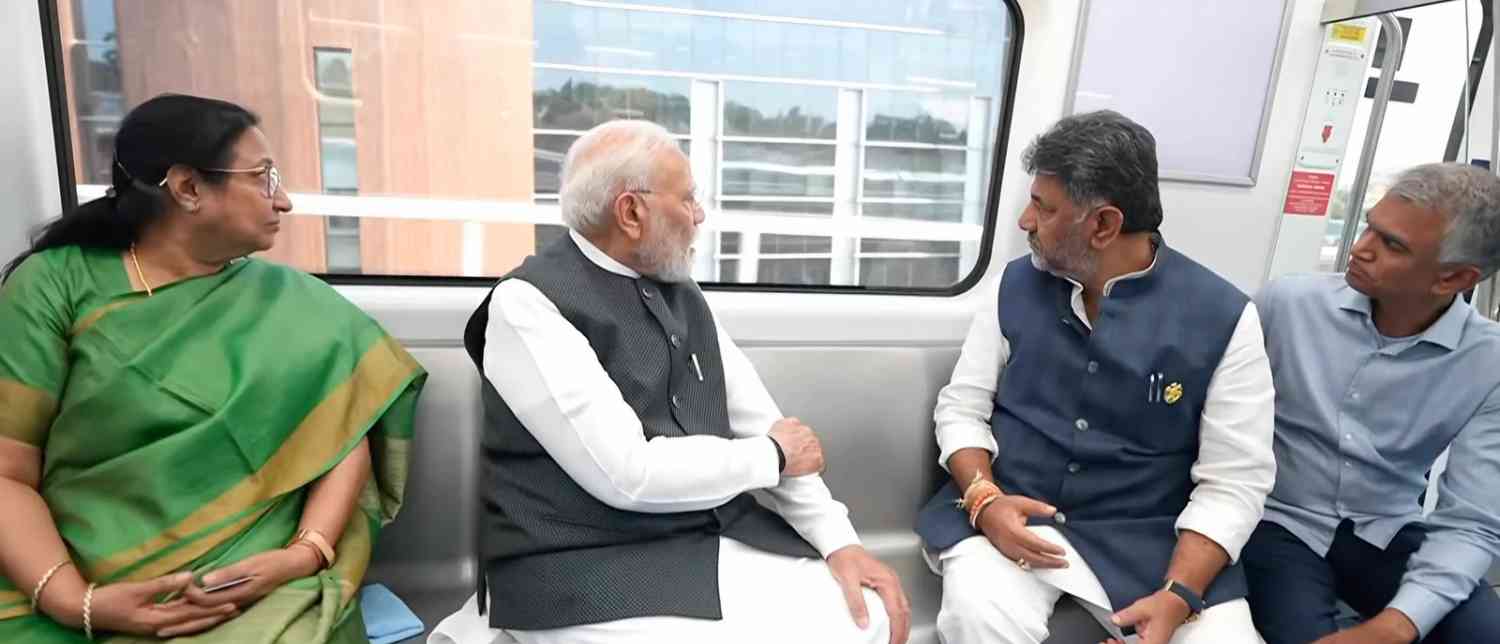
Bengaluru's public transportation network is set for a major transformation as the much-awaited Namma Metro Pink Line prepares to welcome passengers from November 14, 2026. Prime Minister Narendra Modi is inaugurating the 7.5-km elevated section of the Bengaluru Metro Pink Line on November 13, marking a significant milestone in the city's urban mobility journey. With this expansion, Bengaluru's operational metro network will cross the 100-km mark, becoming the second-largest operational metro network in India.
The development brings more than just additional metro connectivity. The inauguration also comes with three officially renamed metro stations, improved interchange possibilities, and a broader infrastructure push involving projects worth over Rs 15,600 crore across Karnataka.
For thousands of daily commuters, the opening of the new Pink Line section represents another step towards faster, more convenient and better-connected journeys across Bengaluru.
Bengaluru Metro Pink Line Inauguration: Key Details and Operational Timeline
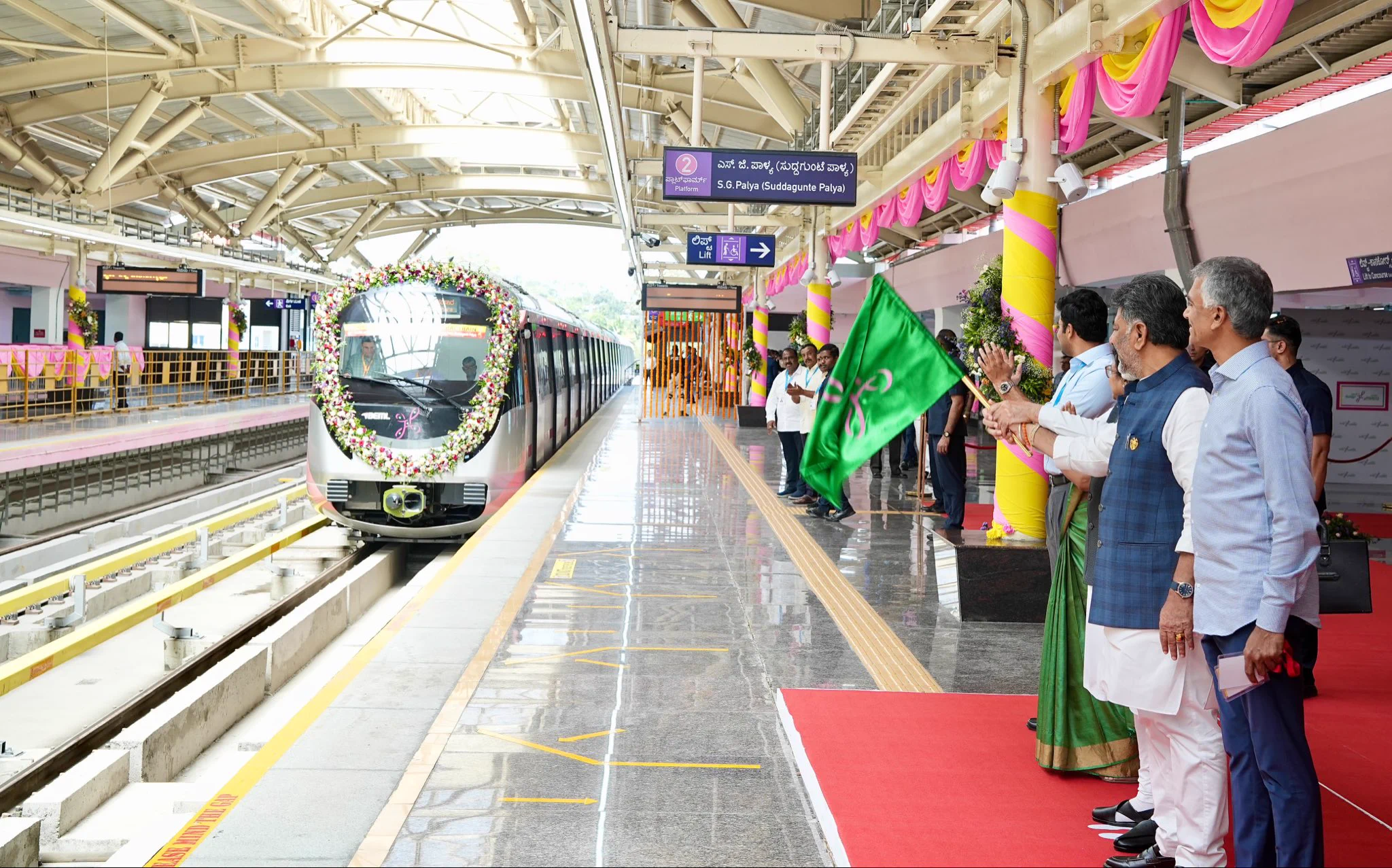
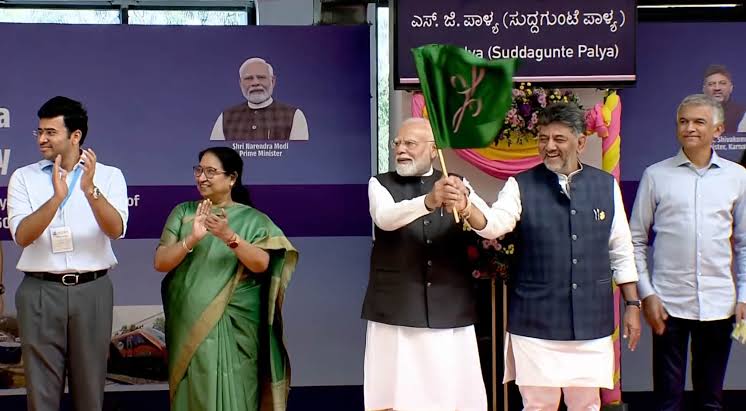
The 7.5-km elevated corridor between Kalena Agrahara and SG Palya (formerly Tavarekere) is the first section of the Namma Metro Pink Line to become operational. Prime Minister Narendra Modi is scheduled to inaugurate the stretch on November 13, 2026, before passenger services commence at 6 AM on Saturday, November 14.
The opening will expand Bengaluru's operational metro network from approximately 96.1 km to 103.6 km, taking it beyond the significant 100-km milestone.
Initially, metro trains on the newly inaugurated section are expected to operate at an eight-minute frequency. Five train sets have been allocated for the stretch, with four deployed for regular services and one retained as a standby unit. Train frequency may be improved after authorities assess passenger demand and signalling performance.
The fare structure for the newly opened section had not been finalised as of November 11, making it important for commuters to check official Bengaluru Metro Rail Corporation Limited (BMRCL) announcements before planning their journeys.
Bengaluru Metro Pink Line: Three Stations Get New Names
Ahead of the inauguration, the Central Government approved the Karnataka government's proposal to rename three stations on the elevated section of the Pink Line.
The changes were recommended following public representations and a review by a state-level committee. The objective is to ensure that metro station names better reflect the surrounding localities and geographical identities.
Here are the three revised station names:
| Previous Station Name | New Station Name |
|---|---|
| IIMB | Bilekahalli-IIMB |
| JP Nagar 4th Phase | NS Palya-JP Nagar 4th Phase |
| Tavarekere | SG Palya (Sadduguntepalya) |
The decision to rename IIMB Metro Station as Bilekahalli-IIMB recognises Bilekahalli as the revenue village in which the station is situated.
Similarly, NS Palya has been incorporated into the name of JP Nagar 4th Phase Metro Station because it identifies the revenue village surrounding the station.
The renaming of Tavarekere Metro Station is particularly noteworthy. Although Tavarekere is the name of a revenue village in the wider area, the locality is situated some distance from the station. SG Palya, which is also the name of the corresponding Greater Bengaluru Authority ward, is more commonly associated with the station's immediate surroundings. Therefore, the revised name will be SG Palya (Sadduguntepalya).
Meanwhile, Kalena Agrahara, Hulimavu and Jayadeva Hospital stations will retain their existing names.
These changes are intended to make station identification more geographically relevant and help passengers locate metro stations more easily.
Namma Metro Pink Line Route and Stations: From Gottigere to Nagawara
The Bengaluru Metro Pink Line is an important addition to the city's expanding public transportation infrastructure. Once fully operational, the corridor will connect Gottigere in south Bengaluru with Nagawara in the northern part of the city.
The approximately 21.25-km corridor will feature 18 stations, including 12 underground stations and six elevated stations. Its alignment is designed to connect residential neighbourhoods, commercial centres, educational institutions and important transit hubs.
Major localities and destinations along the Pink Line include:
-
Gottigere
-
Kalena Agrahara
-
Hulimavu
-
Bilekahalli-IIMB
-
NS Palya-JP Nagar 4th Phase
-
Jayadeva Hospital
-
SG Palya
-
Dairy Circle
-
Langford Town
-
MG Road
-
Shivaji Nagar
-
Cantonment
-
Pottery Town
-
Venkateshpura
-
Nagawara
One of the corridor's biggest advantages will be its integration with other metro routes. Passengers will be able to interchange with the Yellow Line at Jayadeva Hospital and the Purple Line at MG Road. An interchange with the upcoming Blue Line is planned at Nagawara, while JP Nagar 4th Phase is expected to provide connectivity with the proposed Orange Line.
This multi-line integration is expected to improve access to several parts of Bengaluru without requiring commuters to depend entirely on road transportation.
When Will the Entire Bengaluru Metro Pink Line Become Operational?
Although the elevated section is opening in November 2026, the entire Pink Line corridor will not become operational simultaneously.
The project is being developed in two phases.
Phase 1: Elevated Section
The first phase covers the 7.5-km elevated stretch between Kalena Agrahara and SG Palya. It is being inaugurated on November 13, with commercial passenger operations scheduled to begin on November 14.
The six stations on this section are Kalena Agrahara, Hulimavu, Bilekahalli-IIMB, NS Palya-JP Nagar 4th Phase, Jayadeva Hospital and SG Palya.
Phase 2: Underground Section
The remaining underground section, connecting Dairy Circle with Nagawara, spans approximately 13.8 km. This stretch is expected to become operational around March 2027, alongside Phase 2A of the Blue Line.
Once both phases are completed, the Pink Line will provide a continuous north-south metro connection through several important residential and commercial areas of Bengaluru.
PM Modi's Bengaluru Visit: Projects Worth Rs 15,600 Crore
The inauguration of the Pink Line is part of a much larger development programme during Prime Minister Narendra Modi's Karnataka visit on November 13.
The Prime Minister is launching, inaugurating and dedicating infrastructure and development projects worth more than Rs 15,600 crore across multiple sectors, including urban mobility, renewable energy, power transmission, petroleum infrastructure, waste management and railways.
Apart from inaugurating the Bengaluru Metro Pink Line, the programme includes several significant developments.
Renewable Energy and Power Transmission: Major transmission infrastructure projects in the Koppal-II and Gadag-II renewable energy zones, involving an investment of approximately Rs 4,450 crore, will be inaugurated. The projects are expected to facilitate the integration of around 2 GW of renewable energy potential into the electricity grid. Additional transmission infrastructure and system-strengthening projects are also part of the programme.
Petroleum Infrastructure: An underground LPG storage cavern with a capacity of 80,000 metric tonnes is being dedicated to the nation in Mangaluru. Built at an investment of over Rs 850 crore, the facility is connected to New Mangalore Port through a 9.4-km pipeline. The Devangonthi Marketing Terminal near Bengaluru, developed at a cost of Rs 330 crore, is also being inaugurated.
Waste Management: The foundation stone will be laid for a compressed biogas plant at Haralakunte in Bengaluru. The facility is designed to process approximately 300 tonnes of municipal solid waste every day and produce around 12.6 tonnes of compressed biogas.
Railway Infrastructure: Four redeveloped railway stations—Chamarajanagar, Chikkamagaluru, Sakleshpur and Subrahmanya Road—will be inaugurated under the Amrit Bharat Station Scheme. The programme also includes the inauguration of the 45-km Bagalkot-Wandal railway doubling section and electrification of the 55-km Sakleshpur-Subrahmanya Road Ghat section.
Bengaluru-Mangaluru-Madgaon Vande Bharat Express to Be Flagged Off
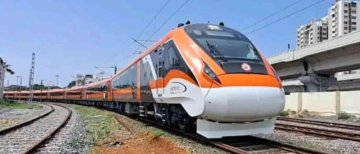
Another major highlight of the Prime Minister's Karnataka visit is the flag-off of the Bengaluru-Mangaluru-Madgaon Vande Bharat Express.
The semi-high-speed train will strengthen rail connectivity between Bengaluru, coastal Karnataka and Goa, covering important destinations such as Hassan, Sakleshpur, Mangaluru, Udupi, Murdeshwar, Gokarna and Karwar.
The introduction of this service is expected to offer passengers a more convenient travel option while improving connectivity between important tourism, commercial and regional centres.
The Prime Minister's itinerary also includes participation in the golden jubilee celebrations of Prashanti Kutiram at S-VYASA University in Bengaluru. Later, he is scheduled to visit Mysuru, participate in a plantation drive under the Bharat Van programme and inaugurate the COSMOS-Mysuru Planetarium, described as India's first LED dome planetarium.
What Does the Pink Line Expansion Mean for Bengaluru Commuters?
The expansion of Namma Metro is an important development for a city that continues to experience growing traffic congestion and increasing demand for reliable public transportation.
The Pink Line is particularly significant because it will connect southern Bengaluru with central and northern parts of the city. Its interchange facilities with existing and upcoming metro corridors will further strengthen the overall transportation network.
For office commuters, students, residents and visitors, the expanded metro network could mean more predictable journeys, reduced dependence on private vehicles and improved access to important destinations.
Crossing the 100-km mark also places Bengaluru among India's largest operational metro networks, highlighting the city's growing investment in mass rapid transit infrastructure.
However, the real impact will depend on the timely completion of the underground section, seamless interchange facilities, adequate train frequency and efficient last-mile connectivity.
What the Pink Line Means for Bengaluru's Future
The inauguration of the Bengaluru Metro Pink Line's elevated section marks a major milestone in Namma Metro's expansion. With passenger services beginning on November 14, 2026, Bengaluru's operational metro network will reach approximately 103.6 km, making it India's second-largest operational metro network.
The renaming of three stations, the development of new interchange connections and the progress towards completing the entire Pink Line corridor collectively represent an important step in improving the city's public transportation system.
Combined with railway, renewable energy, petroleum and urban infrastructure projects worth over Rs 15,600 crore, the announcements during Prime Minister Narendra Modi's Karnataka visit underline the state's broader infrastructure development ambitions.
As Bengaluru continues to expand, the Pink Line could become a crucial part of its evolving urban mobility landscape, bringing the city closer to a more connected, efficient and sustainable public transport system.
© Copyright 2026. All Rights Reserved. Powered by Vygr Media.