
 By
By 
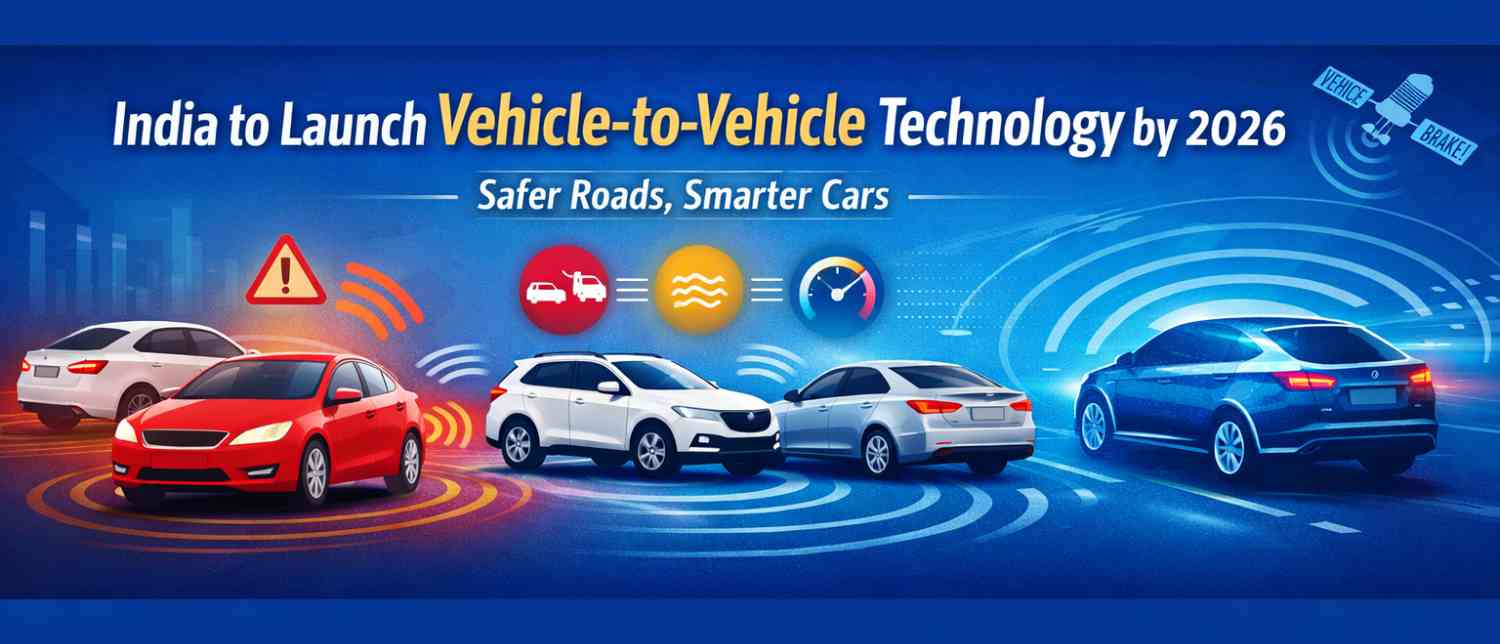
In a significant move aimed at enhancing road safety, the Government of India is preparing to roll out Vehicle-to-Vehicle (V2V) communication technology nationwide by the end of 2026. This cutting-edge system will enable vehicles to communicate directly with each other, independent of mobile networks or internet connectivity, potentially revolutionizing road safety across the country.
The initiative is being driven by the Ministry of Road Transport and Highways (MoRTH) under the guidance of Union Road Transport and Highways Minister Nitin Gadkari, who emphasized that the technology is designed to reduce road accidents, particularly in challenging driving conditions such as dense traffic, fog, or areas with stationary vehicles.
What Is Vehicle-to-Vehicle (V2V) Technology?
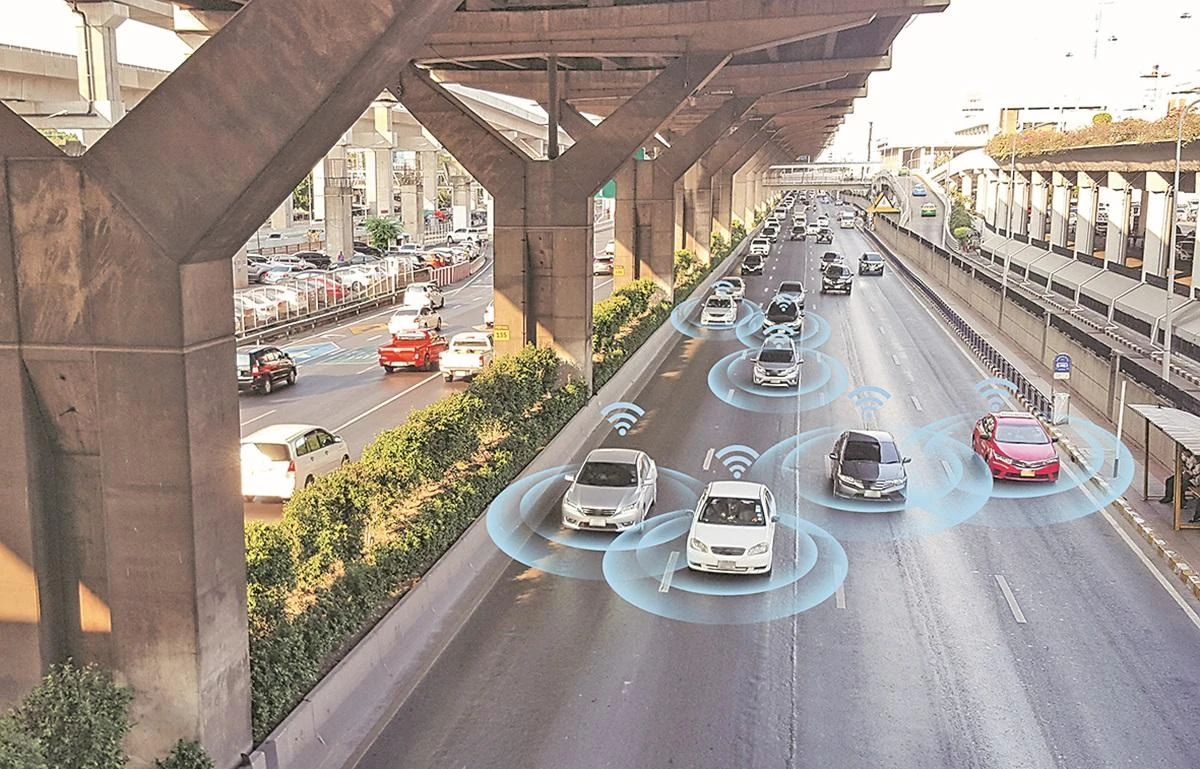
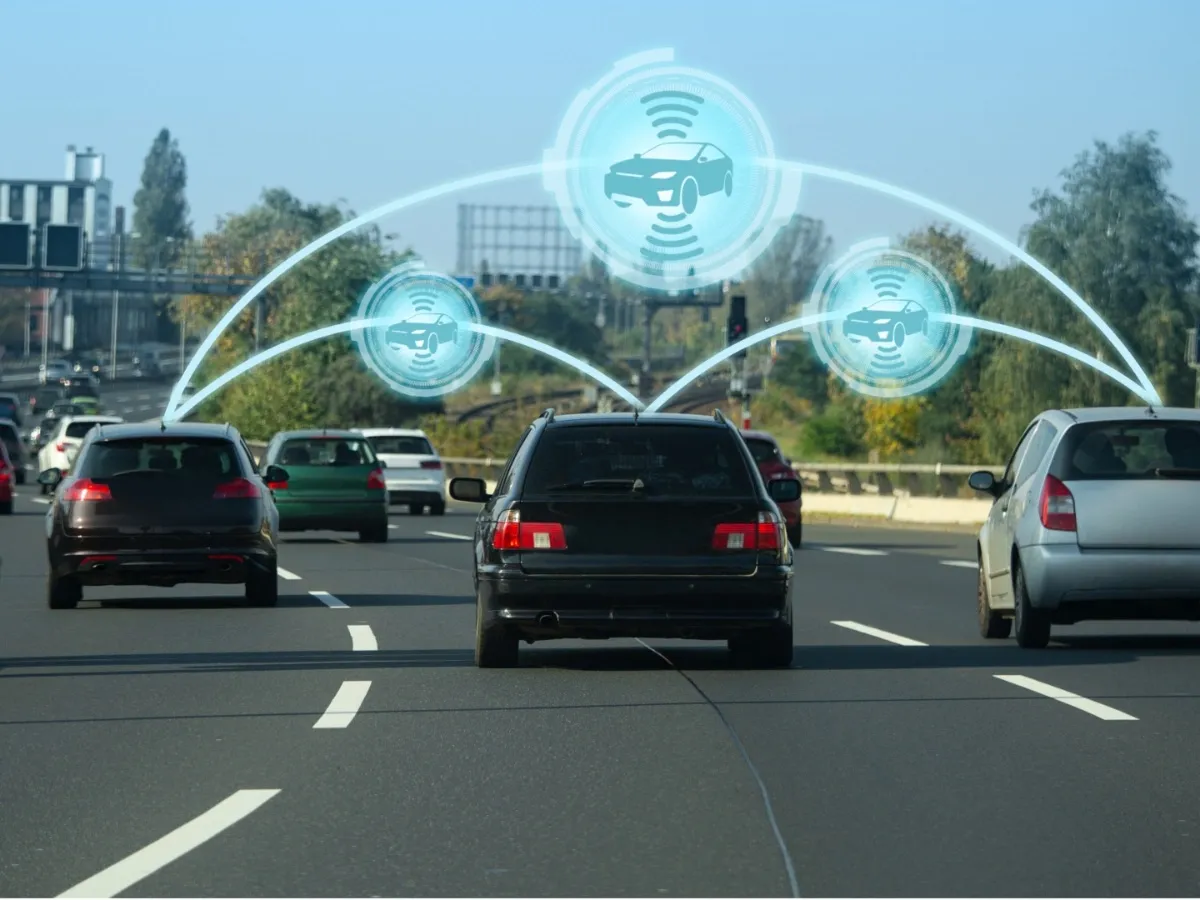
Vehicle-to-Vehicle communication, or V2V, is an advanced wireless system that allows vehicles to share critical safety-related information in real time. Unlike traditional vehicle safety technologies that rely on sensors or cameras, V2V enables vehicles to exchange data about speed, location, acceleration, braking, and movement—even for vehicles in blind spots.
The core principle of V2V is simple: by sharing real-time information, vehicles can warn drivers about potential hazards, providing precious seconds to prevent accidents. This becomes especially valuable in scenarios where visibility is limited, such as during dense fog, nighttime driving, or sudden traffic stops.
According to MoRTH Secretary V Umashankar, the initiative marks a “major step towards road safety,” as such technology is currently operational in only a handful of countries globally. The Indian project is estimated to cost approximately ₹5,000 crore.
How V2V Technology Will Work on Indian Roads
The V2V system in India will function through a dedicated hardware device installed in vehicles, which is akin to a SIM card in size and operation. Once installed, this device enables vehicles to communicate within a short-range network with all surrounding vehicles, providing 360-degree coverage.
Key features include:
-
Real-Time Alerts: Drivers receive notifications when another vehicle comes dangerously close, whether it is moving or stationary.
-
Blind Spot Detection: Vehicles in blind spots can be identified, reducing the risk of collisions during lane changes or merges.
-
Distance and Speed Monitoring: The system calculates safe following distances and alerts drivers if another vehicle is approaching too quickly.
-
Fog and Low-Visibility Assistance: The technology is particularly useful during foggy conditions when visual cues are insufficient.
V2V does not override driver control but acts as an advanced warning system, complementing existing safety features like Advanced Driver Assistance Systems (ADAS). In fact, some premium SUVs already equipped with ADAS will eventually integrate V2V for enhanced coordination between safety systems.
Technical and Regulatory Framework
The implementation of V2V technology is being coordinated with the Department of Telecommunications (DoT). A joint task force has been set up to facilitate the technical and regulatory aspects of the project. As part of this effort, the DoT has agreed in principle to allocate 30 MHz of spectrum (5.875–5.905 GHz) exclusively for V2V communication. This dedicated frequency ensures reliable, interference-free operation of the system.
The Ministry of Road Transport and Highways is finalizing technical standards and communication protocols to ensure uniform adoption across vehicle manufacturers. Once these standards are notified, the initial rollout will focus on new vehicles, with the potential for retrofitting older models in a subsequent phase.
Safety Imperatives Driving V2V Adoption
India faces a pressing road safety challenge. According to government data, approximately 5 lakh road accidents occur annually, resulting in around 1.8 lakh fatalities. Shockingly, about 66% of these deaths are among the 18–34 age group, highlighting the urgency for proactive safety interventions.
Minister Nitin Gadkari pointed out that human error, poor road visibility, and unsafe vehicle conditions contribute significantly to these accidents. V2V is positioned as a preventive tool to address these risks by providing timely alerts that can reduce collision likelihood before a driver can even visually identify a hazard.
The technology is expected to be particularly effective in preventing accidents involving parked or roadside vehicles, sudden braking on highways, and dense fog scenarios where pileups are common during winter months.
Complementing Broader Road Safety Measures
V2V rollout is part of a broader agenda to improve road safety in India. Some complementary initiatives include:
-
Bus Safety Enhancements: Existing buses will be equipped with fire extinguishers, drowsiness detection systems for drivers, and emergency hammers for passengers. The government is also emphasizing the Bus Body Code, noting that poorly designed buses have contributed to major accidents in which at least 135 people died.
-
Motor Vehicle Act Amendments: The upcoming budget session of Parliament will propose 61 amendments aimed at improving road safety, simplifying regulations, promoting mobility, and aligning Indian norms with global standards.
-
Advanced Driver Assistance Systems (ADAS): The phased introduction of ADAS in vehicles will enhance driver awareness, supporting collision avoidance, lane-keeping, and adaptive braking systems.
-
Bharat NCAP Ratings and Safety Standards: Passenger vehicles, buses, and sleeper coaches will see improved safety standards, including crash ratings and body code compliance.
-
Digital and Automated Permitting: Efforts are underway to introduce a points-based system for traffic violations and streamline goods vehicle permits through digital automation.
Consumer Impact and Cost Considerations
While the total project cost is pegged at ₹5,000 crore, the specific cost to consumers for equipping their vehicles with V2V technology has not yet been disclosed. Industry estimates suggest that the hardware could add a few thousand rupees per vehicle.
Importantly, the system is designed to work alongside existing technologies, including ADAS, rather than replacing them. This ensures that vehicles equipped with sensors and cameras will benefit from an additional safety layer, improving response time in emergencies and reducing reliance on human reflexes alone.
Phased Implementation Timeline
The Ministry of Road Transport and Highways aims to notify the technical standards and regulations for V2V technology by the end of 2026. Once formalized, the rollout will occur in phases:
-
New Vehicles: Initial implementation will focus on vehicles manufactured after the notification date.
-
Existing Vehicles: Retrofitting options may be introduced later to expand coverage across the existing fleet.
-
Integration with ADAS and Other Systems: Vehicles already equipped with advanced safety technologies will be aligned with V2V protocols to ensure interoperability.
This phased approach ensures smooth adoption, allows manufacturers to standardize equipment, and helps mitigate technical or logistical challenges during early deployment.
The Road Ahead: A Safer Future
V2V technology promises to transform the way India manages road safety by shifting the focus from reactive measures to preventive strategies. By enabling vehicles to “talk” to each other in real time, drivers gain access to crucial information that can reduce collisions, improve traffic flow, and save lives.
The government’s vision is not only to reduce fatalities but also to modernize transport regulations, enhance citizen services, and align Indian road safety standards with global benchmarks. Combined with infrastructure improvements, stricter enforcement of traffic laws, and public awareness campaigns, V2V represents a key milestone in the nation’s journey toward safer roads.
As Minister Nitin Gadkari highlighted, India records over 4.8 lakh road accidents annually, resulting in approximately 1.73 lakh deaths, with fatalities continuing to rise. In this context, the adoption of V2V technology is not just a technical upgrade—it is a life-saving intervention that could redefine road safety across the country.
Final Thoughts
By 2026, Indian roads could see a transformative leap in safety with the nationwide introduction of Vehicle-to-Vehicle communication technology. Designed to complement existing systems like ADAS and enhance driver awareness, V2V promises to prevent accidents, save lives, and modernize traffic management. With dedicated spectrum, a phased rollout, and strong government backing, India is positioning itself to join the ranks of countries employing next-generation automotive safety technology.
This proactive approach underscores a broader commitment to reducing road fatalities, protecting young drivers, and leveraging technology to create safer, smarter, and more connected roadways for all.
With inputs from agencies
Image Source: Multiple agencies
© Copyright 2025. All Rights Reserved. Powered by Vygr Media.