
 By
By 
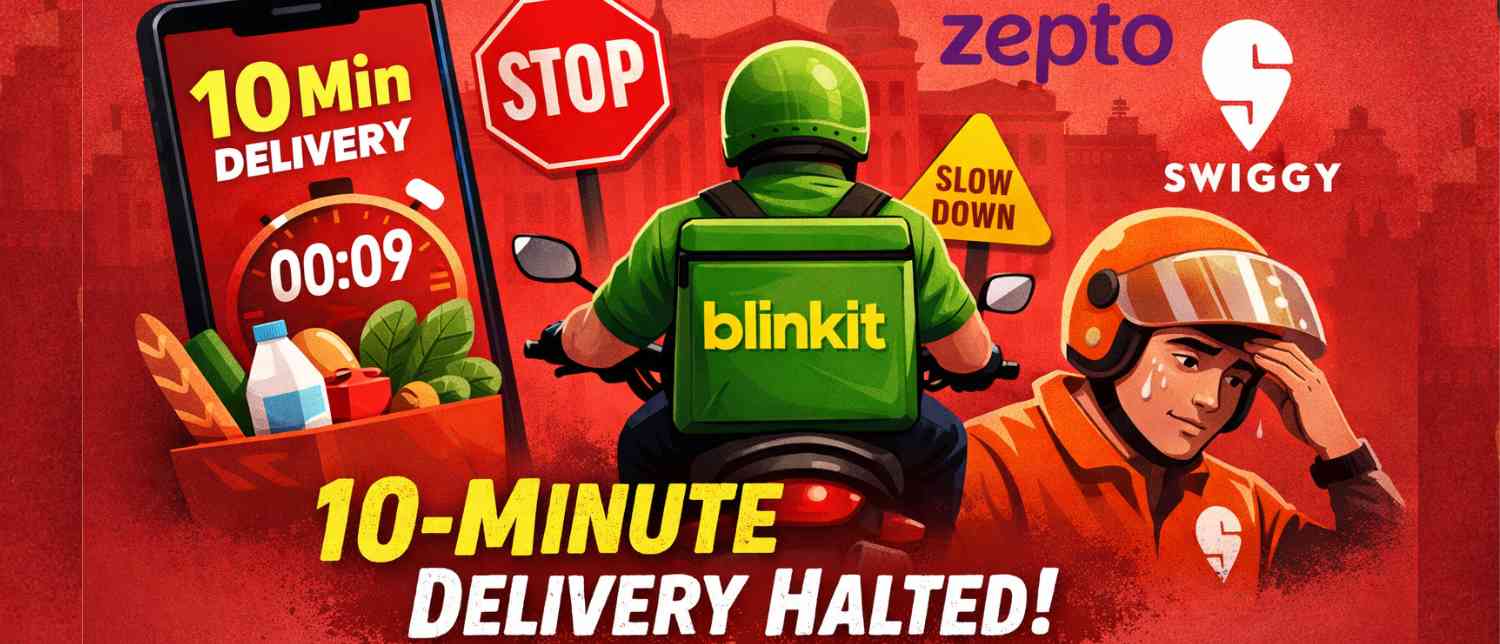
India’s booming quick-commerce sector is hitting the brakes on one of its most aggressive promises—10-minute grocery delivery. Platforms such as Blinkit, Zepto, Zomato, and Swiggy have begun withdrawing or reworking ultra-fast delivery claims after sustained government intervention, mounting pressure from labour unions, and growing concerns about the safety and working conditions of gig workers.
The shift marks a significant moment for India’s app-based delivery economy, which has relied heavily on speed as its core selling point. What was once marketed as a revolutionary convenience is now being re-evaluated as a potential risk to human life, road safety, and worker dignity.
Government Steps In Over Gig Worker Safety
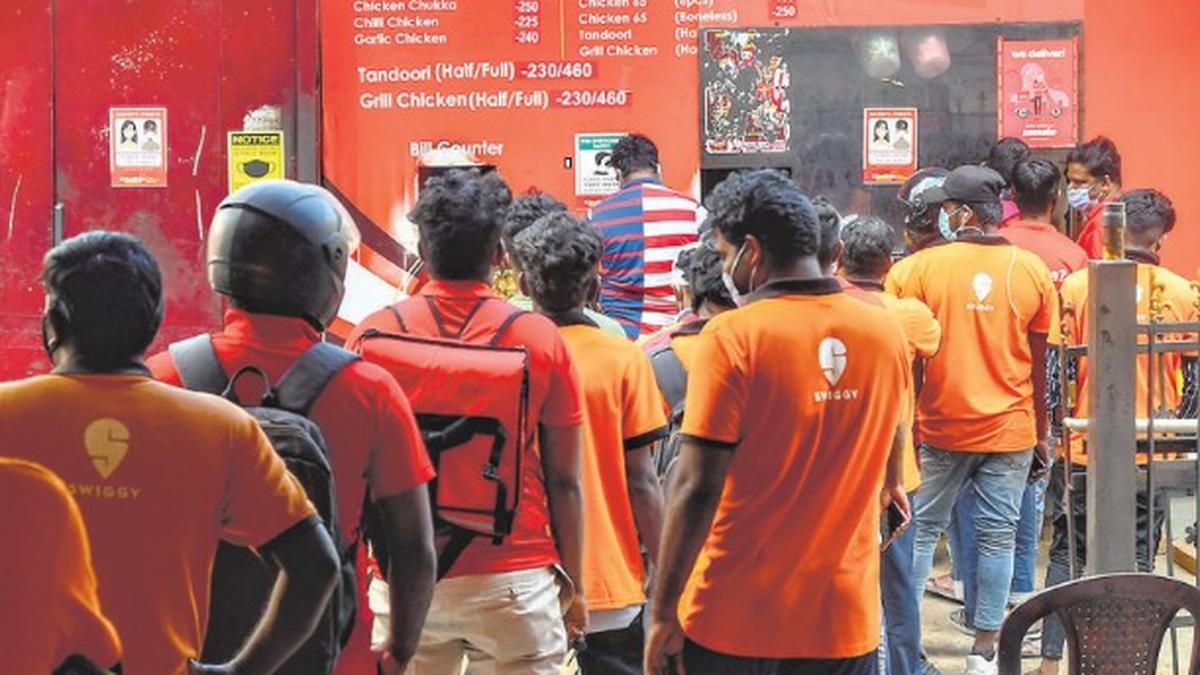
The turning point came after Union Labour and Employment Minister Mansukh Mandaviya raised concerns over the impact of rigid delivery timelines on gig workers. According to multiple reports, Mandaviya held a series of meetings over the past month with representatives from leading quick-commerce platforms, including Blinkit, Zepto, Zomato, and Swiggy.
During these discussions, the minister questioned the rationale behind advertising fixed 10-minute delivery guarantees and whether such claims indirectly encouraged unsafe driving or excessive pressure on delivery partners. While company representatives maintained that ultra-fast deliveries were enabled by warehouses located close to consumers, rather than by pushing riders to speed, the government was not convinced that branding such timelines was harmless.
Officials from the Labour Ministry told news outlets that Mandaviya urged companies to discontinue 10-minute delivery branding, citing the health, welfare, and safety of delivery workers. The companies reportedly agreed to the advisory.
Blinkit Acts First, Others Expected to Follow
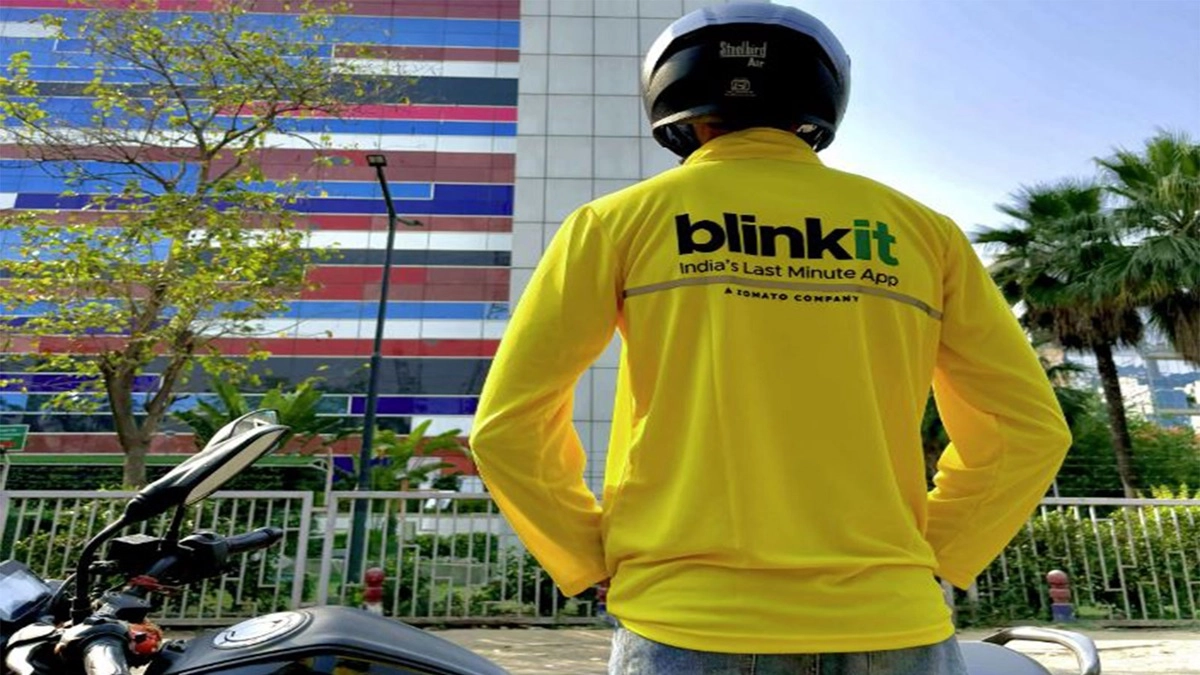
Among the major players, Blinkit has already implemented the change. The platform has removed the 10-minute delivery claim from its branding and public communication. Its principal tagline has been revised from:
“10,000+ products delivered in 10 minutes”
to
“30,000+ products delivered at your doorstep.”
Sources cited by ANI and CNBC-TV18 confirmed that the update has been rolled out across Blinkit’s branding, though the company has not issued an official statement.
Government officials and industry sources say other aggregators, including Zepto, Zomato, and Swiggy, are expected to follow suit in the coming days by revising advertisements, app messaging, and public-facing campaigns. While rapid delivery will continue, companies are expected to avoid language that suggests an absolute, non-negotiable time guarantee.
Protests and Strikes Preceded the Decision
The government’s intervention did not come in isolation. It followed weeks of sustained protests by gig worker unions and delivery partners across the country.
In late December, unions such as the Indian Federation of App-Based Transport Workers (IFAT) and the Gig and Platform Service Workers Union called on workers employed by quick-commerce platforms to log off applications during the last week of the year. Their demands went beyond delivery timelines and included:
-
Regulation of platform companies under labour laws
-
A ban on unsafe 10–20 minute delivery models
-
An end to arbitrary ID blocking and penalties
-
Transparent wage structures
-
Social security benefits
-
Protection of the right to organise and engage in collective bargaining
The protests culminated in a large-scale strike on December 31, New Year’s Eve—one of the busiest delivery days of the year. The disruption affected operations of Zomato, Swiggy, Blinkit, and Zepto in several cities, drawing public attention to the issue.
Gig workers also submitted a formal memorandum to Minister Mandaviya, urging him to intervene and discontinue ultra-fast delivery mandates that they said were forcing them into dangerous road behaviour and extreme stress.
Labour Unions Welcome the Move
Labour unions have welcomed the government’s action as long overdue. Shaik Salauddin, General Secretary of the Indian Federation of App-Based Transport Workers, said the 10-minute delivery model had created unsafe working conditions for years.
“The 10-minute delivery model forced delivery partners into dangerous road behaviour, extreme stress and unsafe working conditions,” Salauddin said, adding that the union welcomed and thanked the labour minister for listening to workers’ voices and acting decisively in the interest of their safety.
Union leaders argue that while companies may not explicitly instruct riders to speed, the combination of countdown timers, branding, customer expectations, and penalties for delays creates relentless pressure on delivery partners.
Political Reaction: Raghav Chadha Calls It a Victory
The move also drew strong political reactions. Aam Aadmi Party (AAP) Rajya Sabha MP Raghav Chadha, who has been vocal about regulating app-based delivery platforms, welcomed the decision and described it as a victory for delivery partners and citizens alike.
In a post on X (formerly Twitter), Chadha wrote:
“Satyamev Jayate. Together, we have won. I am deeply grateful to the Central Government for its timely, decisive and compassionate intervention in enforcing the removal of the ‘10-minute delivery’ branding from quick-commerce platforms.”
Chadha highlighted the psychological and physical pressure created by ultra-fast delivery promises, saying that when “10 minutes” is printed on a rider’s T-shirt, jacket, or delivery bag—and a countdown timer runs on a customer’s screen—the pressure becomes “real, constant, and dangerous.”
He added that he had spoken to hundreds of delivery partners over the past few months, many of whom were overworked, underpaid, and risking their lives to meet what he described as an unrealistic promise.
Thanking citizens who supported the campaign, Chadha said they had stood “on the side of human life, safety and dignity,” and reassured gig workers that they were not alone.
Zomato Founder’s Earlier Defence
The decision comes despite earlier pushback from industry leaders. Following the December 31 strike, Deepinder Goyal, co-founder of Zomato—which acquired Blinkit—had dismissed concerns that the 10-minute delivery mandate encouraged unsafe driving.
Goyal argued that Blinkit riders travel an average distance of just two kilometres and at an average speed of 16 kmph, suggesting that speed limits were not being violated. He also stated that the company pays insurance premiums for its drivers.
However, critics and unions countered that averages do not reflect ground realities in congested urban areas, especially during peak hours or festive seasons.
A Broader Shift in India’s Gig Economy
Officials say the removal of ultra-fast delivery branding aligns with the government’s broader push to formalise and protect gig and platform workers, a workforce that has grown rapidly over the past decade.
The Ministry of Labour and Employment has already launched initiatives such as the e-Shram portal, which aims to create a comprehensive national database of unorganised and platform workers. The goal is to enable targeted social security schemes and welfare interventions for millions working in the gig economy.
By discouraging rigid delivery timelines, the government is signalling that speed-driven growth must not come at the cost of safety and labour rights.
What Changes for Consumers and Companies
For consumers, the immediate change will be in messaging rather than service. Orders may still arrive quickly, but platforms will no longer market speed as a guaranteed, fixed-time commitment.
Industry executives say rapid delivery will remain a competitive advantage, but companies will now need to recalibrate customer expectations, operational practices, and rider incentives to prioritise safety and regulatory compliance.
The ultra-fast delivery model gained massive popularity during the Covid-19 pandemic, when demand for essentials surged and consumers became accustomed to near-instant gratification. What began as 30-minute delivery gradually escalated into 10-minute claims. The current shift suggests the industry may now be entering a more safety-first and sustainable phase.
A Defining Moment for Quick Commerce
The scrapping of 10-minute delivery branding marks a pivotal shift for India’s quick-commerce sector. It reflects growing recognition that technological convenience cannot override human costs, and that the gig economy requires stronger safeguards as it expands.
As platforms rethink their promises and the government continues to engage with stakeholders, the debate around speed, safety, and dignity in app-based work is far from over—but for now, India’s quick-commerce giants appear to have slowed down, at least on paper.
With inputs from agencies
Image Source: Multiple agencies
© Copyright 2025. All Rights Reserved. Powered by Vygr Media.