
 By
By 
For most of modern journalism, the central question has been deceptively simple: What is news?
Editors, reporters and news organisations have traditionally answered that question through a combination of public interest, relevance, urgency, evidence and professional judgment. They decided which story deserved a front page, which investigation required weeks of work, which political development needed scrutiny and which event, despite being dramatic, did not merit disproportionate attention.
That editorial gatekeeping is being steadily disrupted.
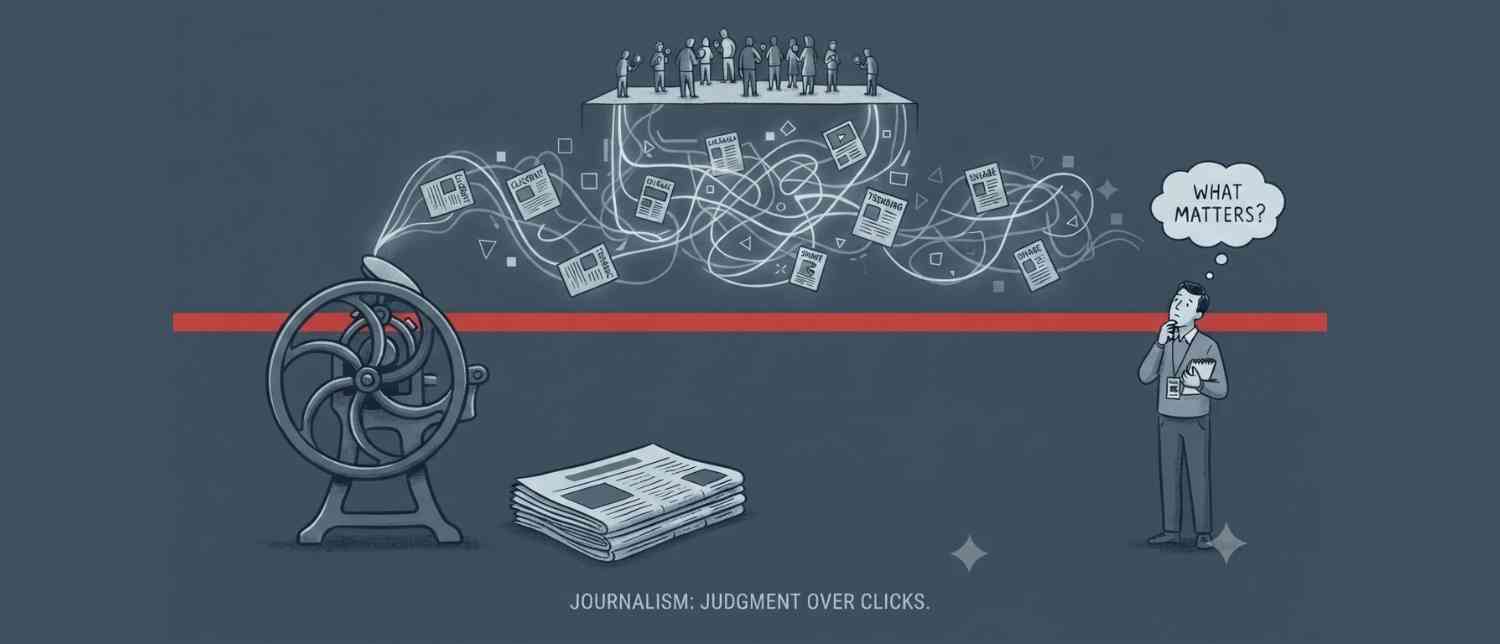
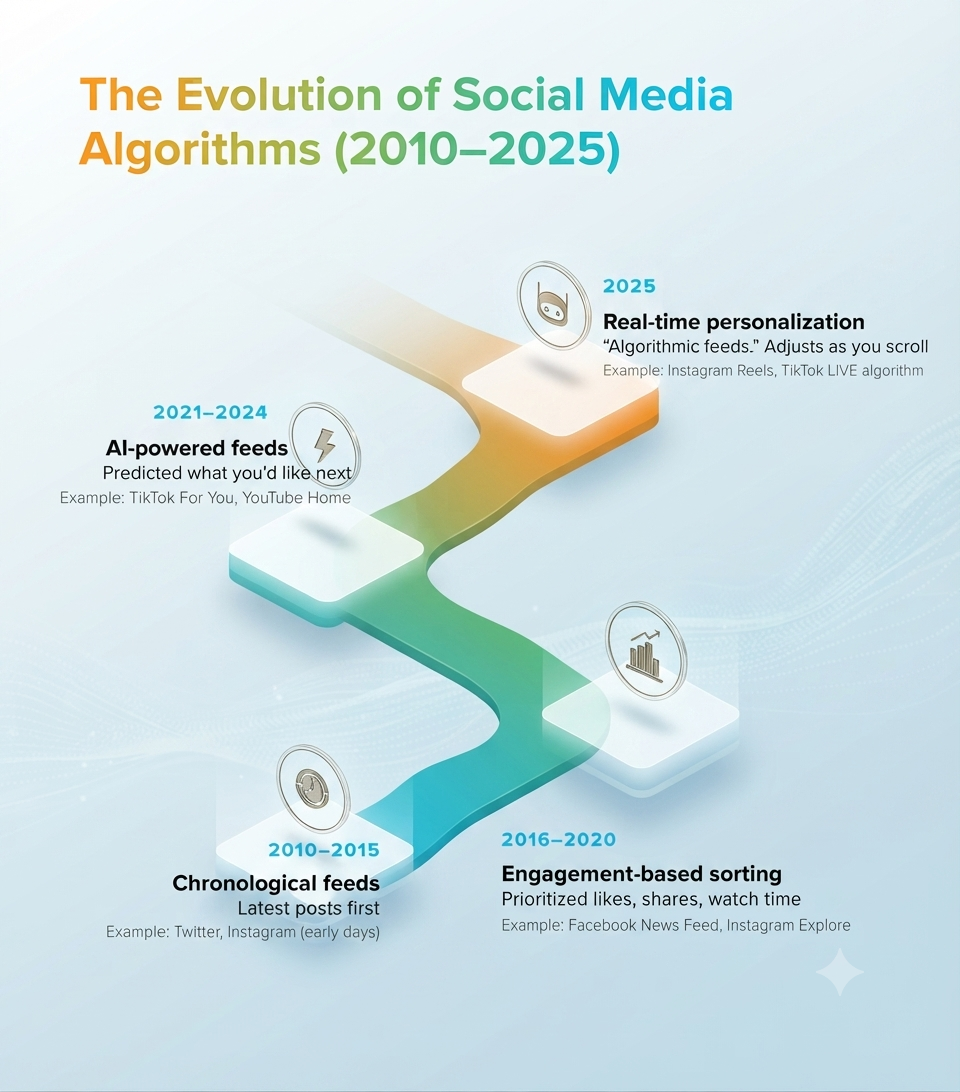
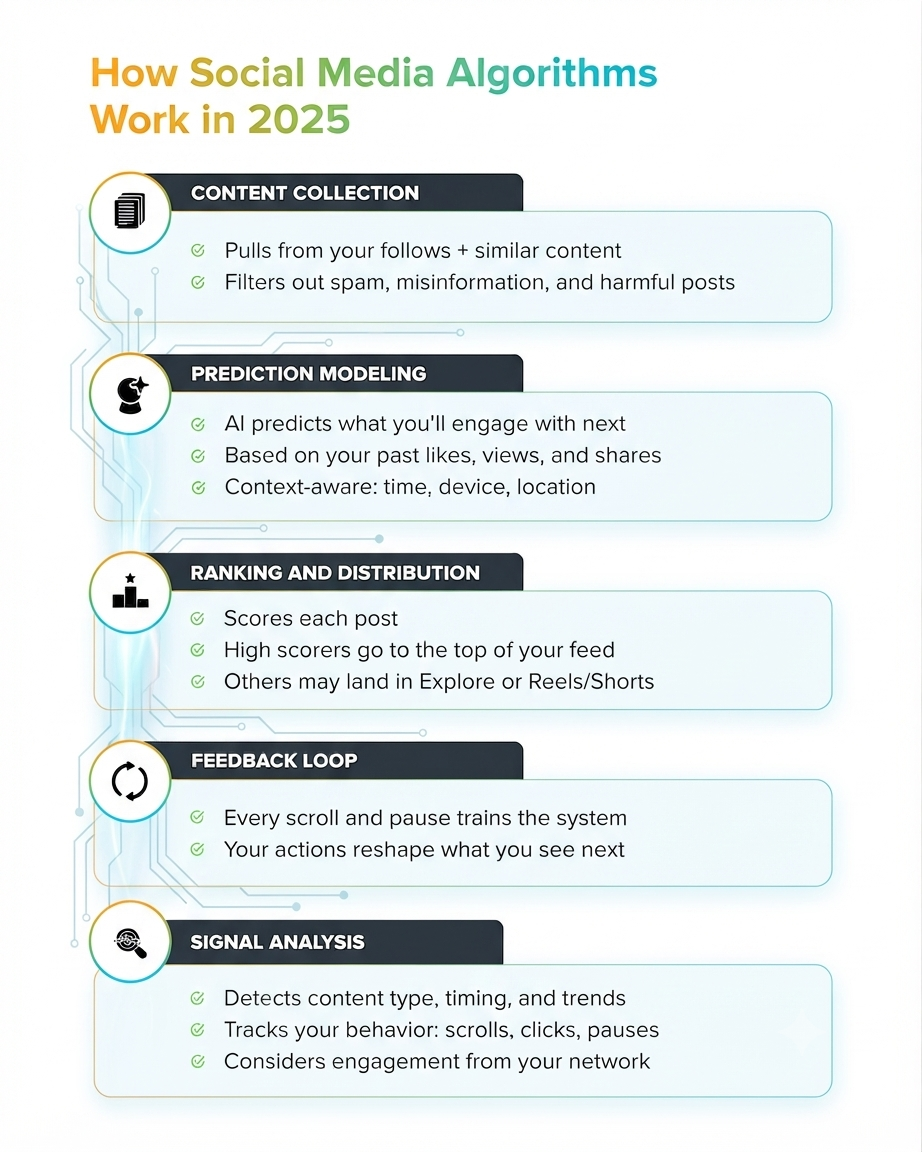
Today, much of what people encounter as news is not selected by an editor sitting around a conference table. It is selected, ranked, recommended and repeated by systems designed to understand individual behaviour. Algorithms study clicks, pauses, searches, shares, viewing time and other signals to predict what a person is likely to engage with next. Artificial intelligence is taking that process further by generating summaries, answering questions and increasingly mediating the route through which people encounter information.
This shift is often described as a technological transformation in journalism. It is more than that.
It is a transformation in who gets to decide what people notice.
And that makes the rise of algorithms not merely a media-business story, but a democratic one.
The end of the newsroom as the only gatekeeper
The old media model was imperfect. Editors made mistakes. Institutions had biases. Traditional journalism was never completely neutral, and the power to decide what counted as important was itself a form of influence.
Yet there was one crucial feature of the old system: editorial decisions were, at least in principle, attributable to human beings and governed by professional norms.
A reporter could be challenged. An editor could be questioned. A newsroom could issue a correction. A publication could be held accountable for its choices.
The algorithmic environment complicates that accountability.
News now moves through a distributed system in which platforms, ranking mechanisms, recommendation engines, audience data and commercial incentives all affect visibility. Newsrooms may determine what gets published, but they do not necessarily determine who sees it, when they see it or how prominently it appears.
The distinction matters.
A deeply reported investigation into corruption may be journalistically significant but perform poorly in a system optimised for immediate engagement. A sensational controversy, by contrast, can generate clicks, comments and watch time within minutes.
The algorithm does not necessarily know or care that one story has greater civic importance than the other. It knows that one is more likely to keep people engaged.
That is the fundamental mismatch.
Newsworthiness and share-worthiness are not the same thing.
Yet the economics of digital media can encourage newsrooms to behave as though they are.
Recent analysis of the changing news environment points to an increasingly data-driven model in which audience signals can influence story selection, headline writing, distribution and even the timing and framing of coverage. In some newsrooms, AI and automated tools are already helping identify potential stories and trends before journalists begin traditional reporting.
Technology can make journalism faster. But speed is not the same as judgment.
And if editorial judgment becomes subordinate to performance metrics, journalism risks losing the very thing that distinguishes it from an endless stream of content.
The algorithm does not need to control you to influence you
One of the most revealing aspects of recommendation systems is that they do not need to force anyone to do anything.
They only need to make one choice feel effortless.
A person opens an app intending to spend five minutes online. One video becomes another. A headline leads to a post. A recommendation resembles something viewed earlier. A controversial claim is followed by another, slightly more provocative claim.
The individual is still technically choosing.
But the environment in which those choices happen is increasingly curated by predictive systems.
Recommendation algorithms learn from small behavioural signals: what users click, ignore, replay, search for, purchase or watch until the end. Over time, the feed begins to reflect not only what users have explicitly said they like, but what their behaviour suggests will keep them engaged.
This creates a subtle shift from choice to guided choice.
The danger is not that an algorithm becomes an all-powerful puppet master. That description is too simplistic. The more serious concern is that algorithms can quietly narrow the range of information people encounter while making that narrowing feel natural.
Imagine a library where the shelves are rearranged every morning according to what the librarian predicts you will enjoy. You would still be free to choose any book. But your sense of what exists would already have been shaped before you made your choice.
That is increasingly how digital information works.
The problem becomes especially serious when the subject is journalism.
People cannot evaluate information they never encounter.
If an algorithm repeatedly reinforces existing interests, opinions or emotional preferences, the public sphere fragments into increasingly personalised information environments. One person sees extensive coverage of a political issue. Another sees almost none. A third sees the issue primarily through outrage-driven commentary. A fourth encounters a completely different narrative.
Two people can therefore inhabit the same country, use the same platform and still receive sharply different versions of what is happening.
That is more than personalisation.
It is the fragmentation of the shared reality on which democratic debate depends.
When everyone gets a different reality
Democracy requires disagreement. It does not require everyone to think alike.
What democracy does require is some degree of shared factual ground.
Citizens can disagree over taxes, immigration, education, foreign policy or climate policy. But meaningful disagreement becomes much harder when people cannot even agree on which facts are worth considering.
Hyper-personalised information systems create the possibility of what can be described as an “audience of one”: information so individually tailored that the common public sphere gradually weakens. AI-generated summaries and conversational systems may accelerate this tendency by giving different people different answers to similar questions, based on different contexts, prompts or inferred preferences.
That has profound consequences for journalism.
A newspaper once had to decide what its audience ought to know. A television bulletin had limited time and therefore had to make choices. Editors had to determine what deserved prominence precisely because there was not room for everything.
Digital technology seemed to eliminate that scarcity.
There is now almost unlimited space to publish.
But an unexpected problem has emerged: when everything can be published, importance becomes harder to recognise.
The crisis is no longer a shortage of information. It is an excess of it.
And in an environment flooded with synthetic content, short-form video, creator commentary, headlines and automated summaries, the most valuable service journalism may provide is not producing more information.
It may be helping people identify what actually matters.
Journalism must resist becoming an imitation of the algorithm
There is an understandable temptation for news organisations to respond to declining attention by becoming more like the platforms that compete with them.
Shorter videos.
More alerts.
More dramatic headlines.
More emotionally charged thumbnails.
More celebrity stories.
More content.
But there is a point at which adaptation becomes surrender.
Journalism does not need to defeat the algorithm at its own game. It is unlikely to win that competition, because algorithms are exceptionally good at prediction, optimisation and scale.
A newsroom should not try to become a machine.
Its comparative advantage lies elsewhere.
Journalists can ask questions machines are not designed to answer on their own: Who benefits? Who is being ignored? What evidence is missing? What happened before this? Who should be held accountable? What are the consequences six months from now rather than six minutes from now?
These are editorial questions, not engagement metrics.
That is why the emerging argument for human-centred journalism in the age of AI is so important. Journalism is not merely a delivery system for information. It is a process built around verification, context, responsibility and meaning. The deliberate “friction” involved in checking facts, talking to sources, testing claims and recognising uncertainty is not necessarily a weakness. It is part of the mechanism by which trustworthy journalism is produced.
The pressure to eliminate that friction deserves scrutiny.
Instant answers are attractive. Instant certainty is even more attractive.
But certainty is not necessarily truth.
In many cases, the most responsible journalistic answer begins with: We do not know yet.
That sentence is difficult to optimise for clicks.
It is essential for credibility.
The danger of confusing attention with importance
The attention economy has created a powerful distortion: it rewards content according to what people are likely to do, rather than according to what society may need them to understand.
Outrage performs.
Conflict performs.
Novelty performs.
Fear performs.
Nuance often does not.
A complex investigation might require several thousand words. A misleading claim might require only a few seconds to spread.
This creates an unfair contest.
Public-interest journalism often takes time. It requires documents, interviews, verification, field reporting and legal checks. Sensational content can be produced much faster, particularly when it is designed to trigger an immediate emotional reaction.
When engagement becomes the dominant measure of success, the economic system begins rewarding the material that is easiest to consume and most difficult to ignore.
That can slowly alter newsroom priorities.
Recent analysis has highlighted how engagement-driven models can push serious investigative and public-service reporting out of the spotlight while giving greater visibility to lighter, sensational or highly shareable material. In financially vulnerable media markets, that pressure can be particularly difficult to resist.
This is why the phrase “algorithmic journalism” should not be understood merely as journalism produced with artificial intelligence.
The deeper issue is journalism produced according to the incentives of algorithmic distribution.
A newsroom can use no generative AI whatsoever and still become algorithmic in its thinking if every editorial decision starts with the question: Will this perform?
AI is not the villain, dependency is
The answer is not to reject artificial intelligence.
That would be both impractical and shortsighted.
AI can help journalists discover information, transcribe interviews, translate material, analyse large datasets, identify patterns and reduce repetitive work. Used responsibly, it can make reporting more efficient and enable journalists to spend more time on the tasks that require human judgment. Hybrid newsroom models that use AI for support while keeping editorial decisions with journalists offer a more sensible path than either blind enthusiasm or outright rejection.
The real question is not: Will journalists use AI?
They almost certainly will.
The better question is: Who remains accountable when AI influences what gets reported, how it is framed and who sees it?
That question becomes particularly urgent as AI-generated summaries and conversational search systems increasingly sit between audiences and original reporting.
If a machine answers a user's question by compressing five articles into a paragraph, the user may never visit those articles. That creates a paradox: journalism becomes the raw material for AI systems while the organisations that financed the reporting may lose visibility, traffic and revenue.
In other words, the technology may become increasingly dependent on journalism while the journalism ecosystem becomes increasingly economically dependent on the technology.
That is an unstable arrangement.
The sustainability of journalism cannot be separated from the infrastructure through which journalism is discovered.
The future belongs to newsrooms that build trust, not just traffic
There is another important shift that journalism must make.
For years, publishers have relied heavily on platforms for distribution. That can deliver enormous reach, but it also makes media organisations vulnerable to changes in recommendation systems, search rules, monetisation policies and platform priorities.
A sustainable future requires stronger direct relationships between newsrooms and audiences.
That means newsletters, memberships, communities, events, specialised products, trusted digital experiences and other ways of reaching readers without having to borrow their attention entirely from a platform.
The objective should not be to abandon social media. Millions of people are there, and journalism cannot pretend otherwise.
The goal should be to use those platforms as gateways rather than permanent homes.
A newsroom should be able to reach audiences where they are while also giving those audiences a reason to come directly to the newsroom when they need reliable information. That shift is not merely commercial. It is editorial independence in another form.
Trust, after all, cannot be built by distribution alone.
It is built through consistency.
By acknowledging mistakes.
By explaining how reporting was done.
By distinguishing fact from opinion.
By showing uncertainty rather than hiding it.
By giving readers context when the algorithm is giving them fragments.
And by covering stories that matter even when those stories are unlikely to trend.
Journalism's greatest advantage is still judgment
There is an uncomfortable truth at the heart of this debate.
Algorithms are becoming extraordinarily good at telling us what we are likely to want.
Journalism has a different responsibility.
It must help us understand what we need to know.
That does not mean journalists should decide what society is allowed to discuss. It does not mean traditional media should regain unchecked authority. Nor does it mean algorithms are inherently malicious.
It means we must recognise that prediction and public-interest judgment serve different purposes.
An algorithm can identify a pattern in millions of people's behaviour.
It cannot, by engagement data alone, determine whether a neglected issue will affect a community five years from now.
It can predict that outrage will outperform a policy explainer.
It cannot make the moral argument that the policy still deserves scrutiny.
It can identify what is popular.
It cannot, by popularity alone, establish what is important.
That distinction is journalism's last real competitive advantage.
And perhaps its most important democratic obligation.
A shared public sphere is worth defending
The future of journalism should not be a battle between humans and machines.
It should be a negotiation over values.
We need the efficiency of technology without surrendering editorial independence. We need personalisation without eliminating serendipity. We need speed without sacrificing verification. We need engaging journalism without allowing engagement to become the only definition of value.
Most of all, we need a public information system in which people can still encounter facts that challenge their assumptions, stories that do not fit their preferences and issues that matter even when nobody has trained an algorithm to recommend them.
That may require stronger media literacy, greater transparency around recommendation systems, more accountability from platforms and sustainable economic models for journalism. It may also require governments and regulators to recognise that trustworthy journalism is not simply another commercial product but part of democratic infrastructure.
But the responsibility does not belong only to institutions.
Audiences also have agency.
People can seek out original reporting. They can read beyond the headline. They can follow journalists and outlets with transparent editorial standards. They can deliberately expose themselves to perspectives outside their habitual feeds.
The algorithm may shape the starting point.
It does not have to determine the destination.
The most dangerous future for journalism is therefore not one in which artificial intelligence replaces every reporter.
It is one in which journalism remains staffed by humans but gradually adopts the priorities of machines: faster, louder, more personalised, more optimised and less concerned with significance.
That would leave us with an information industry that knows exactly how to capture attention and increasingly little interest in whether that attention is being used well.
The central question of journalism in the algorithmic age is therefore no longer simply “What will people click?”
It is “What should people know, even when they do not know to ask for it?”
That is where journalism must draw the line.
Algorithms can recommend.
They can rank.
They can predict.
They can personalise.
But a healthy democracy still needs someone to say: This matters. Look here. Ask questions. Check the evidence. Do not look away.
That someone should still be journalism.
With input from agencies
Image Source: Multiple agencies
© Copyright 2026. All Rights Reserved. Powered by Vygr Media.