
 By
By 
“A woman should not have to become smaller to make a man’s world feel safer.”
There is something profoundly wrong with the way India talks about women's safety. A woman is assaulted, a park is found to be poorly lit, CCTV cameras are missing, security guards are absent, and suddenly the conversation turns towards where women should or should not go. Stay away from isolated places. Do not travel late. Do not walk alone. Do not use parks after sunset. Share your location. Call someone when you reach home.
The Aastha Kunj gang rape case has once again exposed this deeply familiar pattern. A 17-year-old girl went out with a friend on her birthday, visited Kalkaji Mandir and then entered Aastha Kunj Park. According to her statement to the police, three men approached the teenagers, allegedly posed as policemen, took their phones, separated them and threatened them before the girl was sexually assaulted in a secluded part of the park. The three accused have been arrested, and the case remains under investigation and judicial process.
But the most important question is not simply what happened to one teenager on one September evening. The larger question is why a public space in the national capital could have conditions in which people, especially young women, had to depend on luck, darkness and personal caution for their safety.
And an even more uncomfortable question follows: Why does the burden of adapting to male violence continue to fall on women?
A public park should not become a test of survival
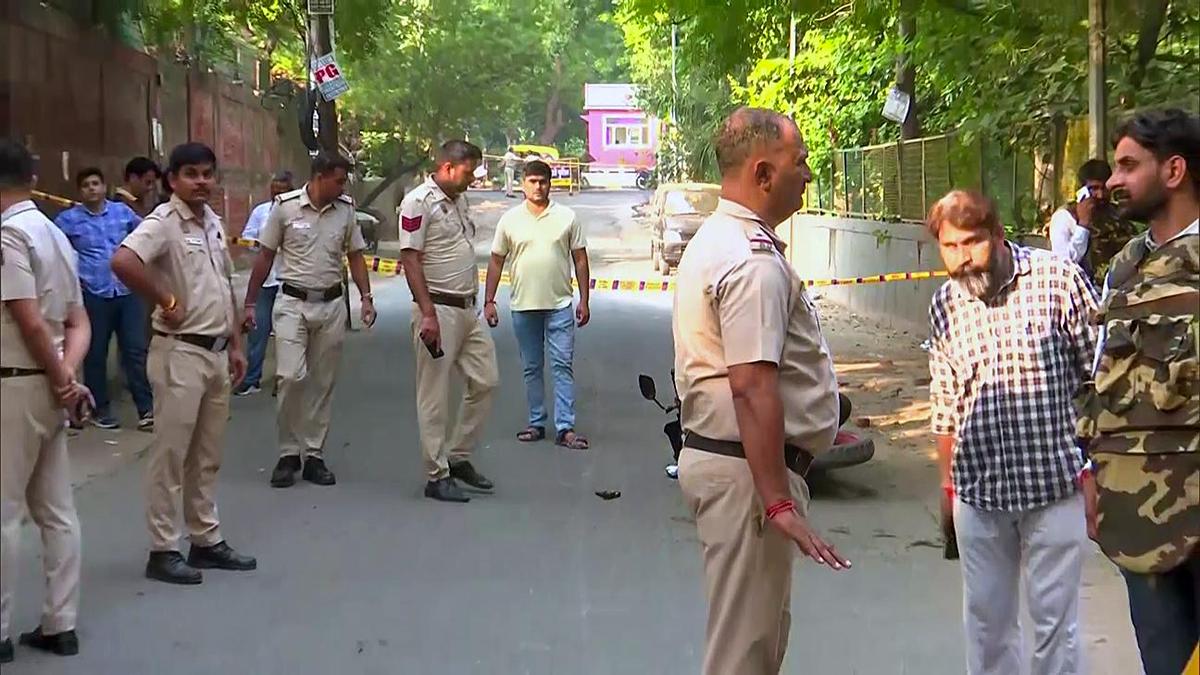
Aastha Kunj is not some remote stretch of wilderness. It is a large public park situated close to major places of worship and educational institutions. Yet investigators found serious security shortcomings: there were reportedly no CCTV cameras at the park's entry and exit gates, portions of the boundary wall had collapsed, some gates were unmanned and lighting was inadequate after dark.
These failures did not cause the alleged crime. The responsibility for sexual violence lies with those who commit it, not with a broken wall, a dark pathway or a missing camera.
But that distinction should not become an excuse for ignoring infrastructure.
A well-lit public space does not guarantee safety. A CCTV camera cannot physically stop an assault. A police patrol cannot be everywhere. Yet these measures matter because safety is not created by one magical intervention. It is created through layers of visibility, surveillance, access, maintenance, policing and accountability.
The problem is that these layers often become visible only after a crime has occurred.
After Aastha Kunj, the authorities ordered a safety audit of parks across Delhi, with attention to lighting, security and patrolling. That is necessary. But the obvious question is why such vulnerabilities had to become national news before they received urgent attention.
A safety audit conducted after a teenager is allegedly assaulted is a response. A functioning safety system that identifies and fixes dangerous locations before someone is harmed is prevention.
India needs much more of the second.
The irony is that the first response is often to restrict women
This is where the Aastha Kunj case becomes larger than a question of CCTV cameras and streetlights.
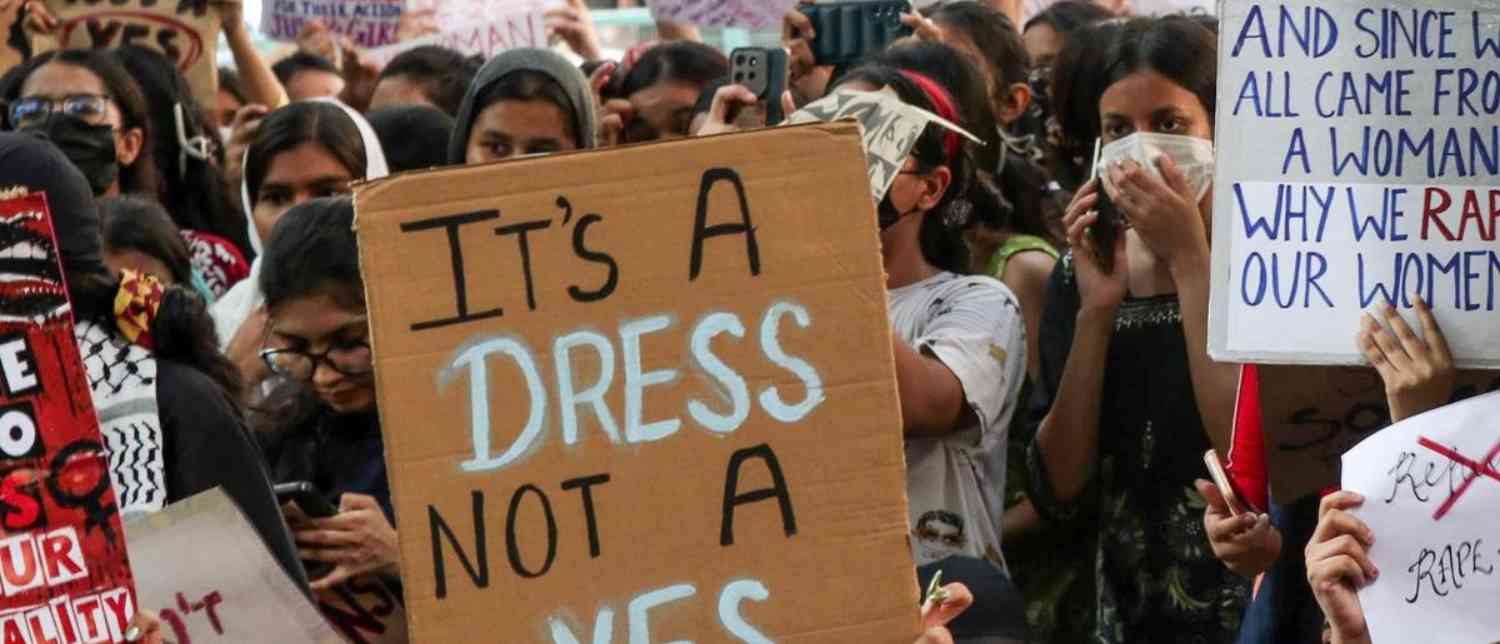
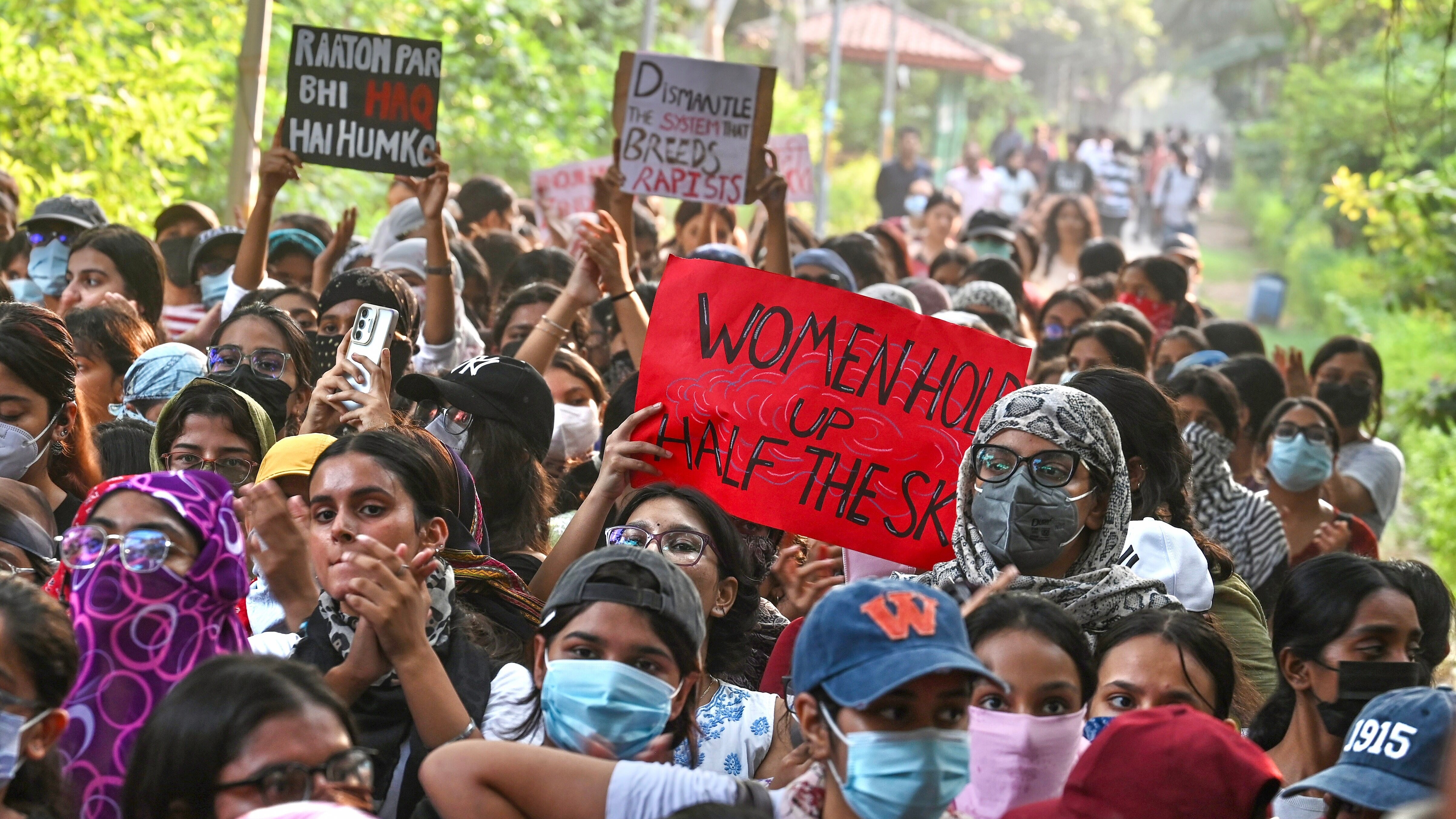
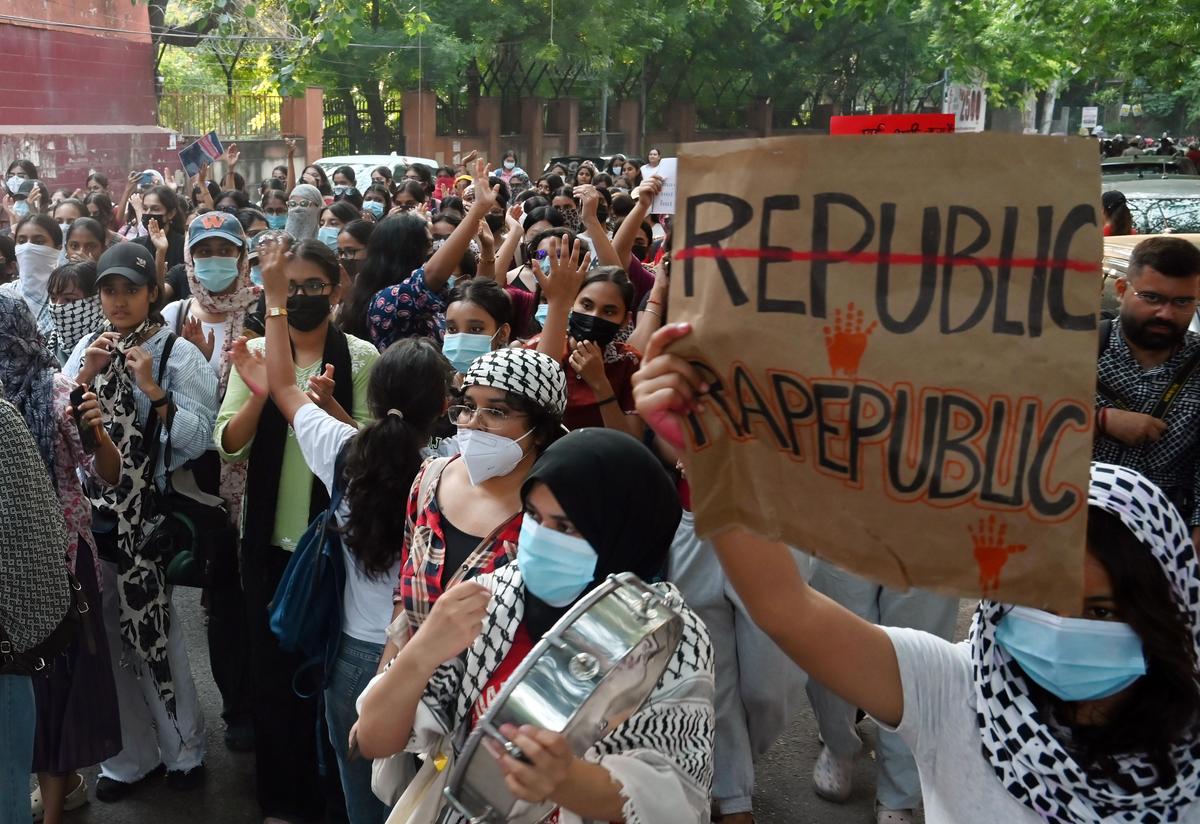
Following the incident, Lady Shri Ram College temporarily moved classes online, while concerns were also raised around restricting access to public parks after sunset. Students protested, demanding justice for the survivor and asserting women's right to move freely, including at night.
The instinct is understandable. When a terrifying crime happens close to a college campus, parents worry, students worry and institutions worry. Nobody can dismiss that fear.
But fear cannot be allowed to dictate the permanent boundaries of women's lives.
If a man commits a crime in a park and the solution is to prevent women from using the park, the criminal has effectively determined who gets to occupy public space.
That is an extraordinary surrender.
Women have spent decades fighting for access to education, employment, public transport, sport and public life. The struggle has never been merely about physical movement. It has been about the right to participate in society without having to seek permission for every ordinary decision.
The answer to unsafe public spaces cannot therefore be to make women's world smaller.
India has been having this conversation for decades
The disturbing part is how familiar all of this feels.
The 1972 Mathura rape case triggered a major women's rights movement after the acquittal of the accused policemen. The subsequent campaign contributed to legal reforms in 1983, including changes relating to custodial rape and the understanding of consent in certain circumstances.
Then came December 2012.
The gang rape and death of a young woman on a Delhi bus produced nationwide protests and eventually major changes to India's criminal law, including a broader legal definition of rape and tougher punishments.
More than a decade later, India is still having to ask whether women can safely occupy public spaces.
That should make us uncomfortable.
Legal reform matters. Punishment matters. Faster investigation matters. But law cannot, by itself, manufacture a culture that understands consent, bodily autonomy and equality.
The Aastha Kunj case is a reminder that passing a law is one thing. Changing the social attitudes that produce violence is another.
This is not only a women's problem. It is a problem with how boys are raised
There is a tendency to frame sexual violence as a problem women must learn to navigate. They are taught how to avoid danger, identify suspicious people, carry emergency numbers, share their location and choose safer routes.
But how many boys are taught the equivalent?
How many boys grow up having serious conversations about consent, bodily autonomy, coercion and sexual entitlement? How many are taught that a woman's refusal is not an insult, that silence is not consent and that attraction never creates ownership?
The larger gender conversation cannot stop at telling girls how to protect themselves.
It has to ask what boys are being taught about women.
An opinion analysis following the Aastha Kunj case pointed to the persistent social belief that men are entitled to women's bodies and argued that India's education system has not done enough to teach consent, equality and bodily autonomy. It also connected this problem with deeply rooted patriarchal ideas inside families and society.
That argument deserves serious attention.
A society cannot repeatedly tell girls to be careful while leaving boys with inadequate education about why another person's boundaries must be respected.
Safety education for girls is useful. But it is not a substitute for teaching boys not to become perpetrators.
“When a woman is told to stay indoors because a man might hurt her, the burden of his violence has already been placed on her.”
The “good boy” myth is not enough
India has a particularly uncomfortable relationship with the idea of the “good boy”.
We are often quick to separate violent men from the rest of society: he was a criminal, a monster, an outsider, someone abnormal. That makes the problem easier to understand because it allows everyone else to feel safe.
But sexual violence does not become less serious because the accused otherwise appears respectable, educated or familiar.
The reported details of the Aastha Kunj case are particularly disturbing because the accused allegedly used the appearance of authority to control the teenagers. According to the survivor's account, the men claimed to be policemen and questioned the teenagers about their presence in the park before allegedly taking their phones and separating them.
That alleged misuse of authority is important because sexual violence often begins with power: the power to intimidate, isolate, threaten, manipulate or make another person feel that resistance is impossible.
We need to stop imagining consent as a simple “yes” or “no” exchanged between two people in perfectly equal circumstances.
Fear changes behaviour.
Threats change behaviour.
Power changes behaviour.
And any serious conversation about sexual violence has to acknowledge that.
The survivor should not have to prove that she behaved perfectly
One of the ugliest features of rape discourse is the obsession with the victim's choices.
Why did she go there?
Why was she with a boy?
Why was she outside at that hour?
Why did she trust them?
Why did she not fight?
Why did she not scream?
Why did she not run?
These questions often appear as attempts to understand the circumstances, but they can quickly become a way of placing the victim on trial.
The broader editorial debate following the Aastha Kunj case has also highlighted concerns about judicial and social attitudes that scrutinise women's behaviour, character or decisions when examining allegations of sexual violence.
This does not mean every question about evidence is victim-blaming. Courts must examine evidence. Investigators must establish facts. The accused have rights and allegations must be proved through due process.
But there is a crucial difference between examining evidence and examining whether a woman was sufficiently “good” to deserve protection.
A woman does not become less entitled to bodily autonomy because she went somewhere voluntarily.
A teenager does not invite violence by sitting in a park.
And being outside after dark is not consent.
India's rape crisis cannot be reduced to one park
The Aastha Kunj case became the centre of attention, but it occurred amid reports of several other serious sexual offences in Delhi during September.
Reported cases included the rape of a child in Sadar Bazar, the assault of a six-year-old and the gang rape and murder of a teenage girl in Swaroop Nagar. One report cited an estimate of 13 reported rape cases in Delhi during September, although the month was not yet over at the time of publication.
These cases should not be treated as a statistical competition. One assault does not become less horrifying because another happened elsewhere.
But the clustering of serious cases should force a broader examination of prevention, policing, social attitudes and institutional response.
The issue is not simply whether the police can catch perpetrators after a crime.
The issue is whether society is doing enough before the crime happens.
“The strength of a woman should never be measured by how much fear she can endure, but by how freely she is allowed to live.”
And then there is the uncomfortable world of online misogyny
The culture surrounding sexual violence does not exist only on streets and in dark parks.
It increasingly exists on screens.
The opinion debate around Aastha Kunj has pointed towards the spread of misogyny through social media, the sexualisation and humiliation of women online, and the way digital platforms can reinforce ideas of women as objects rather than autonomous people.
This deserves more serious attention than it usually receives.
Technology itself is not the problem. Social media does not create every violent attitude. Pornography cannot simply be presented as a single explanation for rape. Human behaviour is far more complicated than that.
But digital culture can amplify existing attitudes.
A boy who repeatedly encounters content that treats women as objects, mocks consent or celebrates humiliation is absorbing messages about power and gender. That does not automatically make him a criminal, but it does mean that digital literacy and gender education can no longer be treated as separate conversations.
The internet has changed dramatically.
Our conversation about consent has not changed enough.
The Supreme Court has now raised the stakes
The Aastha Kunj case has also moved into a larger institutional conversation.
The Supreme Court has taken suo motu cognisance of recent rape and sexual-assault cases in Delhi-NCR and stressed that public spaces cannot become high-risk zones because of inadequate safety arrangements. The court's intervention brings the question of public safety beyond the immediate crime and towards the responsibility of institutions that manage parks, roads, transport systems and other shared spaces.
That is important because accountability cannot stop at sympathy.
Every time a horrific crime happens, public figures express concern. Statements are issued. Investigations are announced. Security measures are promised.
Then attention moves elsewhere.
The real test is what remains after the cameras leave.
Are the lights working?
Are the gates staffed?
Are cameras functional?
Are vulnerable locations regularly patrolled?
Are complaints acted upon?
Are institutions checking whether their safety measures work in practice rather than merely exist on paper?
And when a known vulnerability is ignored, who answers for it?
Those are the questions that turn outrage into governance.
Punishment alone will not dismantle rape culture
There is another uncomfortable truth we need to accept: harsher punishment cannot be the entire answer.
Every major rape case produces demands for the harshest possible punishment. Understandably, people want justice, especially when the alleged crime is horrific.
But if our response begins and ends with punishment after the fact, we have built a system that waits for violence before acting.
Prevention requires something much broader: better policing, safer public infrastructure, gender-sensitive education, responsible institutions, faster investigation, survivor support and a social understanding of consent that begins long before anyone enters a courtroom.
The goal should not simply be to catch more offenders.
It should be to create fewer offenders and fewer opportunities for violence in the first place.
A woman should not need a safety plan to live an ordinary life
This is perhaps the most important lesson from Aastha Kunj.
Women already carry an invisible map of risk in their heads.
Which road is safer?
Which metro exit should I take?
Is anyone around?
Is the streetlight working?
Should I call someone?
Should I share my location?
Should I book a cab instead?
Should I avoid the park?
Should I reach home before it gets dark?
This constant calculation is so normalised that many people no longer recognise it as a restriction.
But it is a restriction.
A woman may technically be free to go anywhere, while practically being forced to calculate whether going there is worth the risk.
That is not complete freedom.
And telling women to accept this calculation as the price of being outside is not a solution.
The answer cannot be to lock women indoors
There is a simple moral test for every proposed safety measure: Does it make the environment safer, or does it merely make women's lives smaller?
Improving lighting makes the environment safer.
Increasing effective patrolling can make the environment safer.
Fixing broken boundaries can make the environment safer.
Installing and maintaining meaningful CCTV coverage can improve surveillance.
Making emergency response faster can improve safety.
Teaching consent can help change behaviour.
Holding institutions accountable can improve prevention.
But closing public spaces to women after dark does not make the underlying society safer.
Moving women out of classrooms because men might attack them does not solve male violence.
Telling women not to travel at night does not make the roads safer.
It simply transfers the cost of male violence onto women's freedom.
That is the wrong equation.
From Mathura to Nirbhaya to Aastha Kunj, the unfinished work remains
India has repeatedly shown that it can respond to public outrage with legal reform and institutional action. The Mathura case changed the conversation about custodial rape. The 2012 Delhi gang rape changed criminal law and sparked a national movement.
Yet the persistence of sexual violence shows that legal reform cannot be the final destination.
Something deeper has to change.
We need to stop raising daughters primarily to avoid being harmed and start raising sons not to harm.
We need to stop treating female mobility as something that requires justification.
We need to stop confusing protection with control.
We need to stop searching for reasons why a victim was in a particular place and start asking why a perpetrator believed he had the right to violate another person's body.
And we need institutions that understand that a functioning streetlight, a staffed gate or a police patrol is not a cosmetic improvement. For someone walking home, these can be the difference between feeling that a city belongs to them and feeling that the city belongs only to those who can afford to ignore its dangers.
The Aastha Kunj survivor deserves justice and dignity. The accused deserve due process. And Delhi's residents deserve public spaces that are genuinely public.
But perhaps the biggest lesson is this: women should not have to surrender freedom in exchange for safety.
A safer India cannot be one in which women are told to stay indoors because men cannot be trusted outdoors.
It has to be an India where a teenage girl can celebrate her birthday, visit a temple, sit in a public park and return home without having to calculate whether the world will allow her to do so safely.
The question, then, is not whether women should be allowed to live freely after dark.
The question is why we have allowed the idea of a woman's freedom to become negotiable in the first place.
Women do not need a smaller world. They need a safer one.
With input from agencies
Image Source: Multiple agencies
© Copyright 2026. All Rights Reserved. Powered by Vygr Media.