 By

A classroom is supposed to be one of the safest places in a child's life. It is where children learn to read, write, question, disagree, make friends and understand the world around them. It is where they are expected to discover kindness, discipline and the value of living alongside people who may think differently.
But what happens when the classroom itself becomes a place of violence?
Recent incidents of classroom violence in India have raised deeply uncomfortable questions about the behaviour of children, the influence of popular culture and the responsibilities of parents, teachers and educational institutions. From an eight-year-old attacking a younger student in Panchkula to a 21-year-old man allegedly attacking a 15-year-old schoolgirl with a chainsaw in Andhra Pradesh after she rejected his advances, the incidents expose two disturbing realities: aggression is appearing in spaces where children should feel protected, and violence against women continues to find its way into educational environments.
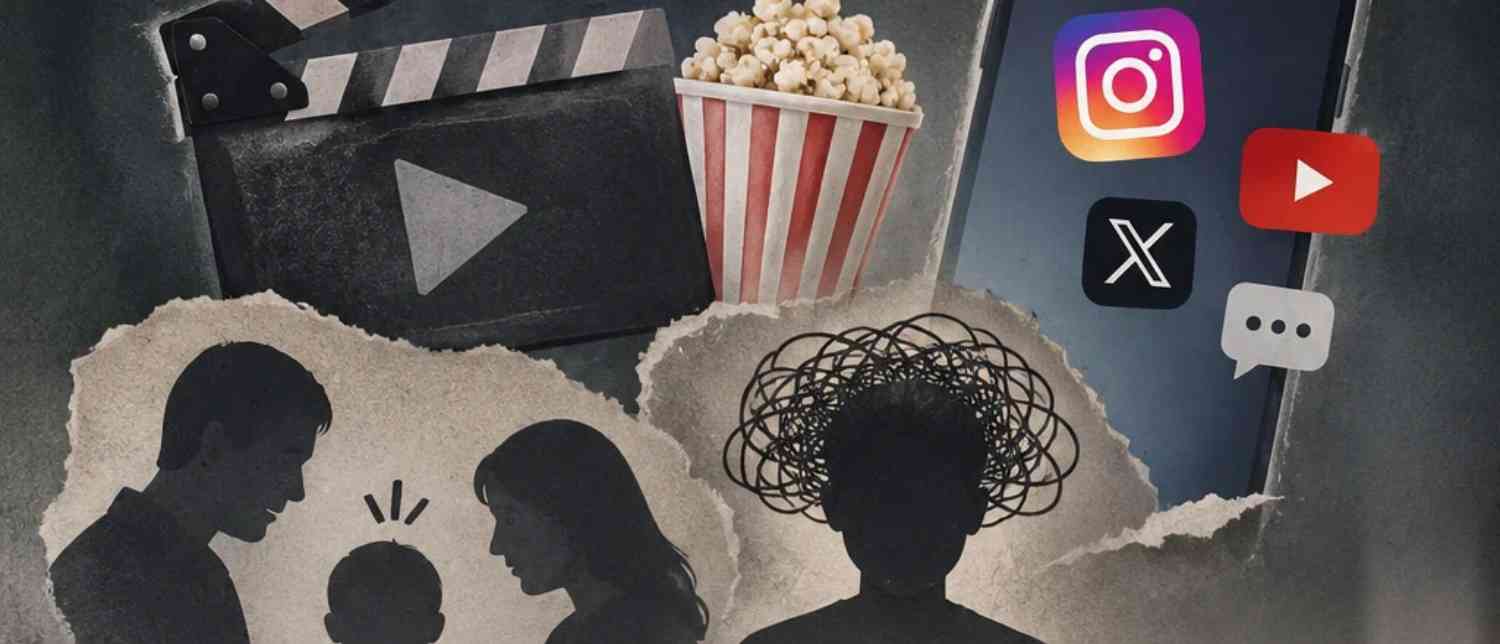
The immediate reaction has been familiar. Violent films are being blamed. Social media is under scrutiny. Parents are being questioned. Some have even argued that movies depicting extreme aggression are encouraging young people to imitate what they see on screen.
There may be legitimate concerns behind these arguments. Cinema and digital content can influence attitudes, particularly among impressionable viewers. But is blaming violent movies really enough to explain why a child attacks another child or why a young man believes that a woman's rejection gives him the right to hurt her?
The uncomfortable truth is that classroom violence is not simply a cinema problem. It is a reflection of a much deeper crisis involving parenting, emotional development, gender attitudes, online influences and institutional responsibility.

Violent Films and Student Aggression: Is Cinema Really to Blame?
Whenever a disturbing incident of violence occurs, popular culture becomes an easy target. Films that portray revenge, dominance, revenge-driven masculinity and physical aggression are often accused of normalising destructive behaviour.
The debate has gained momentum around movies such as Animal, which features scenes of extreme violence and aggressive expressions of masculinity. One particularly controversial sequence involving a character carrying an assault rifle into a classroom has drawn comparisons with real-life school violence.
It is reasonable to question what young audiences take away from such portrayals. When aggression is presented as a symbol of power, dominance is confused with confidence, and intimidation is rewarded with admiration, the messages deserve scrutiny.
However, there is a significant difference between depicting violence and encouraging people to commit violence.
Cinema does not operate in isolation. Audiences interpret stories through their own experiences, family environments, social conditioning and personal beliefs. A film that one person watches as fictional entertainment may be interpreted differently by someone already struggling with anger, insecurity or hostility.
This does not mean filmmakers should escape criticism. Creative freedom comes with the responsibility to recognise the social messages that art can communicate. But holding cinema solely responsible for violent behaviour oversimplifies a complicated psychological and social issue.
The relationship between media violence and youth aggression is not a straightforward cause-and-effect equation. Exposure to violent content may influence perceptions, desensitise some viewers or reinforce existing attitudes, but it cannot independently explain every act of aggression.
If a film is enough to turn someone violent, why do millions of people watch the same content without committing similar acts?
The more meaningful question is whether society is paying attention to the vulnerabilities, attitudes and environments that make certain individuals more susceptible to harmful influences.
The Parenting Question: Are We Raising Children Without Boundaries?
The Panchkula incident raises a question that is particularly difficult to ignore: what does a child understand about acceptable and unacceptable behaviour?
Children are not born knowing how to manage frustration, anger, disappointment or conflict. These abilities develop through observation, guidance, discipline and experience. Parents play a crucial role in teaching children that hurting someone is not an acceptable response to anger and that actions have consequences.
Yet modern parenting is increasingly complicated. Many parents are balancing demanding jobs, financial pressures and limited time with their children. Smartphones, streaming platforms and online games have also changed how children spend their free time.
The problem is not that parents allow children to enjoy technology or entertainment. It is that access sometimes grows faster than supervision, understanding and emotional guidance.
A child may have unrestricted access to the internet but very little understanding of what is appropriate to watch. Parents may know which games their children play without knowing whom they interact with online or what attitudes those interactions reinforce.
There is also a growing need to distinguish between affection and permissiveness. Loving a child does not mean agreeing with every demand, overlooking every mistake or avoiding uncomfortable conversations. Children need emotional security, but they also need boundaries.
Discipline is not synonymous with punishment, humiliation or physical violence. It means consistently teaching responsibility, respect and self-control.
Parents must learn to recognise warning signs such as repeated cruelty, bullying, threats, uncontrolled anger, deliberate intimidation and an inability to accept rejection. These behaviours should not automatically be dismissed as harmless childhood mischief or teenage attitude.
Equally, one incident should not be used to label a child permanently. Children can learn, change and develop healthier behavioural patterns when they receive appropriate guidance and support.
The responsibility of parenting extends beyond providing food, education and material comfort. It also involves understanding what children are thinking, what they are watching, how they treat others and whether they feel comfortable discussing difficult emotions at home.
Toxic Masculinity and the Dangerous Idea That Rejection Deserves Revenge
While childhood aggression demands attention, the attack on a teenage girl in Andhra Pradesh points towards an equally serious issue: the growing normalisation of male entitlement and hostility towards women.
A woman or girl has every right to reject romantic advances. She does not owe anyone affection, attention, companionship or an explanation for her decision. Yet violence against women often emerges from a disturbing belief that rejection is an insult to male pride and must be answered with retaliation.
This is where the conversation about toxic masculinity becomes essential.
Toxic masculinity does not mean that masculinity itself is harmful. It refers to rigid expectations that equate being a man with dominance, emotional suppression, aggression and control over women. Under these beliefs, vulnerability is treated as weakness, disagreement becomes an attack on authority, and rejection becomes something that must be avenged.
These attitudes do not appear overnight. They are reinforced through everyday conversations, peer groups, entertainment, social media and family environments.
Boys who repeatedly hear that women must be controlled, that male aggression is natural or that a man's worth depends on his ability to dominate may gradually internalise these ideas.
The problem becomes more dangerous when personal insecurity is transformed into resentment towards women.
A particularly troubling aspect of contemporary digital culture is the growth of incel communities and misogynistic online subcultures. The term 'incel', short for involuntary celibate, is associated with online communities in which some men blame women and society for their perceived inability to establish romantic relationships. While not everyone who identifies with the term is violent, certain extremist spaces promote hostility, misogyny and even fantasies of revenge.
These communities can provide vulnerable or isolated young men with an explanation for their frustrations. Unfortunately, that explanation may involve blaming women rather than developing emotional maturity, accepting rejection or taking responsibility for one's own behaviour.
The danger is not simply that young people encounter these ideas. It is that they may begin to treat misogyny as confidence and cruelty as strength.

Social Media and the Rise of Online Misogyny Among Teenagers
The influence of social media on teenagers has made the problem more complicated.
Earlier generations were largely exposed to the opinions of their families, friends, teachers and immediate communities. Today's teenagers encounter an endless stream of content, opinions, influencers and online communities that can shape their understanding of relationships, identity and gender.
Algorithms can repeatedly recommend similar content based on a user's viewing habits. Someone who begins watching videos about dating frustrations or masculinity may eventually encounter increasingly polarising material, including content that portrays women as manipulative, men as victims and aggression as a legitimate response to rejection.
This is one reason the global conversation surrounding the series Adolescence became so significant. The drama follows a teenage boy accused of murdering a female classmate and explores the disturbing intersection of adolescent insecurity, cyberbullying, online misogyny and the manosphere.
Its larger message is not that every boy who watches misogynistic content will become violent. Rather, it asks whether adults understand the digital environments in which children are growing up.
Parents may know their children's friends but remain unfamiliar with the online personalities they admire. Teachers may notice changes in classroom behaviour without knowing what students discuss in private group chats. A teenager may appear perfectly ordinary at home while participating in online spaces that encourage contempt towards women.
This creates a serious gap between children's digital lives and adult awareness.
Banning smartphones or restricting internet access may sometimes be necessary, particularly for younger children. But restrictions alone cannot solve the problem. Children must also learn digital literacy, critical thinking, empathy and the ability to recognise manipulation.
Most importantly, they should know that popularity on social media does not make an opinion morally acceptable or factually correct.
Schools Cannot Remain Silent Spectators
Educational institutions also need to examine their role in preventing student violence.
Schools are not merely examination centres. They are environments where children develop social skills, learn to resolve disagreements and interact with people outside their families. Consequently, school safety must include much more than security guards, CCTV cameras and restrictions on what students carry.
Following a fatal stabbing involving students at an Ahmedabad school in 2025, several institutions strengthened security measures, revised anti-bullying policies and introduced counselling initiatives.
Such steps are important. However, preventive action must go beyond responding to incidents after they occur.
Bullying, intimidation, social exclusion, repeated threats and aggressive behaviour should never be dismissed as ordinary school conflicts. Teachers and school administrators need the training to identify troubling behavioural patterns and intervene before disagreements escalate.
Every school should have an accessible and confidential system through which students can report bullying, harassment and threats without fearing humiliation or retaliation.
Professional counsellors and psychologists should also be available to support children dealing with emotional distress, anger, isolation or behavioural difficulties. Teachers cannot be expected to function as mental health professionals, but they must be equipped to recognise when a student needs additional support.
Equally important is the need to protect children who experience violence. Victims require immediate medical attention where necessary, psychological support and a safe environment in which to recover.
Schools must also teach gender sensitivity, consent, emotional regulation and conflict resolution as essential life skills rather than treating them as occasional classroom discussions.
A safe school is not simply one where violence is punished. It is one where children are taught why violence is unacceptable and are given the support to develop healthier ways of responding to conflict.
Society's Collective Responsibility: Everyone Has a Role to Play
Perhaps the biggest problem with the debate surrounding classroom violence is our tendency to look for a single culprit.
Parents blame schools. Schools blame families. Families blame smartphones. Social media companies blame user behaviour. Filmmakers defend creative freedom. Society points fingers at young people.
Everyone has an explanation, but very few are willing to examine their own contribution.
The truth is that children learn from the world adults create around them. They observe how men speak about women, how disagreements are handled at home, how teachers exercise authority and how society responds to people who are different.
When aggression is celebrated in public life, when bullying is treated as entertainment and when women are routinely blamed for men's frustrations, children absorb these contradictions.
We cannot expect boys to respect women if they grow up hearing women being insulted or treated as inferior. We cannot demand emotional maturity from children while mocking boys who cry or express vulnerability. We cannot ask students to reject violence when adults themselves use intimidation to settle disagreements.
There is also a tendency to overlook children who do not fit conventional expectations. Those who struggle socially, experience emotional difficulties or display unusual behaviour may be ridiculed, isolated or labelled rather than understood.
Recognising such difficulties does not mean excusing harmful actions. Accountability and compassion must coexist. A child who hurts another person must be held accountable, but adults must also investigate what went wrong and provide appropriate intervention.
Society must move away from the idea that responsibility begins only after a tragedy. Prevention requires sustained attention, not temporary outrage.

Beyond Banning Films: India Needs a Serious Conversation About Child Safety
The growing concern over classroom violence in India demands a coordinated response.
Parents must become more involved in their children's emotional and digital lives. Schools must strengthen anti-bullying mechanisms, improve counselling facilities and create environments where students feel safe reporting troubling behaviour. Policymakers must invest in accessible child mental health services, teacher training and age-appropriate digital safety education.
Technology platforms must also take greater responsibility for harmful content, online harassment and communities that encourage gender-based hostility. At the same time, filmmakers should remain free to explore uncomfortable subjects while audiences are encouraged to engage with cinema critically.
Most importantly, boys must be taught that masculinity does not require domination. Strength is not measured by how much fear someone can create. It is demonstrated through self-control, empathy, respect and the ability to accept another person's choices.
Girls must grow up knowing that rejection is their right, that their safety is non-negotiable and that their independence does not make them responsible for someone else's aggression.
And children, regardless of gender, must have adults they can approach without fear of being judged, dismissed or punished for expressing difficult emotions.
Cinema may reflect society, challenge it or sometimes reinforce its worst instincts. Social media may amplify harmful attitudes, and parenting may shape the foundations of behaviour. But none of these factors can be examined in isolation.
The real crisis is not simply that children are watching violent films or spending too much time online. It is that adults are struggling to understand the world children inhabit and the values they are learning from it.
A classroom should never become a place where a child fears being attacked by another student. A girl should never have to fear violence because she rejected someone's advances. And parents should never discover only after a tragedy that their child's emotional world was unfamiliar to them.
Blaming cinema may offer society a convenient escape from uncomfortable questions. But banning a film will not teach a child empathy, restricting a smartphone will not automatically dismantle misogyny, and installing CCTV cameras will not repair a culture that mistakes aggression for strength.
The responsibility belongs to all of us. And until we are willing to accept it, our classrooms will continue to reflect the failures of the society outside them.
© Copyright 2026. All Rights Reserved. Powered by Vygr Media.