
 By
By 
The promise sounds like a life-changing opportunity: a well-paid job in a foreign country, a generous monthly salary, insurance benefits and the possibility of financial security for an entire family. For young Indians struggling with limited employment opportunities, such an offer can appear to be the breakthrough they have been waiting for.
But for some Indian nationals who travelled to Russia expecting lucrative employment, the dream of earning a better living has reportedly turned into a nightmare involving military service, a dangerous war zone and prolonged separation from their families.
The ongoing Russia-Ukraine war has exposed a troubling overseas employment racket in which Indian citizens have allegedly been recruited through misleading job offers and intermediaries before finding themselves serving in the Russian armed forces. While some individuals reportedly entered military contracts voluntarily in pursuit of financial benefits, others and their families have alleged that they were deceived about the nature of the work they would be expected to perform.
The crisis raises urgent questions about India's overseas employment system, the accountability of recruitment agents, the vulnerability of job seekers and the government's ability to protect citizens working beyond its borders.
It also reveals a deeper problem: when domestic employment opportunities fail to meet the expectations of young people, the promise of a foreign salary can become powerful enough to overshadow even extraordinary risks.
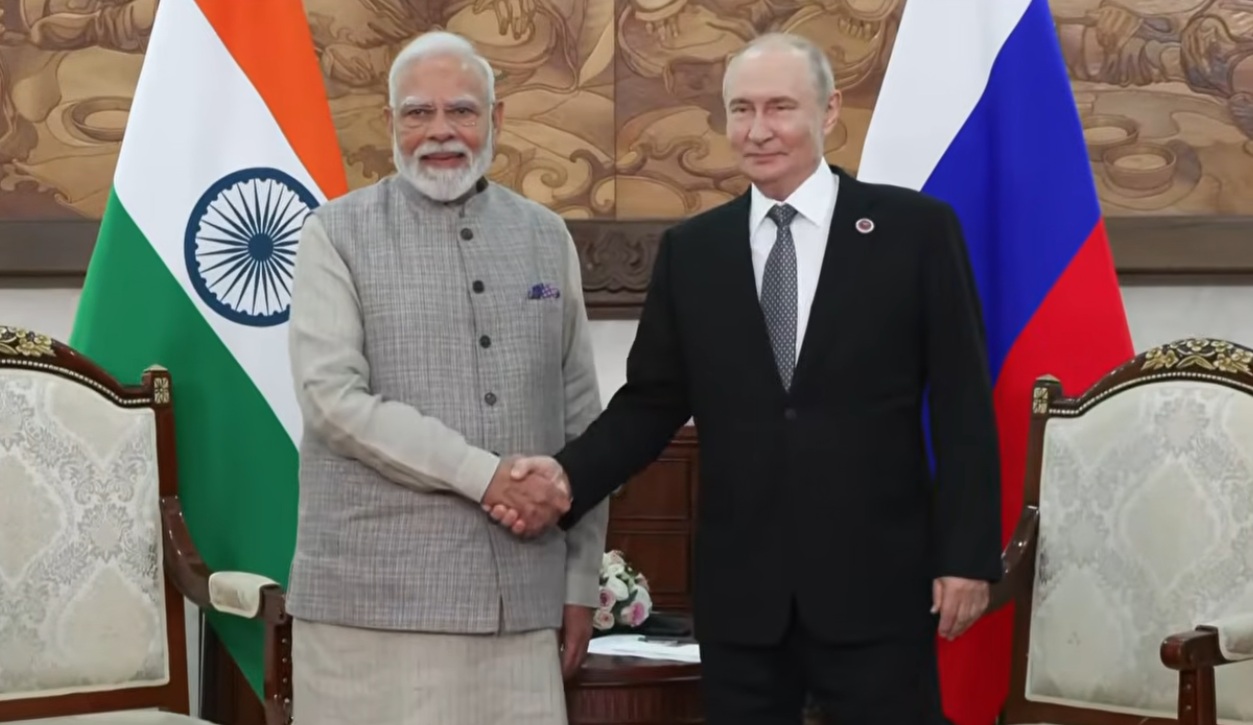
Russia-Ukraine War: How Lucrative Job Offers Became a Recruitment Trap
The recruitment of Indian nationals into Russia's military has drawn growing attention as families report that their relatives travelled abroad believing they had secured civilian employment.
In several reported cases, recruitment agents allegedly presented opportunities involving security services, support work or other employment. Families subsequently said their relatives were drawn into military service amid the continuing Russia-Ukraine conflict.
The precise circumstances differ from case to case. Some Indian nationals reportedly signed military contracts attracted by financial incentives, while others' families have alleged that their relatives were misled about the work they were accepting. These distinctions matter because voluntary recruitment and deceptive recruitment require different investigations and legal responses.
Nevertheless, the common thread is alarming: people seeking employment have become entangled in a conflict in which the consequences can be fatal.
The problem is not simply that Indians have travelled to Russia for work. It is that some reportedly entered a recruitment process without fully understanding the nature of their eventual employment, the risks associated with military service or the difficulty of leaving once they were deployed.
For a job seeker who has invested money, travelled thousands of kilometres and signed documents in an unfamiliar language, the ability to refuse an assignment may be far more limited than originally imagined.
The crisis therefore demands closer scrutiny of how recruitment offers are advertised, who arranges travel, what contracts workers sign and whether the promised employment matches the work ultimately performed.
The Salary Factor: Why Indian Youths Take the Risk
Financial incentives are central to understanding why some Indians have considered joining the Russian military despite the dangers.
An October 2026 opinion analysis highlighted reports from Telangana in which young workers were allegedly offered salaries of approximately ₹2 lakh per month, along with insurance and additional bonuses. One reported worker had paid an agent ₹2.5 lakh to obtain employment in Russia.
Such sums can appear transformative to people whose families depend on irregular earnings, low-paid work or uncertain employment. A salary that would be difficult to secure through ordinary local employment can create the impression that working abroad offers a direct route out of financial hardship.
The incentives reported in connection with Russian military recruitment have also been substantial. In a May 2026 submission to the Supreme Court, the Centre described financial packages reportedly offered to foreign recruits, including a signing bonus of around $5,000, a monthly salary of approximately $2,500, social benefits, possible Russian citizenship and compensation of around $168,000 in the event of death.
These figures were presented in the context of explaining why certain Indian nationals had entered military contracts. They should not be interpreted as guaranteed benefits available to every recruit, particularly those allegedly deceived by civilian job offers.
For economically vulnerable workers, however, even the promise of such earnings can outweigh concerns that would otherwise discourage them from accepting a dangerous assignment.
Recruiters can exploit this imbalance by making the financial rewards appear immediate and the risks distant. A potential recruit may focus on the monthly income, the signing bonus or the prospect of supporting parents, paying debts and improving a family's living conditions.
The consequences of a military contract, meanwhile, may remain unclear until the person reaches the destination country.
This is why the crisis cannot be understood solely as a story about individual decisions. It is also about the economic pressures that make extraordinary offers attractive, the information available to applicants and the unequal relationship between a recruiter who understands the arrangement and a job seeker who may know very little about it.
Missing Indians, Reported Deaths and Families Waiting for Answers
Behind the recruitment figures are families who have spent months trying to discover whether their relatives are alive, where they are being held and whether they will ever return home.
One particularly distressing case concerns Manoj Singh Shekhawat, a 33-year-old cab driver from Jaipur. In an audio message sent to his family from near the Russia-Ukraine front in October, he reportedly warned relatives that they should fear the worst if they did not hear from him for three days. His family continued hoping that he was alive even after months without reliable information.
His case formed part of a wider struggle involving families seeking government intervention to trace and repatriate Indian nationals caught up in the conflict.
In March 2026, relatives from 26 families approached the Supreme Court seeking assistance in locating their loved ones and bringing them home. Their accounts highlighted the emotional and practical difficulties faced by families when communication with relatives disappears and official confirmation is delayed.
For those families, the uncertainty is devastating. They cannot make informed decisions about the future, complete necessary family arrangements or find closure without knowing what happened to their relatives.
The reported deaths have added another layer of anguish. In a status report discussed in May 2026, the Centre told the court that 217 Indians had joined Russian forces, 49 had died and six were missing in action. The status of another 23 people was reported as unknown at that time.
The government also said that recovering or extracting mortal remains from active combat areas was not possible in some cases because of the security situation.
The human consequences extend beyond the immediate danger faced by those serving. Families may have to navigate government offices, police complaints, diplomatic communications and documentation requirements while struggling with the possibility that their loved one will never return.
For parents, spouses, siblings and children, a missing family member is not simply an unresolved administrative case. It is a continuing crisis that affects every part of daily life.
How Many Indians Have Been Recruited? Understanding the Official Figures
The number of Indian nationals involved in the Russian military recruitment crisis has changed across official statements and court proceedings, making it essential to distinguish between figures reported at different times.
In November 2025, Indian authorities said their understanding was that 44 Indian nationals were serving in the Russian Army, an increase from an earlier reported figure of 27. At least 12 Indian nationals had been reported killed by that stage.
In May 2026, the Centre informed the Supreme Court that 217 Indians had joined Russian forces, of whom 49 had died and six were missing in action. The government said 139 had been released from military service and that the status of other individuals remained uncertain.
By July 2026, the government again confirmed that 139 Indian nationals had been released and said efforts continued to secure the return of approximately two dozen more reportedly serving in the Russian military.
A further update in October 2026 cited a broader figure of 259 Indian nationals believed to have been drafted into the Russian armed forces. Of these, 139 had obtained an early discharge, while information was still being sought about 69 others whose status remained unresolved or who were believed potentially to be serving.
These figures should not be treated as directly interchangeable. They refer to different reporting dates and categories, including people who joined, those released, deaths, missing persons and individuals whose status had not been established.
The figures nevertheless demonstrate the scale of the challenge. They also underline the importance of maintaining a reliable, regularly updated record of every Indian national identified as having entered the Russian military system.
Without clear information about each person's identity, location, legal status and circumstances of recruitment, families cannot receive timely answers, and authorities cannot reliably assess the full extent of the problem.
The Role of Recruitment Agents and Overseas Employment Fraud
Recruitment intermediaries occupy a crucial position in the overseas employment market. Legitimate agents can help workers navigate documentation, contracts, travel arrangements and foreign employment requirements. But when intermediaries operate outside the law or deliberately misrepresent an opportunity, the same system can expose job seekers to exploitation.
In the Russian recruitment cases, families have blamed networks of travel agents and intermediaries operating in India and Russia for allegedly entrapping their relatives. Some reported victims were promised lucrative civilian jobs before finding themselves involved in military service.
Such allegations require individual investigation. Not every agent involved in overseas recruitment is fraudulent, and not every Indian who joins a foreign military has necessarily been deceived. Authorities must establish what each intermediary promised, what the applicant understood, what documents were signed and whether the final employment arrangement differed from the original offer.
India already has a regulatory framework intended to protect people seeking work abroad. Section 10 of the Emigration Act, 1983, requires recruiting agents covered by the law to obtain registration. The Ministry of External Affairs also operates the eMigrate system, through which registered recruiting agents and relevant employment arrangements can be checked.
The framework includes requirements relating to employment records, contracts, advertisements and payment receipts. It also restricts the use of sub-agents and caps the service fee charged to an emigrant at the equivalent of 45 days' wages, subject to a maximum of ₹20,000.
An official response cited in the October 2026 analysis indicated that approximately 3,505 unregistered agents were listed on the relevant portal. This points to the continuing challenge of bringing recruitment activity within the regulated system.
The central weakness is enforcement. A worker may be approached through personal contacts, social media, informal travel networks or an unregistered intermediary. If the individual travels under a visa that does not accurately reflect the eventual employment, the original arrangement may escape effective scrutiny.
By the time authorities discover that the promised job was different from the actual assignment, the worker may already be abroad, isolated from family support and unable to leave safely.
Why the eMigrate System Needs Stronger Monitoring
India's overseas employment regulations provide an important starting point, but registration alone cannot guarantee that every worker remains protected after departure.
The eMigrate system can improve transparency when recruitment takes place through authorised channels. However, its effectiveness is limited when a person travels under the pretext of tourism, education or another purpose and subsequently enters a different employment arrangement.
A more effective system would connect recruitment verification with visa checks and post-arrival monitoring. Authorities should be able to establish whether the employer, job description and contractual conditions match what was originally promised.
The process should extend across three stages: before departure, after arrival and once employment begins.
Before travel, applicants should be able to verify an agent's registration, confirm the employer's identity and obtain an independently explained contract. After arrival, mechanisms should exist to check whether the worker has reached the stated workplace and begun the agreed job. Later monitoring should help identify changes in employer, working conditions or the nature of the assignment.
Employment involving military organisations, security services or defence contractors deserves especially close scrutiny. Contracts should clearly identify whether the work involves civilian support, military service or deployment in a conflict zone.
A vague description such as army-related work should never be sufficient where the actual duties could expose a civilian job seeker to combat.
Contracts must be available in a language the worker understands. Applicants should receive an accurate translation and an independent explanation of the risks, pay, legal obligations and conditions under which the contract can be terminated.
These safeguards would not eliminate every instance of fraud, but they could make it harder for recruiters to conceal the true nature of a job until the worker is beyond India's immediate reach.
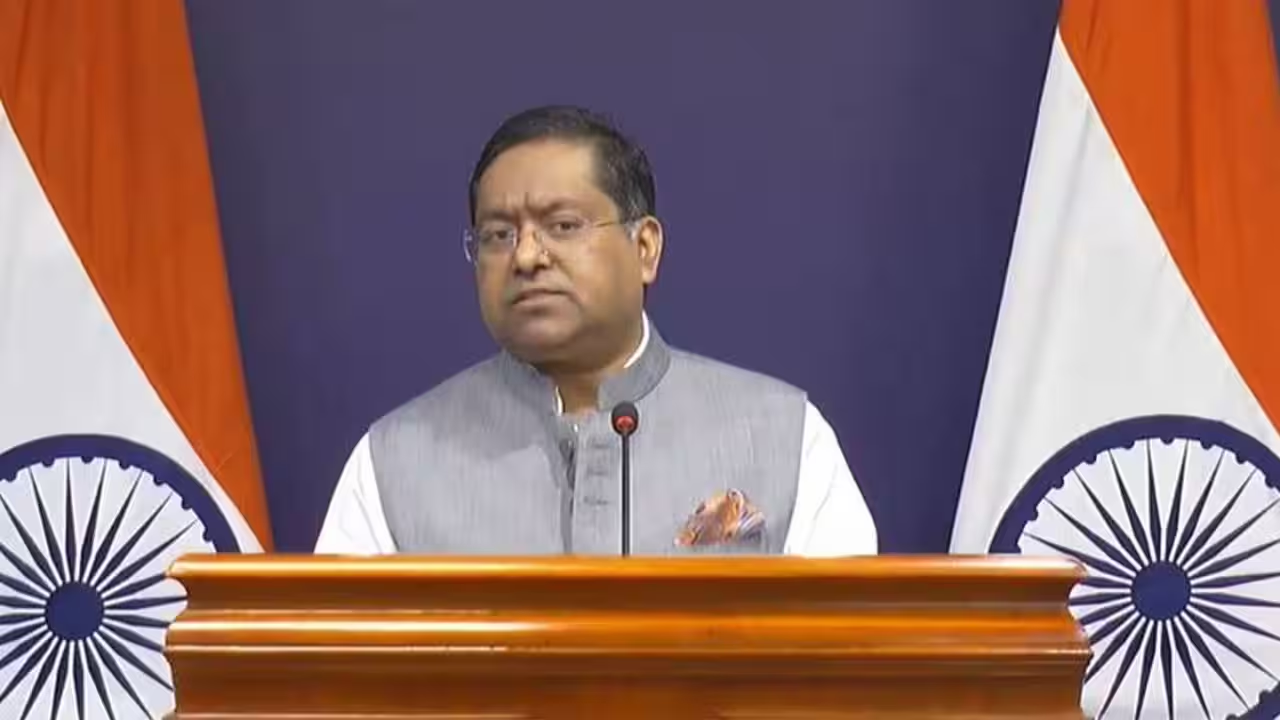
Government Warnings and Diplomatic Efforts to Bring Indians Home
The Indian government has repeatedly warned citizens against accepting unverified job offers connected to the Russian armed forces.
In its September 30 and October 1, 2026 advisories, the government described joining the Russian military as dangerous and strongly discouraged the practice. It urged Indians travelling to Russia to exercise due diligence, particularly when dealing with unregistered agents or organisations.
The government also warned against voluntarily giving up Indian citizenship, obtaining a Russian passport and joining the Russian armed forces in pursuit of short-term financial benefits. It said some individuals had reportedly taken such steps without consulting Indian authorities.
Diplomatic engagement has meanwhile continued to secure the release and repatriation of Indian nationals. The reported release of 139 individuals represents important progress, but it does not resolve the situation of everyone whose status remains uncertain.
The Supreme Court has also directed the government to continue tracing missing Indians and strengthen communication with affected families. Measures discussed in the proceedings included appointing a nodal officer, facilitating DNA matching between relatives and recovered remains, and helping families pursue compensation claims.
The court also emphasised the need to provide relevant information to families in their respective vernacular languages. These steps recognise that families need more than general assurances: they require an accessible point of contact, reliable updates and practical help navigating complex procedures.
India's long-standing defence and strategic relationship with Russia makes the issue diplomatically sensitive. Nevertheless, protecting citizens must remain a priority. Regular exchanges of information, consular access and a clear process for establishing the whereabouts of every affected Indian are essential.
The Bigger Problem: Unemployment, Migration and Vulnerable Job Seekers
The recruitment crisis exposes a wider contradiction in India's employment landscape. Overseas work can offer valuable opportunities, but the desire to earn more can also leave people vulnerable when reliable domestic options are limited or difficult to access.
For a young worker supporting parents, paying off debt or trying to build a more secure future, an overseas salary can represent far more than money. It can mean dignity, independence and the possibility of changing a family's circumstances.
Fraudulent recruiters understand the power of that aspiration. They can exploit it by emphasising the financial rewards while withholding crucial information about the actual work, contractual obligations and potential dangers.
Public awareness campaigns are necessary, but warnings alone cannot solve the problem. Workers need practical ways to distinguish legitimate employment from fraudulent offers. They also need accessible grievance mechanisms, stronger enforcement against unregistered intermediaries and better employment prospects at home.
Recruitment fraud should be investigated wherever evidence supports allegations of deception, forgery, trafficking or unauthorised recruitment. Digital platforms that carry misleading job advertisements should cooperate with investigations and help prevent repeat offenders from targeting additional applicants.
At the same time, authorities must avoid treating every affected worker as though they made the same choice under the same circumstances. Someone who knowingly signs a military contract for financial gain is in a different position from someone who alleges that a civilian job offer concealed the reality of military service.
Investigations must establish those differences while ensuring that Indian citizens in danger receive appropriate assistance.
A Foreign Salary Must Not Become a Ticket to War
The recruitment of Indian nationals into Russia's armed forces is more than a diplomatic challenge or a series of isolated overseas employment disputes. It is a warning about what happens when financial desperation, misleading recruitment and gaps in regulatory enforcement converge.
For families waiting for missing relatives, the priority is immediate and deeply personal: establish where their loved ones are, secure their release wherever possible and provide clear answers about those who have died or remain unaccounted for.
For the government, the task is twofold. It must continue diplomatic efforts to bring affected Indians home while strengthening the systems designed to prevent other job seekers from entering similarly dangerous situations.
That means scrutinising recruitment agents, monitoring employment arrangements beyond departure, ensuring that contracts are understood and investigating credible allegations of fraud. It also means expanding access to reliable employment information and making it easier for young Indians to find legitimate opportunities.
Ultimately, the most important lesson is that a promise of high earnings should never be allowed to conceal the true nature of a job.
An overseas employment opportunity should offer a route to a better future, not expose a worker to a war they never knowingly agreed to fight. Until recruitment can be verified, workers can be monitored and fraudulent agents can be held accountable, the promise of a lucrative salary will continue to carry risks that no family should have to bear.
© Copyright 2026. All Rights Reserved. Powered by Vygr Media.