
 By
By 
New Delhi: In what could become one of the most significant overhauls of India's higher education admission system in decades, the Ministry of Education is reportedly considering a proposal to give Class 12 board examination marks up to 50% weightage in admissions to professional courses currently based primarily on entrance examinations such as NEET and JEE.
The proposal is part of a broader set of reforms aimed at reducing the overwhelming dependence on a single high-stakes entrance examination while making school education more meaningful. The recommendations have been put forward by a nine-member expert committee constituted by the Ministry of Education, whose final report is expected to be submitted to the government in the coming weeks.
Why the Government Is Considering the Change
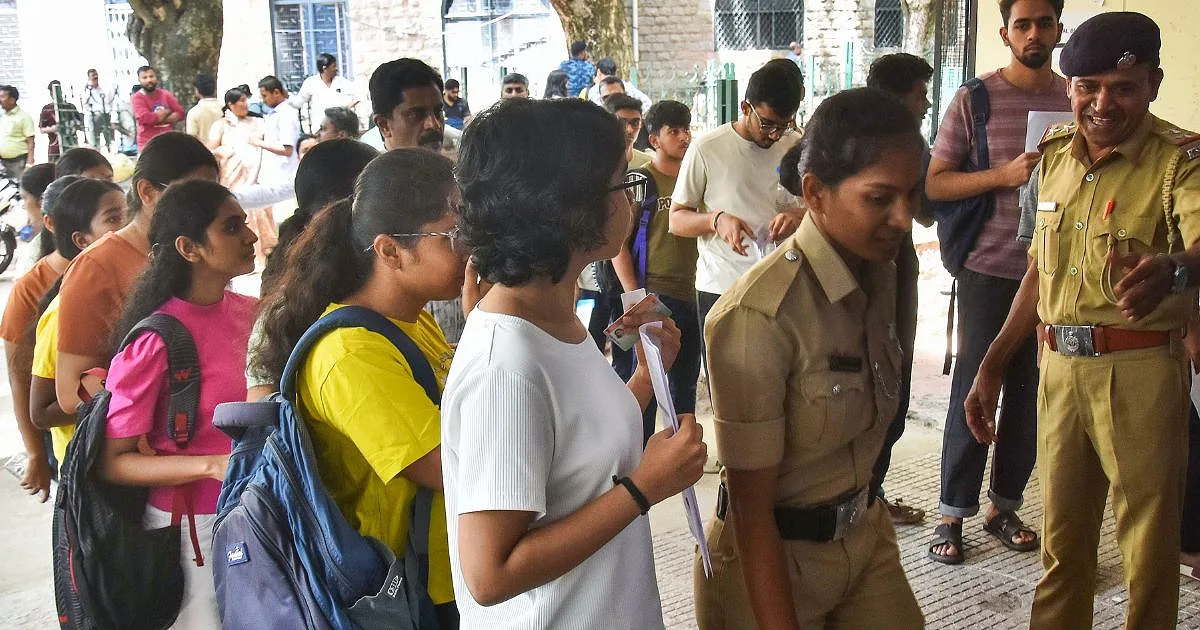
The proposed reform comes amid growing concerns over the credibility and fairness of India's entrance examination system. Over the past few years, allegations of paper leaks, evaluation discrepancies, the proliferation of coaching institutes, and the rise of "dummy schools" have sparked widespread debate about whether the current model adequately assesses students' academic capabilities.
Officials believe that relying almost entirely on entrance examinations places immense psychological pressure on students while encouraging a coaching-centric ecosystem that often sidelines classroom learning. By assigning substantial weight to Class 12 board examination scores, policymakers hope to encourage consistent academic performance throughout the school year instead of rewarding success in a single competitive examination.
What the Proposal Says
According to reports, the committee has suggested that board examination marks could account for up to 50% of the admission criteria, with the remaining weightage continuing to come from entrance examinations such as NEET and JEE.
Currently, admissions to medical and engineering programmes are determined almost entirely by entrance examination scores. Board examination marks are generally used only to determine eligibility, requiring students to secure a minimum percentage before appearing for these national-level entrance tests.
If implemented, the proposed system would fundamentally alter the admission process by making school board performance a decisive factor in securing admission to prestigious institutions.
However, it is important to note that the proposal remains under government consideration and has not yet been approved or officially implemented.
A Shift Towards School-Based Learning
Another major recommendation focuses on bringing entrance examinations closer to the school curriculum.
Experts have long argued that the syllabus and question patterns of examinations like NEET and JEE often encourage students to depend heavily on private coaching rather than regular classroom instruction. The committee has reportedly recommended aligning entrance examination syllabi more closely with school education so that students can prepare effectively through their regular academic studies.
Such a move is expected to reduce the financial burden on families who spend significant amounts on coaching institutes while also restoring greater importance to classroom teaching and learning.
Multiple Attempts and Computer-Based Testing Also Proposed
Beyond changes to admission weightage, the committee has reportedly proposed several structural reforms to India's examination ecosystem.
Among the key recommendations is the introduction of multiple opportunities for students to appear in entrance examinations, reducing the life-defining pressure associated with a single attempt.
The panel has also suggested a gradual transition towards adaptive, on-demand computer-based testing, which would allow examinations to be conducted more frequently while improving flexibility and reducing logistical challenges.
These recommendations aim to create a more resilient examination framework capable of addressing issues such as paper leaks, examination disruptions and large-scale administrative challenges.
Reducing Dependence on Coaching Centres
One of the central objectives of the proposed reforms is to address India's rapidly expanding coaching industry.
For years, students preparing for competitive examinations have increasingly relied on specialised coaching institutes, often at considerable financial cost. This trend has also contributed to the growth of dummy schools, where students formally remain enrolled but spend most of their time attending coaching classes instead of regular school.
By increasing the importance of board examination performance and aligning entrance examinations with school curricula, policymakers hope to incentivise students to focus more on classroom education and reduce excessive dependence on coaching institutions.
Education experts believe such a shift could also help improve learning outcomes by encouraging conceptual understanding rather than exam-oriented preparation.
Potential Benefits for Students
If implemented effectively, the proposed reforms could transform the way students prepare for higher education admissions.
Instead of placing all their hopes on a single entrance examination, students would have greater incentive to perform consistently throughout their Class 12 academic year. This could help reduce stress levels and encourage balanced learning.
The reforms may also benefit students from schools where coaching facilities are limited or unaffordable. Giving meaningful weight to board examination scores could create a more level playing field by recognising sustained academic achievement alongside competitive examination performance.
At the same time, multiple attempts at entrance examinations could provide students with additional opportunities to improve their scores without waiting an entire academic year.
Challenges That May Need to Be Addressed
While the proposal has attracted considerable attention, experts also point out several implementation challenges.
One of the biggest concerns relates to the variation in evaluation standards across different education boards. India has multiple school boards, including CBSE, CISCE and numerous state boards, each following different syllabi, examination patterns and marking practices.
If board marks begin carrying 50% weightage nationally, policymakers may need to develop mechanisms to ensure fairness and comparability across boards.
Another important consideration is maintaining transparency in admissions while preventing any unintended disparities arising from differences in board-level assessment systems.
These issues are expected to receive careful attention if the government decides to move ahead with the recommendations.
Final Decision Yet to Be Taken
Despite widespread discussion surrounding the proposal, the recommendations have not yet become official policy.
The expert committee's report is expected to be submitted to the government shortly, after which the Ministry of Education will examine its recommendations before deciding whether and how to implement them.
Any major changes to admission policies for NEET, JEE or other national entrance examinations would require detailed policy decisions, stakeholder consultations and official notifications before taking effect.
Until then, admissions for current examination cycles will continue to follow the existing rules unless the government formally announces otherwise.
A Possible Turning Point in India's Admission System
If adopted, the proposed reforms could mark a fundamental shift in India's approach to higher education admissions. By balancing entrance examination performance with school board results, the government hopes to reduce the intense pressure associated with single-exam admissions while strengthening the role of school education.
The recommendations also reflect a broader effort to improve the credibility, accessibility and fairness of India's examination system in the aftermath of recent controversies.
While the final decision now rests with the government, the proposal has already triggered an important national conversation about how academic merit should be assessed and whether consistent school performance deserves a greater role in determining students' futures.
With inputs from agencies
Image Source: Multiple agencies
© Copyright 2026. All Rights Reserved. Powered by Vygr Media.