
 By
By 
India is not just experiencing a summer; it is enduring a reckoning.
Across six separate reports published over the past few days, a stark, almost surreal picture emerges: a country where school calendars are collapsing under the weight of heat, where cities dominate global temperature charts with alarming consistency, and where a scientific term once obscure is now quietly becoming a measure of survival itself. Taken together, these accounts don’t merely describe a heatwave. They document a transformation in how heat is lived, governed, and feared in India.
This is not weather. This is a warning.
The Summer That Broke the Calendar
When governments begin to rewrite school schedules, it signals more than administrative caution; it signals distress.
States like Odisha and Chhattisgarh have already advanced summer vacations, effectively conceding that classrooms are no longer safe spaces for children in April. Delhi, too, is adjusting its school timetable, shortening hours and reconsidering exposure. These are not isolated decisions; they are reactive measures to an environment that has become physically hostile during what used to be a routine academic month.
What’s striking is not just the timing but the normalisation of disruption. Summer vacations historically began in May, sometimes late April. Now, April itself is being treated as peak summer, an implicit acknowledgement that seasonal boundaries have shifted. Education, one of the most structured systems in society, is bending under climate pressure.
And yet, even as schools shut their doors earlier, millions of children remain exposed to those without access to air-conditioned transport, those in rural areas, those whose homes trap heat rather than repel it. The policy response, while necessary, is uneven in its protection.
India: The Epicentre of Global Heat
If anecdotal evidence were not enough, the numbers are unequivocal and deeply unsettling.
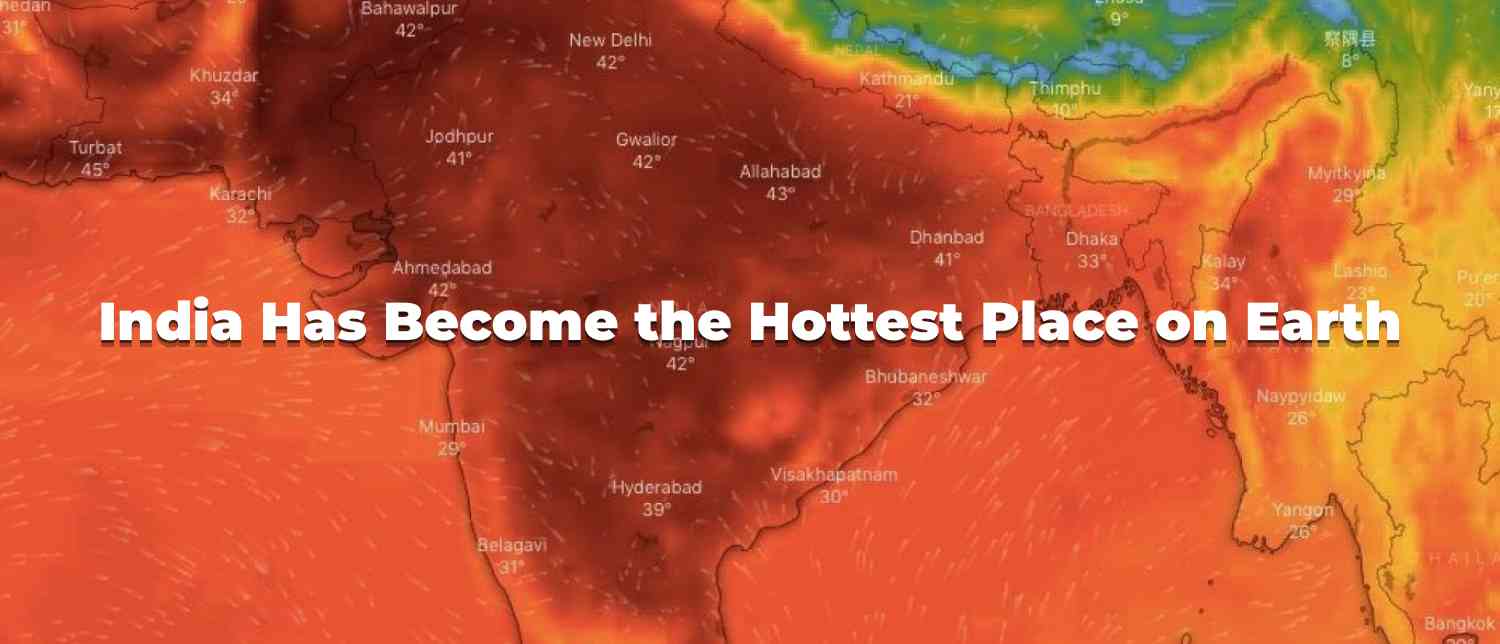
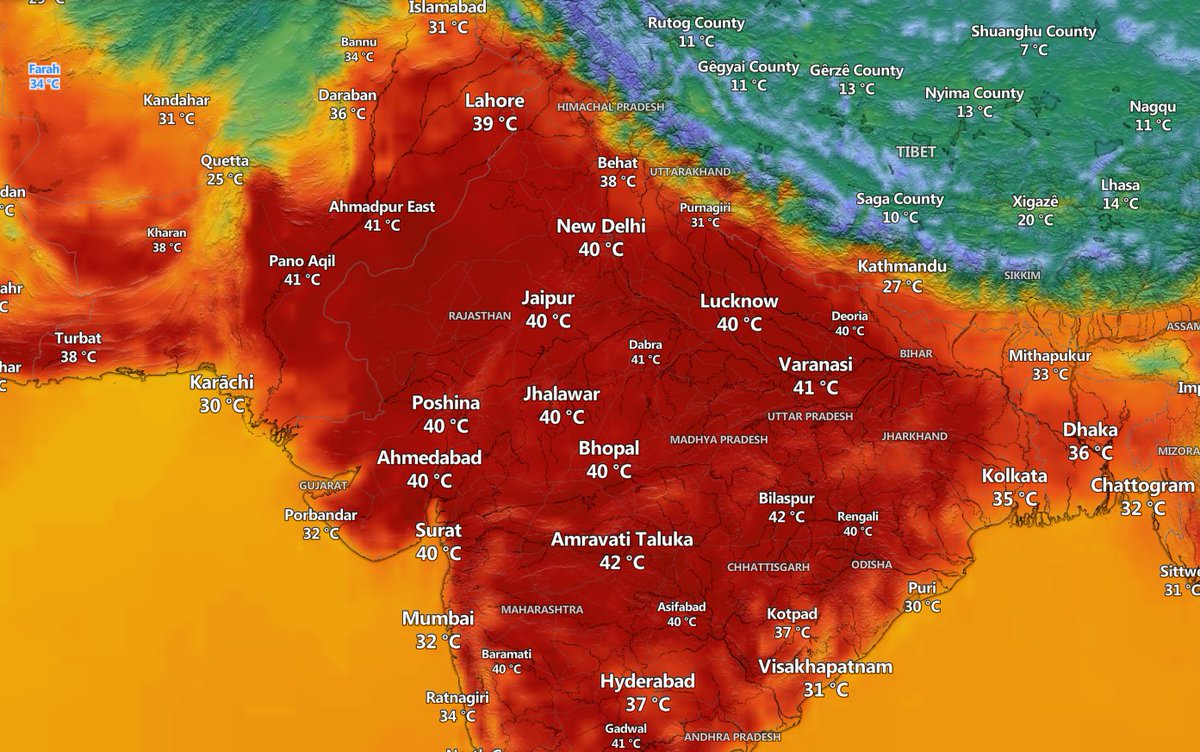
India now accounts for 95 out of the world’s 100 hottest cities on certain days. In another snapshot, 19 of the 20 hottest cities globally are Indian. These are not statistical anomalies; they are patterns persistent, repeatable, and growing.
Cities across Madhya Pradesh, Rajasthan, Uttar Pradesh, and beyond are registering temperatures that push the limits of human tolerance. Madhya Pradesh, in particular, has emerged as a consistent hotspot, topping charts with relentless intensity. This is not just about isolated spikes; it is about sustained heat that refuses to relent, even at night.
The phrase “hotbox effect” has begun to circulate, and it is apt. Urban India is increasingly behaving like a sealed container, trapping heat through a deadly combination of concrete density, reduced vegetation, vehicular emissions, and waste heat from air conditioning itself. Cities are no longer just experiencing heat; they are generating and amplifying it.
What makes this even more alarming is the scale. India is not just part of the global heat store, but it is dominating it.

The Invisible Killer: Wet-Bulb Temperature
Temperature alone, however, does not tell the full story. A more insidious metric is gaining attention: wet-bulb temperature.
Unlike standard temperature readings, wet-bulb temperature accounts for humidity. It measures the lowest temperature to which air can be cooled by evaporation, a critical factor in determining whether the human body can regulate its own heat through sweating.
At a wet-bulb temperature of around 35°C, the human body effectively loses its ability to cool itself. Prolonged exposure becomes fatal, even for healthy individuals in the shade with access to water.
India is increasingly approaching these thresholds.
This is where the crisis shifts from uncomfortable to existential. High humidity levels, particularly in coastal and densely populated regions, mean that even lower “dry” temperatures can feel and function like extreme heat. A day that reads 40°C on a thermometer can feel far more dangerous when humidity is factored in.
The danger is not always visible. There is no dramatic spike, no headline-grabbing number. Instead, there is a slow, suffocating accumulation of heat stress that disproportionately affects outdoor workers, the elderly, and those without access to cooling.
Wet-bulb temperature reframes the conversation. It is no longer about how hot it feels. It is about whether survival is physiologically possible.
Why India Is Burning
So why is India at the centre of this escalating crisis?
The answer lies in a convergence of factors, geographical, environmental, and human-made.
First, there is the role of climate change, which has increased the frequency, duration, and intensity of heatwaves. India’s pre-monsoon months are becoming longer and harsher, with delayed rainfall offering little relief.
Second, there is urbanisation. Rapid, often unplanned growth has replaced green cover with heat-absorbing infrastructure. Asphalt roads, concrete buildings, and glass facades trap heat during the day and release it slowly at night, preventing temperatures from dropping.
Third, there is the loss of water bodies and vegetation, both of which play critical roles in natural cooling. Lakes, ponds, and tree cover act as buffers against heat. Their disappearance has left cities exposed.
Fourth, there is the paradox of air conditioning. While it offers immediate relief, it also contributes to the problem by releasing heat into the environment and increasing energy demand, often met through fossil fuels.
Finally, there is geography. Large parts of India lie in regions naturally prone to high temperatures. What has changed is the intensity and persistence of that heat.
The result is a perfect store of mana in a country where natural vulnerability meets human amplification.
The Human Cost
Behind every statistic is a lived reality.
Construction workers continue to labour under direct sunlight. Street vendors, delivery personnel, and agricultural workers have little choice but to endure the heat. For many, staying indoors is not an option;n it is a privilege.
Hospitals are already reporting increases in heat-related illnesses: dehydration, heat exhaustion, and heatstroke. These are not new conditions, but their frequency and severity are rising.
There is also an economic dimension. Productivity drops as temperatures rise. Outdoor work becomes slower, riskier, and sometimes impossible. Energy demand surges, straining power grids and increasing the likelihood of outages, es ironically, at the very moment when cooling is most needed.
Education, healthcare, labor every system is feeling the strain.
A Crisis of Inequality
Perhaps the most troubling aspect of this heat crisis is how unevenly it is experienced.
For those with access to air conditioning, insulated homes, and reliable electricity, heat is an inconvenience. For others, it is a daily threat.
Urban slums, with their cramped living conditions and poor ventilation, become heat traps. Rural areas, lacking infrastructure and resources, face their own set of challenges. Even within cities, disparities are stark. Tree-lined neighbourhoods remain relatively cooler, while densely built areas suffer.
This is not just a climate issue; it is a social one.
Policy Responses: Reactive, Not Proactive
Governments are not unaware of the crisis. Early school closures, revised work hours, and public advisories are all steps in the right direction.
But they are, fundamentally, reactive.
What is missing is a long-term, systemic approach to heat management. Urban planning needs to prioritise green spaces, reflective materials, and ventilation. Water bodies must be restored, not encroached upon. Public infrastructure, from bus stops to markets,s must be redesigned with heat in mind.
There is also a need for heat action plans that go beyond emergency response. These should include early warning systems, community outreach, and targeted support for vulnerable populations.
The challenge is not just to survive this summer, but to prepare for the next and the next.
Rethinking “Normal”
Perhaps the most dangerous aspect of the current situation is the risk of normalisation.
If April heatwaves become expected, if school closures become routine, if 45°C days are treated as just another part of summer, then the urgency of the crisis may begin to fade even as the reality worsens.
But this is not normal. It cannot be.
India’s dominance on global heat charts is not a point of grim pride; it is a signal of systemic failure, both global and local. Climate change is a shared responsibility, but its impacts are being felt unevenly, and India is on the front lines.
The Road Ahead
There is no single solution to a problem of this scale.
Mitigation,n reducing emissions, is essential but slow. Adaptation, changing how we live, build, and work,k is immediate but complex.
What is clear is that incremental change will not suffice. The scale of the crisis demands ambition, coordination, and urgency.
From rethinking urban design to investing in renewable energy, from protecting vulnerable populations to educating the public about risks like wet-bulb temperature, every layer of society has a role to play.
Heat as a Harbinger
The stories emerging from across India are not isolated reports; they are chapters in a larger narrative, one that is still being written.
A narrative where summers arrive earlier and stay longer. Where cities become furnaces. Where survival itself becomes contingent on factors as intangible as humidity.
This is not just about heat. It is about how a nation responds when its environment begins to outpace its systems.
India is burning, but it is also adapting, improvising, and, at times, struggling to keep up.
The question is not whether the heat will return next year. It will.
The question is whether India will be ready for it.
With inputs from agencies
Image Source: Multiple agencies
© Copyright 2026. All Rights Reserved. Powered by Vygr Media.