 By

India's Muslim population is projected to grow by nearly 57% by 2070 even though Muslim women are having fewer children than before, according to a Pew Research Center report; the main drivers are a younger age structure and demographic momentum, not higher fertility.
Key takeaways
- Projection: India's Muslim population is expected to rise from 213 million in 2020 to 334 million in 2070, an increase of about 57%.
- Fertility is falling: Muslim women in India are projected to have 2.3 children on average in 2025-30, down from earlier decades, while Hindu women are at 1.8.
- Why growth continues: Indian Muslims are younger, with a median age of 24 against 29 for Hindus, so more women are entering their childbearing years.
- Above replacement: Muslim fertility is projected to stay above the replacement level of about 2.1 for roughly two more decades.
- Hindus remain the large majority: Their share dips from 79% to 76% by 2070, even as their numbers grow by about 176 million.
- Global rank: India moves from third to second in the world for Muslim population, behind only Pakistan.
What the Pew projections say for India
The Pew Research Center's report on the future of the global Muslim population, released on November 18, 2026, looks at 2020 to 2070. For India, it projects the Muslim population rising from 213 million to 334 million, a gain of 121 million or about 57%. Hindus, still by far the largest group, are projected to grow more slowly.
|
Group |
2020 |
2070 (projected) |
Change |
|---|---|---|---|
|
Muslims |
213 million (15% of population) |
334 million (20%) |
About +57% |
|
Hindus |
1.11 billion (79%) |
1.29 billion (76%) |
About +16% |
So Muslims' share of India's population is projected to rise by about five percentage points, while the Hindu share falls by about three. Hindus would still make up more than three-quarters of the country.
The report also notes that India is home to roughly 94.5% of the world's Hindus in 2020, a share projected to ease to 93.6% by 2070, so India remains the centre of the global Hindu population.
Why the population keeps growing even as fertility falls
The apparent paradox has a simple explanation: a population's growth depends on how many people are of childbearing age, not only on how many children each woman has. Demographers call this population momentum.
India's Muslim population is younger than its Hindu population. The report puts the median age at 24 for Muslims and 29 for Hindus in 2020. A younger group has a larger share of girls and young women who have yet to start families, so births keep rising in absolute terms for years after fertility starts to fall.
Three factors work together:
- Age structure: A bigger cohort of young people means more future parents, even if each has fewer children than the previous generation.
- Fertility above replacement: Muslim fertility is projected at 2.3 children per woman in 2025-30, still above the roughly 2.1 needed to keep a population stable, and Pew expects it to stay above that level for about two more decades. Hindu fertility is already below it, at around 1.8-1.9.
- Compounding over 50 years: A small yearly difference in growth, held for five decades, builds into a large gap in totals, which is why a falling rate can still produce a 57% rise by 2070.
None of this requires fertility to rise. The projected growth comes from the group's age profile and from fertility that is declining but has not yet reached replacement level.
The fertility gap between Muslim and Hindu women is narrowing
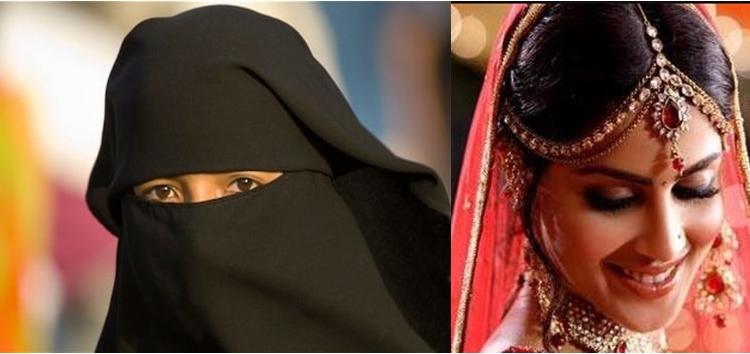
Fertility has fallen sharply across India's religious communities. The average Hindu woman now has 1.9 children, down from 3.3 about three decades ago. Muslim fertility has also declined, and the gap between the two groups has narrowed, which is the trend the report highlights.
|
Measure |
Muslims |
Hindus |
|---|---|---|
|
Projected fertility, 2025-30 (children per woman) |
2.3 |
1.8 |
|
Median age, 2020 |
24 |
29 |
|
Replacement level |
About 2.1 |
About 2.1 |
The remaining difference is about half a child per woman. That is enough, combined with the younger age profile, to leave Muslim population growth faster than Hindu growth for decades, but it is a much smaller edge than the headline growth figure might suggest.
India in the global picture: from third to second
In 2020, India had the world's third-largest Muslim population, behind Indonesia (239 million) and Pakistan (227 million). By 2070 the report projects India at second place with 334 million, behind Pakistan at 461 million. India would then hold about 9.2% of the world's Muslims.
Globally, the Muslim population is projected to grow by about 80% between 2020 and 2070, compared with 11% for everyone else, reaching roughly 3.6 billion or 36% of the world's people. Muslims are expected to overtake Christians as the largest religious group by 2035.
The global driver is the same one at work in India: a young age profile. Worldwide, the report finds Muslims average 3.1 children per woman against 2.0 for non-Muslims, so India's Muslim fertility of 2.3 is well below the global Muslim average, and the growth there is slower than the worldwide figure of 80%.
How to read the numbers: projections, not predictions
The figures come from a cohort-component model that starts from 2020 estimates drawn from censuses and surveys and ages each group forward year by year. It covers 201 countries and territories and builds on the United Nations' 2024 population estimates, plus data on religious switching and migration.
Pew's authors stress that the results are not predictions. The model assumes migration and religious switching continue at recently observed levels, applies the same death rates to all religious groups within a country, and does not account for wars, epidemics, disasters or major economic and social shifts.
Three points help put the 57% figure in context:
- It is a growth figure for a smaller base, so it adds 121 million people over 50 years, against about 176 million added to the Hindu population.
- Even on these projections, Hindus remain about three-quarters of India's population in 2070.
- Small changes in fertility, as with the long fall already seen among Hindus, can move long-range projections noticeably, so the numbers are best read as a range of plausible outcomes.
Frequently asked questions
How much will India's Muslim population grow by 2070? From 213 million in 2020 to a projected 334 million, an increase of about 57%.
Why will it grow if Muslim fertility is falling? Because the population is young. A larger group of young people enters childbearing age, and fertility of 2.3 children per woman is still above the replacement level of about 2.1.
What is the fertility rate of Muslim and Hindu women in India? Pew projects 2.3 children per Muslim woman and 1.8 per Hindu woman for 2025-30.
What share of India's population will be Muslim in 2070? About 20%, up from 15% in 2020. Hindus are projected at 76%, down from 79%.
Will India have the second-largest Muslim population in the world? Yes, on these projections, behind Pakistan, moving up from third place in 2020.
Is this a forecast? No. Pew describes the numbers as projections based on current trends and assumptions, not predictions.
© Copyright 2026. All Rights Reserved. Powered by Vygr Media.