 By
By 
India has witnessed its first major fuel price hike in nearly four years, with petrol and diesel prices rising by around Rs 3 per litre and CNG becoming costlier by Rs 2 per kg across several cities. The move comes after weeks of mounting pressure on oil marketing companies (OMCs), which were reportedly losing nearly Rs 1,600 crore every day as global crude oil prices surged following the escalating Iran conflict and disruptions in the Strait of Hormuz.
The increase marks a significant shift in the government’s pricing approach after months of trying to shield consumers from the impact of soaring international crude prices. However, analysts say the latest hike is only a partial correction and further increases may still be on the table if geopolitical tensions continue.
Why Fuel Prices Were Raised Now
The immediate trigger behind the hike has been the prolonged conflict in West Asia, particularly the Iran war and disruptions in the Strait of Hormuz — one of the world’s most critical oil shipping routes. The tensions severely affected global energy supply chains and pushed crude oil prices sharply higher. India’s crude basket reportedly climbed from around $69 per barrel before the conflict to as high as $113-$114 per barrel in recent weeks.
The surge in crude prices dramatically increased the cost of importing and refining fuel for India’s state-run OMCs, including Indian Oil Corporation (IOC), Bharat Petroleum Corporation Limited (BPCL), and Hindustan Petroleum Corporation Limited (HPCL). Despite these rising costs, fuel prices at retail pumps remained unchanged for nearly 10 weeks.
That delay created massive “under-recoveries,” where companies sold petrol and diesel below their actual cost. According to reports, cumulative losses for OMCs were projected to cross Rs 1.2 lakh crore in the first quarter of FY27 if prices remained unchanged.
The financial strain became unsustainable. Analysts noted that no company could continue absorbing losses of Rs 1,600 crore per day indefinitely.
Impact of the Strait of Hormuz Crisis
The Strait of Hormuz has emerged as the biggest flashpoint in the ongoing energy crisis. A substantial portion of global crude oil and LNG shipments passes through this narrow maritime route. The conflict-led uncertainty and shipping disruptions in the region led to sharp increases in freight charges, marine insurance premiums, and charter costs for crude shipments.
Data from commodities analytics firm Kpler showed that India’s crude oil stockpiles have already fallen by nearly 15% since the outbreak of the US-Iran war in February. Refiners continued operating at normal processing levels despite reduced imports, gradually drawing down reserves.
The situation has raised concerns about India’s energy security and forced authorities to consider alternative sourcing strategies while also promoting fuel conservation measures.
| State/UT | Petrol Price (Rs/litre) | Price Change |
|---|---|---|
| Andaman & Nicobar | 84.99 | +2.53 |
| Andhra Pradesh | 113.03 | +3.29 |
| Arunachal Pradesh | 93.88 | +3.21 |
| Assam | 101.21 | +2.97 |
| Bihar | 108.55 | +3.01 |
| Chandigarh | 97.27 | +2.97 |
| Chhattisgarh | 103.56 | +3.11 |
| Dadra and Nagar Haveli and Daman and Diu | 95.33 | +2.89 |
| Delhi | 97.77 | +3.00 |
| Goa | 99.76 | +3.19 |
| Gujarat | 97.95 | +3.35 |
| Haryana | 98.95 | +3.00 |
| Himachal Pradesh | 98.31 | +2.93 |
| Jammu & Kashmir | 99.83 | +3.34 |
| Jharkhand | 100.84 | +2.98 |
| Karnataka | 106.21 | +3.25 |
| Kerala | 110.58 | +3.20 |
| Ladakh | 106.05 | +2.88 |
| Lakshadweep | 103.51 | +2.76 |
| Madhya Pradesh | 109.71 | +3.30 |
| Maharashtra | 106.68 | +3.14 |
| Manipur | 102.28 | +3.13 |
| Meghalaya | 98.86 | +2.60 |
| Mizoram | 102.11 | +2.56 |
| Nagaland | 99.97 | +2.28 |
| Odisha | 104.19 | +3.22 |
| Pondicherry | 99.25 | +2.99 |
| Punjab | 101.19 | +2.90 |
| Rajasthan | 107.97 | +2.94 |
| Sikkim | 106.50 | +3.05 |
| Tamil Nadu | 103.67 | +2.87 |
| Telangana | 110.89 | +3.39 |
| Tripura | 100.61 | +3.08 |
| Uttar Pradesh | 97.55 | +2.82 |
| Uttarakhand | 96.23 | +2.68 |
| West Bengal | 108.70 | +3.25 |
Government Had Already Sacrificed Revenue
The Centre had earlier attempted to cushion consumers by sharply reducing excise duties on petrol and diesel. Petrol excise duty was reportedly cut from Rs 13 per litre to Rs 3, while diesel excise duty was reduced from Rs 10 to zero.
Those tax cuts significantly reduced the government’s revenue collections. Reports estimate the Centre was losing nearly Rs 14,000 crore every month due to the duty reduction.
As a result, both the government and the oil companies were simultaneously absorbing the global energy shock. Eventually, the combined burden became too large to sustain.
Fuel Prices in Major Cities
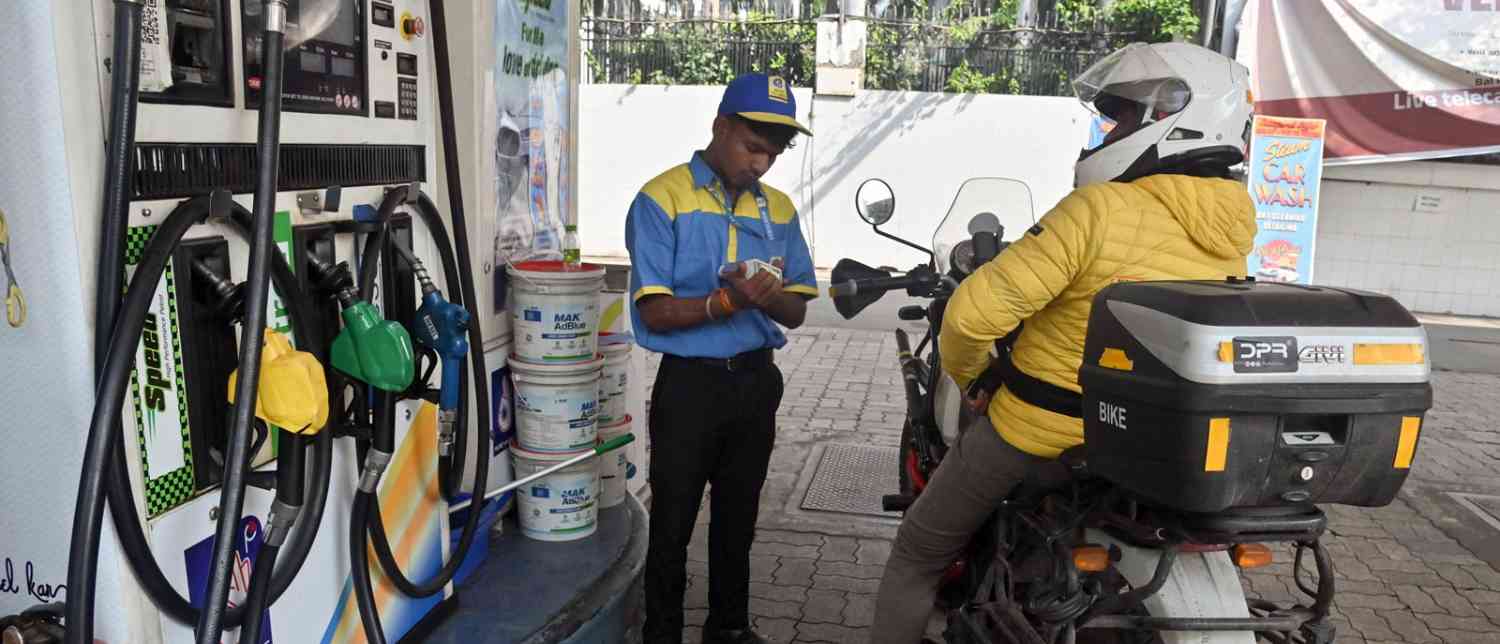
The latest hike has increased petrol and diesel prices differently across cities. Delhi saw an even Rs 3 per litre increase for both fuels, while the sharpest hikes were reported in Kolkata and Mumbai. Diesel prices in Mumbai reportedly rose by Rs 3.11 per litre, while petrol in Kolkata increased by Rs 3.29 per litre.
Following the revision, petrol prices in Delhi touched around Rs 97.77 per litre while diesel rose to Rs 90.67 per litre.
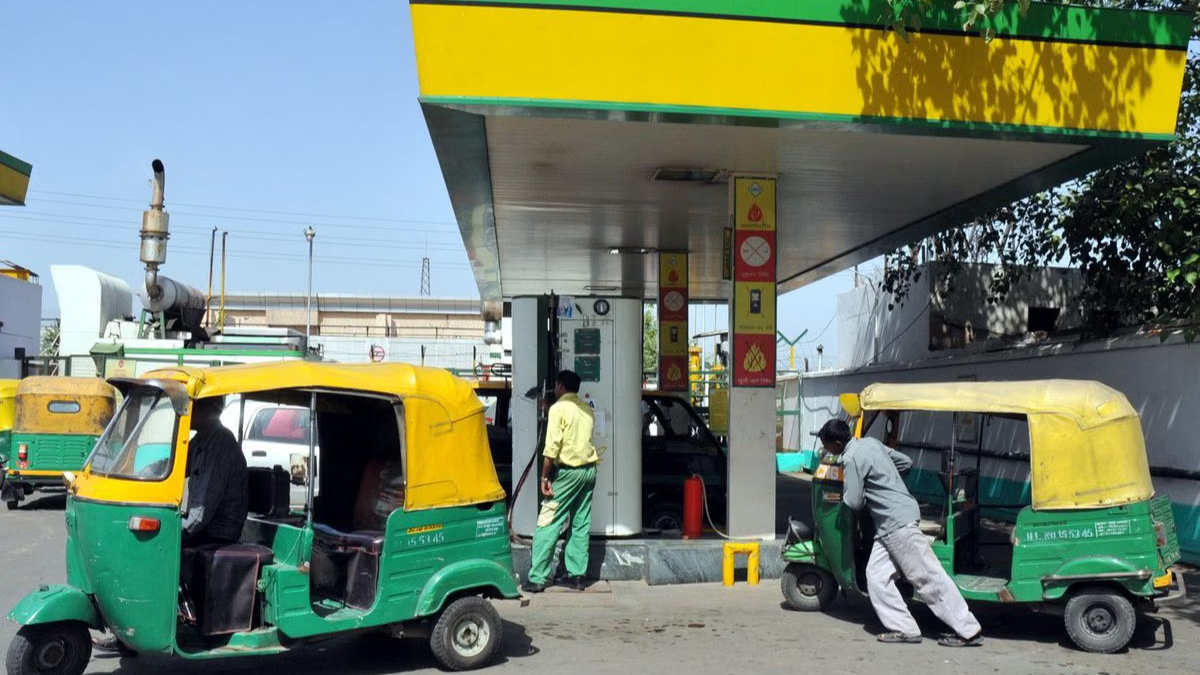
CNG prices were also revised upward by Rs 2 per kg, adding further pressure on household budgets and transportation costs.
| State/UT | Diesel Price (Rs/litre) | Price Change |
|---|---|---|
| Andaman & Nicobar | 80.64 | +2.59 |
| Andhra Pradesh | 100.71 | +3.14 |
| Arunachal Pradesh | 83.28 | +3.06 |
| Assam | 92.50 | +3.04 |
| Bihar | 94.63 | +2.85 |
| Chandigarh | 85.25 | +2.80 |
| Chhattisgarh | 96.55 | +3.16 |
| Dadra and Nagar Haveli and Daman and Diu | 90.91 | +2.97 |
| Delhi | 90.67 | +3.00 |
| Goa | 91.49 | +3.16 |
| Gujarat | 93.73 | +3.46 |
| Haryana | 91.41 | +3.01 |
| Himachal Pradesh | 90.28 | +3.04 |
| Jammu & Kashmir | 88.52 | +3.19 |
| Jharkhand | 95.76 | +3.14 |
| Karnataka | 94.10 | +3.11 |
| Kerala | 99.35 | +3.09 |
| Ladakh | 90.95 | +2.73 |
| Lakshadweep | 98.54 | +2.83 |
| Madhya Pradesh | 94.88 | +3.08 |
| Maharashtra | 93.14 | +3.11 |
| Manipur | 88.15 | +2.92 |
| Meghalaya | 90.12 | +2.40 |
| Mizoram | 90.80 | +2.22 |
| Nagaland | 91.36 | +2.54 |
| Odisha | 95.74 | +3.19 |
| Pondicherry | 89.39 | +2.92 |
| Punjab | 90.97 | +2.88 |
| Rajasthan | 93.23 | +2.74 |
| Sikkim | 93.40 | +2.85 |
| Tamil Nadu | 95.25 | +2.86 |
| Telangana | 98.96 | +3.26 |
| Tripura | 89.50 | +2.95 |
| Uttar Pradesh | 90.82 | +2.96 |
| Uttarakhand | 91.35 | +2.91 |
| West Bengal | 95.13 | +3.11 |
Ripple Effect on Inflation and Daily Life
Economists and market observers believe the fuel price hike will have widespread inflationary consequences across the economy. Petrol and diesel are core transportation fuels, and any increase in their prices directly impacts logistics, freight movement, agriculture, public transport, and manufacturing.
As transport costs rise, prices of vegetables, milk, groceries, consumer goods, and food deliveries are expected to increase as well.
Daily commuting costs, cab fares, intercity travel, and goods transportation are likely to become more expensive in the coming weeks, potentially affecting middle-class and lower-income households the most.
The hike also risks reigniting inflationary pressures at a time when the Reserve Bank of India has been closely monitoring price stability.
Weak Rupee Added to the Pressure
Another major factor behind the price revision has been the sharp weakening of the Indian rupee. Reports showed the rupee hovering near record lows of around 95.95 against the US dollar, making crude imports even more expensive for India, which imports the majority of its oil needs.
With crude oil globally traded in dollars, every fall in the rupee increases India’s import bill and widens the cost burden on refiners and marketers.
Why the Rs 3 Hike May Not Be Enough
Despite public concern over rising fuel prices, analysts say the latest increase only partially offsets the actual losses suffered by OMCs.
According to market estimates, every Re 1 per litre increase in retail margins could boost EBITDA by around 17% for HPCL, 15% for BPCL, and 12% for IOC.
However, experts warned that further hikes may still be needed if crude prices remain elevated. LPG under-recoveries are also adding pressure on company profitability, with HPCL reportedly losing nearly Rs 670 per LPG cylinder in May 2026 compared to Rs 84 in the fourth quarter of FY26.
Analysts also expect the latest increase to be “the first of several” if the Middle East crisis continues.
Oil Companies Under Market Pressure
Interestingly, the fuel price hike did not boost investor confidence in oil marketing companies. Shares of IOC, BPCL, and HPCL reportedly fell up to 3% after the announcement, as investors viewed the hike as insufficient relative to the scale of losses being absorbed by the companies.
The broader stock market also remained under pressure due to rising oil prices. Brent crude climbed above $109 per barrel during the week, while Indian benchmark indices Sensex and Nifty logged weekly losses amid concerns over inflation, foreign outflows, and higher import costs.
Government Appeals for Fuel Conservation
As the crisis deepens, the government has also started encouraging fuel-saving measures. Reports suggest authorities are promoting work-from-home arrangements and limiting unnecessary travel in an attempt to reduce fuel demand and control the import burden.
At the same time, Indian Oil officials have assured the public that there is no immediate fuel shortage. Company executives described the price rise as “very small” and said refineries are operating at over 100% capacity to ensure uninterrupted supply across the country.
What Happens Next
Much now depends on how the geopolitical situation unfolds in West Asia. If tensions ease and crude prices cool down, India may avoid additional hikes. However, if the Strait of Hormuz disruptions continue and global oil prices remain above $100 per barrel, consumers could face further increases in petrol, diesel, and LPG prices in the months ahead.
For now, the Rs 3 increase represents a balancing act between protecting consumers and preventing deeper financial damage to India’s oil sector. But with fuel costs influencing nearly every aspect of the economy, the impact of the latest hike is expected to be felt far beyond petrol pumps.
With inputs from agencies
Image Source: Multiple agencies
© Copyright 2026. All Rights Reserved. Powered by Vygr Media.