 By

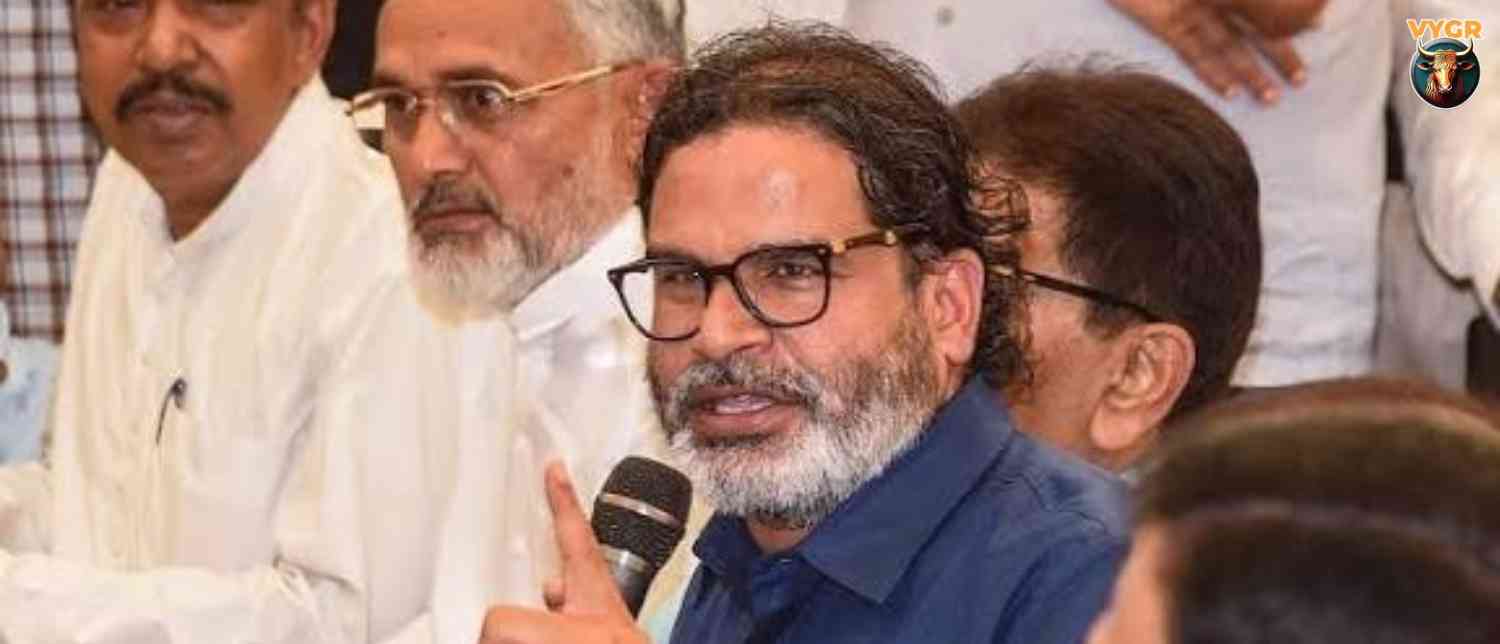
If there is one thing Prashant Kishor is known for, it is saying things that other politicians avoid. This weekend, he did it in the heart of Mithila, standing before a Brahmin gathering and asking them an uncomfortable question: why has your community’s political fortune declined, and what role did your own choices play?
The remarks have since gone viral and set off a political argument. Let’s break down what he said, what’s his own framing and what isn’t, and why it matters.
What happened
Jan Suraaj Party founder Prashant Kishor was speaking at a Brahmin community event in Mahinam village in Bihar’s Darbhanga district, in the Mithila region. A video of the speech has circulated widely, with reports dated November 8.
What Kishor said
According to reports of the speech, Kishor made several points.
On the past. He said the community’s ancestors had held positions such as legislator and MP during the Congress era. In his argument, success in a democracy comes down to the number of votes a candidate can gather.
On Muslim support. He argued that Muslims made up roughly 20 per cent of the potential vote in the equation he described, and that sections of the Brahmin community had weakened their electoral prospects by moving to the BJP and by targeting Muslims on social media. One of the lines attributed to him, in paraphrase, was that the community could not increase its population, and the Muslim vote had been part of what helped it win.
On the community’s condition. He questioned why living conditions had not improved even though the community had elected representatives for the past 15 years.
On the way forward. He urged the audience to prioritise education, knowledge and social responsibility, saying books and learning are a greater source of strength than physical power. He also voiced concern about the growing divide between Brahmins and Muslims.
What’s fact and what’s framing?
This is the key distinction in the story.
| Item | Status |
|---|---|
| Kishor spoke at a Brahmin event in Mahinam village, Darbhanga | Reported |
| He criticised sections of the community for BJP alignment and social media remarks | Reported, as his characterisation |
| Muslims account for about 20 per cent of the “vote share” | Kishor’s own framing, not a verified figure for any constituency |
| The community’s living conditions haven’t improved despite 15 years of elected representatives | Kishor’s claim |
| Brahmin support for the BJP caused a loss of Muslim votes | Kishor’s political argument, not an established finding |
| He said all Brahmins behave this way | Not reported. Reports describe “sections of” the community |
Because the story is based on a viral video and reports of it, the exact words and full context may differ from the summaries. It’s worth checking the video itself before quoting anything directly.
What is he trying to say?
Reading the speech charitably, Kishor is making a political argument rather than a religious one: that caste politics has pushed an influential community into dependence on one party, and that this has cost it numbers, bargaining power, and development. It’s also a message to Muslim voters and to others that Jan Suraaj wants to build an alliance outside the established camps.
Critics may read it differently. They could argue that blaming a community for losing votes is divisive, that it generalises about an entire caste, or that a speech like this, delivered at a community event, is aimed at stirring identity politics. Those are possible readings, not reactions I’ve seen reported.
Why it matters in Bihar
Bihar’s politics has long been shaped by social arithmetic, with caste and religion deciding how voters line up. Mithila is a region where Brahmin voters have traditionally been influential, and the BJP has been widely seen as a natural home for many of them. Muslims, in turn, have historically leaned toward other parties. A leader suggesting that Brahmin and Muslim voters have a shared past, and that it can be rebuilt, cuts across that familiar map.
Kishor has pursued Muslim voters before. Reports show he has courted them in other parts of Bihar and has attacked rivals he accuses of betraying them. This speech fits that pattern, but it is unusual for being addressed directly to a Brahmin audience.
What has the reaction been?
At the time of writing, I hadn’t found reactions from the BJP, from other parties or from Brahmin community bodies. The controversy has so far played out mostly on social media, where the video has gone viral and drawn sharp responses on both sides. We will update this article when parties or community groups respond.
What it could mean for Jan Suraaj
The speech tests whether Kishor can speak to rival communities with the same message. If it lands, it could widen his appeal. If it is read as lecturing a community, it risks hardening opposition among people he wants to win over. Which of those happens will depend on how widely the full speech, not just the clipped version, is heard.
What happens next
Expect more political responses over the coming days, from the BJP, from rival parties and possibly from community organisations. Kishor himself may clarify or repeat his remarks. Watch whether the debate turns into a formal complaint or stays on social media, and whether Jan Suraaj builds on the message with events in other parts of Mithila.
© Copyright 2026. All Rights Reserved. Powered by Vygr Media.