
 By
By 
If you've been paying off a home loan, a car loan or a personal loan, here is the news you were hoping not to read: the Reserve Bank of India (RBI) has raised its repo rate by 25 basis points to 5.50 per cent. It is the first increase since February 2023, and the central bank has made it clear this may not be the last one.
Let's break down what happened, why the RBI did it, and what it could mean for your monthly budget.
What the RBI announced
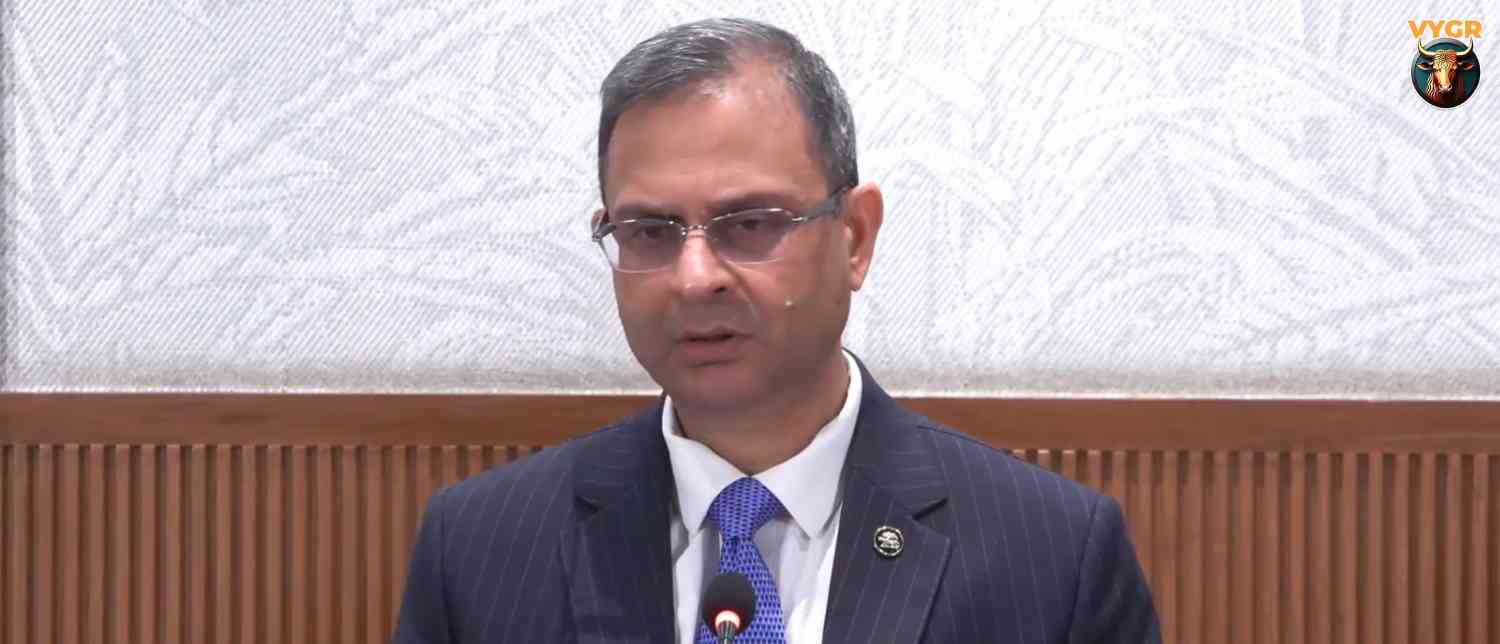
The Monetary Policy Committee (MPC) did two things at once. It raised the rate, and it changed its stance from "neutral" to "calibrated tightening." In plain terms, that is the RBI's way of telling markets that further hikes are possible.
Governor Sanjay Malhotra was fairly direct about it. He said the next move can only be a hike or a pause, depending on how conditions develop. He also said that high-frequency indicators show the economy holding its momentum in the second me slowdown compared wit have reportedh the first.
The committee also revised its forecasts for FY27:
|
GDP growth |
6.7% | 7.1% |
|
Retail inflation |
5.0% | 5.2% |
The decision comes after nearly two years of an accommodative stance. The last hike was in February 2023, when the rate went from 6.25 to 6.50 percent. That makes this the first rise in more than three and a half years.
First, what is the repo rate?
The repo rate is the interest rate at which the RBI lends money to the commercial banks. Think of it as the starting price of money in the economy. When it goes up, banks pay more to borrow, and they usually pass that cost on to customers in the form of higher loan rates. When it falls, borrowing generally gets cheaper.
That is why a decision made in a boardroom in Mumbai can change the number on your EMI statement.
Why did the RBI raise rates?
The answer is that prices are rising from several directions at once, and the RBI doesn't want the pressure to spread further.
Inflation is edging up. Retail inflation was 4.82 per cent in August, above the RBI's 4 per cent medium-term target for a third month in a row. It is still inside the 2 to 6 per cent tolerance band, so there is no emergency. But the directions matters, and the central bank would rather act early than late.
Oil is expensive. Crude oil has moved above $100 a barrels amid geopolitical tensions. For a country that imports most of its oil, that feeds into fuel costs, transport costs and, eventually, the price of almost everything. The West Asia conflict and the Russia-Ukraine war add to the uncertainty.
The monsoon has been unkind. Maharashtra has declared drought in about 265 of its 358 talukas, and Karnataka, Telangana, Andhra Pradesh and Rajasthan have flagged the possibility too. Reservoir levels are around 20 per cent below last year. That raises worries about farm output and the rabi crop, and the possibility of El Niño conditions stretching into 2027 is another risk to food prices.
Global interest rates are high. The US Federal Reserve recently raised its policy rate by 25 bps to 3.75 to 4 per cent, and US benchmark yields have climbed sharply. India's 10-year bond yield is up 25 bps in a month to 7.21 per cent. When the gap between Indian and US rates narrows, foreign investors can find India less attractive, and the report says they have been pulling money out. That puts pressure on financial markets and the rupee, which makes the RBI's response more important.
What the rate hike means for your EMI
This is the part most people care about, so let's be practical.
Who is affected first: borrowers whose loans are tied to an external benchmark such as the repo rate. When the repo rate rises, these loans are usually repriced fairly quickly. Check your loan agreement or ask your lender for the reset date.
Who may see a slower change: loans linked to the MCLR (marginal cost of funds-based lending rate). Banks have more flexibility here, since the change depends on their funding costs, liquidity and deposit mobilisation. So the increase may come later, or be smaller.
Who is not affected right now: if you have a genuinely fixed-rate loan, your rate stays the same until the term ends.
Here is a rough idea of what a 0.25 percentage point increase could mean. These figures are our own illustrative calculations, not from the report, and assume the full increase is passed on:
| ₹50 lakh home loan, 20 years | 8.50% to 8.75% | About ₹800 more per month |
| ₹25 lakh home loan, 15 years | 8.50% to 8.75% | About ₹370 more per month |
On the ₹50 lakh loan, that works out to roughly ₹1.9 lakh extra over the full 20 years. It's not a catastrophe, but it adds up, and further hikes would add more. Your own number will depend on your loan, your lender and your reset date.
What it means for savers
There is some good news. Deposit rates could rise a little as banks look to attract funds. How much they move depends on liquidity and funding conditions, so don't expect an overnight jump. Still, anyone who has watched high retail inflation eat into their savings will welcome the possibility of better returns on fixed deposits.
What borrowers can do now?
None of this is financial advice, but there are a few sensible questions to ask yourself:
- Check how your loan is linked. Find out whether it is tied to the repo rate, the MCLR or a fixed rate, and when it resets.
- Ask your lender about options. Many lenders let you choose between a higher EMI and a longer tenure when rates rise. Compare the total interest cost before choosing.
- Think about prepayment. If you have spare cash, even a small part-prepayment can reduce the interest you pay over the loan's life.
- Hold off on new borrowing if you can. If another hike follows, new loans could get pricier.
Inflation risks are spreading
The RBI's concern is not just about vegetable prices. The report says price pressure is spreading beyond food and perishables, with energy costs, food inflation and weather disruption all playing a part.
Analysts quoted in the report expect retail inflation to peak at around 6 per cent in the third quarter and average about 5 per cent in FY27. Economists also point to a widening gap between consumer and wholesale inflation, as higher input costs gradually work their way through farm and non-farm sectors. If inflation stays above target, policy could stay tight for longer.
The economy is strong, and that is part of the story
This hike is happening while growth is healthy, which is unusual. India's GDP grew 7.8 per cent in the first quarter of FY27, ahead of expectations, helped by consumption, investment and exports. GST collections, vehicle sales and bank credit have also held up well.
Analysts expect FY27 growth of around 7.3 per cent, so the RBI's 7.1 per cent forecast is the more cautious figure. But the risks are real: higher crude prices, elevated global interest rates, geopolitical tensions, trade-policy uncertainty and weather disruption could all weigh on growth in the coming quarters.
What happens next
The RBI is walking a tightrope. It wants to bring inflation under control without slowing growth too much. With the stance now at "calibrated tightening," all eyes will be on the next MPC meeting, and on how quickly banks pass this hike on to customers. We will update this article with bank announcements and any changes to loan and deposit rates.
Quick FAQ
Will my EMI go up?
If your home, car or personal loan has a floating rate linked to the repo rate, it is likely to rise once your lender resets it. Fixed-rate loans are not affected.
What is "calibrated tightening"?
RBI's new policy stance. It signals a willingness to raise rates further if inflation requires it.
When was the last repo rate hike?
February 2023, when the rate went from 6.25 per cent to 6.50 per cent.
Will fixed deposit rates go up?
They could rise a little, depending on how much money banks need to raise.
Is more tightening coming?
The governor said the next move can only be a hike or a pause, so it depends on how inflation and growth develop.
© Copyright 2026. All Rights Reserved. Powered by Vygr Media.