 By

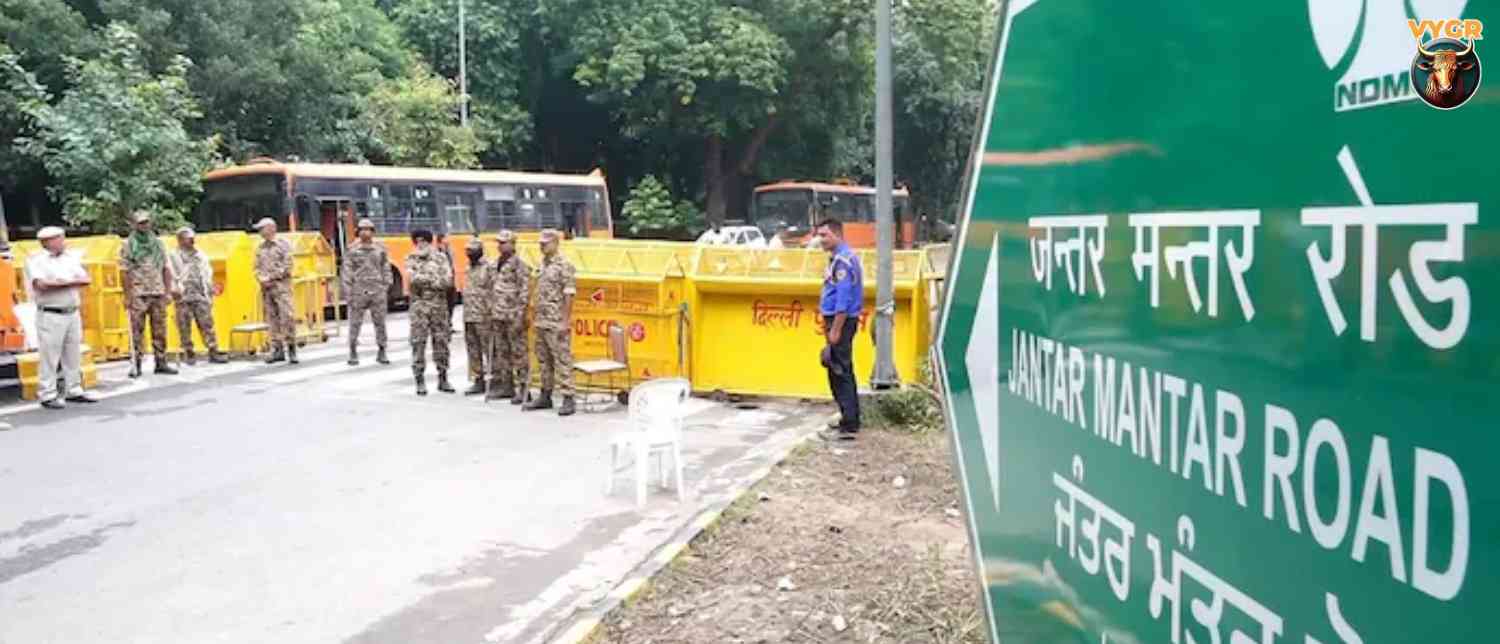
New Delhi: The Supreme Court said on Tuesday that no group can hold on to a protest site for an indefinite period, as it asked the Centre, Delhi Police and other authorities to respond to a plea from Delhi's traders over losses they link to the protests against Chief Election Commissioner (CEC) Gyanesh Kumar.
The bench of Chief Justice of India Surya Kant, Justice Joymalya Bagchi and Justice V. Mohana described the matter as a clash of two constitutional claims: the right to protest on one side, and the right to trade and earn a living on the other. The court said both have to be balanced, with particular care for daily-wage workers, hawkers and small traders who have little cushion when a market goes quiet.
The traders' plea, filed by the Kirana Committee Delhi, is one of a large batch of petitions that has grown out of the October protests. The lead matter is MA Baby v. Union of India and Others (Writ Petition (Civil) No. 1333 of 2026). The court has made no finding on the traders' allegations, and its remarks on Tuesday were oral.
What the bench said about protest sites
The Chief Justice's central point was about fairness between groups. "You cannot occupy a site for all times to come," he said, and then asked where farmers, workers, trade unions and the homeless would go to protest if one group stayed put. A designated site, in the court's view, should be given for a designated period so that others get their turn. Everyone has a right to protest, he said, but that doesn't turn a protest ground into a permanent address.
The bench also made clear it wasn't shutting the door on protest. It said authorities cannot stop demonstrations altogether, and that any order granting or refusing permission should be reasoned and recorded. The right to protest, it noted, is a fundamental right under Article 19(1)(a) and (b), but it sits alongside the right to carry on a trade or business, and the two have to be read together.
On livelihoods, the Chief Justice was direct about who he was thinking of. The court was talking about more than shopfronts, he said, and was thinking of the daily-wage worker whose income stops when the market empties. Ramlila Maidan, he added, is a historic protest site, but it can't be occupied without an end date.
The bench also pushed back on the traders. It directed them to make the organisers of the anti-CEC protests parties to the case, saying it could not decide the dispute properly without hearing those who called the protests.
The traders' case
Senior Advocate Mukul Rohatgi, appearing for the traders, told the court that shops in Connaught Place stayed shut through the festive season and that the area was close to empty. About 50 lakh people live around Ramlila Maidan, he said, and they too have felt the disruption. "Our people are bleeding," he told the bench.
He put the revenue loss at roughly ₹2,000 crore in court. A separate, much larger number comes from the Chamber of Trade and Industry, which says Delhi's businesses lost around ₹14,000 crore between October 1 and November 1. The two figures come from different sources, and the court hasn't tested either.
What the traders want is fairly specific:
- a halt to protests during the festive period, which Rohatgi framed as an "out of the box" pause of about two months;
- a shift of the protest to an alternative site, or a cap on how long a protest can run, so that their right to livelihood isn't infringed;
- a scheme from the government for protest sites in Delhi and other state capitals.
The Chamber of Trade and Industry has separately written to the Delhi Police Commissioner asking that rallies, marches and sit-ins be barred until November 11.
The government's line and the questions from the bench
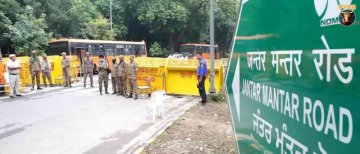
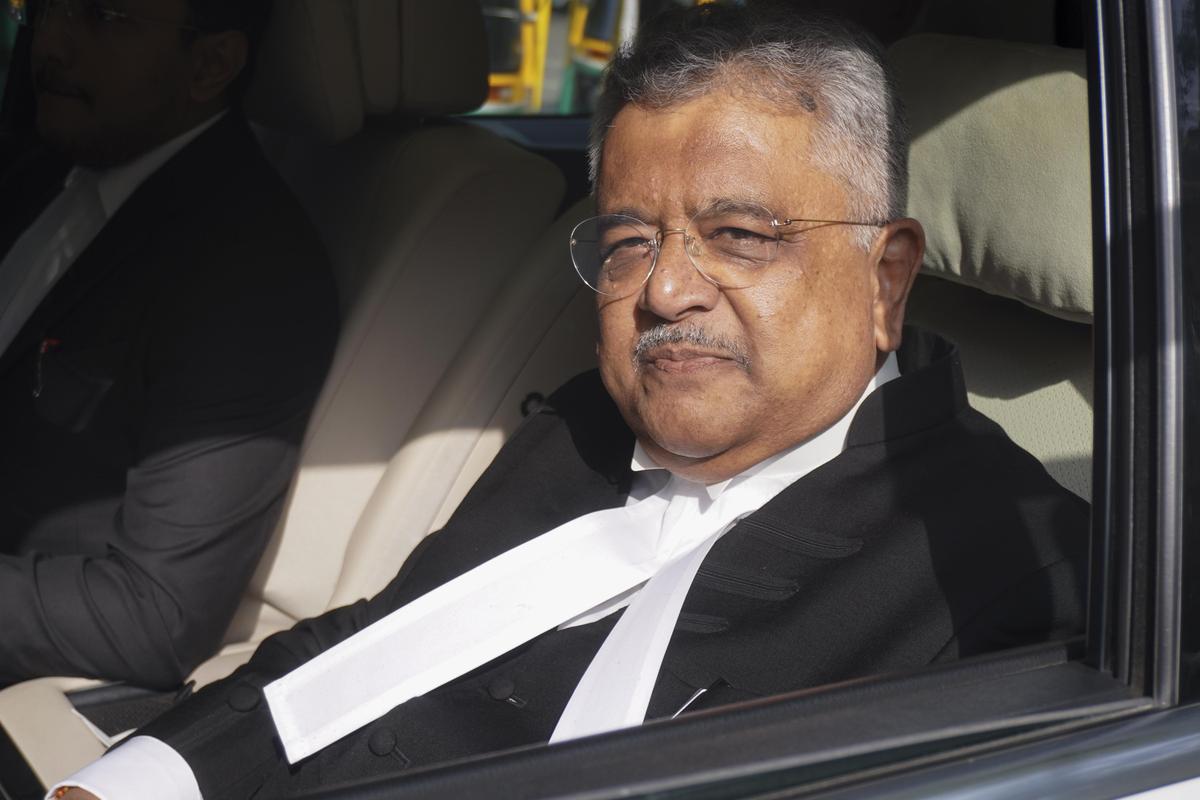
Solicitor General Tushar Mehta backed the idea that protest sites can't be held indefinitely. Jantar Mantar, he said, is a public road and can't be occupied for good, and protesters can't be allowed to march to Parliament or the Supreme Court without permission. He told the court that a protest permitted for one day in July stayed on for 17 days, and that shops were forced to close while some protests turned violent. A protest called without permission, he argued, is a different matter from the use of a designated site.
The bench itself raised doubts about how neatly the losses can be tied to the protests. Justice Bagchi asked whether a fall in sales could be put down to protests alone, pointing out that the wider economy and the State's own barricading of streets could also hurt business. Senior Advocate Arundhati Katju, appearing in the batch, asked in open court whether lack of sales can be pinned on the protests alone.
Senior Advocate N. Hariharan, for protesters, said Ramlila Maidan is itself a notified protest site after Jantar Mantar was relocated, and asked where people are supposed to protest if both are restricted. The traders' side pointed to the mounting cost; the protesters' side pointed to the shrinking space. The bench didn't pick between them on Tuesday.
The rest of the batch: detentions, surveillance and journalists
The traders' plea was only one item in a crowded courtroom. The same bench is dealing with petitions that allege mass detentions, custodial assault, barricading, closure of Delhi Metro stations, internet shutdowns and excessive police action during the October protests. Those are allegations from the petitioners and the court hasn't examined them yet.
Several things moved on Tuesday:
- Nine categories. The bench grouped the connected petitions into nine categories of issues and asked counsel to propose a sequence for arguments and the time they'll need. The Registry has been told not to register fresh petitions unless the Advocate-on-Record certifies that they raise a new and distinct issue.
- Surveillance. Notice was issued on a petition challenging the use of CCTV and facial recognition on protesters. Advocate Prashant Bhushan asked for disclosure of what surveillance was used and under what legal framework. The Solicitor General said only CCTV was used and questioned how privacy could be claimed at a protest in a public place. Justice Bagchi asked what a person's reasonable expectation is when standing in public, and said the court would look at how the State uses the data for identification and investigation.
- Detentions. Senior Advocate Menaka Guruswamy cited about 7,000 detentions and asked whether democracy wasn't bleeding too. The Solicitor General replied that protesters had been removed, not detained, and argued the habeas corpus petitions had become infructuous. Guruswamy countered that release doesn't end the matter.
- Women journalists. Senior Advocate Indira Jaising repeated her request for a Special Investigation Team to probe alleged sexual violence against women journalists. The Union's counter affidavit is now on record, a copy has gone to petitioners' counsel, and the plea will be heard separately on November 23.
- Lawyers. The bench also took note of allegations that internet restrictions got in the way of lawyers reaching court and that some advocates were detained while leaving their chambers.
Background: how the protests reached the Supreme Court
The protests demand the resignation of Chief Election Commissioner Gyanesh Kumar. Protesters say there were irregularities in the Special Intensive Revision (SIR) of electoral rolls and that large numbers of voters were wrongly deleted. Opposition parties, student groups and the Cockroach Janta Party have all joined in at different points. The Supreme Court batch deals with how the protests were policed and managed, and with their effect on the city. It isn't deciding whether the demand for the CEC's resignation is justified.
|
Date |
What happened |
|---|---|
|
Nov 3, 2026 |
Supreme Court issues notice on the traders' plea, says no group can occupy a protest site indefinitely, and orders organisers to be made parties. |
|
Oct 23, 2026 |
Protests resume in Delhi; more than 100 protesters are detained during a march towards the Election Commission's office. |
|
Oct 10, 2026 |
Protests continue in the capital after a call for a march to Jantar Mantar. |
|
Oct 2, 2026 |
Protests at Jantar Mantar on Gandhi Jayanti; hundreds are detained, Metro services are affected. |
|
Late Sep 2026 |
Congress launches a nationwide agitation seeking the CEC's resignation. |
At an earlier hearing, the court declined to restore Jantar Mantar as a protest site straight away, and asked authorities to respond on a large number of related petitions. Tuesday's order on the traders' plea adds a new question to that mix: how long any one group can stay on a site that is meant to be shared.
What happens next
The traders now have to bring the protest organisers on record before the court can take up their plea in full. The Centre, Delhi Police and the other authorities will file their responses, and counsel in the wider batch have been asked to submit how they want the nine categories argued. The women journalists' plea is listed separately on November 23. A date for the traders' plea itself hasn't been confirmed yet.
The court's observations were oral. Until a written order lays down any rule on how long a protest site can be used, the observations are a signal rather than a binding restriction.
Frequently asked questions
What did the Supreme Court say about protest sites? The bench said no group can occupy a protest site indefinitely, because other groups also have a right to protest, and that the right to protest must be balanced with the right to trade and earn a livelihood.
Who is hearing the case? A bench of Chief Justice of India Surya Kant, Justice Joymalya Bagchi and Justice V. Mohana.
Who filed the traders' plea, and what do they want? The Kirana Committee Delhi. It seeks a halt to protests in the festive season, an alternative site or a limit on duration, and a scheme for protest sites.
How much loss do traders claim? Their counsel cited about ₹2,000 crore in court. The Chamber of Trade and Industry puts the loss at about ₹14,000 crore for October 1 to November 1. Neither figure has been tested by the court.
Has the court banned protests in Delhi? No. It issued notice, asked the traders to add the organisers as parties, and said authorities cannot prevent protests altogether.
What is the case about, overall? A batch of petitions arising from the October protests in Delhi against CEC Gyanesh Kumar, covering traders' losses, detentions, surveillance, and alleged police excess.
© Copyright 2026. All Rights Reserved. Powered by Vygr Media.