 By
By 
The recent controversy over the National Council of Educational Research and Training’s (NCERT) Class 8 Social Science textbook has triggered a national debate on how India’s judiciary should be presented to young students. What began as a curricular revision soon escalated into a constitutional flashpoint, drawing sharp reactions from senior advocates, the Supreme Court, and eventually the government itself.
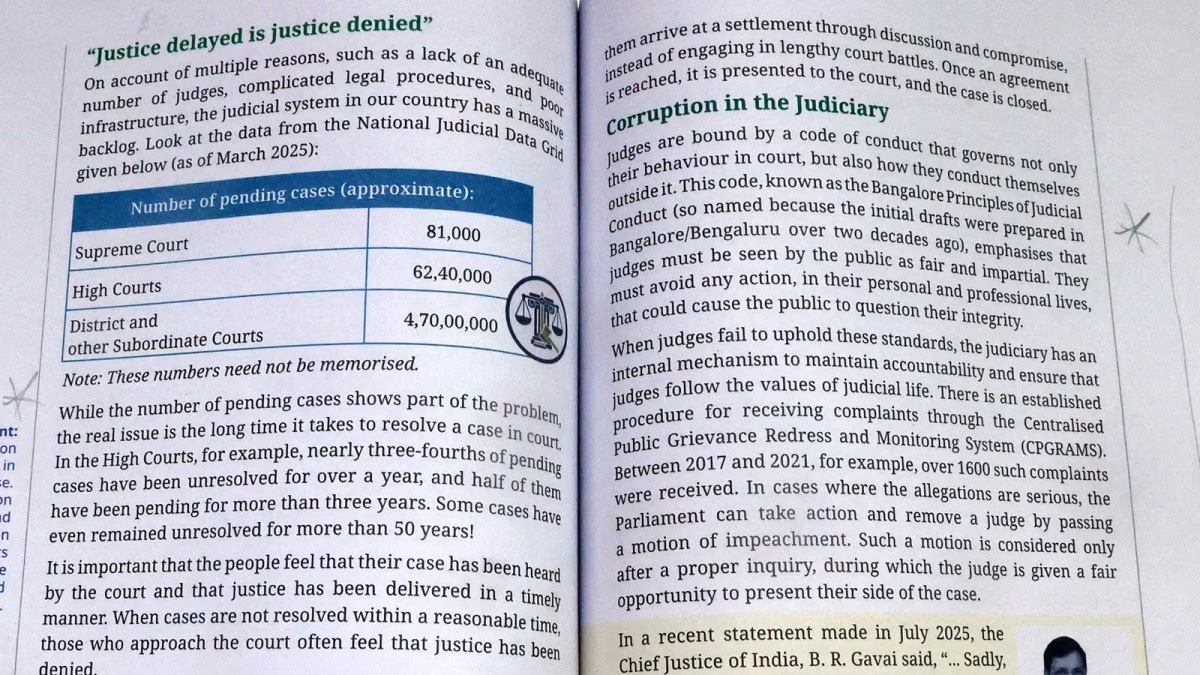
At the heart of the issue was a chapter titled “The Role of the Judiciary in Our Society” in NCERT’s newly released Class 8 textbook, Exploring Society: India and Beyond – Part 2. Unlike previous editions that focused primarily on the structure, hierarchy, and functions of the courts, the revised chapter explicitly listed “corruption at various levels of the judiciary” and a “massive backlog” of cases as key challenges confronting India’s legal system.
A Shift in Tone: What the New NCERT Chapter Said
Earlier editions of the Class 8 civics curriculum concentrated on explaining the three organs of government—legislature, executive, and judiciary—along with the importance of an independent judiciary, citizens’ access to courts, and delays in justice delivery. While they acknowledged systemic challenges such as case pendency, they did not directly frame the judiciary through the lens of corruption.
The revised chapter, however, went further. It cited specific data points to illustrate the scale of judicial backlog: approximately 81,000 pending cases in the Supreme Court, around 62.4 lakh (6,240,000) in High Courts, and nearly 4.7 crore (47,000,000) in district and subordinate courts. These figures, while drawn from publicly available data, were used to underscore structural strain within the justice delivery system.
More controversially, the textbook stated that “people do experience corruption at various levels of the judiciary,” adding that for the poor and disadvantaged, this can further hinder access to justice. It explained that judges are bound by a code of conduct governing both their courtroom behaviour and conduct outside it. It also highlighted internal accountability mechanisms and referred to the Centralised Public Grievance Redress and Monitoring System (CPGRAMS), noting that over 1,600 complaints had been received between 2017 and 2021.
In addition, the book discussed the process of impeachment and removal of judges and quoted former Chief Justice of India BR Gavai, who in July 2025 remarked that instances of corruption and misconduct negatively impact public confidence. The quote emphasised that rebuilding trust requires “swift, decisive and transparent action” and that transparency and accountability are democratic virtues.
Context: Complaints Against Judges
The chapter’s release coincided with a disclosure by the Ministry of Law and Justice that between 2016 and 2025, the office of the Chief Justice of India had received 7,528 complaints against sitting judges of the Supreme Court and High Courts. Responding to a question by MP Matheswaran VS on February 14, the Ministry clarified that complaints against members of the higher judiciary are addressed through an “in-house mechanism” evolved by the judiciary itself.
Although the NCERT textbook did not directly cite this 7,528-complaint figure, the proximity of these developments intensified scrutiny around the narrative being presented to students.
Supreme Court Reacts: “Won’t Allow Anyone to Defame Institution”
The issue reached the Supreme Court after senior advocate Kapil Sibal flagged the matter during court proceedings. He criticised the selective focus on judicial corruption and questioned why similar scrutiny was not directed toward politicians, ministers, public servants, or investigative agencies.
Senior advocate Abhishek Manu Singhvi also objected, calling attention to what he described as “selectivity” in singling out judicial corruption.
Chief Justice of India Surya Kant expressed “grave concern,” stating that High Court judges and members of the Bar were “perturbed.” He underscored that he would not allow anyone to “defame the institution” and indicated that he might initiate suo motu action. Describing the development as appearing to be a “calculated move,” he asserted, “I will not allow anyone to defame the institution. I know how to deal with it. Law will take its course.”
The court’s response signaled the depth of institutional discomfort with the framing of the chapter, even though the numerical data itself was not disputed.
Lawyers’ Concerns: Education or Complication?
Several senior lawyers voiced reservations about introducing the topic in a Class 8 textbook.
Senior advocate Sidhart Luthra argued that school education is meant to educate, not to “complicate young minds.” Civics, he said, has traditionally aimed to familiarise students with governance structures—the roles of Parliament, the judiciary, and the executive—rather than delve into sensitive criticisms at an early stage. According to him, such commentary reflects individual viewpoints and is not suitable for inclusion in a foundational curriculum. While acknowledging that no institution is beyond questioning in a democracy, he emphasised that each institution must be critiqued in appropriate ways and contexts.
Luthra also explained that the judiciary has historically been considered the “weakest” branch because it cannot implement its own orders; it relies on the executive. This institutional vulnerability, he said, justifies powers such as contempt of court, which exist to protect judicial authority.
Supreme Court advocate Pragya Parijat Singh described the chapter’s tone as lacking critical analysis. She argued that while every institution has pros and cons, presenting corruption without equally discussing the judiciary’s transformative role in Indian democracy was incomplete and potentially misleading.
She pointed to landmark cases such as the Kesavananda Bharati judgment, in which the Supreme Court articulated the “basic structure” doctrine safeguarding constitutional principles. The absence of such contextual achievements, she suggested, skewed the portrayal. Singh also highlighted the importance of trust in the criminal justice system, noting that public faith in courts underpins democratic functioning. If young students internalise a negative perception, she warned, it could discourage them from seeking justice or pursuing legal careers.
Advocate Gyananant Singh echoed similar concerns, questioning the academic necessity of the chapter. He argued that such issues may be suitable for news discourse but not for early-stage schooling. Quoting the maxim that justice should not only be done but be seen to be done, he cautioned against creating prejudice in young minds.
Government Steps In: Removal of the Section
Amid escalating criticism, high-level government sources indicated that references to “corruption at various levels of the judiciary” would be removed from the textbook. Sources described the content as inappropriate for schoolchildren and said that “inspirational things” should have been written instead.
The reference to former Chief Justice BR Gavai’s remarks was also deemed inappropriate by sources, particularly in light of the displeasure expressed by the current Chief Justice.
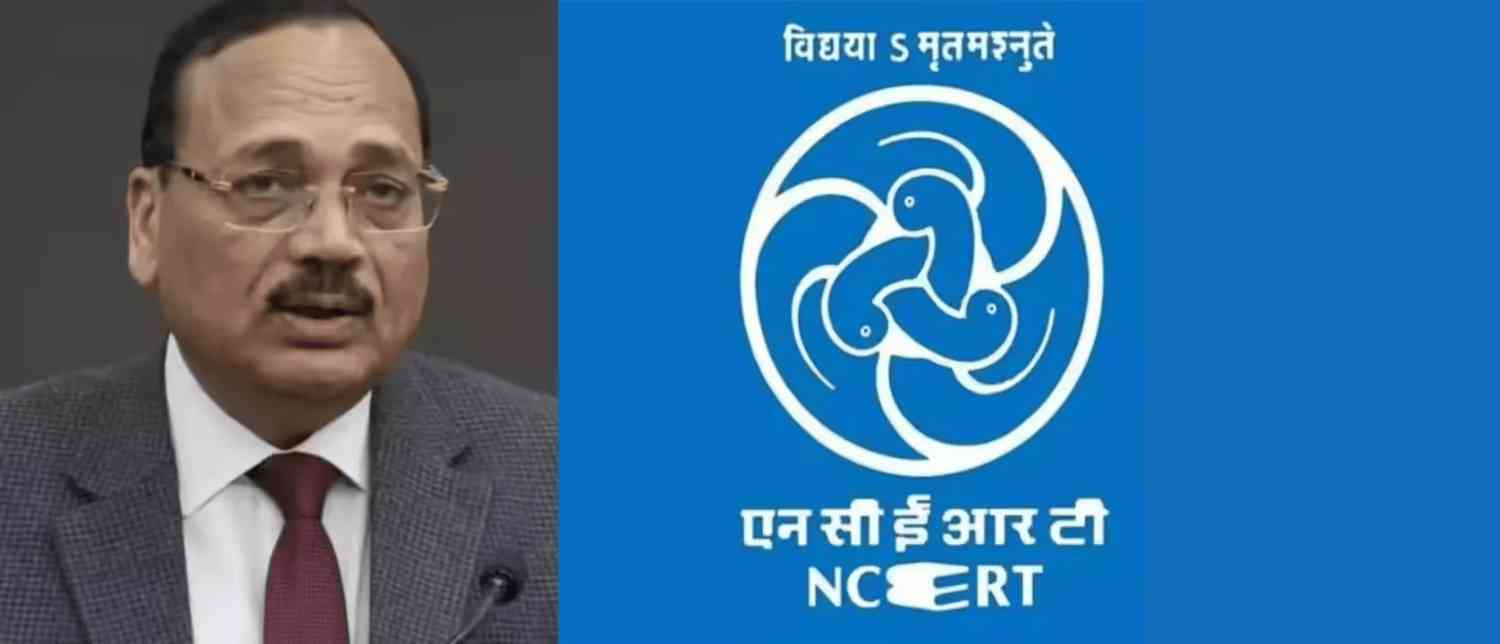
Soon after, NCERT issued a formal apology, calling the inclusion an “error of judgement.” The organisation reiterated that it holds the judiciary in the highest esteem as the upholder of the Constitution and protector of fundamental rights. It clarified that there was no intention to question or diminish the authority of any constitutional body and stated that the chapter would be rewritten in consultation with appropriate authorities before the 2026–27 academic session.
Subsequently, NCERT withdrew the textbook altogether following the Supreme Court’s sharp reaction.
Balancing Transparency and Trust in Civic Education
The controversy raises deeper questions about how democratic institutions should be taught in schools. On one hand, transparency and accountability are core democratic values. The textbook itself cited this principle, drawing from judicial commentary that transparency is essential to restoring public confidence.
On the other hand, critics argue that framing the judiciary primarily around corruption risks undermining trust among impressionable students. Legal experts maintain that while judicial shortcomings must be acknowledged, they should be contextualised within the broader narrative of constitutional safeguards, landmark judgments, and the judiciary’s role in protecting rights.
The debate also highlights tensions between academic freedom and institutional sensitivity. Data about case backlogs and complaint mechanisms is publicly available and routinely discussed in policy forums. Yet, its presentation in a middle-school textbook triggered concerns about tone, selectivity, and developmental appropriateness.
The Road Ahead
As NCERT prepares to revise the chapter, the episode serves as a reminder of the delicate balance required in civic education. Teaching students about governance involves not just outlining structures, but also nurturing informed, critical, and responsible citizens. The question is not whether institutions should be immune from scrutiny—they are not—but how and when that scrutiny should be introduced.
The NCERT textbook controversy underscores that civic education in India remains a contested space where constitutional values, institutional reputation, and pedagogical responsibility intersect. As the revised chapter takes shape for the 2026–27 session, policymakers will need to reconcile transparency with trust—ensuring that young minds are informed without being overwhelmed, and critical without being cynical.
With inputs from agencies
Image Source: Multiple agencies
© Copyright 2025. All Rights Reserved. Powered by Vygr Media.