
 By
By 
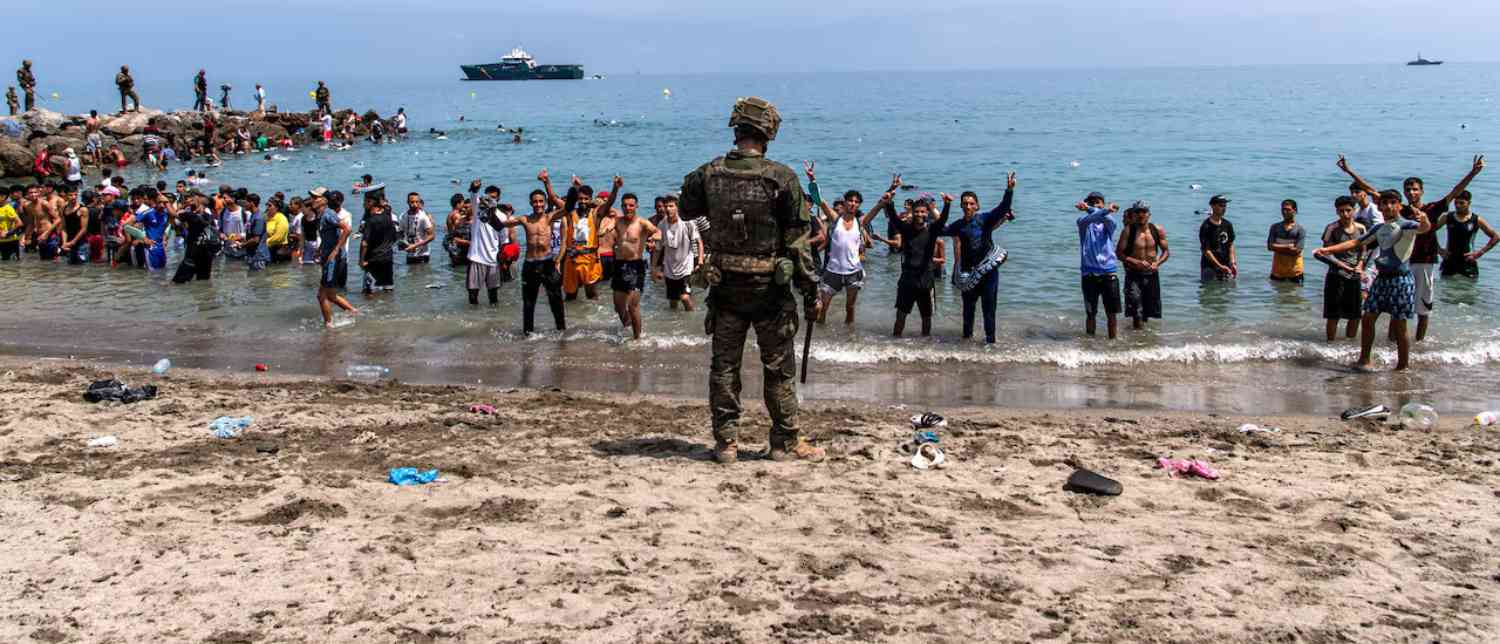
The Spanish enclave of Ceuta, a tiny territory on the northern coast of Africa, has once again become the epicentre of one of Europe's most severe migration emergencies. In an unprecedented surge, an estimated 50,000 to 60,000 migrants crossed from Morocco into Ceuta within just 24 hours, overwhelming local authorities, straining humanitarian resources, and triggering a diplomatic and political crisis that has reverberated across Spain and the European Union.
What began as a sudden collapse of border control quickly escalated into a humanitarian disaster. The perilous sea crossing claimed dozens of lives, with recent reports putting the death toll above 50 and continuing to rise as rescue teams recover bodies from the Mediterranean waters.
A Border Unlike Any Other
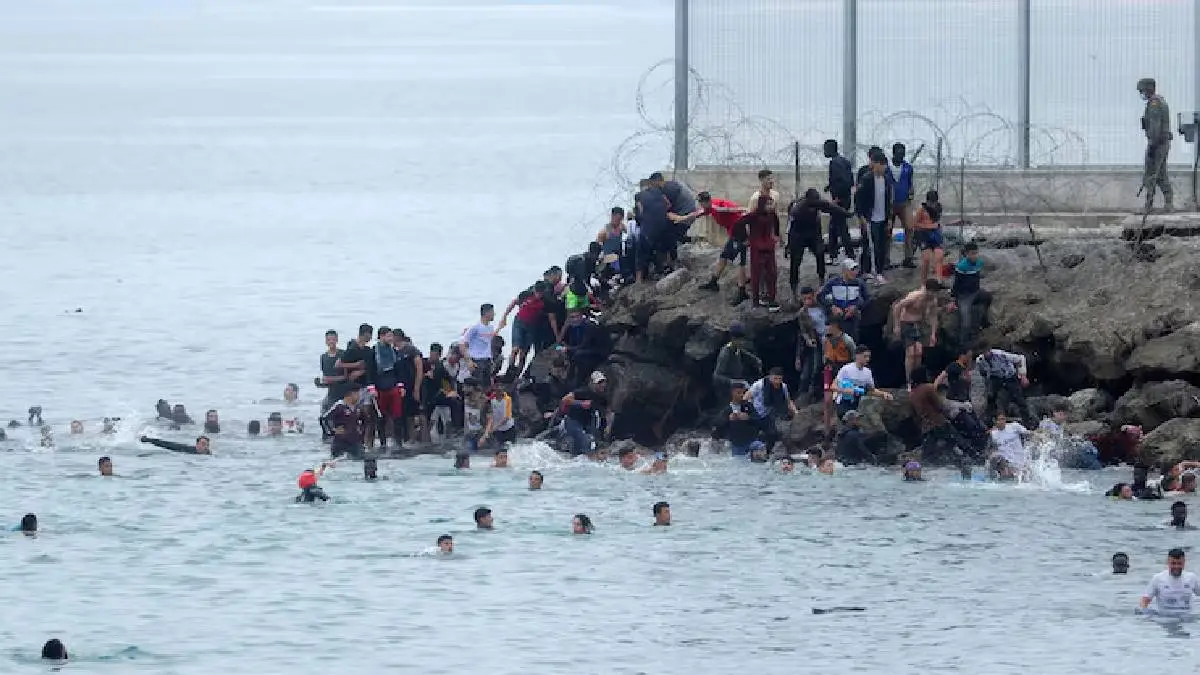
Ceuta is one of Spain's two autonomous cities in North Africa, the other being Melilla. Although geographically surrounded by Morocco, Ceuta is politically part of Spain and, by extension, the European Union. This unique status has long made it one of Europe's most sensitive migration flashpoints.
For thousands of migrants from Morocco and sub-Saharan Africa, reaching Ceuta means stepping onto European soil. While arriving in Ceuta does not automatically grant access to mainland Spain or the Schengen Area, the enclave has historically represented hope for better economic opportunities and protection.
Morocco, meanwhile, continues to claim sovereignty over Ceuta, making the territory a recurring source of diplomatic friction between Rabat and Madrid.
What Triggered the Latest Crisis?
Unlike previous migration surges linked to diplomatic disputes, the latest crisis appears to have been fuelled by a combination of misinformation, human smuggling networks, and legal uncertainty.
According to Spanish authorities, traffickers exploited widespread interpretations of a recent Spanish Supreme Court ruling concerning the treatment of migrants intercepted at sea. Many migrants reportedly believed they would not be immediately returned once they reached Ceuta, prompting thousands to attempt the dangerous crossing simultaneously.
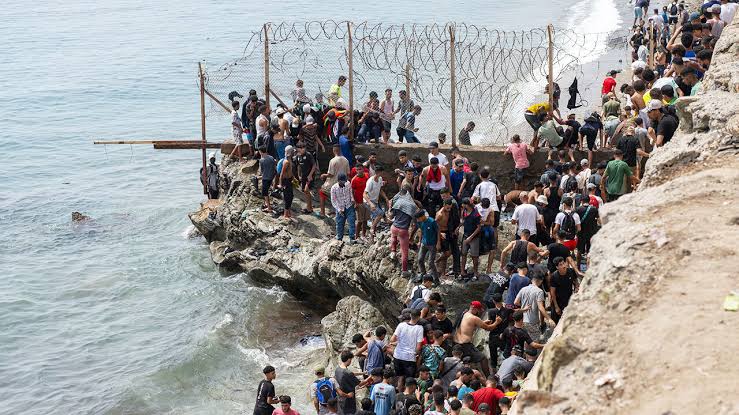
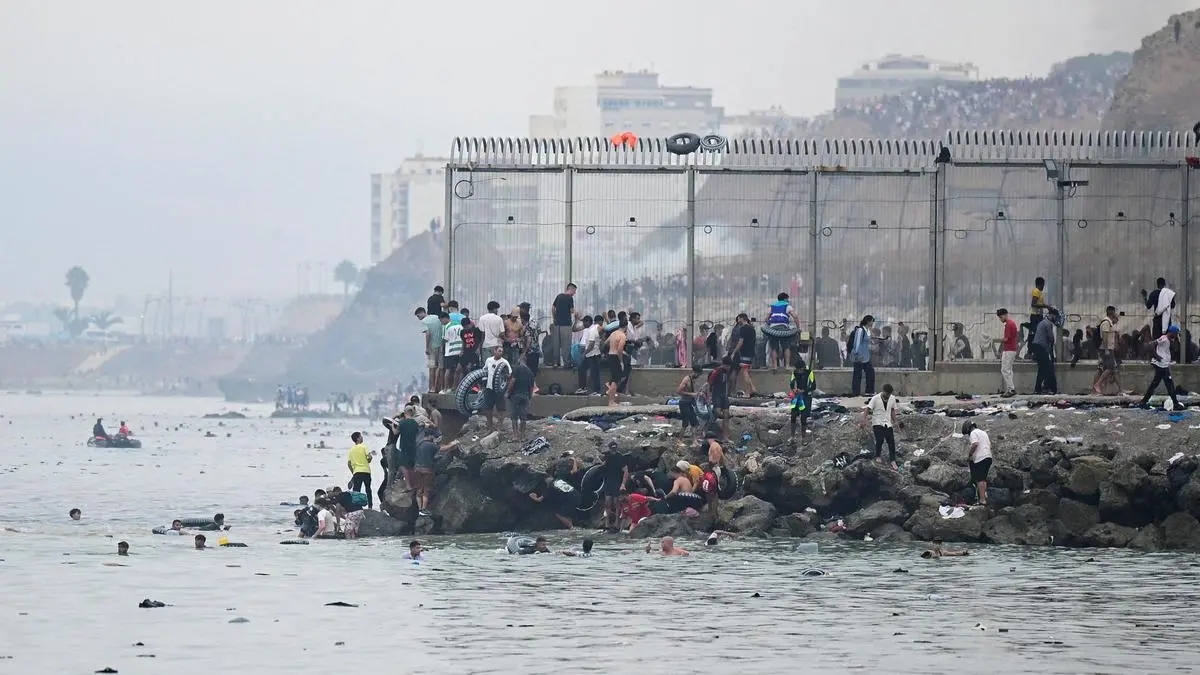
Videos circulating on social media showed crowds climbing around border barriers, swimming across dangerous waters, and arriving exhausted on Ceuta's beaches. Some crossed using inflatable devices while many simply swam for hours against strong currents.
Authorities say these dangerous journeys transformed what began as a migration surge into one of the deadliest border tragedies in recent European history.
Human Cost Mounts
The Mediterranean has long been among the world's deadliest migration routes, but the events in Ceuta have underlined just how quickly humanitarian emergencies can unfold.
Rescue teams have continued searching the coastline as authorities revised casualty figures upward. While earlier reports spoke of 19 or 34 deaths, later official updates confirmed that the toll had climbed beyond 50, with additional victims feared missing.
Survivors described chaotic scenes in which exhausted swimmers struggled against powerful currents. Many reportedly reached Spanish territory dehydrated, injured and in shock.
Local reception centres, originally designed to handle a fraction of these numbers, rapidly exceeded capacity. Emergency shelters, medical teams and humanitarian organisations scrambled to provide food, temporary accommodation and healthcare to new arrivals.
Spain Responds with Security and Relief Measures
Spanish Prime Minister Pedro Sánchez travelled to Ceuta as the crisis unfolded, signalling the seriousness with which Madrid views the situation.
The Spanish government deployed additional police officers, military personnel, drones, rescue boats and specialised civil protection units to reinforce border security and restore order. Authorities also announced emergency humanitarian assistance while beginning the identification and processing of migrants.
Officials insisted Spain would defend both its humanitarian obligations and the integrity of its external borders.
The government also announced plans to strengthen maritime barriers and improve surveillance around vulnerable sections of the coastline in an effort to prevent similar mass crossings in the future.
Thousands Return to Morocco
Despite fears that tens of thousands of migrants would continue onward into mainland Europe, the situation evolved differently.
Within days, a substantial majority of those who entered Ceuta voluntarily returned to Morocco or were assisted in returning after discovering the difficult conditions awaiting them.
Reports indicated that many migrants found themselves without food, shelter or employment opportunities, making prolonged stays impossible.
Spanish officials said the vast majority of migrants remained inside Ceuta and did not reach mainland Spain.
Political Storm Across Europe
The migration surge has quickly evolved into a broader European political issue.
Several European governments questioned Spain's ability to secure one of the European Union's external borders. Some politicians even called for temporary restrictions affecting Spain's participation in the Schengen free-travel area, although European institutions clarified that Ceuta's unique legal status differs from mainland Spain.
European Commission leaders expressed solidarity with Spain while emphasising the need for stronger cooperation on migration management and external border protection.
Within Spain, opposition parties criticised the government's handling of the crisis, while far-right groups organised protests demanding stricter immigration controls.
The Morocco Factor
Relations between Spain and Morocco have frequently influenced migration dynamics around Ceuta and Melilla.
The two countries cooperate extensively on border management, anti-smuggling operations and migration control. However, disagreements over Western Sahara and Morocco's longstanding claims over Ceuta periodically complicate bilateral ties.
Spanish authorities have avoided directly accusing Morocco of facilitating the latest crossings, instead pointing toward organised trafficking networks and confusion surrounding legal developments.
Independent fact-checking organisations have also found no evidence supporting online claims that Morocco deliberately "opened" the border or that Spain's immigration regularisation policies directly triggered the surge.
A Humanitarian Crisis Beyond Numbers
Behind the statistics lie thousands of personal stories shaped by poverty, unemployment, conflict and the hope for a better future.
Many migrants reportedly spent months preparing for the crossing, sharing information through messaging apps and social media. Some even practised swimming specifically for the journey across the narrow but dangerous stretch of sea separating Morocco from Ceuta.
For families, young people and unaccompanied minors, the risks often appeared preferable to the economic hardships they faced at home.
Human rights organisations have repeatedly urged both Spain and Morocco to prioritise the protection of vulnerable migrants while ensuring border security measures comply with international law.
Why Ceuta Matters to Europe
Although Ceuta covers barely 19 square kilometres and has a population of around 85,000, its strategic importance extends far beyond its size.
As one of the European Union's only land borders with Africa, the enclave serves as a testing ground for European migration policy.
The latest events have highlighted persistent challenges confronting European governments:
-
Managing irregular migration while protecting human rights.
-
Combating increasingly sophisticated smuggling networks.
-
Balancing national sovereignty with international humanitarian obligations.
-
Addressing the economic inequalities that continue driving migration.
Experts argue that border enforcement alone cannot resolve these underlying pressures.
Looking Ahead
While immediate tensions have eased following the return of many migrants, the crisis has reopened fundamental questions about Europe's migration strategy.
Spain now faces the dual challenge of rebuilding confidence in border management while maintaining humanitarian standards expected of an EU member state.
Meanwhile, cooperation with Morocco will remain crucial to preventing future emergencies.
The tragedy in Ceuta is a reminder that migration is rarely driven by a single cause. Economic hardship, misinformation, organised trafficking, legal ambiguity and geopolitical tensions can combine rapidly, producing humanitarian disasters with consequences far beyond national borders.
As investigations continue into the deaths and European leaders debate new migration policies, Ceuta once again stands as a symbol of one of the defining challenges facing Europe in the 21st century—a place where geography, politics and human desperation intersect in profoundly consequential ways.
With input from agencies
Image Source: Multiple agencies
© Copyright 2026. All Rights Reserved. Powered by Vygr Media.