
 By
By 
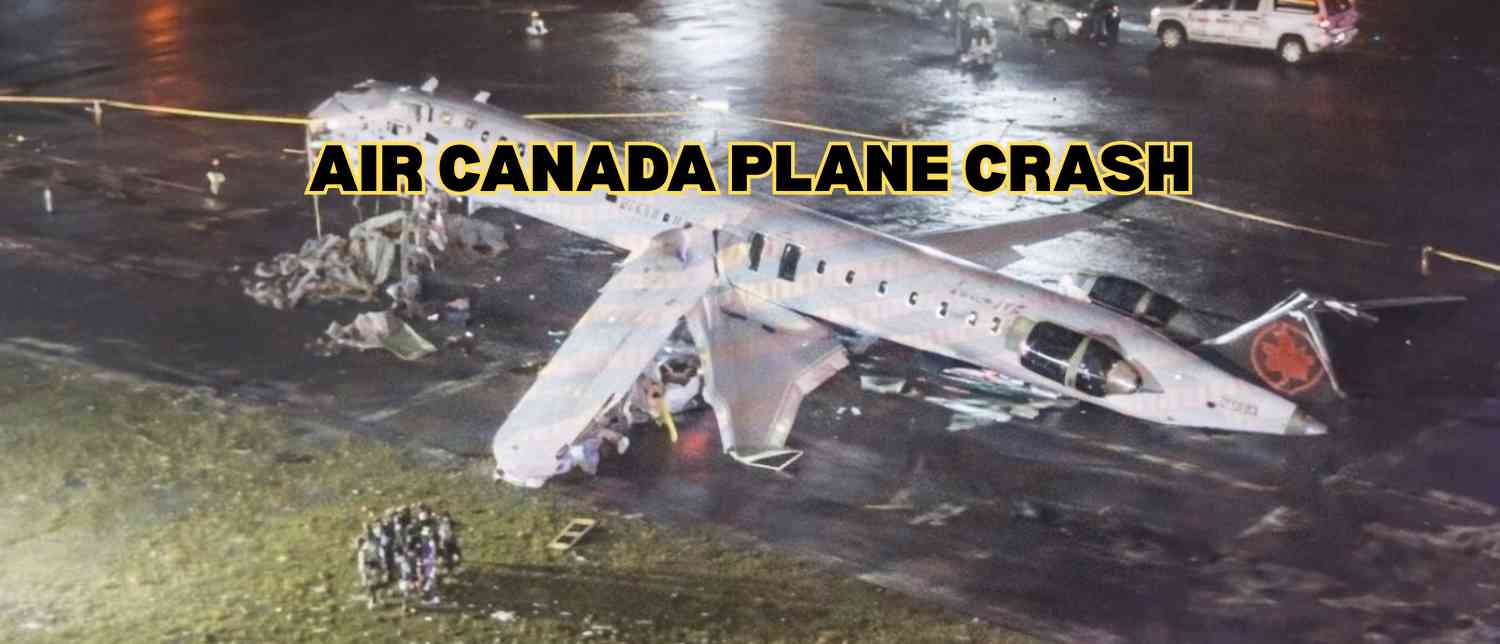
A tragic runway collision at New York’s LaGuardia Airport involving an Air Canada Express aircraft and an airport service truck has raised urgent questions about air traffic coordination, runway safety, and human error. Drawing from multiple reports and emerging investigation details, the incident paints a deeply concerning picture of miscommunication and delayed reactions in a high-risk environment.
The Incident: Collision on the Runway
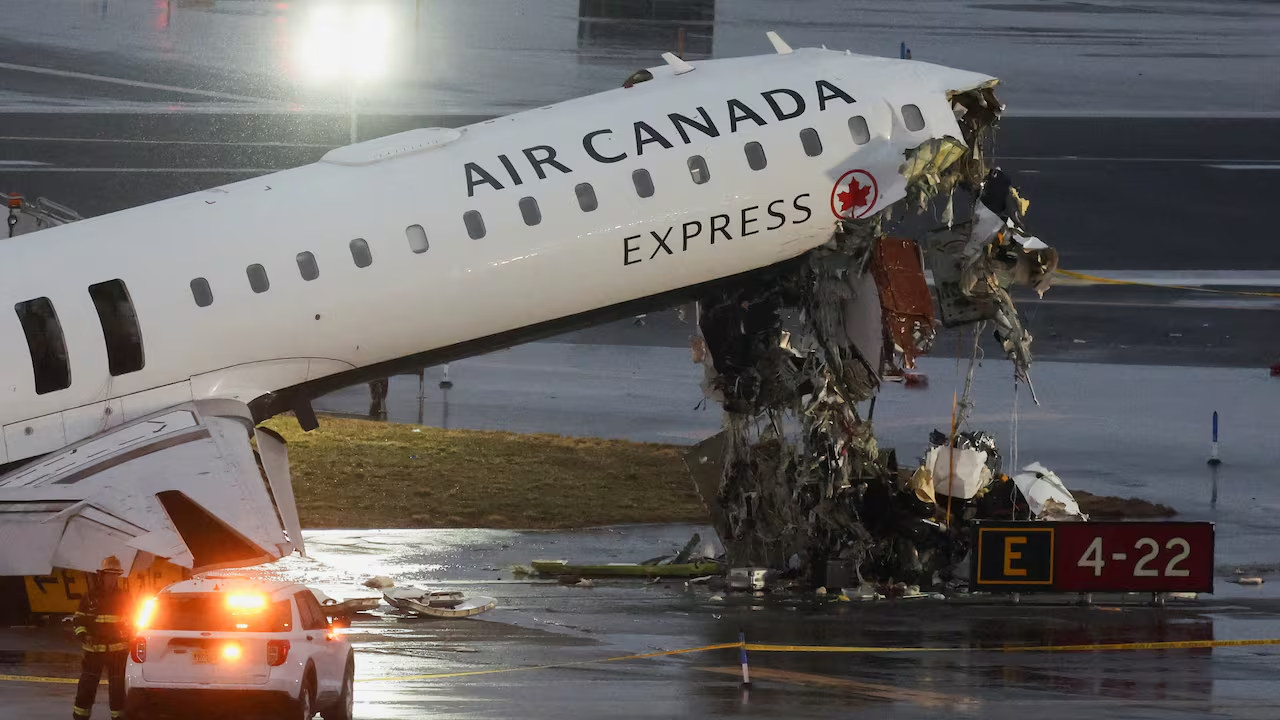
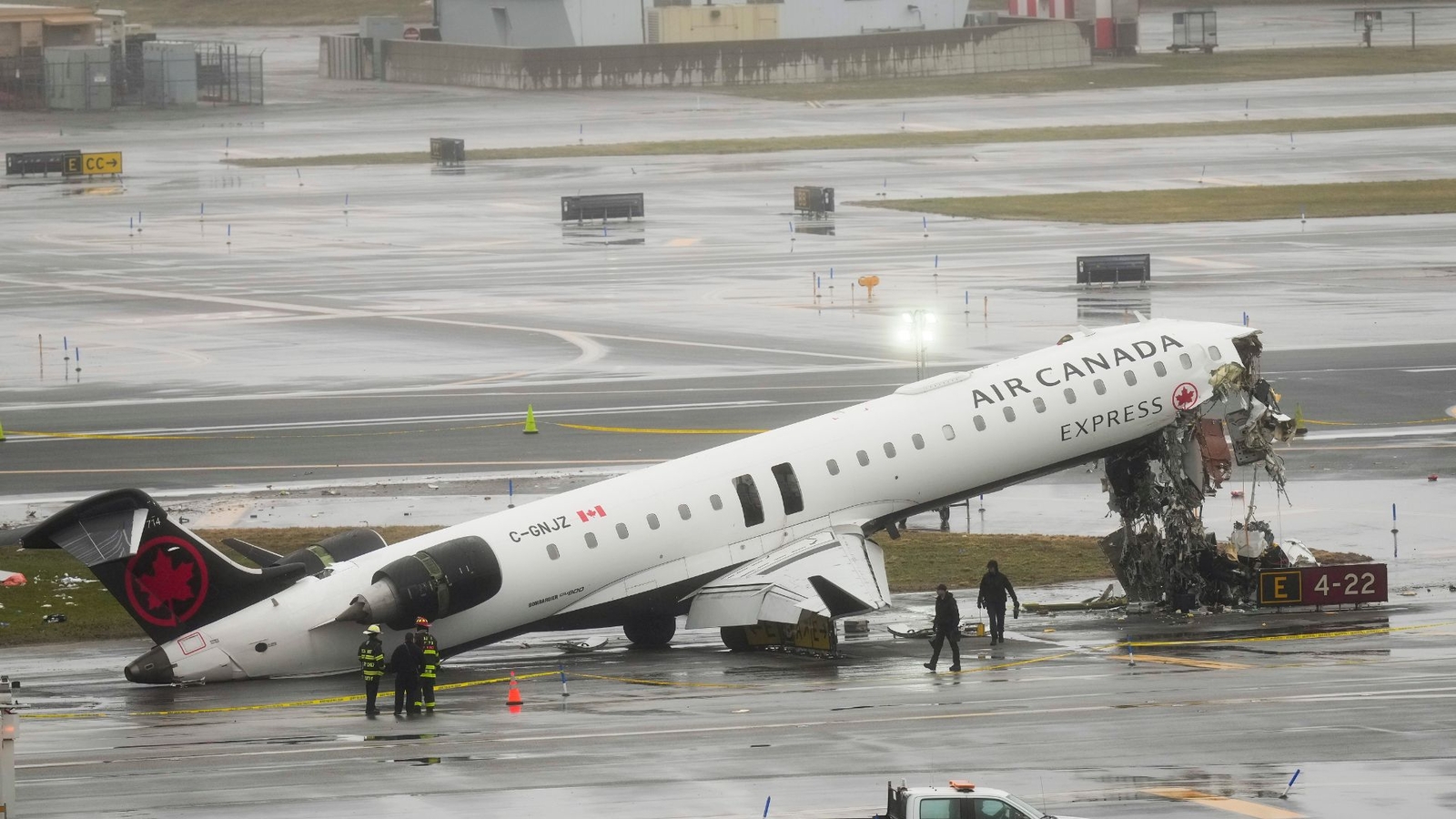
The crash occurred when an Air Canada Express aircraft, preparing for takeoff, collided with an airport vehicle—reported to be a fire or maintenance truck—on the runway. The impact resulted in catastrophic consequences, including fatalities and significant damage to the aircraft.
According to reports, the aircraft had already begun its takeoff roll when it struck the vehicle, which had entered or remained on the active runway. The collision triggered a fire, intensifying the severity of the incident and complicating emergency response efforts.
Air Traffic Control Warnings: “Stop, Stop, Stop”
One of the most alarming revelations from the incident is the role of air traffic control (ATC) communications in the moments leading up to the crash. Audio transcripts indicate that controllers urgently warned the truck driver to halt.
Repeated instructions of “Stop, stop, stop” were issued by ATC as the situation escalated. These warnings suggest that controllers had identified the imminent danger but were unable to prevent the collision in time.
The urgency in the controller’s voice, as captured in audio recordings, underscores how rapidly the situation deteriorated. Despite the warnings, the vehicle remained in the aircraft’s path, leading to the fatal impact.
CCTV footage has captured the exact moment an Air Canada Express aircraft collided with a fire truck at New York’s LaGuardia Airport, offering a clear visual account of the incident that occurred on Monday night.
killing both pilots and injuring two officers; 72 passengers were… pic.twitter.com/bzgrCPTC48— JUST IN | World (@justinbroadcast) March 23, 2026
Cockpit Audio: Final Seconds Before Disaster
Further insight into the tragedy comes from cockpit voice recordings, which captured the final exchange between the pilot and co-pilot. These recordings reveal confusion and alarm in the cockpit as the crew realized the danger ahead.
The pilots reportedly attempted to react in the final seconds, but the proximity of the truck and the speed of the aircraft left little room for evasive action. The sudden nature of the hazard meant that even immediate responses were insufficient to avert the crash.
The cockpit audio highlights the human dimension of the tragedy—trained professionals confronted with an unexpected and rapidly unfolding emergency.
The Vehicle’s Presence on the Runway
A central question in the investigation is how the truck ended up on an active runway during a takeoff sequence. Preliminary findings suggest a breakdown in coordination between ground operations and air traffic control.
In busy airports like LaGuardia, strict protocols govern runway access. Vehicles are typically required to obtain explicit clearance before entering or crossing a runway. The presence of the truck during an active takeoff indicates a possible lapse in these procedures.
Investigators are examining whether the driver misunderstood instructions, failed to hear warnings, or entered the runway without proper clearance. Another possibility being explored is whether there was confusion in communication channels or overlapping instructions.
NTSB Investigation Underway
The US National Transportation Safety Board (NTSB) has launched a full-scale investigation into the crash. The agency is focusing on several key aspects:
-
Air traffic control communications: Reviewing transcripts and audio to determine whether instructions were clear and timely.
-
Runway operations: Examining how the vehicle gained access to the runway and whether protocols were followed.
-
Human factors: Assessing decision-making by both the vehicle operator and the flight crew.
-
Aircraft systems and performance: Evaluating whether the aircraft’s braking or abort systems were engaged and if they functioned properly.
-
Airport procedures: Investigating whether systemic issues or procedural gaps contributed to the incident.
The NTSB is also analyzing radar data, surveillance footage, and black box recordings to reconstruct the sequence of events with precision.
Eyewitness and Video Evidence
Video footage of the crash has surfaced, providing a stark visual account of the collision. The footage shows the aircraft accelerating down the runway before striking the truck, followed by a burst of flames.
Eyewitnesses described a loud explosion and immediate fire, with emergency crews rushing to the scene. The intensity of the impact and subsequent fire highlights the dangers posed by runway incursions, even at ground level.
The visuals reinforce the timeline suggested by ATC audio—there was little time between the realization of danger and the actual collision.
Runway Incursions: A Persistent Risk
This incident underscores the ongoing risk of runway incursions—situations where unauthorized aircraft, vehicles, or people are present on a runway.
Despite advancements in aviation safety, runway incursions remain a global concern. Factors contributing to such incidents often include:
-
Miscommunication between pilots, controllers, and ground staff
-
Complex airport layouts
-
High traffic volumes
-
Human error and fatigue
LaGuardia, known for its congestion and tight operational environment, presents additional challenges that require heightened vigilance.
Emergency Response and Aftermath
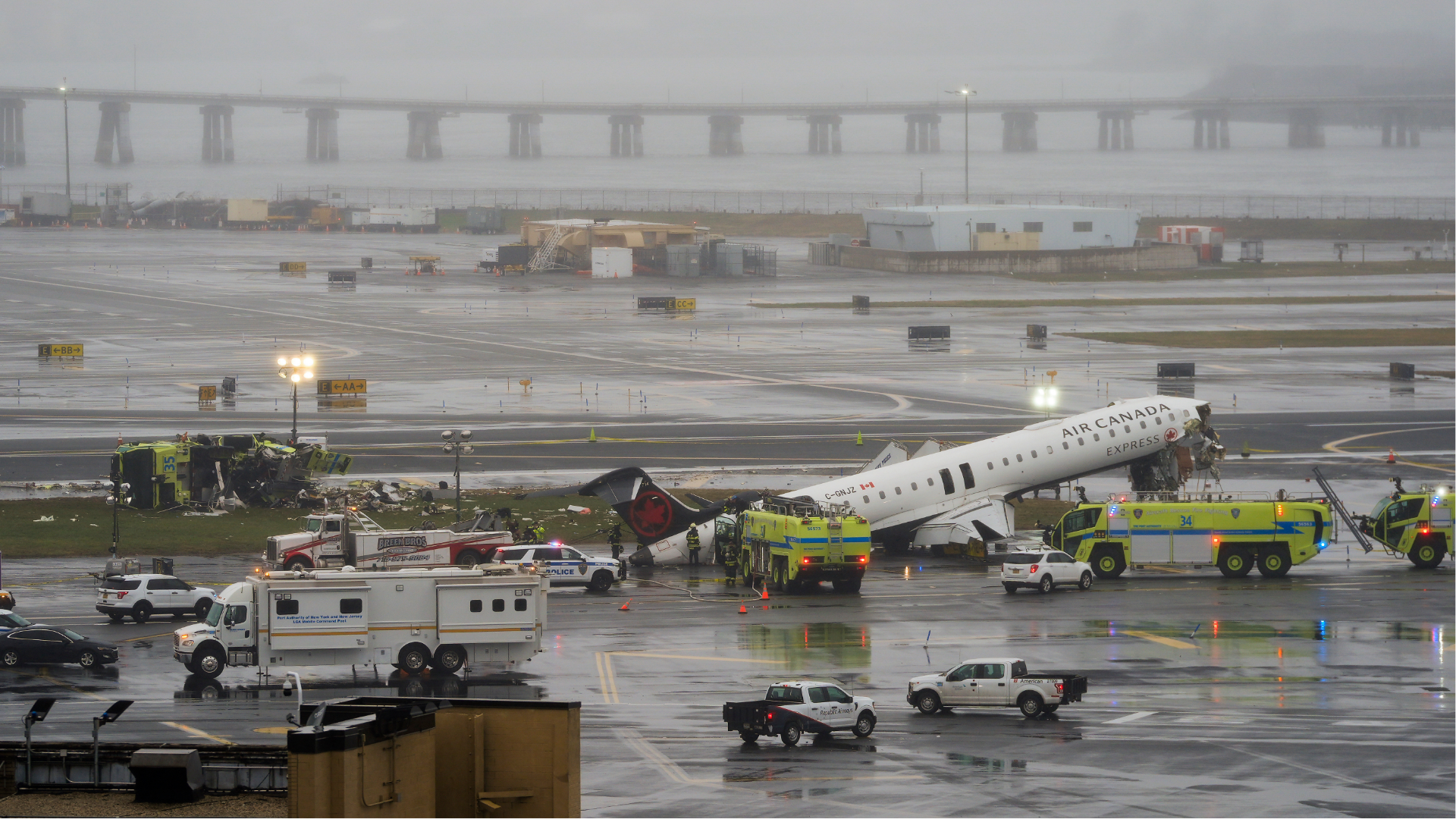
Emergency services responded swiftly to the crash, attempting to contain the fire and assist those involved. However, the severity of the collision meant that casualties were unavoidable.
The airport temporarily halted operations following the incident, leading to disruptions in flight schedules. Authorities worked to secure the site, assist victims, and begin investigative procedures.
Passengers and crew members who witnessed the event reported scenes of panic and confusion, reflecting the traumatic nature of the incident.
Questions Over Communication Breakdown
A critical theme emerging from all reports is the apparent breakdown in communication. Key questions include:
-
Why did the truck not stop despite repeated ATC warnings?
-
Were the instructions clear and received in time?
-
Did overlapping communications contribute to confusion?
-
Were standard safety protocols followed by all parties?
These questions are central to determining accountability and preventing future incidents.
The Role of Technology and Safety Systems
Modern airports are equipped with advanced systems designed to prevent runway incursions, including ground radar and alert systems. Investigators are examining whether such systems were in place at LaGuardia and whether they functioned as intended.
If technological safeguards failed or were not utilized effectively, it could point to systemic issues beyond individual error.
Industry Implications
The crash is likely to prompt renewed scrutiny of runway safety protocols across the aviation industry. Regulators may consider:
-
Enhancing communication protocols between ATC and ground vehicles
-
Increasing training for runway operations
-
Implementing stricter access controls for active runways
-
Upgrading technology to detect and prevent incursions
Airlines and airport authorities worldwide will be watching closely as the investigation unfolds.
A Tragedy Under Investigation
As the NTSB continues its probe, the focus remains on understanding how multiple layers of safety failed in a matter of seconds. The combination of human error, communication breakdown, and procedural lapses appears to have created a perfect storm.
The cockpit recordings, ATC warnings, and video evidence together provide a comprehensive yet sobering account of the incident. Each piece of information adds to a growing understanding of how the tragedy unfolded.
Final Thoughts
The Air Canada Express crash at LaGuardia is a stark reminder of the complexities and risks inherent in aviation operations. While air travel remains one of the safest modes of transportation, incidents like this highlight the importance of constant vigilance, clear communication, and robust safety systems.
As investigators work to piece together the final moments and underlying causes, the aviation community faces the challenge of learning from this tragedy to ensure such an event is not repeated.
The findings of the NTSB will be crucial in shaping future safety measures—and in providing answers to the many questions raised by this devastating accident.
With inputs from agencies
Image Source: Multiple agencies
© Copyright 2025. All Rights Reserved. Powered by Vygr Media.