 By
By 
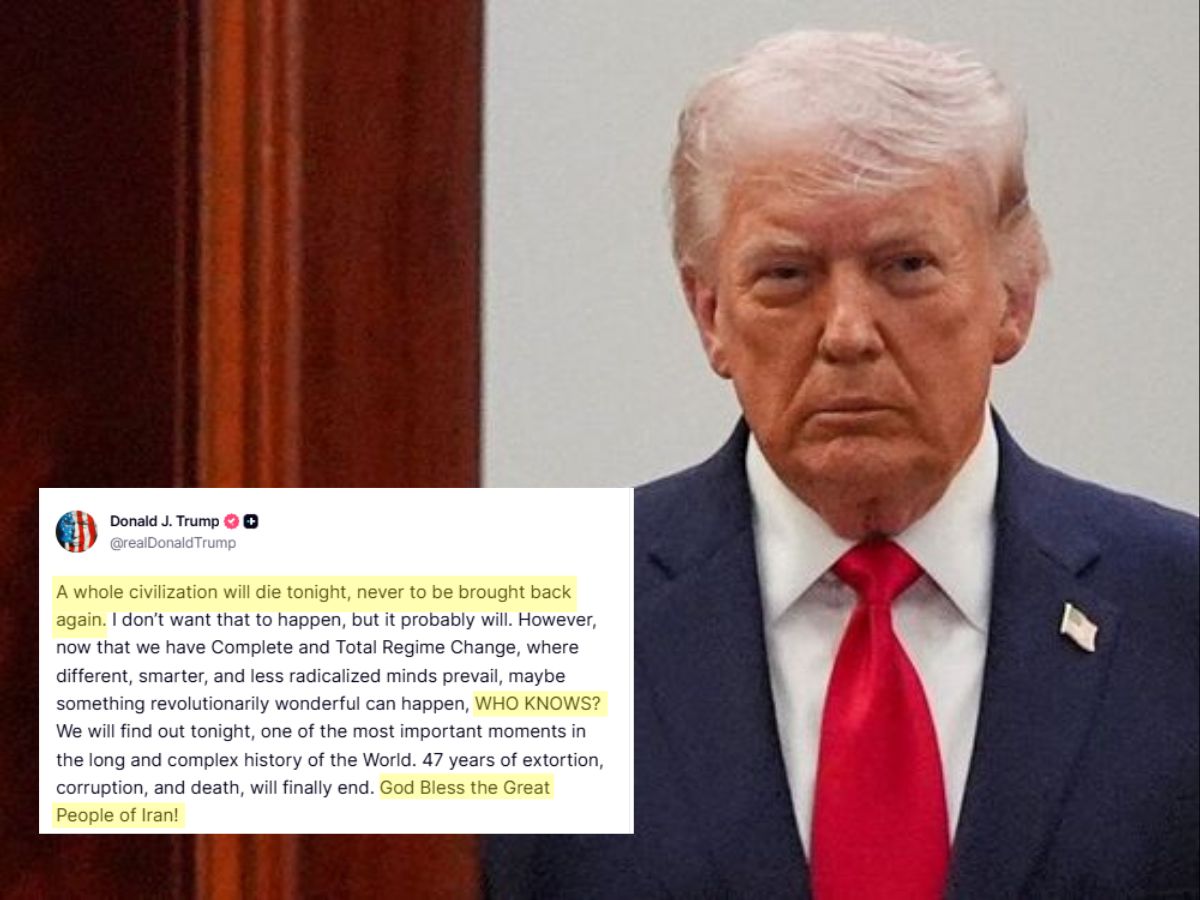
The world stood on a knife’s edge as an explosive geopolitical standoff between the United States, Iran, and Israel escalated dramatically, driven by a chilling warning from former U.S. President Donald Trump: “the whole civilisation will die tonight.” The statement, issued amid rising hostilities, underscored the severity of a crisis that analysts warn could spiral into a full-scale regional—or even global—conflict.
A Deadline That Shook Diplomacy
At the heart of the crisis was a strict deadline issued by Trump to Iran, demanding compliance on critical security concerns tied to its nuclear capabilities and regional aggression. As the clock ticked down, diplomatic channels appeared to collapse entirely. Iranian officials reportedly declared that all avenues of talks with the United States had been shut, signaling a complete breakdown in negotiations at a moment when de-escalation was most urgent.
The refusal to engage diplomatically marked a dangerous turning point. With no backchannel communications or formal negotiations underway, the risk of miscalculation grew exponentially. Observers noted that the absence of dialogue between Washington and Tehran removed one of the last safeguards against rapid escalation.
Military Tensions Rise Around Strategic Oil Lifelines
Compounding fears was the growing focus on key strategic locations, particularly the Strait of Hormuz and Kharg Island—two critical arteries of global oil supply. Reports indicated heightened military activity in and around these areas, raising concerns that any confrontation could disrupt energy flows worldwide.
The Strait of Hormuz, through which a significant portion of the world’s oil shipments pass, has long been a flashpoint in U.S.-Iran tensions. Kharg Island, Iran’s main oil export terminal, was also thrust into the spotlight as a potential target or bargaining chip in the unfolding crisis. Any attack or blockade in these zones could send shockwaves through global markets, triggering economic instability far beyond the Middle East.
“7 Hours to Deadline”: Countdown to Uncertainty
As the deadline approached its final hours, the atmosphere grew increasingly tense. With just seven hours remaining at one point, speculation intensified about what form U.S. action might take. Scenarios ranged from targeted military strikes on Iranian infrastructure to broader operations involving U.S. allies, including Israel.
Trump’s rhetoric suggested a willingness to consider extreme measures, including the potential use of advanced weaponry. While there was no confirmation of nuclear deployment, references to overwhelming force added to the sense of impending catastrophe. Strategic analysts warned that even conventional strikes could ignite a wider war, drawing in multiple regional actors.
Israel Factor and Regional Fallout
Israel’s role in the crisis remained a critical variable. Already engaged in its own security tensions with Iran, Israel was widely expected to align with U.S. objectives if military action were initiated. This alignment raised the possibility of a multi-front conflict, with Iran potentially responding through proxy forces across the region.
Such a scenario could engulf countries like Lebanon, Syria, and Iraq, where Iranian influence is deeply entrenched. The ripple effects would likely extend to global powers, increasing the risk of a broader international confrontation.
India Moves to Protect Its Citizens
Amid the escalating crisis, India issued an urgent advisory to its nationals in Iran, instructing them to “stay where you are for the next 48 hours.” The directive reflected growing concern about the safety of civilians as the situation deteriorated rapidly.
Indian authorities emphasized the unpredictability of developments and urged citizens to avoid unnecessary movement. The advisory also indicated that contingency plans were being considered should evacuation become necessary.
India’s response highlighted the global implications of the crisis. With a large diaspora in the Middle East and strong economic ties to the region, New Delhi’s cautious stance underscored how deeply interconnected the fallout could be.
Collapse of Communication, Rise of Risk
Perhaps the most alarming aspect of the unfolding situation was the complete collapse of communication between the U.S. and Iran. Diplomatic silence, combined with aggressive posturing and military readiness, created a volatile environment where even minor incidents could trigger large-scale conflict.
Iran’s decision to shut down talks was interpreted by some as a strategic move to avoid appearing weak under pressure. However, it also eliminated opportunities for de-escalation at a critical juncture. On the other side, Trump’s uncompromising stance left little room for negotiation, further narrowing the path to peace.
Global Stakes: Oil, Security, and Stability
The potential consequences of the crisis extended far beyond the immediate region. Disruption in oil supplies from the Gulf could lead to sharp price spikes, affecting economies worldwide. Financial markets, already sensitive to geopolitical risks, showed signs of volatility as the deadline approached.
Security experts warned that a conflict involving Iran could have long-lasting implications for global stability. From refugee flows to cyber warfare and terrorism, the secondary effects of such a confrontation could be widespread and enduring.
A Moment of Reckoning
As the world watched the deadline pass, the question remained: would diplomacy find a way back, or had the point of no return already been crossed?
Trump’s stark warning about the end of civilisation may have been hyperbolic, but it captured the gravity of a moment when the stakes could not be higher. With military forces on alert, diplomatic ties severed, and global powers on edge, the situation represented one of the most dangerous flashpoints in recent history.
For now, the world waits—hoping that restraint prevails over rhetoric, and that the brink does not give way to catastrophe.
With inputs from agencies
Image Source: Multiple agencies
© Copyright 2025. All Rights Reserved. Powered by Vygr Media.