
 By
By 
A routine Dubai to Tel Aviv flight turned into a terrifying mid-air emergency on Wednesday after a violent altercation reportedly broke out between the pilots inside the cockpit, triggering emergency signals and briefly raising fears of a flight hijacking.
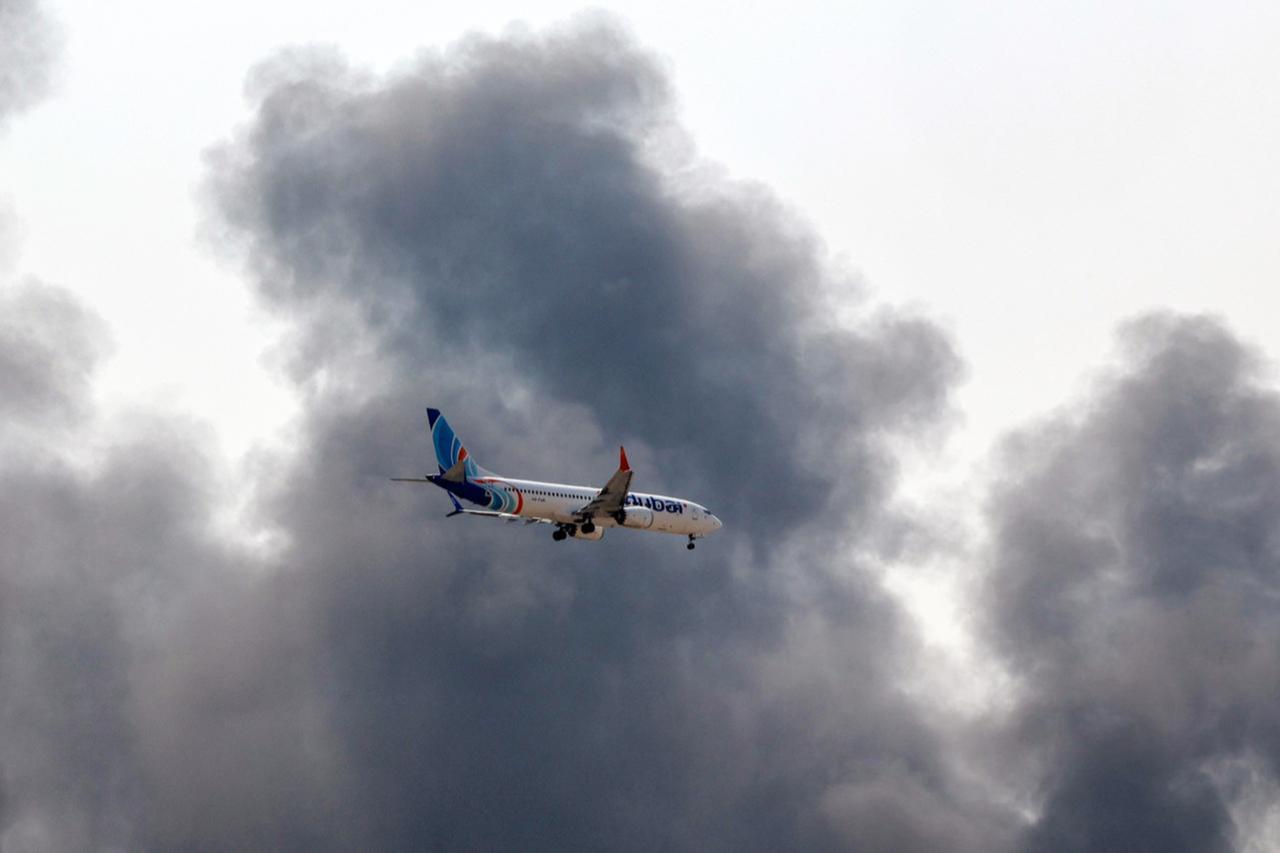
Flydubai flight FZ1073, operating from Dubai International Airport to Ben Gurion Airport near Tel Aviv, was carrying around 180 passengers when it suddenly changed course over Saudi Arabia. The Boeing 737 MAX 8 eventually made a safe emergency landing at Tabuk Airport in Saudi Arabia, with passengers and crew accounted for.
The incident initially appeared far more serious. The aircraft transmitted the internationally recognised 7700 emergency code before switching to 7500, a transponder signal associated with unlawful interference or a possible hijacking. The alert prompted a major security response, including the reported scrambling of Israeli fighter jets.
However, as authorities began piecing together what happened inside the aircraft, reports indicated that the emergency may have been caused by a violent confrontation between the two pilots rather than an external hijacking attempt. The exact sequence of events remained under investigation.
What happened on the Flydubai Dubai-Tel Aviv flight?
According to flight-tracking information, FZ1073 was flying from Dubai towards Tel Aviv when the aircraft experienced a dramatic change in altitude and subsequently transmitted emergency signals.
The aircraft reportedly descended from approximately 34,000 feet to around 16,600 feet, a drop of roughly 17,400 feet, within about two minutes. The unusual descent occurred around the time the emergency situation developed.
The aircraft first transmitted squawk 7700, which indicates a general emergency. It then switched to squawk 7500, the international code used to indicate unlawful interference with an aircraft.
That second signal immediately raised the possibility of a hijacking or attempted hijacking.
The aircraft later turned towards northern Saudi Arabia and headed for Tabuk, where it landed safely.
The situation was particularly sensitive because the flight was carrying a large number of Israeli passengers and was travelling between the United Arab Emirates and Israel. Israeli authorities reportedly treated the 7500 signal as a potential security emergency until more information became available.
Pilot stabbed during reported cockpit fight
The most disturbing details emerged from reports about what allegedly happened inside the cockpit.
Passengers reportedly heard shouting and screams coming from the front section of the aircraft. When the cockpit door was opened, passengers reportedly saw blood and an injured pilot.
Passenger accounts described one pilot being attacked with what was reported to be a folding or pocketknife during the confrontation. Some passengers and crew members reportedly intervened and helped restrain the other pilot.
The two pilots were subsequently reported to have sustained injuries and were taken for medical treatment after the aircraft landed in Tabuk.
The precise sequence of the confrontation, including who initiated the violence and why the fight began, had not been officially established at the time of reporting.
Some reports carried claims that one of the pilots attempted to deliberately send the aircraft into a dangerous descent or crash it, leading the other pilot to intervene. Those allegations remained part of the developing investigation rather than established facts.
Why did the Flydubai flight send a hijack signal?
The 7500 hijack code was one of the most alarming elements of the incident.
Aircraft use standard transponder codes to communicate emergencies to air traffic controllers without relying entirely on voice communications. Squawk 7700 generally indicates a serious emergency, while 7500 is associated with unlawful interference.
Because FZ1073 reportedly transmitted both codes, authorities had to consider the possibility that the aircraft had been taken over or that someone aboard was attempting to gain unlawful control of the plane.
That explains why the incident escalated quickly from an aviation emergency into a potential national-security situation.
Israeli fighter aircraft were reportedly scrambled as authorities attempted to determine what was happening. Prime Minister Benjamin Netanyahu also held security consultations as the aircraft remained in the air.
Once the aircraft landed safely in Saudi Arabia, the immediate hijacking fears began to recede.
Israeli officials subsequently indicated that the incident was not being treated as a conventional hijacking, while investigations continued into the cockpit confrontation.
Passengers feared they would not survive
For people aboard FZ1073, the distinction between a cockpit fight and a hijacking would have offered little comfort in the moment.
Passengers reportedly heard screams before seeing signs of blood inside the cockpit. The sudden descent of the aircraft would have added to the fear, particularly because passengers had no immediate explanation for the aircraft's unusual movement.
One passenger described hearing screams and later seeing an injured pilot when the cockpit was opened. Accounts also indicated that passengers and crew members helped bring the confrontation under control.
The reports underline how quickly an apparent fight between crew members can become a life-threatening aviation emergency.
With the cockpit temporarily at the centre of the incident, the aircraft's ability to continue safely towards Tel Aviv was thrown into question. The presence of additional qualified pilots on board was also reported to have played an important role in enabling the aircraft to make the emergency landing.
Why was the plane diverted to Saudi Arabia?
Once the emergency developed, the aircraft changed course and headed towards Tabuk Airport in northwestern Saudi Arabia.
Tabuk provided a suitable location for the aircraft to land while the situation was brought under control and the injured crew members could receive medical attention.
The landing was also notable for another reason: Saudi Arabia does not have formal diplomatic relations with Israel. The arrival of a flight carrying a large number of Israeli passengers therefore created an unusual situation requiring coordination between the relevant authorities.
After the safe landing, Saudi security personnel were reported to have surrounded the aircraft while officials assessed the situation.
The immediate priority was the safety of the passengers and crew.
What happened to the passengers after landing?
The aircraft landed safely at Tabuk and reports indicated that all passengers and crew were accounted for.
The airline confirmed that the aircraft had experienced an incident while travelling from Dubai to Tel Aviv and that it had landed safely in Tabuk. Further details were expected as authorities continued their investigation.
Arrangements were also being discussed to get the passengers back to Israel. Reports indicated that a replacement aircraft could be organised for the stranded travellers.
For passengers who had expected a routine journey from Dubai to Tel Aviv, the experience was anything but ordinary. Instead of landing at Ben Gurion Airport, they found themselves unexpectedly in Saudi Arabia after a dramatic emergency involving their own cockpit crew.
Was the Flydubai flight actually hijacked?
At the time of the latest reports, a conventional hijacking had been ruled out by Israeli authorities, although the circumstances surrounding the cockpit incident remained under investigation.
This distinction is important.
The aircraft did transmit the 7500 code associated with unlawful interference, which understandably triggered a hijack response. But the transmission itself does not prove that an external hijacking was taking place.
The emerging account pointed instead towards a physical confrontation between the pilots. Passenger accounts of screams, blood and an alleged stabbing added another layer to the incident, while flight-tracking data showed the aircraft's dramatic loss of altitude.
At the same time, claims about an intentional attempt to crash the plane or a possible terror motive had not all been independently confirmed.
The investigation is therefore expected to focus on several questions: what caused the pilots to fight, who activated the emergency codes, why the aircraft experienced such a steep descent, how the cockpit confrontation unfolded, and how control of the aircraft was ultimately restored.
A terrifying aviation scare ends with a safe landing
The Flydubai Dubai-Tel Aviv flight incident could have become a far more serious aviation disaster. Instead, FZ1073 landed safely at Tabuk, and passengers survived the ordeal.
The episode nevertheless raises significant questions about cockpit security, crew conduct and emergency procedures.
For several tense minutes, the combination of a rapid altitude drop, emergency transmissions and the 7500 unlawful-interference signal created the impression that a Dubai-Tel Aviv flight hijacking might be unfolding.
What emerged later was a different and deeply unusual picture: an apparent fight between pilots inside the cockpit, an alleged stabbing, frightened passengers, a sudden diversion and an emergency landing in Saudi Arabia.
Authorities are still working to establish the full chain of events. Until that investigation is complete, some of the more serious allegations surrounding the incident should be treated as claims rather than confirmed facts.
For the passengers aboard Flydubai flight FZ1073, however, the outcome was clear: after a terrifying mid-air emergency thousands of feet above the region, the aircraft reached the ground safely at Tabuk, bringing an extraordinary flight to an unexpected end.
With input from agencies
Image Source: Multiple agencies
© Copyright 2026. All Rights Reserved. Powered by Vygr Media.