 By
By 
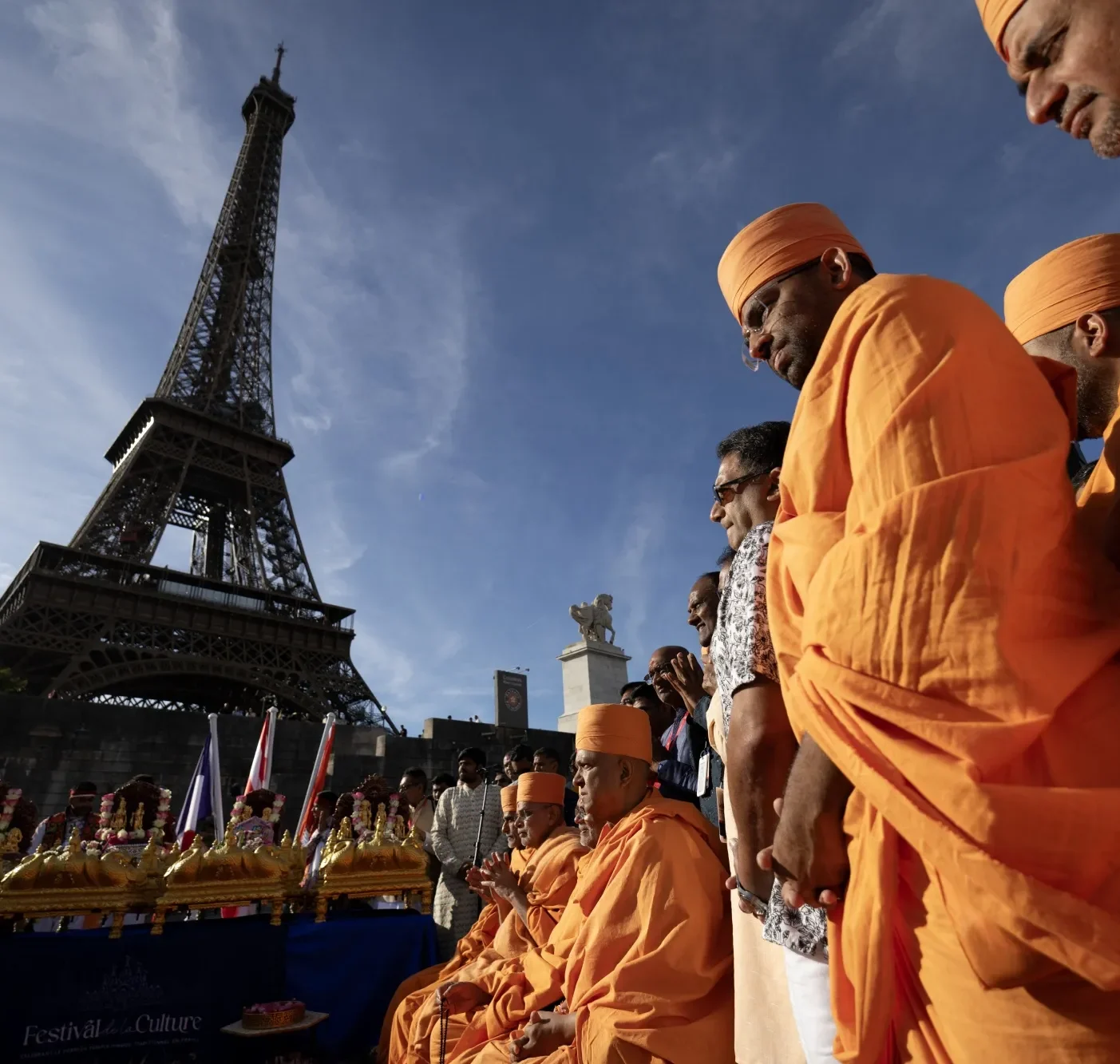
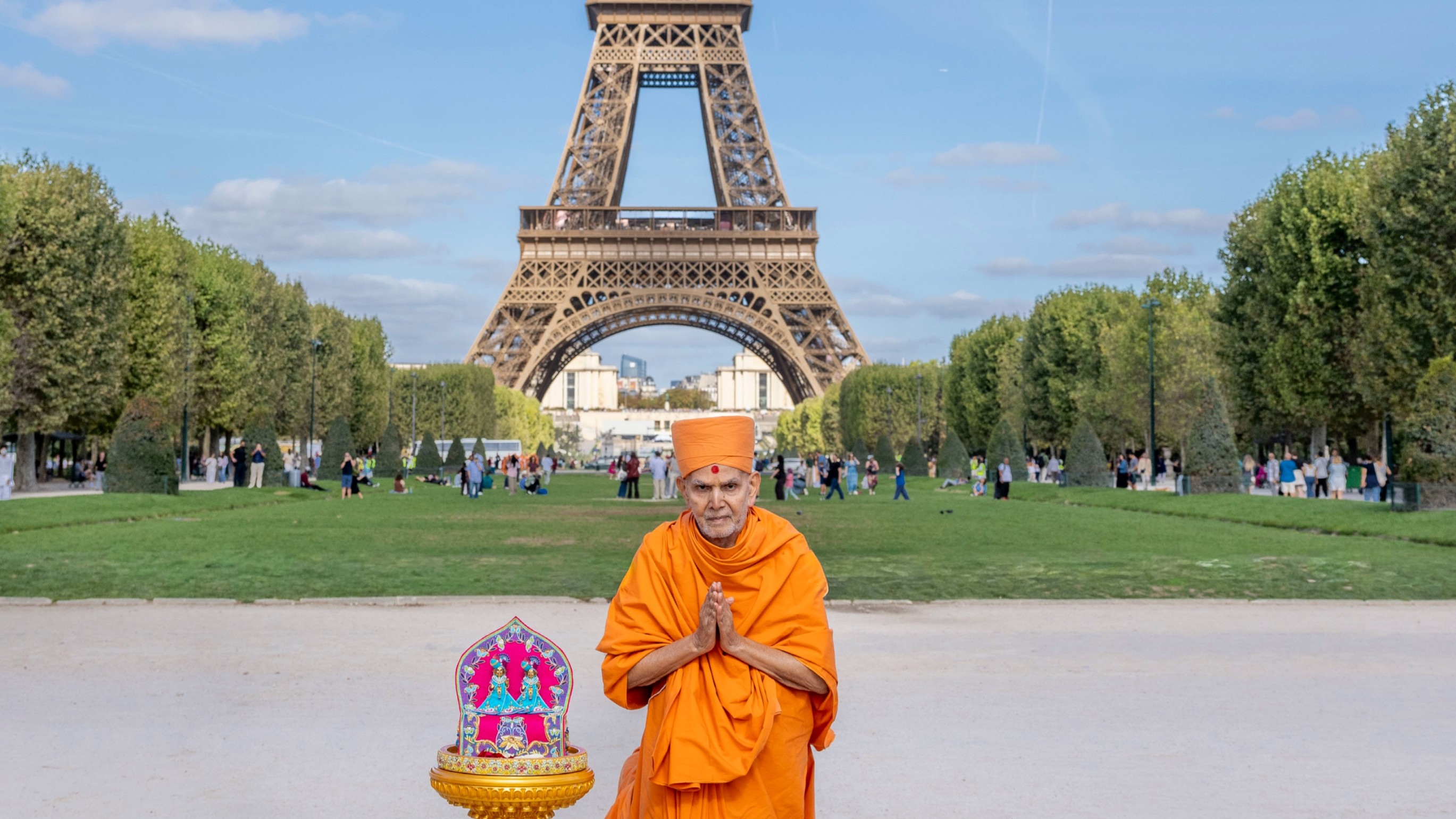
New Delhi/Paris: India has distanced itself from the controversy surrounding a private visit by a BAPS delegation to the Eiffel Tower, saying the dispute over the alleged sidelining of female employees is an issue between the entities directly involved.
The Ministry of External Affairs (MEA) said on Tuesday that while it was aware of the inauguration of a BAPS temple in the Paris region, it had no comment on the separate controversy that erupted following the Hindu organisation’s visit to the Eiffel Tower. MEA spokesperson Randhir Jaiswal described the issue concerning the landmark as a matter “purely between the entities concerned.”
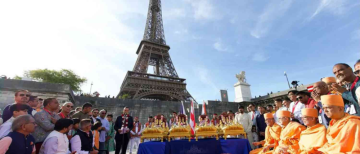
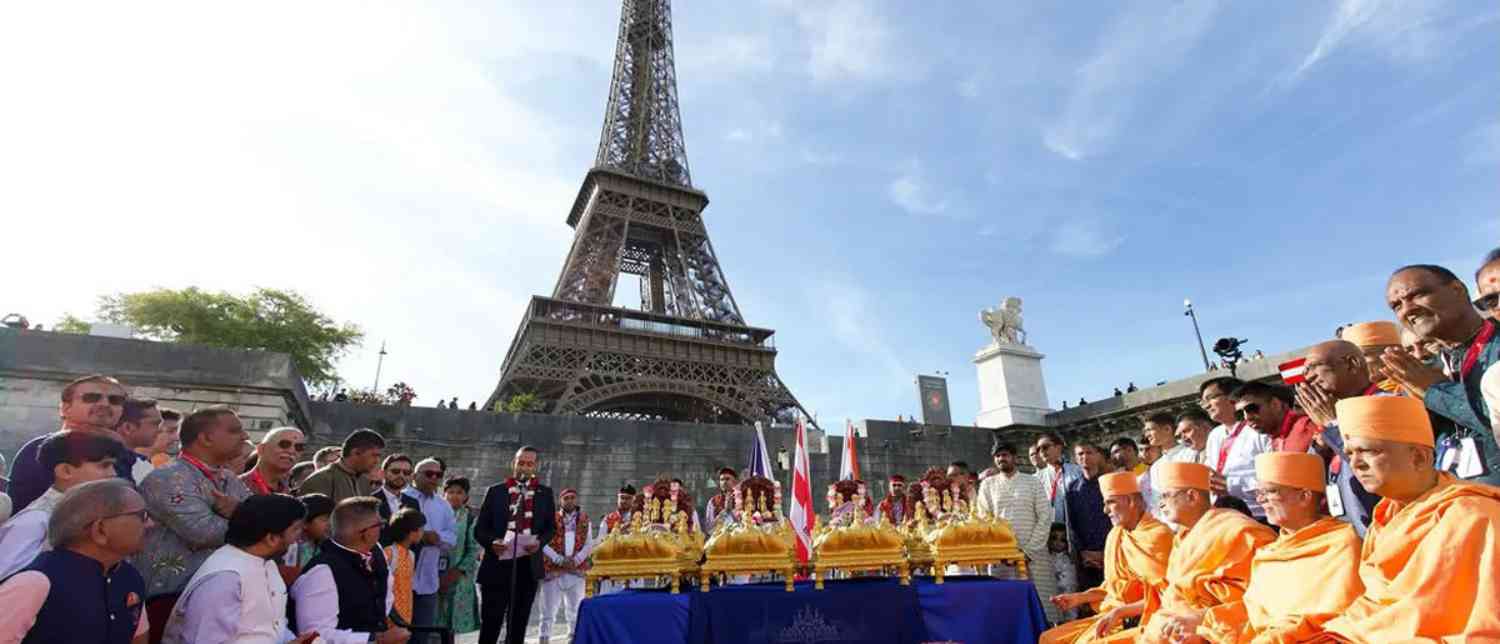
The statement came amid growing attention in India and France over allegations that female employees at the Eiffel Tower were asked to move away from their regular workstations or avoid certain areas while a delegation of around 100 people linked to BAPS visited the monument.
The incident triggered a staff protest, temporarily shut one of Paris’s most recognisable landmarks and prompted sharp criticism from senior French political figures. BAPS has since apologised for any hurt or inconvenience caused, while the company operating the Eiffel Tower acknowledged that the delegation had requested restrictions on interactions with women but said such conditions should not have been accepted.
What happened during the BAPS visit to the Eiffel Tower?
The controversy centres on a private BAPS delegation visit to the Eiffel Tower on Saturday. According to accounts from employee representatives, female workers were allegedly instructed to leave their usual posts as the group moved through parts of the monument.
Some women were reportedly moved to other areas, while male colleagues replaced them at certain positions. Employees also alleged that female staff were told not to pass through specific areas while the delegation was present.
The instructions angered workers, who viewed the move as discriminatory and inconsistent with workplace equality. The protest that followed resulted in the Eiffel Tower being closed to visitors on Monday.
The company responsible for operating the Eiffel Tower, Societe d’Exploitation de la Tour Eiffel (SETE), acknowledged that the visiting delegation had requested that interactions with women be limited. However, it said such conditions should never have been accepted.
SETE president Ariel Weil reaffirmed the landmark’s commitment to France’s republican principles and equality between men and women.
The Eiffel Tower reopened on Tuesday after the strike, but the controversy continued to reverberate across France.
French leaders condemn alleged treatment of women employees
The episode quickly moved beyond a workplace dispute and became a wider political issue, particularly because of France’s strong emphasis on secular republican values and gender equality.
Paris Mayor Emmanuel Gregoire backed the protesting employees and said the reported conditions were unacceptable. He indicated that an investigation would be launched into how the arrangements came about.
France’s National Assembly President Yael Braun-Pivet also criticised the incident, arguing that women should not be required to step aside to accommodate the demands of foreign visitors.
Gender Equality Minister Aurore Berge described the episode as unacceptable and stressed that religious or cultural considerations cannot override the laws and principles of the French Republic.
The reaction reflects the sensitivity surrounding gender equality in France, where questions involving religion, public institutions and individual rights can quickly become politically charged.
The controversy has therefore grown well beyond the circumstances of a single private visit. It has raised questions about how cultural or religious requirements should be accommodated at public-facing institutions, particularly when those requirements are perceived to conflict with established workplace or equality principles.
BAPS apologises amid growing backlash
BAPS has apologised following the controversy, saying it took the concerns raised over the visit seriously.
The organisation said the Eiffel Tower visit had been planned in advance with the monument’s teams and was scheduled around the beginning of normal opening hours in an effort to minimise disruption to other visitors.
BAPS also said it was not aware of any denial of access to the Eiffel Tower and expressed regret to anyone who may have been hurt or inconvenienced by what happened.
The organisation stressed its commitment to mutual respect and service to others.
The apology came as scrutiny intensified over the circumstances surrounding the visit and the instructions reportedly given to Eiffel Tower employees.
While BAPS has expressed regret, the exact sequence of decisions leading to female employees being moved remains central to the controversy. The operating company’s acknowledgment that a request to limit interactions with women had been made has added weight to the employees’ concerns, while the wider dispute over responsibility remains between the parties involved.
Why the controversy has an India connection
The Eiffel Tower row has attracted attention in India partly because it followed the inauguration of a major BAPS Hindu temple near Paris.
The temple opening was a significant event for the BAPS community in France and was attended by prominent figures. Prime Minister Narendra Modi also delivered a virtual address during the inauguration.
That connection led to questions about whether the Indian government had any involvement in or position on the Eiffel Tower visit.
The MEA sought to draw a clear line between the two developments.
Jaiswal said the Prime Minister’s virtual message was simply part of the usual practice of conveying good wishes on occasions such as temple inaugurations. He said there was no reason for further comment on that aspect.
On the Eiffel Tower dispute itself, however, the ministry made its position clear: the matter was between the entities concerned.
The distinction is significant. By separating the Paris temple inauguration from the Eiffel Tower incident, New Delhi has indicated that the controversy should not be viewed as an issue involving the Indian government or as a matter of bilateral relations between India and France.
Who is BAPS?
BAPS, or Bochasanwasi Akshar Purushottam Swaminarayan Sanstha, is a global Hindu socio-spiritual organisation with a large international presence.
The organisation describes itself as a volunteer-driven fellowship focused on spiritual development, service and the promotion of Hindu values. It has a network of temples and followers across several regions of the world and operates charitable and community initiatives.
Its new temple near Paris has placed the organisation in greater public focus in France, making the Eiffel Tower controversy particularly sensitive given its timing.
The temple inauguration and the subsequent Eiffel Tower visit occurred within days of each other, bringing the organisation into the centre of a debate over religion, cultural practices and gender equality in France.
Eiffel Tower row raises broader questions
At the heart of the controversy is a broader question that extends beyond BAPS or the Eiffel Tower: how should institutions balance religious or cultural sensitivities with workplace equality and local laws?
For the employees who protested, the issue was straightforward — being asked to leave a workplace position because of gender was viewed as unacceptable.
For the Eiffel Tower operator, the incident has highlighted the need for clearer boundaries when accommodating requests from private visitors and delegations.
And for BAPS, the episode has become an unexpected controversy shortly after the opening of its new temple in France.
The Indian government, meanwhile, has chosen not to become involved, emphasising that the Eiffel Tower dispute is a matter for the concerned parties.
For now, the Eiffel Tower has reopened and normal operations have resumed. But the political and public debate surrounding the incident is likely to continue as French authorities examine how the controversial workplace arrangements were permitted in the first place.
The episode has also underscored how quickly a private religious visit can become an international story when questions of gender equality, cultural accommodation and public institutions intersect.
For India, the immediate message from the MEA is one of distance: while New Delhi recognises the significance of the BAPS temple inauguration in the Paris region, it does not consider the Eiffel Tower dispute a government matter.
With input from agencies
Image Source: Multiple agencies
© Copyright 2026. All Rights Reserved. Powered by Vygr Media.